Artwork
The Seconda Macchina for the Chinea of 1785: A Pleasure Palace with an Air Balloon
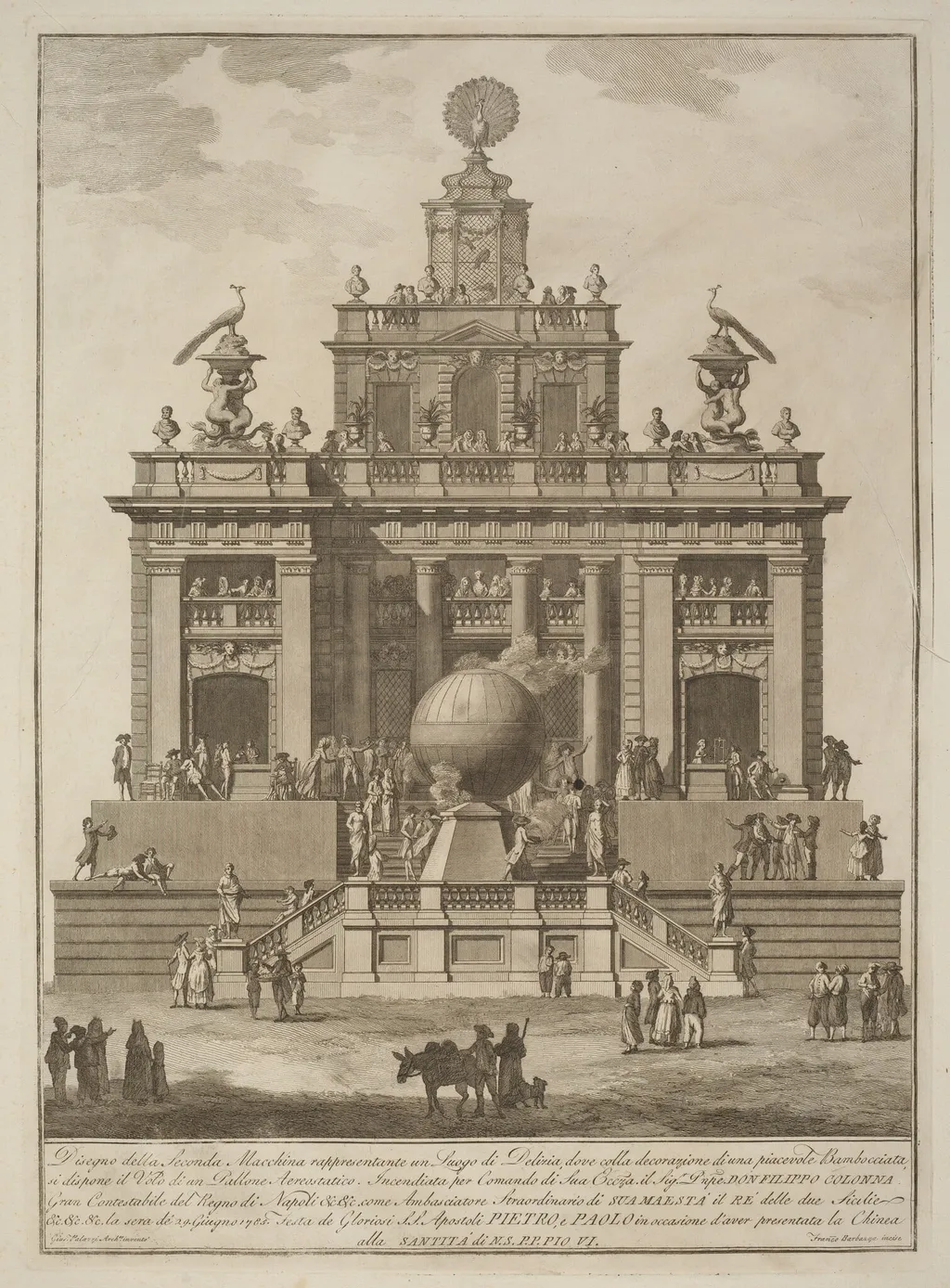
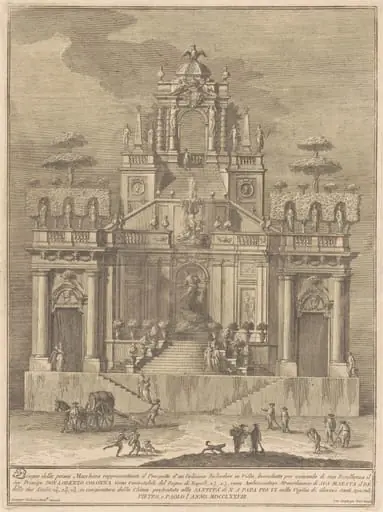
The Seconda Macchina for the Chinea of 1785: A Pleasure Palace with an Air Balloon is an ink print by the Romanticist artist Francesco Barbazza. It dates from 1785 and is held in the collection of the National Gallery of Art.
About this work
This drawing shows a fake palace made of wood and fabric, with two tall towers and a big globe in the middle.
This drawing shows a fake palace made of wood and fabric, with two tall towers and a big globe in the middle. People in 18th-century clothes walk around it, some on stairs, others on the ground. The scene looks like a stage set, with tiny statues on the roof and a peacock perched on top of one tower.
The globe is lit on fire, which might be part of a show or celebration. The text at the bottom hints this was built for a special event in 1785.
Want to know more? Check out the technique: etching.
Overview
Created in 1785 by Francesco Barbazza, this etching depicts a temporary architectural spectacle constructed for the Chinea ceremony in Naples. The scene portrays a fantastical, non-functional palace made of lightweight materials, designed as a transient entertainment structure rather than a permanent building. Its theatrical quality suggests it was part of a public celebration, blending architecture with pyrotechnics and spectacle.
Subject & Meaning
The structure features twin towers crowned by a peacock and statuary, with a central, burning globe serving as the focal point. The presence of elegantly dressed figures moving through the space implies a ceremonial procession or public viewing. The burning globe likely symbolized celestial power or renewal, aligning with the Chinea’s tradition of offering tribute to the Pope through elaborate, symbolic displays.
Technique & Style
Rendered in etching on laid paper, the work employs fine, controlled lines to capture architectural detail and atmospheric depth. The composition emphasizes scale contrast—tiny human figures against the towering, ornate structure—enhancing its illusionistic, stage-like quality. The precision of the etching reflects Barbazza’s skill in translating ephemeral pageantry into a durable graphic record.
History & Provenance
Commissioned for the annual Chinea festival in Naples, the structure was erected as a temporary tribute to the Papacy. Barbazza’s etching served both as documentation and promotional imagery, circulating among elites and foreign visitors. The print’s survival suggests it was valued as a record of a significant civic event, though the original structure was dismantled after the ceremony.
Context
The Chinea was a ritual procession in which Naples presented gifts to the Pope, often featuring elaborate temporary architecture. In 1785, the event incorporated Enlightenment-era fascination with science and spectacle, exemplified by the burning globe—a nod to ballooning and aerial innovation. Barbazza’s image captures the fusion of religious tradition with emerging technological wonder.
Legacy
Barbazza’s etching remains one of the few visual records of 18th-century Neapolitan ceremonial architecture. It illustrates how public festivals blended art, politics, and emerging scientific curiosity. While the structure itself vanished, the print preserves the ambition and aesthetics of a moment when spectacle was both political ritual and cultural expression.
Artist & collection


 The Seconda Macchina for the Chinea of 1785: A Pleasure Palace with an Air Balloon
 The Seconda Macchina for the Chinea of 1782: A Countryside Festival at Night
 The Prima Macchina for the Chinea of 1785: The Temple of Jupiter Begun by Tarquinius Priscus with the Marvel of Accius Naevius
 The Prima Macchina for the Chinea of 1785: The Temple of Jupiter Begun by Tarquinius Priscus with the Marvel of Accius Naevius
 The Prima Macchina for the Chinea of 1782: The Temple of Janus Built by Numa Pompilius
 The Seconda Macchina for the Chinea of 1751: The Palace of Wisdom, Studies, and the Sciences
 The Prima Macchina for the Chinea of 1770: An Roman Building for Commerce
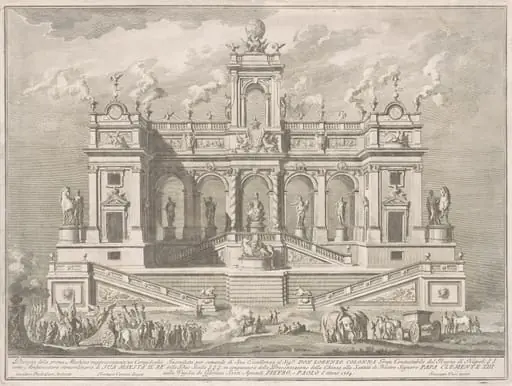 The Prima Macchina for the Chinea of 1764: A Capitol Building
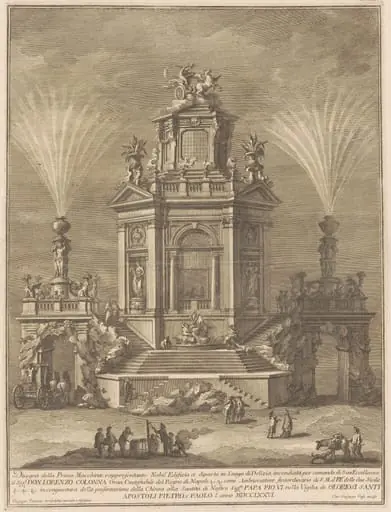 The Prima Macchina for the Chinea of 1776: A Pleasure Palace
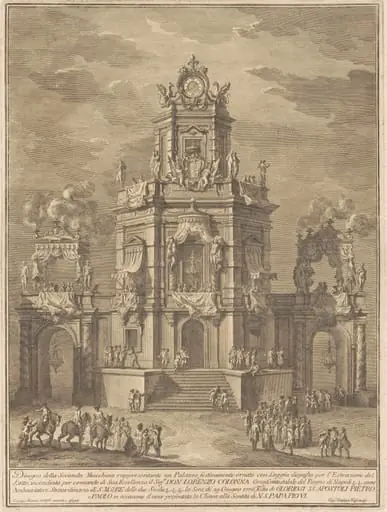 The Seconda Macchina for the Chinea of 1776: A Palace with a Loggia for the Lottery Draw
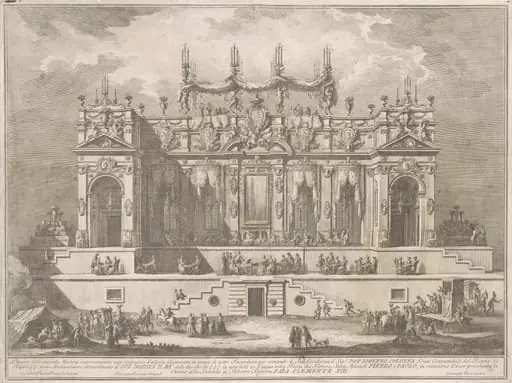 The Seconda Macchina for the Chinea of 1764: A Magnificent Gallery Illuminated at Night
 The Seconda Macchina for the Chinea of 1772: A Square with a Game Market and the Pantheon Fountain
 The Seconda Macchina for the Chinea of 1765: A Decorated Building with Cockaigne Poles
 The Seconda Macchina for the Chinea of 1760: A Chinoiserie Pavilion
 The Prima Macchina for the Chinea of 1766: The Palace of Orpheus
 The Prima Macchina for the Chinea of 1778: A Countryside Belevedere with Hercules and Antaeus