Artwork
The Seconda Macchina for the Chinea of 1751: The Palace of Wisdom, Studies, and the Sciences
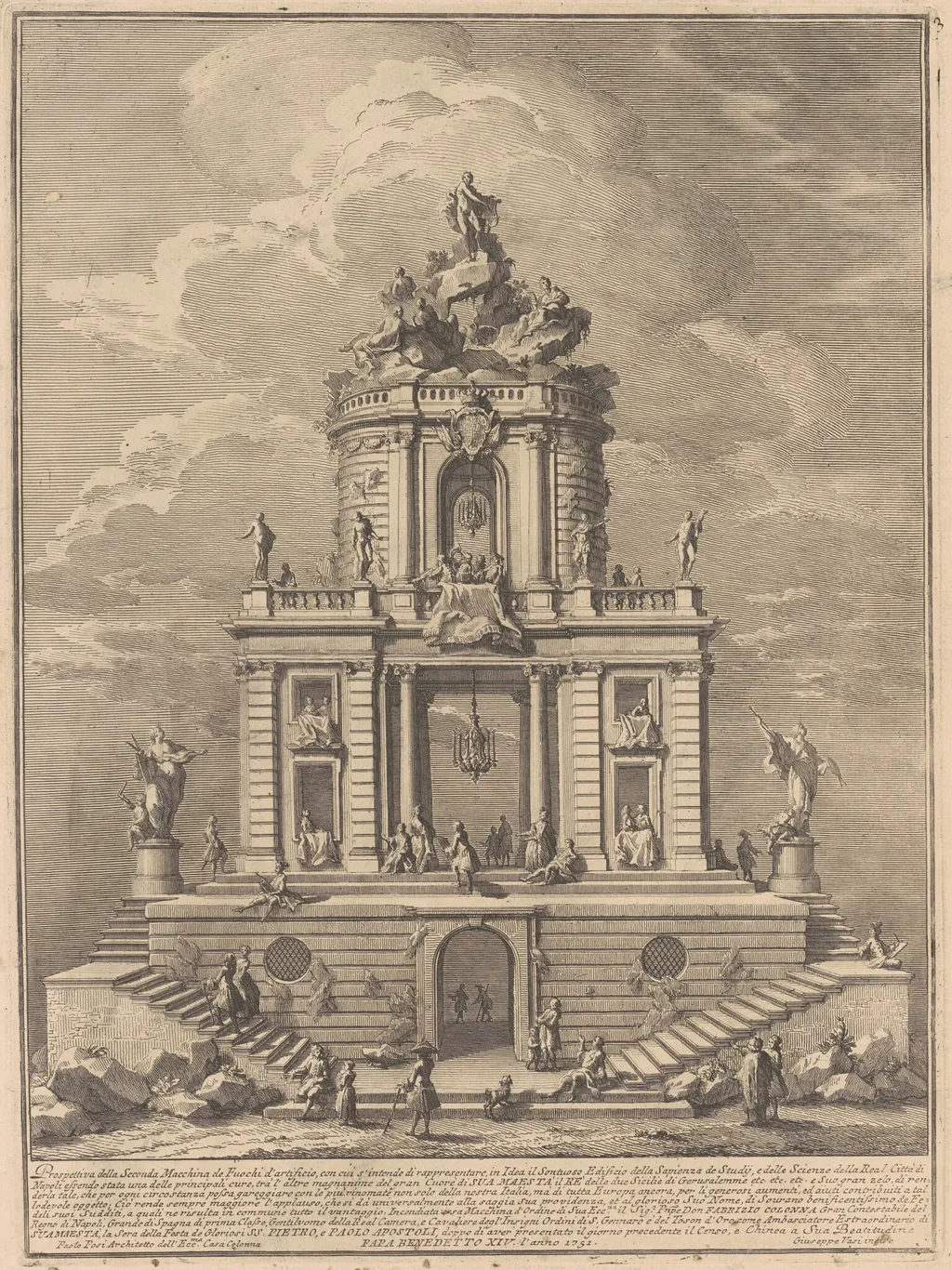
The Seconda Macchina for the Chinea of 1751: The Palace of Wisdom, Studies, and the Sciences is an ink print by the Romanticist artist Giuseppe Vasi. It dates from 1751 and is held in the collection of the National Gallery of Art.
About this work
Overview
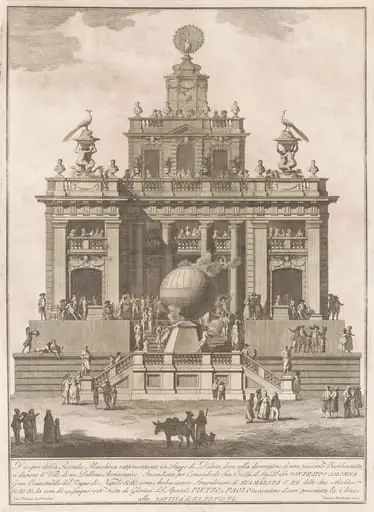
Giuseppe Vasi’s 1752 etching titled “The Seconda Macchina for the Chinea of 1751: The Palace of Wisdom, Studies, and the Sciences” presents an elaborate architectural fantasy. Rendered in fine line work, the print shows a towering, multi‑storey edifice crowned by a central dome, set against a dramatic sky of clouds.
Subject & Meaning
The composition imagines a monumental “Palace of Wisdom,” populated with allegorical figures and statues that suggest the pursuit of knowledge and scientific inquiry. A solitary male figure atop the dome reinforces the theme of intellectual ascent, while the surrounding arches and columns evoke classical ideals of order and learning.
Technique & Style
Vasi employs the etching medium to achieve intricate detailing, from the delicate carving of façade ornamentation to the nuanced play of light and shadow that models the building’s volume. The contrast between crisp line work and softer tonal washes creates depth, guiding the eye toward the central dome.
History & Provenance
Created in 1751 as part of the “Seconda Macchina” series for the annual Chinea ceremony, the print was likely distributed to participants in the Papal celebration of the King of Naples’ tribute. Its survival in museum collections reflects the continued interest in Vasi’s topographical and allegorical prints.
Context
The Chinea was a ceremonial tribute that involved elaborate festivities in Rome, often accompanied by temporary structures and artistic commissions. Vasi’s etching captures the spirit of these public spectacles, integrating architectural imagination with the ritual’s political and cultural significance.
Legacy
While not as widely reproduced as Vasi’s cityscapes, this work illustrates his capacity to blend architectural fantasy with precise printmaking. It contributes to the broader 18th‑century tradition of allegorical architecture that celebrated Enlightenment ideals through visual art.
Artist & collection

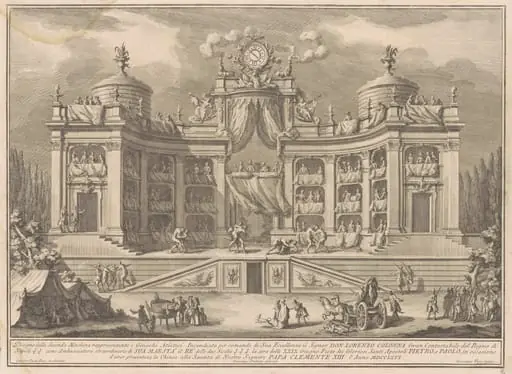 The Seconda Macchina for the Chinea of 1766: A Theater for Athletic Games
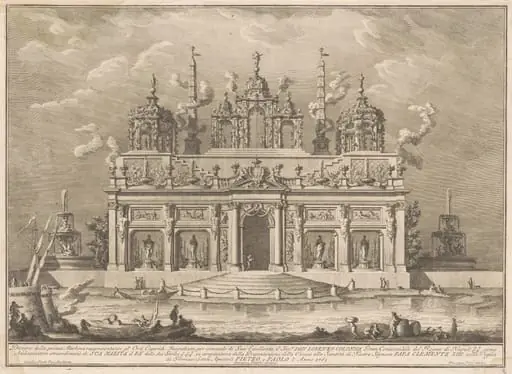 The Prima Macchina for the Chinea of 1765: The Garden of the Hesperides
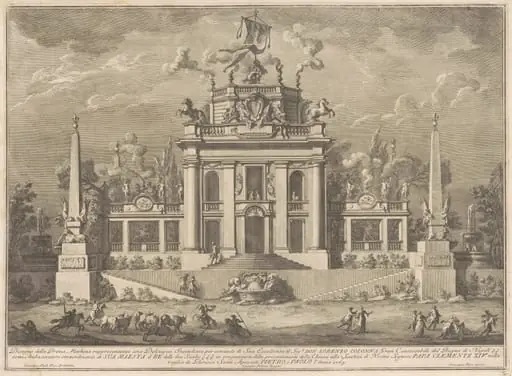 The Prima Macchina for the Chinea of 1769: A "Deliziosa"
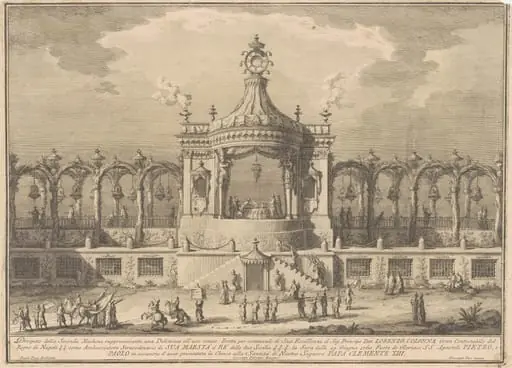 The Seconda Macchina for the Chinea of 1760: A Chinoiserie Pavilion
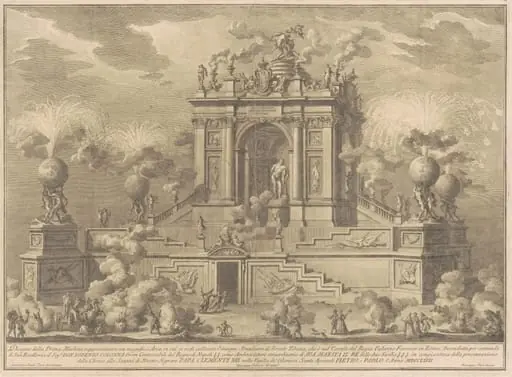 The Prima Macchina for the Chinea of 1767: A Triumphal Arch with the Farnese Hercules
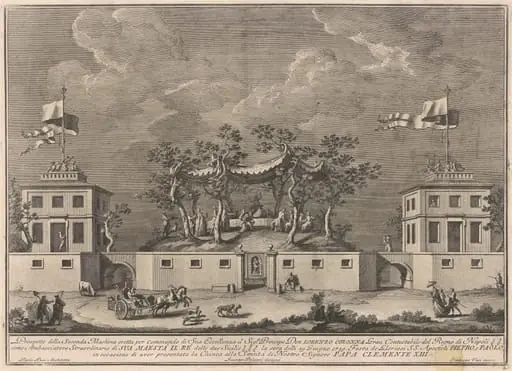 The Seconda Macchina for the Chinea of 1759: A "Deliziosa" with a Bacchanal
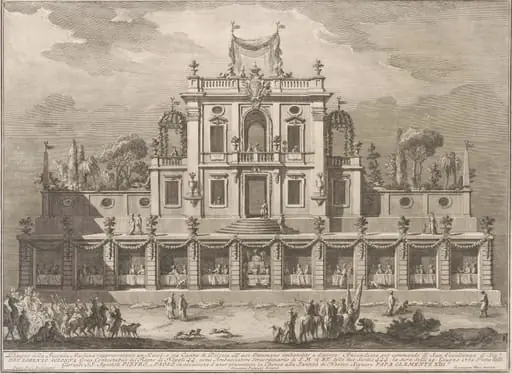 The Seconda Macchina for the Chinea of 1762: A Kiosk, or Pleasure-House in Ottoman Style
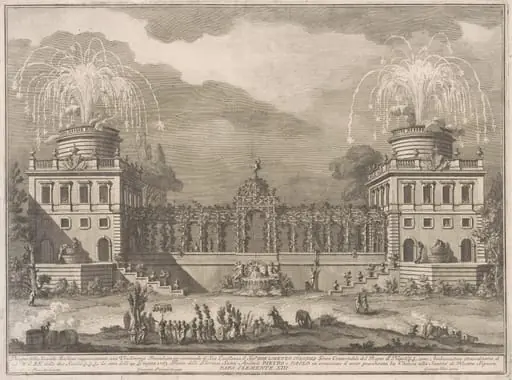 The Seconda Macchina for the Chinea of 1763: The Grape Harvest
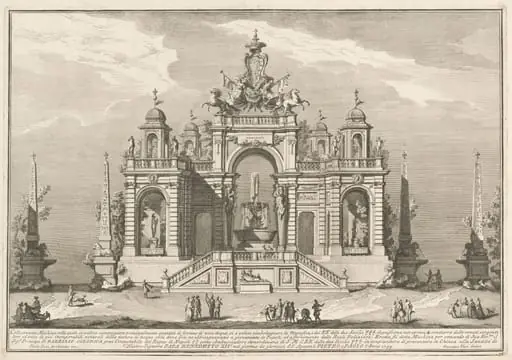 The Seconda Macchina for the Chinea of 1754: An Allegory of Waterworks
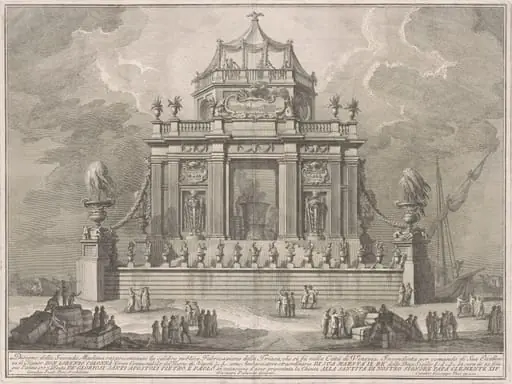 The Seconda Macchina for the Chinea of 1773: The Preparation of Theriac in Venice
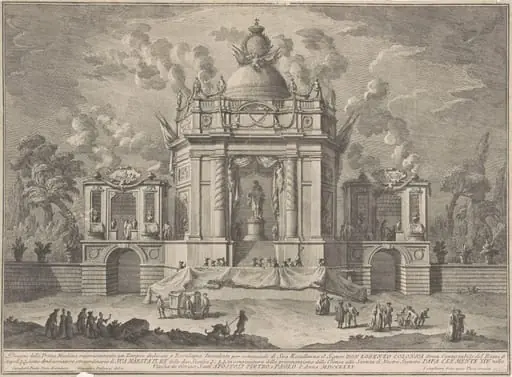 The Prima Macchina for the Chinea of 1771: The Temple of Asclepius
 The Prima Macchina for the Chinea of 1764: A Capitol Building
 The Prima Macchina for the Chinea of 1773: The Temple of Peace
 The Seconda Macchina for the Chinea of 1765: A Decorated Building with Cockaigne Poles
 The Prima Macchina for the Chinea of 1778: A Countryside Belevedere with Hercules and Antaeus
 The Seconda Macchina for the Chinea of 1785: A Pleasure Palace with an Air Balloon
 The Seconda Macchina for the Chinea of 1775: A Bull-fight