Artwork
The Prima Macchina for the Chinea of 1782: The Temple of Janus Built by Numa Pompilius
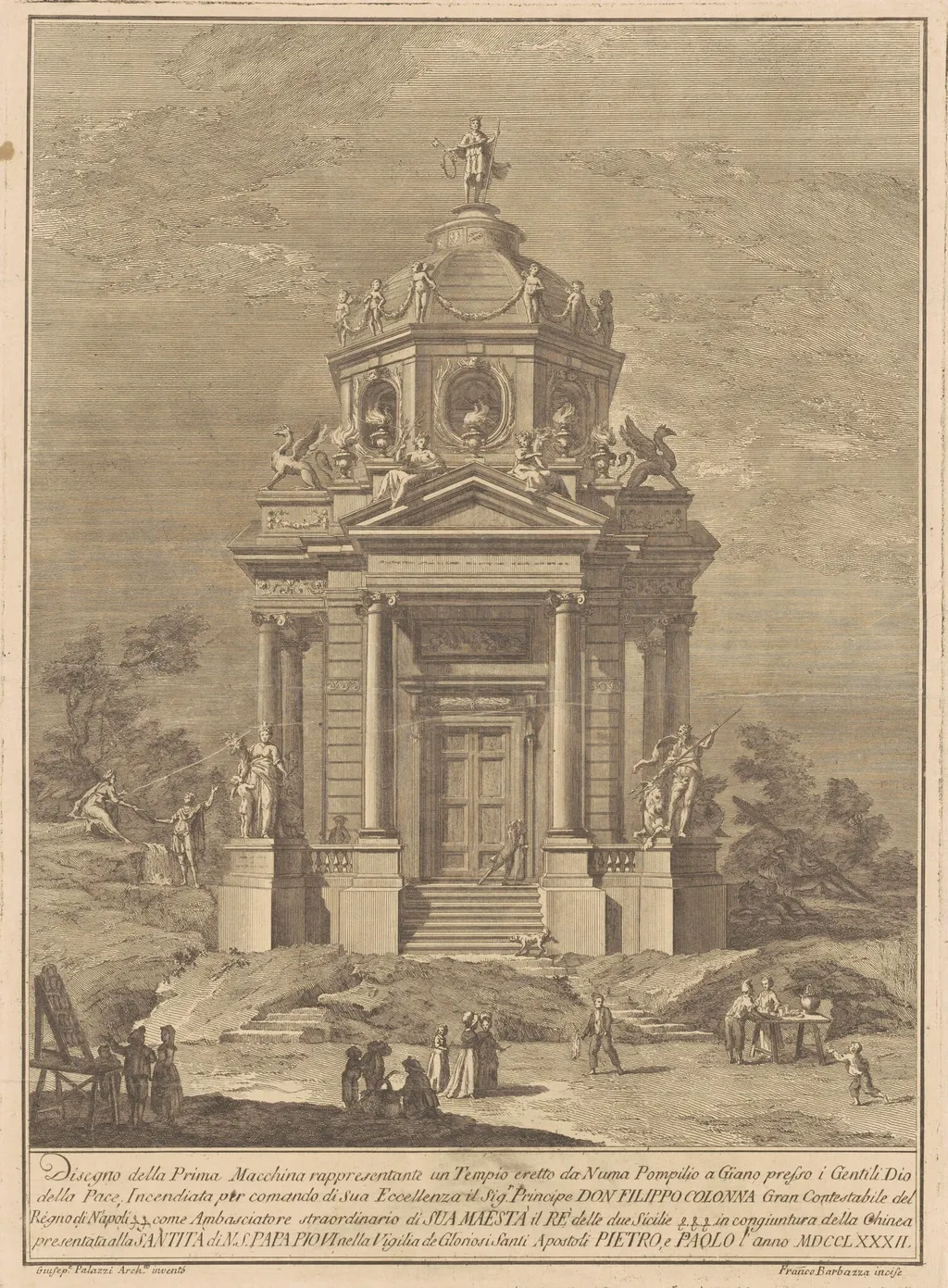
The Prima Macchina for the Chinea of 1782: The Temple of Janus Built by Numa Pompilius is an ink print by the Romanticist artist Francesco Barbazza. It dates from 1782 and is held in the collection of the National Gallery of Art.
About this work
Overview
The Prima Macchina for the Chinea of 1782: The Temple of Janus Built by Numa Pompilius is an etching created by Francesco Barbazza in 1782.
Subject & Meaning
The print depicts a grand, fictional temple with statues and figures in antique attire, suggesting a historical or mythological theme. The closed temple door and elaborate setting imply a ceremonial or theatrical context.
Technique & Style
The etching showcases fine detail and a range of textures, achieved through the artist's skilled carving of the metal plate. The result is a highly rendered image with a drawing-like quality.
Context
The print was created for the Chinea, an annual festival held in Rome, suggesting a connection to a specific cultural or commemorative event.
Artist & collection


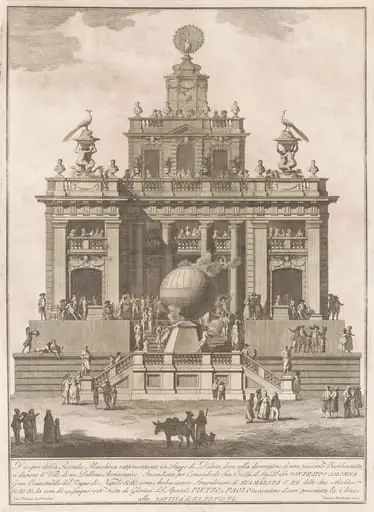 The Seconda Macchina for the Chinea of 1785: A Pleasure Palace with an Air Balloon
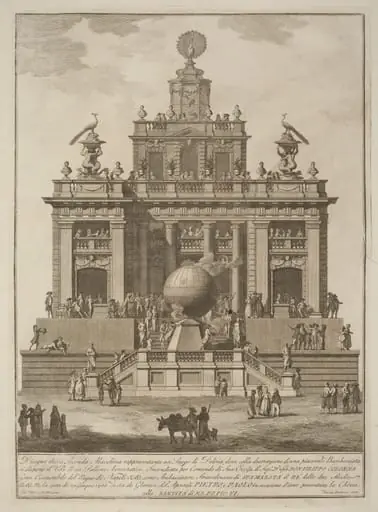 The Seconda Macchina for the Chinea of 1785: A Pleasure Palace with an Air Balloon
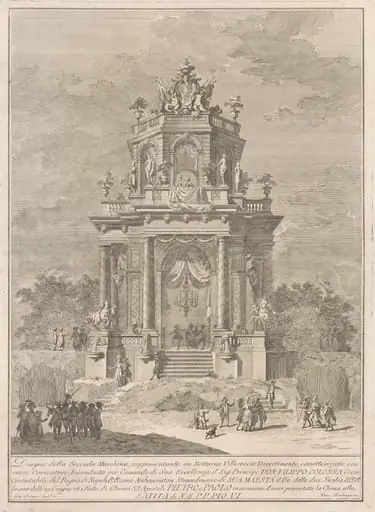 The Seconda Macchina for the Chinea of 1782: A Countryside Festival at Night
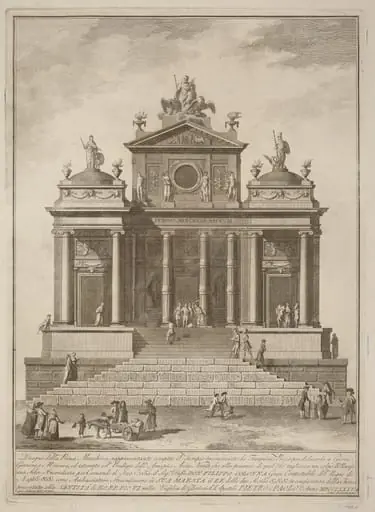 The Prima Macchina for the Chinea of 1785: The Temple of Jupiter Begun by Tarquinius Priscus with the Marvel of Accius Naevius
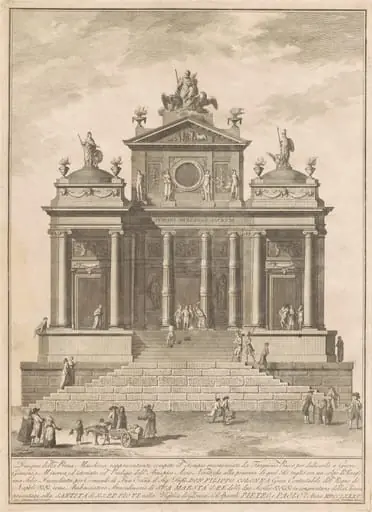 The Prima Macchina for the Chinea of 1785: The Temple of Jupiter Begun by Tarquinius Priscus with the Marvel of Accius Naevius
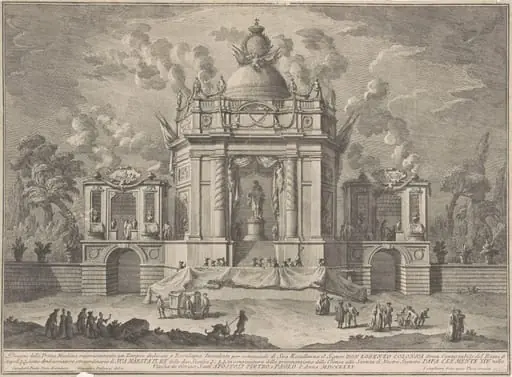 The Prima Macchina for the Chinea of 1771: The Temple of Asclepius
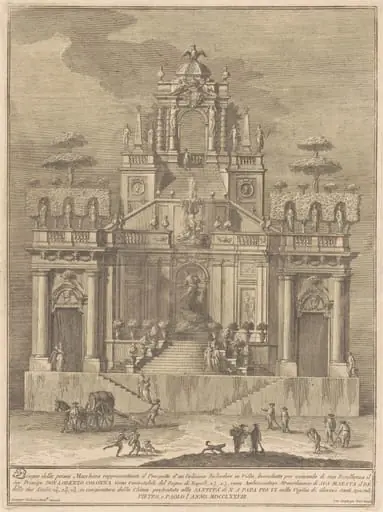 The Prima Macchina for the Chinea of 1778: A Countryside Belevedere with Hercules and Antaeus
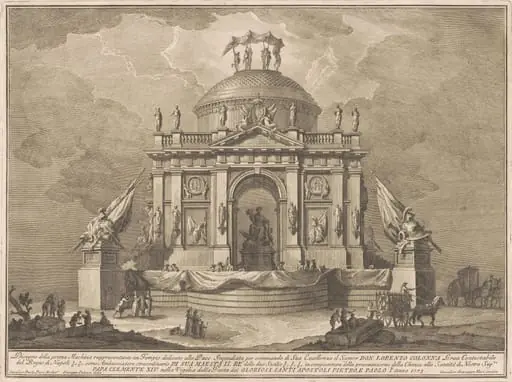 The Prima Macchina for the Chinea of 1773: The Temple of Peace
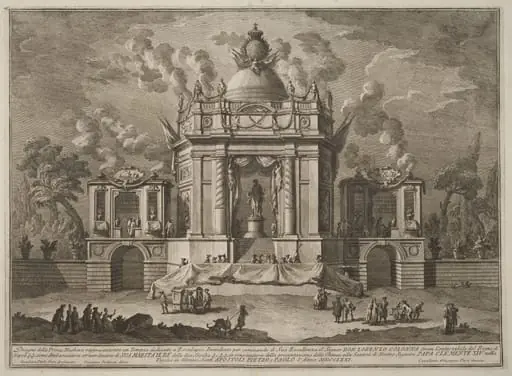 The Prima Macchina for the Chinea of 1771: The Temple of Asclepius
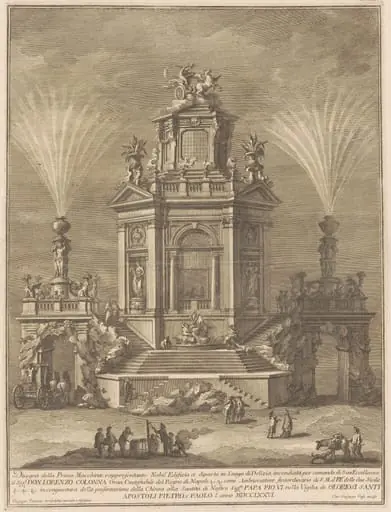 The Prima Macchina for the Chinea of 1776: A Pleasure Palace
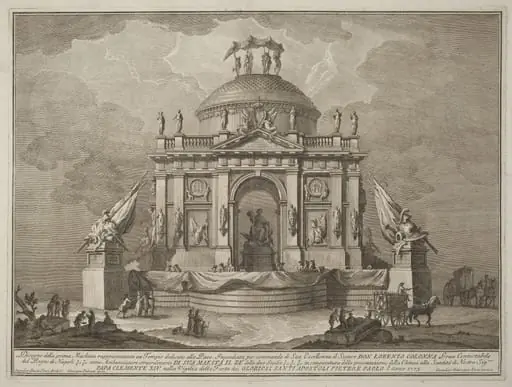 The Prima Macchina for the Chinea of 1773: The Temple of Peace
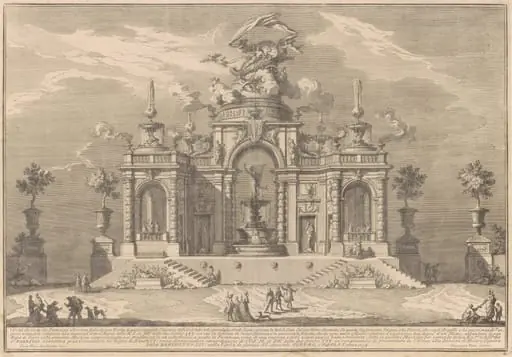 The Prima Macchina for the Chinea of 1754: The Palace of Venus in Cyprus
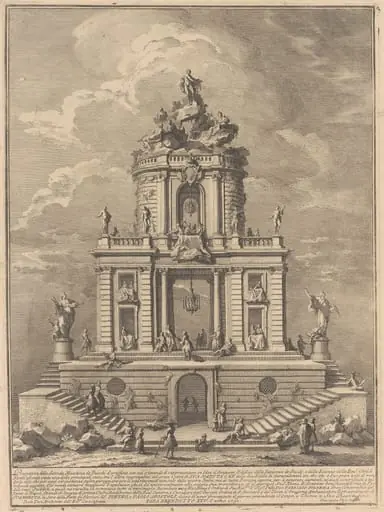 The Seconda Macchina for the Chinea of 1751: The Palace of Wisdom, Studies, and the Sciences
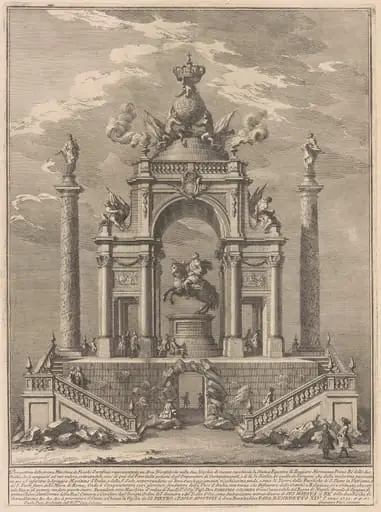 The Prima Macchina for the Chinea of 1751: Triumphal Arch for Roger I of Sicily
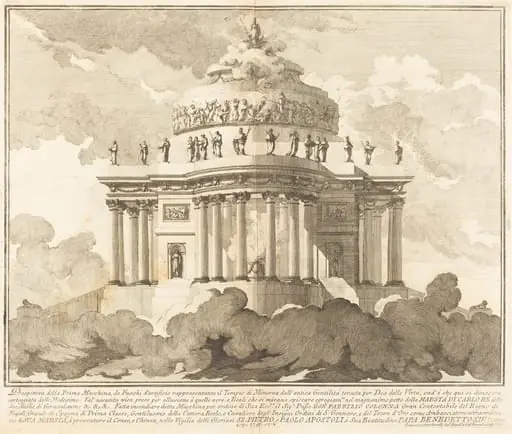 The Prima Macchina for the Chinea of 1746: The Temple of Minerva