Artwork
The Seconda Macchina for the Chinea of 1782: A Countryside Festival at Night
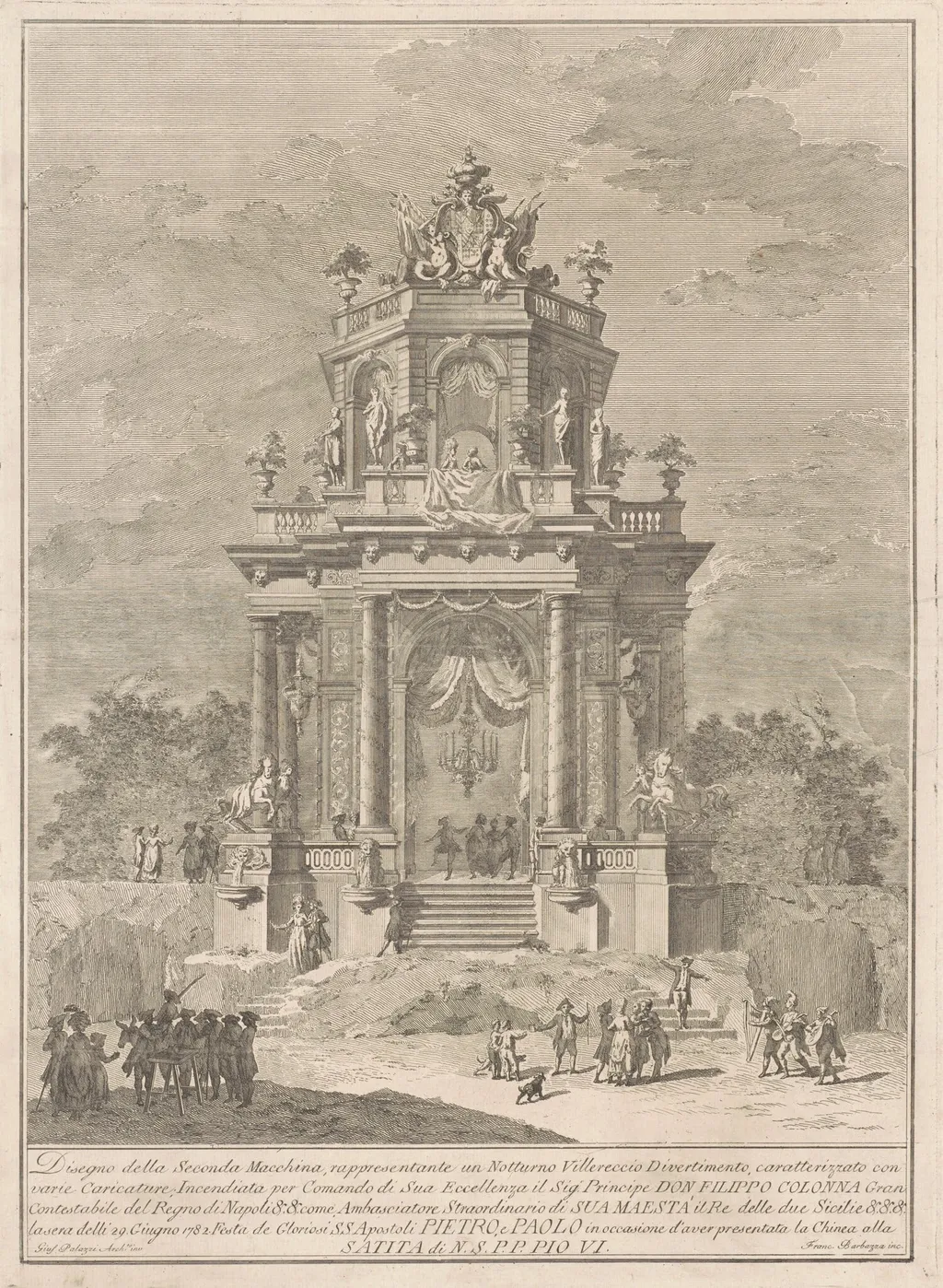
The Seconda Macchina for the Chinea of 1782: A Countryside Festival at Night is an ink print by the Romanticist artist Francesco Barbazza. It dates from 1782 and is held in the collection of the National Gallery of Art.
About this work
The stage was meant to look like a shrine, but it’s also packed with little jokes and funny details.
This picture shows a big, fancy stage set up in the middle of a park at night. It looks like a small temple with columns and statues on top. People in old-time clothes stand around it, some watching, some carrying torches. The stage has a painting of a religious scene inside its open doors.
The text at the bottom says this was built for a special nighttime party in 1782. The stage was meant to look like a shrine, but it’s also packed with little jokes and funny details.
Want to know more? Look up etching to see how artists like this made detailed prints.
Overview
Francesco Barbazza’s 1782 etching, titled *The Seconda Macchina for the Chinea of 1782: A Countryside Festival at Night*, records a temporary architectural spectacle erected for a nocturnal celebration. The print captures a large, elaborately decorated stage set amid a park, illuminated against the darkness and populated by figures in period costume.
Subject & Meaning
The central structure resembles a miniature temple, complete with columns and a crowning group of statues, its open doors revealing a painted religious tableau. Around the edifice, onlookers and torch‑bearers mingle, suggesting a blend of reverence and festivity. Subtle comedic touches are embedded in the design, indicating that the shrine‑like stage also served a playful, theatrical purpose.
Technique & Style
Executed in etching, Barbazza employs fine line work to render architectural details, the glow of torches, and the intricate costumes of the participants. The contrast between dark night sky and illuminated elements showcases the medium’s capacity for nuanced tonal variation, while the composition balances architectural grandeur with lively human activity.
History & Provenance
The print documents a specific event—the Chinea celebration of 1782, a ceremonial procession linked to the Papal States. The stage, described in the inscription at the bottom of the image, was constructed expressly for this nighttime festivity, reflecting contemporary practices of temporary set‑building for public spectacles.
Context
During the late eighteenth century, elaborate temporary architectures were common in papal and aristocratic celebrations, merging religious symbolism with civic pageantry. Barbazza’s depiction offers insight into how such events were staged in the Roman countryside, where the interplay of light, architecture, and crowd created a distinct visual experience.
Legacy
While the original festival structure no longer exists, Barbazza’s etching preserves its visual and cultural details, serving as a primary source for scholars studying eighteenth‑century public celebrations, temporary architecture, and the use of print media to disseminate images of ceremonial events.
Artist & collection


 The Seconda Macchina for the Chinea of 1785: A Pleasure Palace with an Air Balloon
 The Seconda Macchina for the Chinea of 1785: A Pleasure Palace with an Air Balloon
 The Prima Macchina for the Chinea of 1785: The Temple of Jupiter Begun by Tarquinius Priscus with the Marvel of Accius Naevius
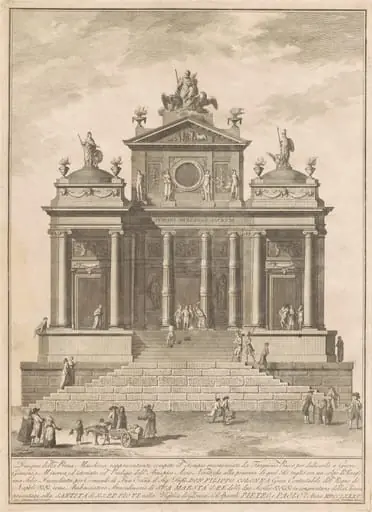 The Prima Macchina for the Chinea of 1785: The Temple of Jupiter Begun by Tarquinius Priscus with the Marvel of Accius Naevius
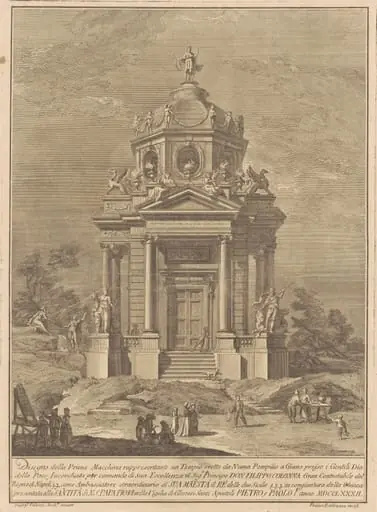 The Prima Macchina for the Chinea of 1782: The Temple of Janus Built by Numa Pompilius
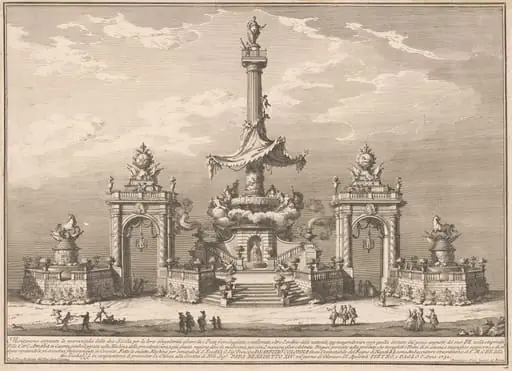 The Seconda Macchina for the Chinea of 1752: The Banquet of the Gods in Villa Carl'Amalia in Caserta
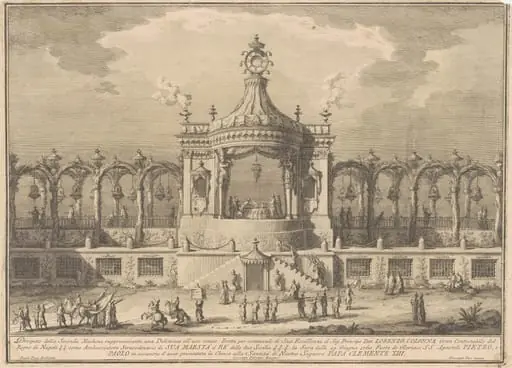 The Seconda Macchina for the Chinea of 1760: A Chinoiserie Pavilion
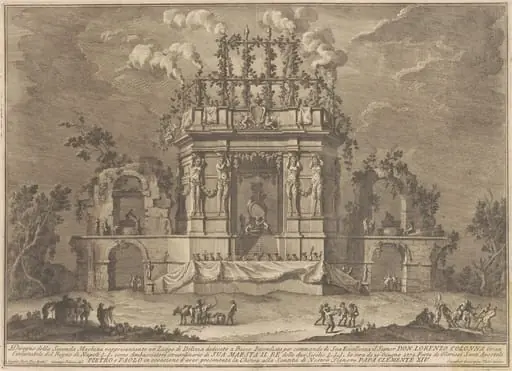 The Seconda Macchina for the Chinea of 1771: A Pleasure Palace Dedicated to Bacchus
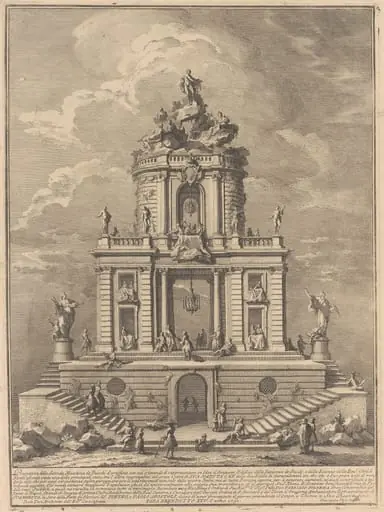 The Seconda Macchina for the Chinea of 1751: The Palace of Wisdom, Studies, and the Sciences
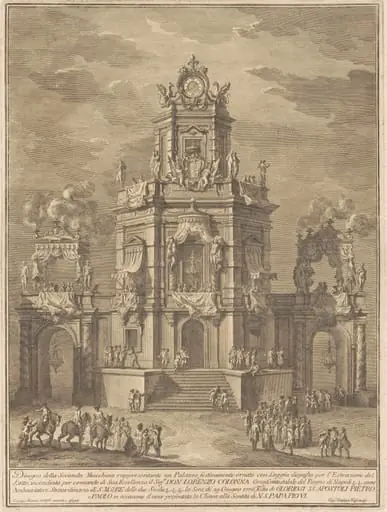 The Seconda Macchina for the Chinea of 1776: A Palace with a Loggia for the Lottery Draw
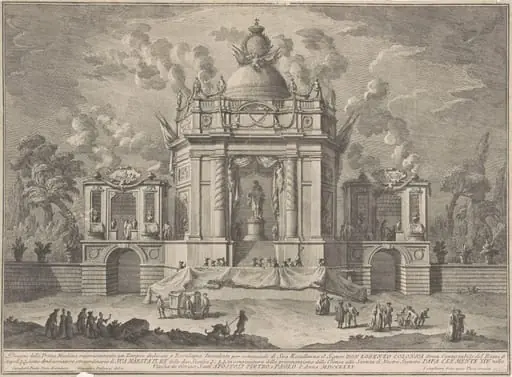 The Prima Macchina for the Chinea of 1771: The Temple of Asclepius
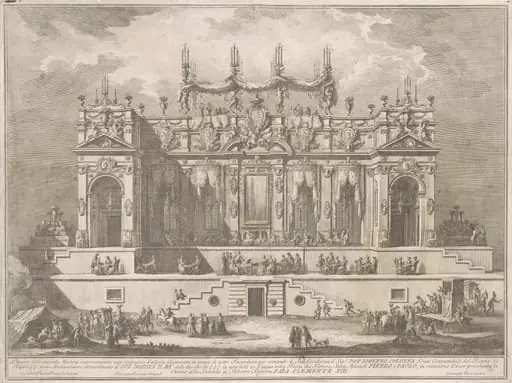 The Seconda Macchina for the Chinea of 1764: A Magnificent Gallery Illuminated at Night
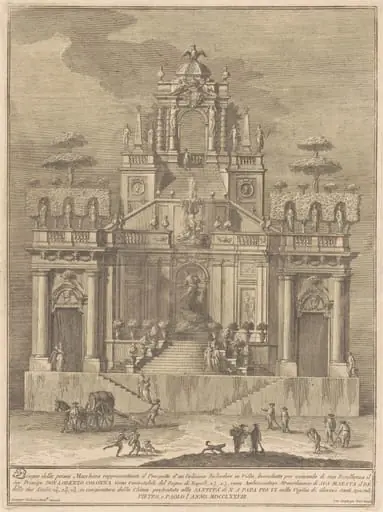 The Prima Macchina for the Chinea of 1778: A Countryside Belevedere with Hercules and Antaeus
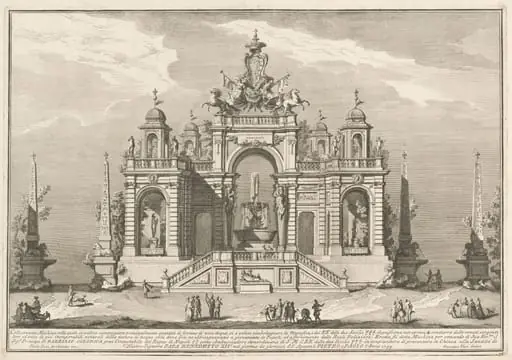 The Seconda Macchina for the Chinea of 1754: An Allegory of Waterworks
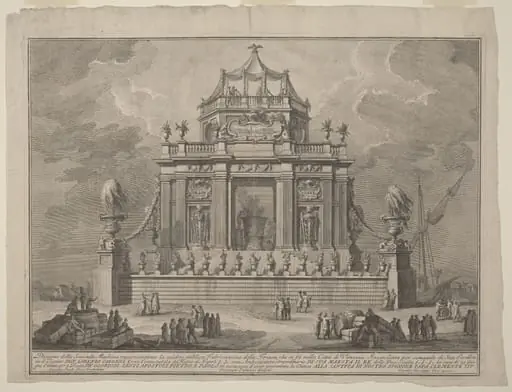 The Seconda Macchina for the Chinea of 1773: The Preparation of Theriac in Venice
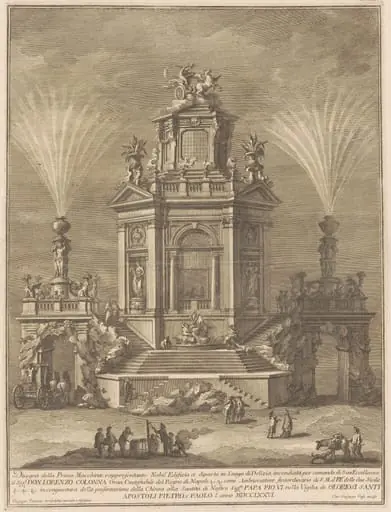 The Prima Macchina for the Chinea of 1776: A Pleasure Palace
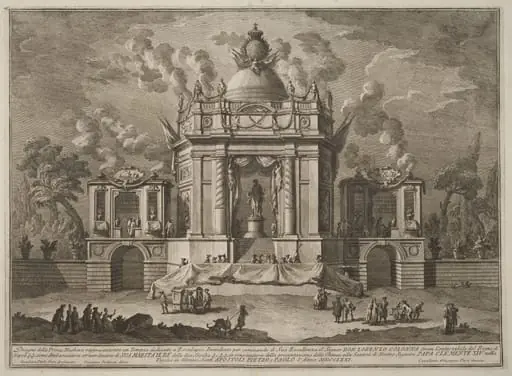 The Prima Macchina for the Chinea of 1771: The Temple of Asclepius