Artwork
The Seconda Macchina for the Chinea of 1785: A Pleasure Palace with an Air Balloon
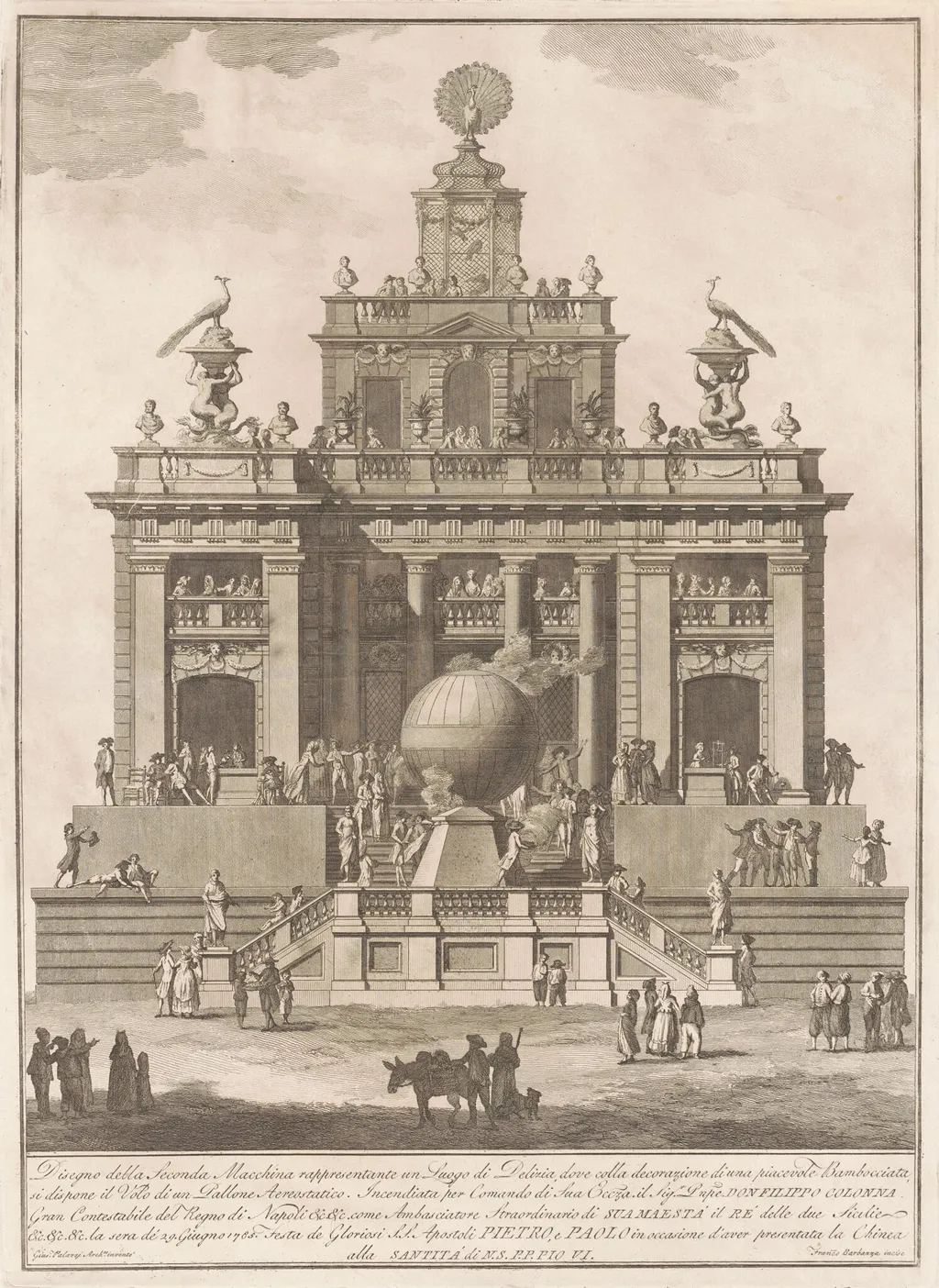
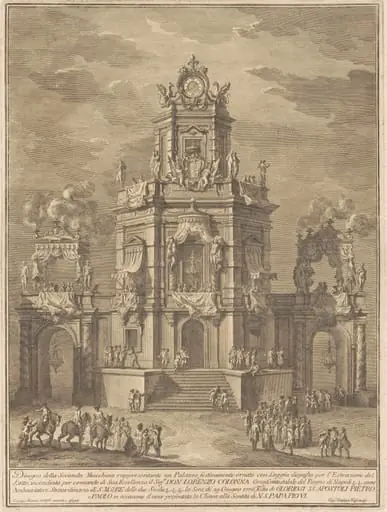
The Seconda Macchina for the Chinea of 1785: A Pleasure Palace with an Air Balloon is an ink print by the Romanticist artist Francesco Barbazza. It dates from 1785 and is held in the collection of the National Gallery of Art.
About this work
It has three levels, with people dressed in old-fashioned clothes walking around, climbing stairs, and watching a big balloon in the center.
This drawing shows a fancy, stage-like structure shaped like a palace. It has three levels, with people dressed in old-fashioned clothes walking around, climbing stairs, and watching a big balloon in the center. The top level has statues, columns, and a giant seashell decoration on top. The whole scene looks like a mix of theater and architecture, with tiny figures moving about.
The balloon in the middle isn’t just decoration—it’s the main event. The text below says this was built for a special celebration in 1785, where people gathered to see it float.
Want to know more? Look up etching to see how artists like this made detailed prints.
Overview
The Seconda Macchina for the Chinea of 1785: A Pleasure Palace with an Air Balloon is an etching on laid paper created by Francesco Barbazza in 1785.
Subject & Meaning
The etching depicts a three-tiered, stage-like structure resembling a palace, with figures in period attire interacting with a central air balloon. The scene blends theatrical and architectural elements, with the balloon as the focal point.
Technique & Style
The work is an example of etching, a printmaking technique that allows for detailed designs. The use of laid paper is also characteristic of the medium.
History & Provenance
The structure was built for a special celebration in 1785, where it was intended to float with its central balloon, indicating the print's connection to a specific historical event.
Artist & collection


 The Seconda Macchina for the Chinea of 1785: A Pleasure Palace with an Air Balloon
 The Seconda Macchina for the Chinea of 1782: A Countryside Festival at Night
 The Prima Macchina for the Chinea of 1785: The Temple of Jupiter Begun by Tarquinius Priscus with the Marvel of Accius Naevius
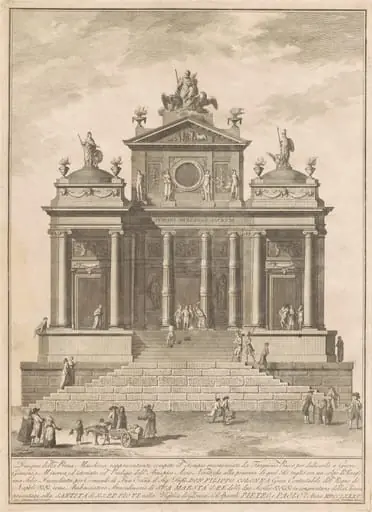 The Prima Macchina for the Chinea of 1785: The Temple of Jupiter Begun by Tarquinius Priscus with the Marvel of Accius Naevius
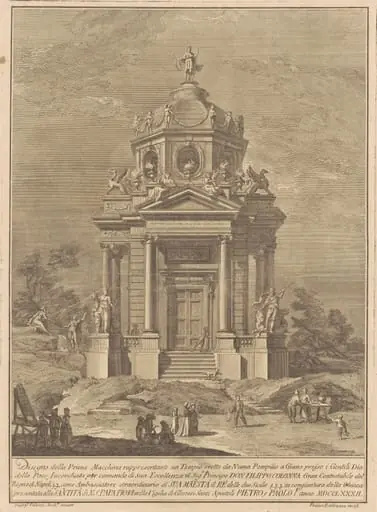 The Prima Macchina for the Chinea of 1782: The Temple of Janus Built by Numa Pompilius
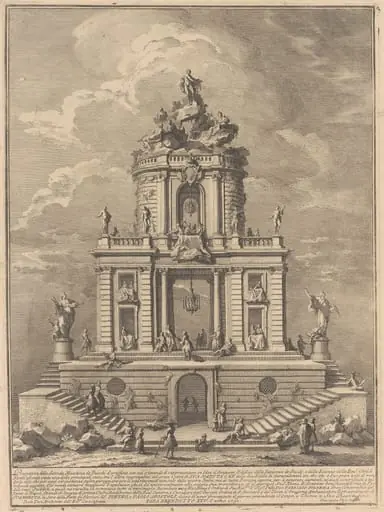 The Seconda Macchina for the Chinea of 1751: The Palace of Wisdom, Studies, and the Sciences
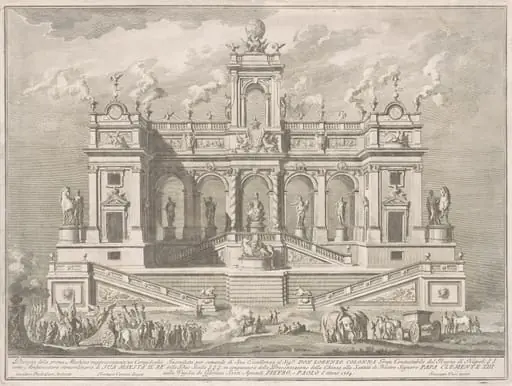 The Prima Macchina for the Chinea of 1764: A Capitol Building
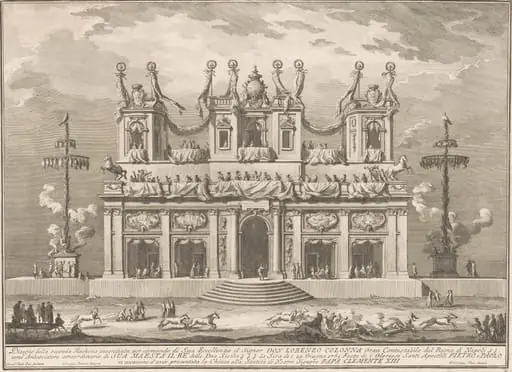 The Seconda Macchina for the Chinea of 1765: A Decorated Building with Cockaigne Poles
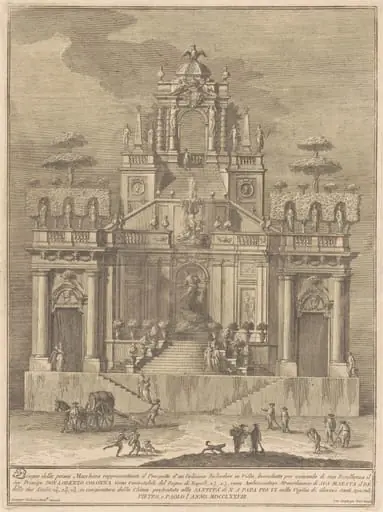 The Prima Macchina for the Chinea of 1778: A Countryside Belevedere with Hercules and Antaeus
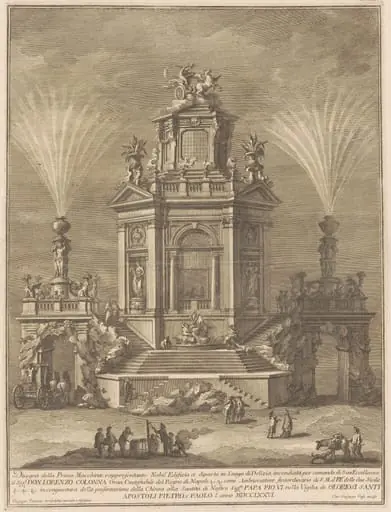 The Prima Macchina for the Chinea of 1776: A Pleasure Palace
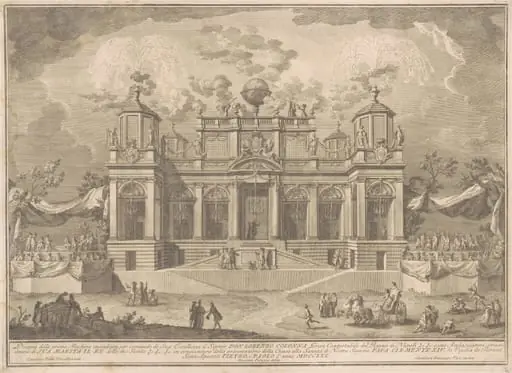 The Prima Macchina for the Chinea of 1770: An Roman Building for Commerce
 The Prima Macchina for the Chinea of 1771: The Temple of Asclepius
 The Seconda Macchina for the Chinea of 1760: A Chinoiserie Pavilion
 The Seconda Macchina for the Chinea of 1764: A Magnificent Gallery Illuminated at Night
 The Seconda Macchina for the Chinea of 1775: A Bull-fight
 The Seconda Macchina for the Chinea of 1776: A Palace with a Loggia for the Lottery Draw