Artwork
Diana and Actaeon
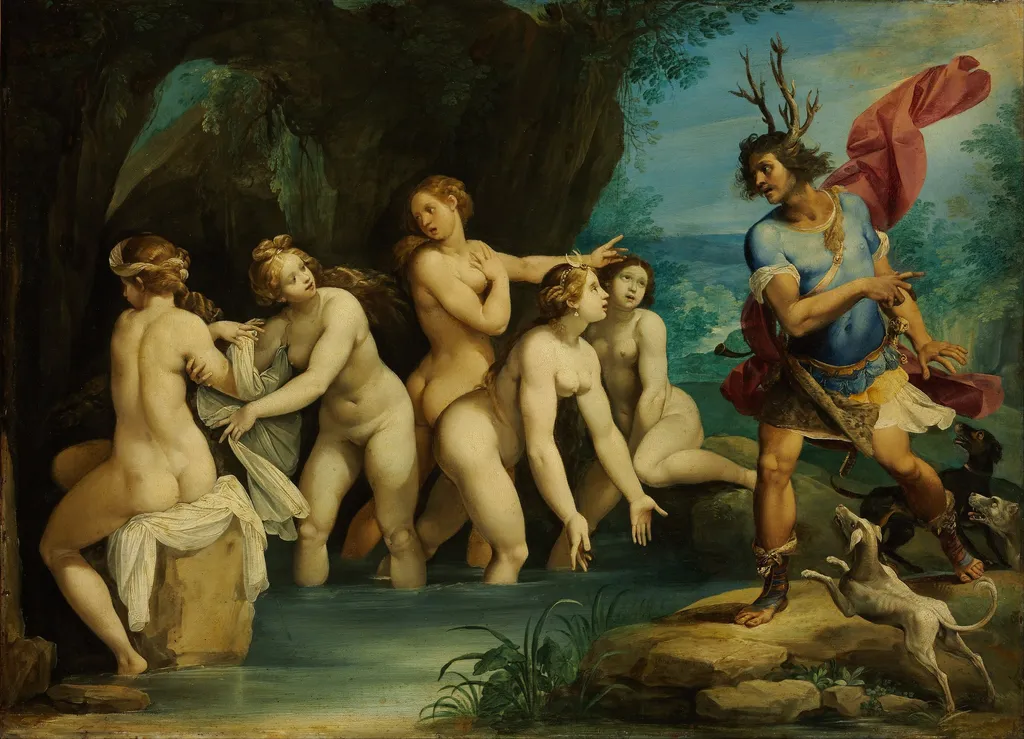
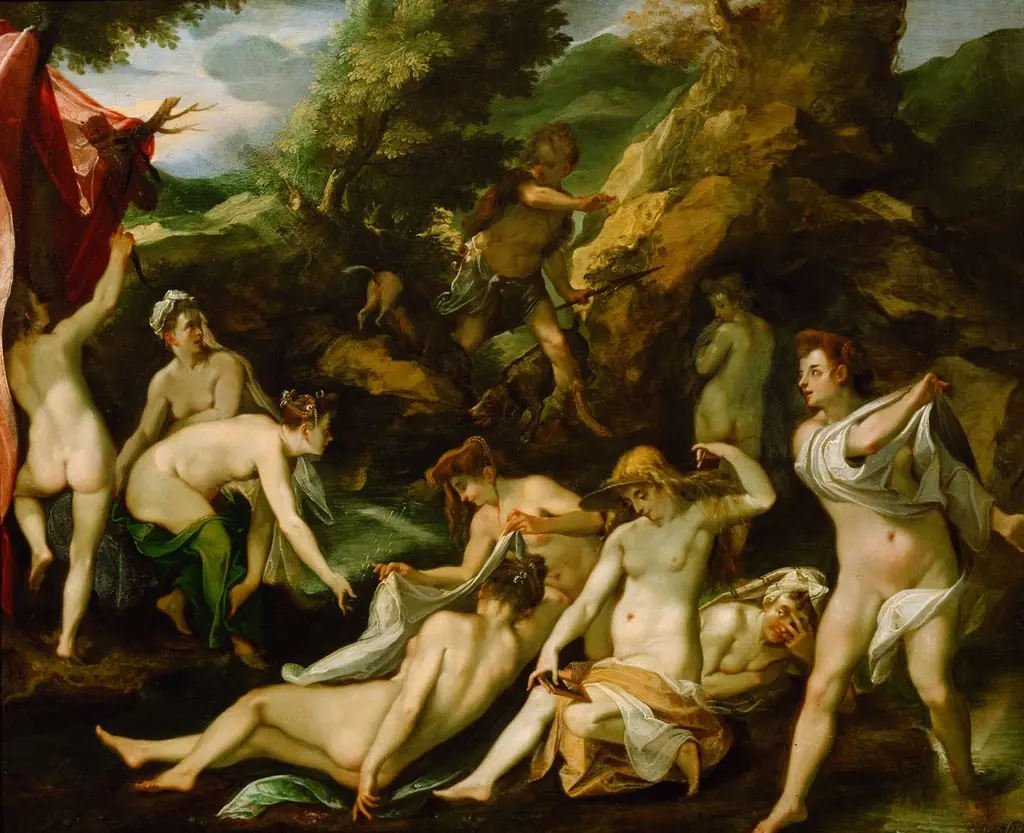
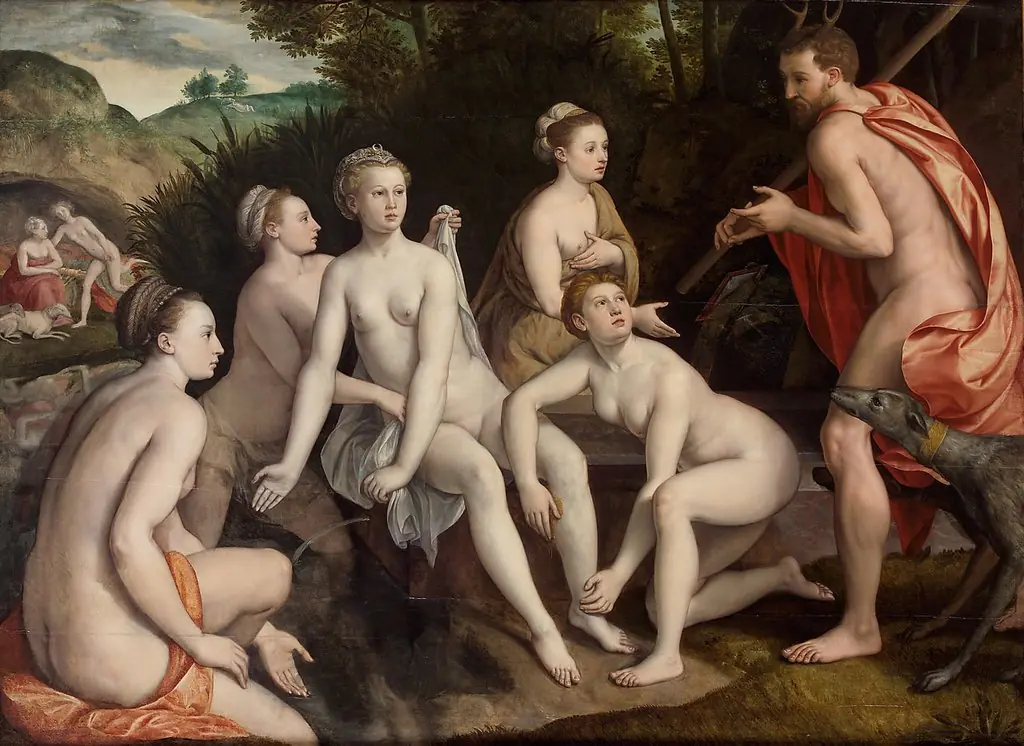
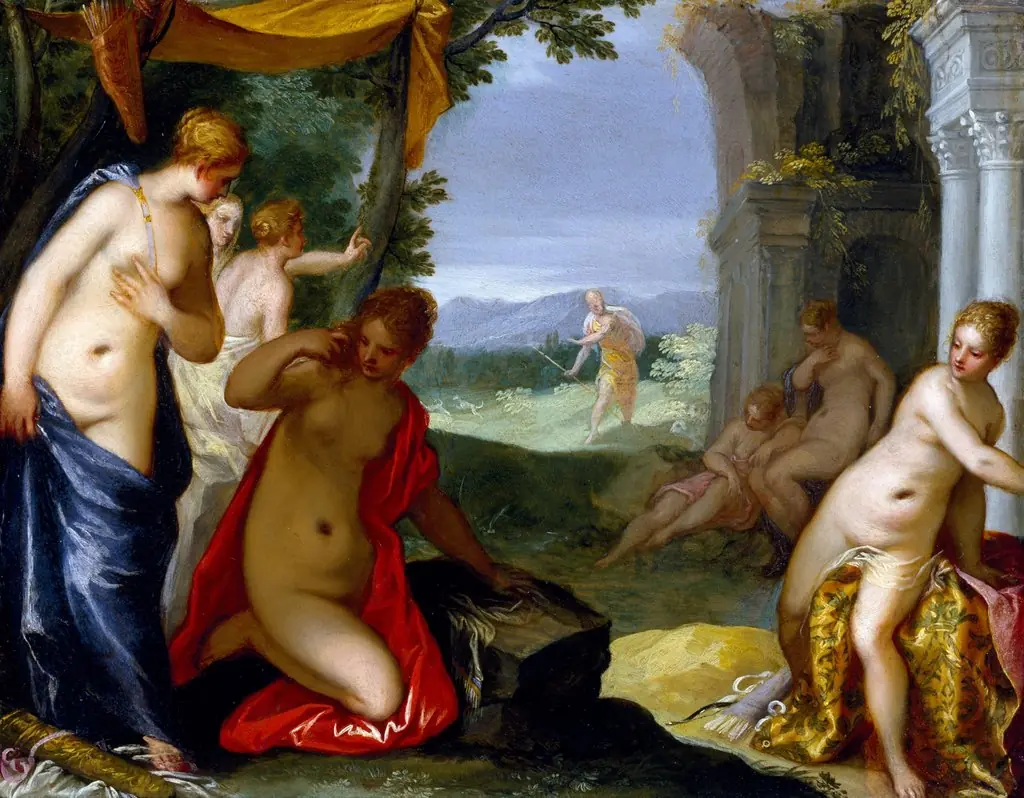
Diana and Actaeon is an oil painting by the Early Baroque Italian artist Giuseppe Cesari. It dates from 1602 and is held in the collection of the Museum of Fine Arts, Budapest.
About this work
Overview
Giuseppe Cesari, known as Il Giuseppino and later as Cavaliere d'Arpino, executed the copper painting *Diana and Actaeon* in 1602. The work belongs to the early Baroque period in Italy and is currently part of the collection of the Museum of Fine Arts in Budapest.
Subject & Meaning
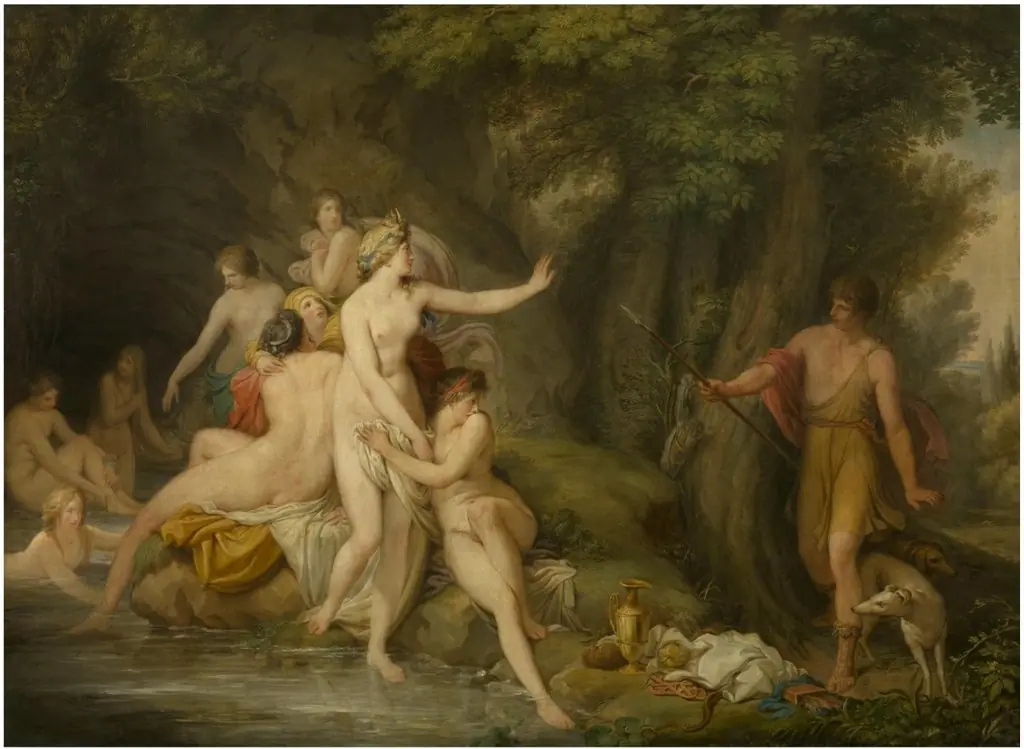
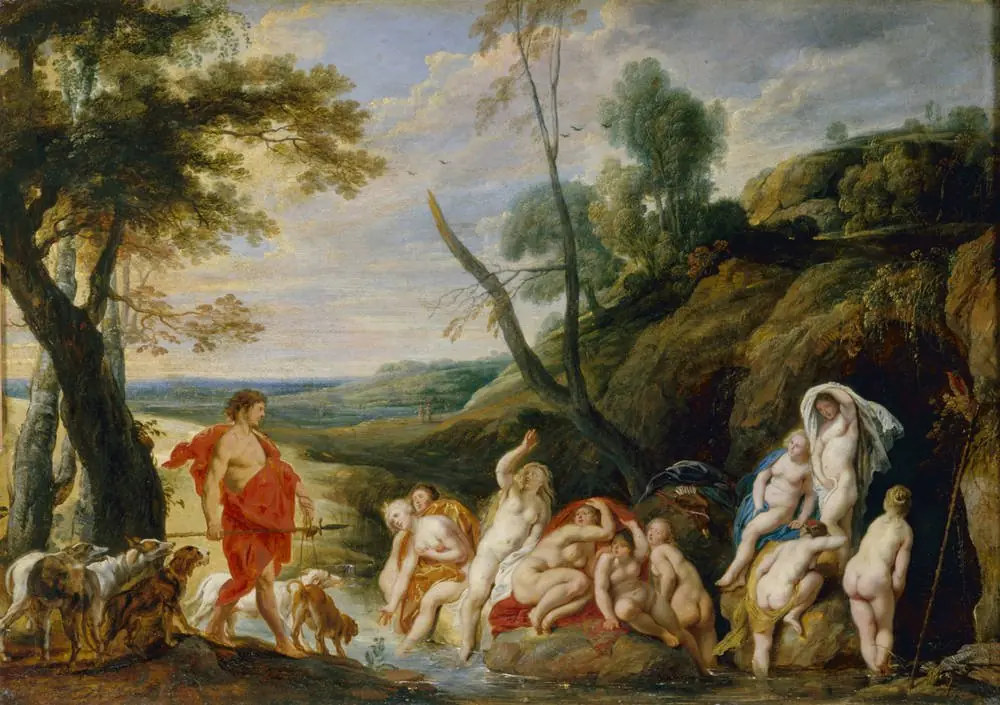
The composition illustrates the moment from Ovid’s Metamorphoses when the hunter Actaeon inadvertently encounters the goddess Diana while she is bathing. The scene captures the tension between the divine, represented by the partially clothed nymphs, and the mortal intruder, shown fleeing with his hounds.
Technique & Style
Rendered on a copper support, the painting combines warm, earthy tones for the figures and landscape with cooler accents, such as the blue tunic of Actaeon. Cesari’s handling of light and color creates a sense of movement, while the delicate drapery and the contrast between nude and clothed bodies reflect Mannerist elegance transitioning toward Baroque dynamism.
History & Provenance
Cesari, a favored artist of Pope Sixtus V and knighted by Pope Clement VIII, headed a prominent Roman workshop that later trained Caravaggio. *Diana and Actaeon* entered the Museum of Fine Arts, Budapest, where it remains on display as part of the museum’s European painting collection.
Own this work as a print
Artist & collection
Artist
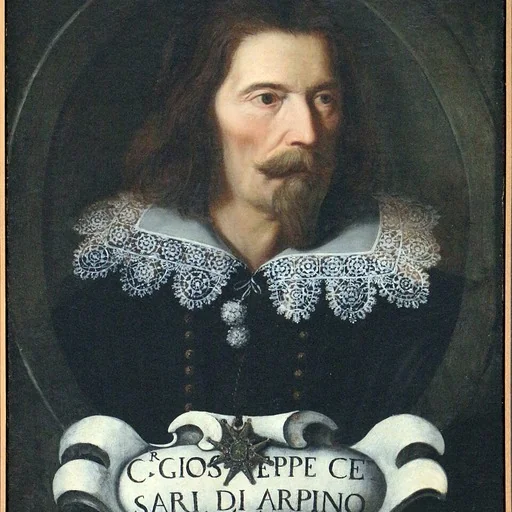
Giuseppe Cesari (14 February 1568 – 3 July 1640) was an Italian Mannerist painter, also named Il Giuseppino and called Cavaliere d'Arpino, because he was created Knight of the Supreme Order of Christ by his patron Pope Clement VIII.