Artwork
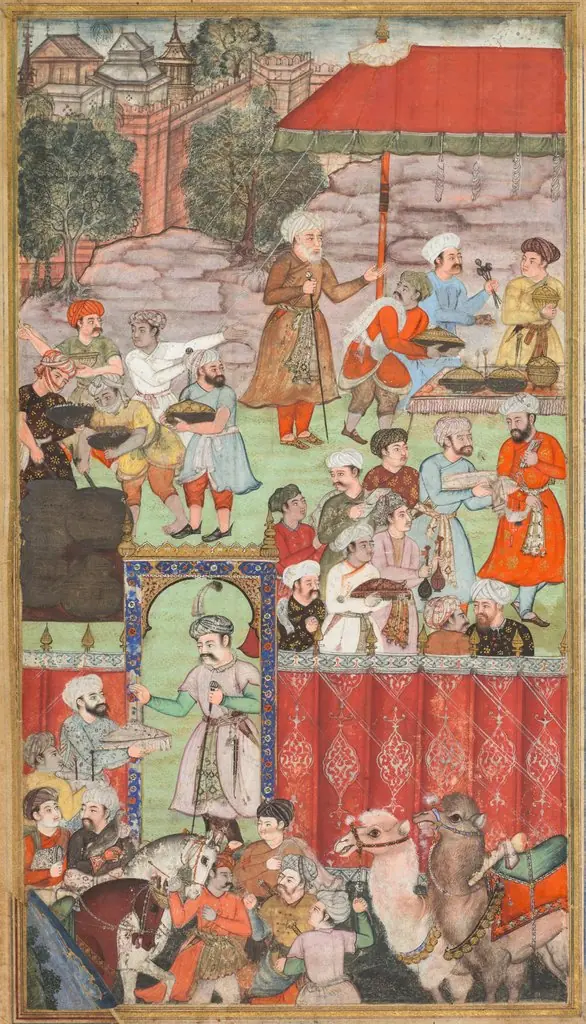
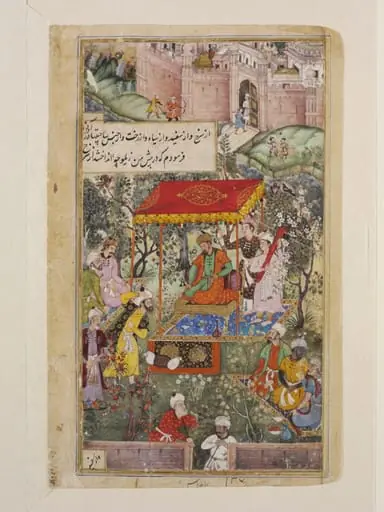
A feast for Babur hosted by his half-brother Jahangir Mirza in Ghazni in May 1505, from a Babur-nama (Memoirs of Babur)
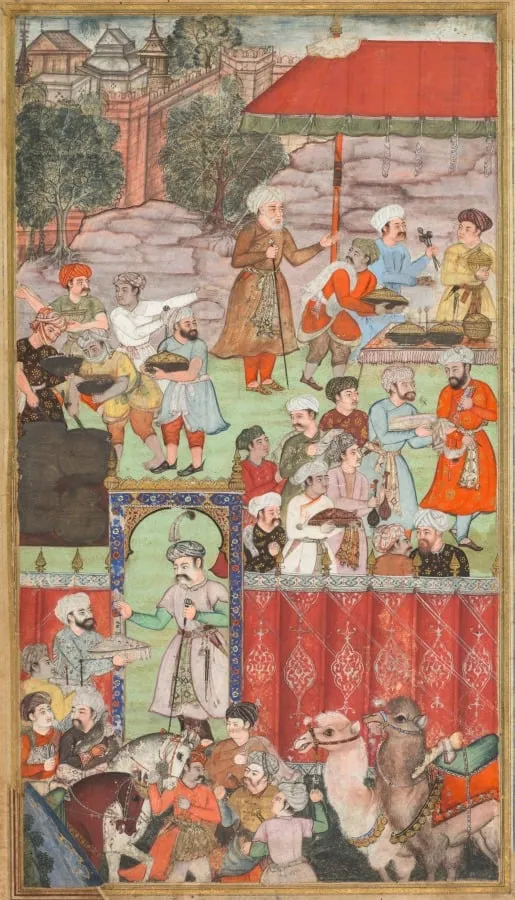
A feast for Babur hosted by his half-brother Jahangir Mirza in Ghazni in May 1505, from a Babur-nama (Memoirs of Babur) is an unspecified painting by the Mughal Painting artist Basawan. It is held in the collection of the Cleveland Museum of Art. This painting depicts a feast hosted by Jahangir Mirza, half-brother of Babur, in Ghazni, Afghanistan, in 1505.
About this work
The tiny details, like the gold-threaded fabric and the way light hits the wine cups, make it feel alive.
You see a long, low table piled with food and wine, surrounded by men in rich robes and turbans. Servants move between guests, and a bright red tent glows against a dark night sky.
This painting shows a real party from 1505, before the Mughal Empire even ruled India. The host is Babur’s half-brother, and the feast is a political move—food and gifts to build trust. The tiny details, like the gold-threaded fabric and the way light hits the wine cups, make it feel alive.
Look up more paintings of mughal feasts to see how art and power mixed.
Overview
This painting depicts a feast hosted by Jahangir Mirza, half-brother of Babur, in Ghazni, Afghanistan, in 1505. It is an illustration from the Babur-nama, Babur's memoirs.
Subject & Meaning
The scene shows a lavish feast in a tent, symbolizing the forging of alliances and relationships through gift-giving and hospitality, crucial to Babur's empire-building endeavors.
Technique & Style
The painting features intricate details, such as gold-threaded fabric and the play of light on wine cups, creating a vivid atmosphere. The artist's attention to detail brings the scene to life.
Context
The feast took place in 1505, two decades before Babur's conquest of Delhi, in a region of Afghanistan where he was consolidating his power.
Artist & collection
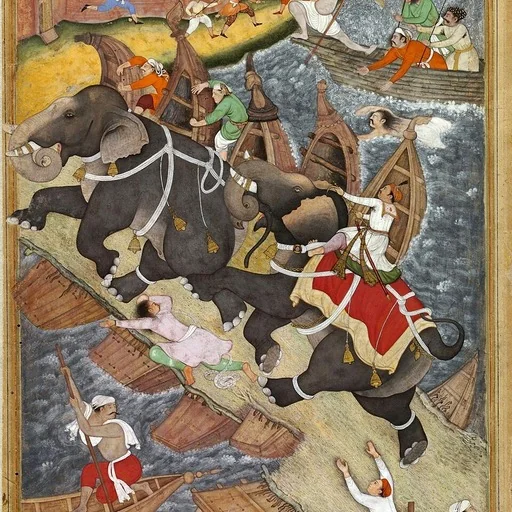
Artist
Basāwan, or Basāvan, was an Indian miniature painter in the Mughal style. He was known by his contemporaries as a skilled colorist and keen observer of human nature, and for his use of portraiture in the illustrations…

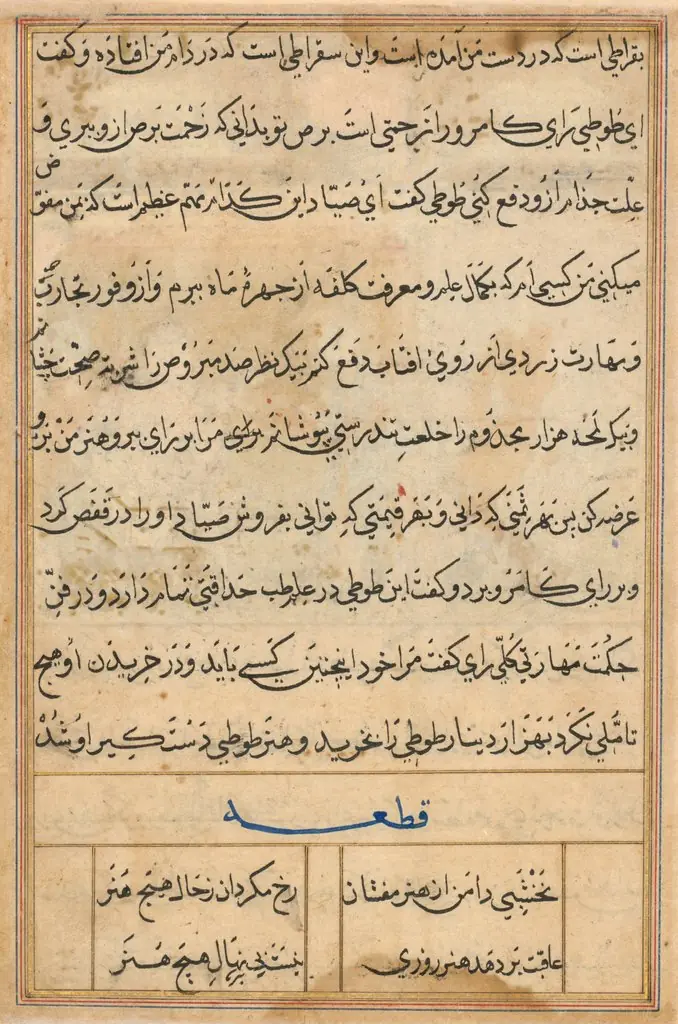 Page from Tales of a Parrot (Tuti-nama): text page
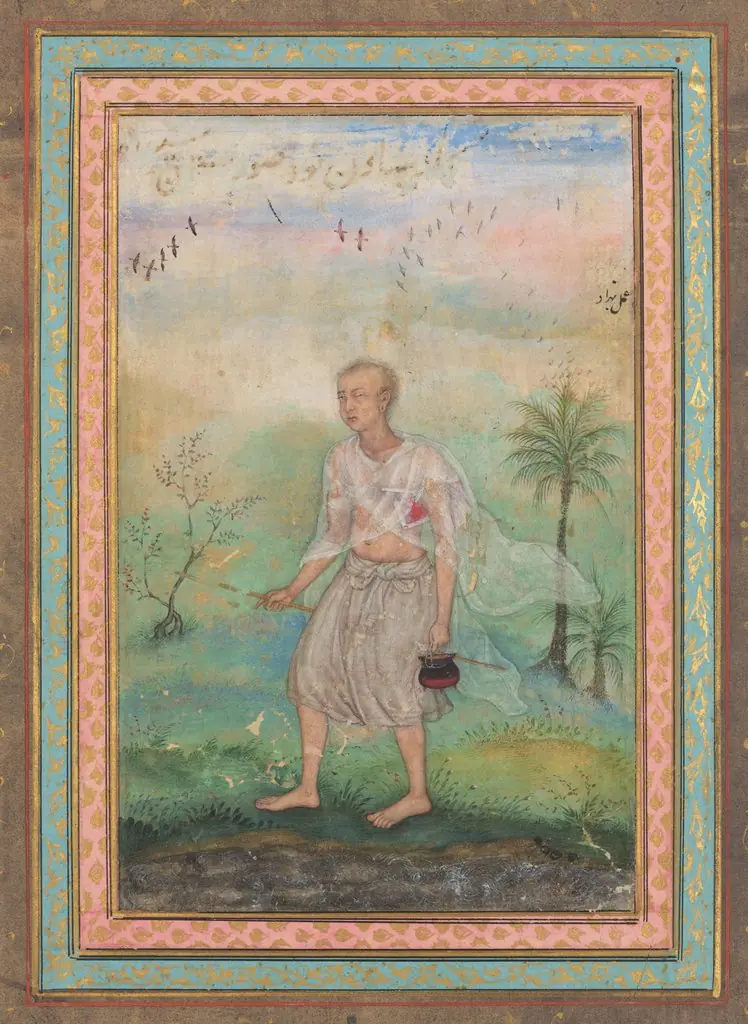 Jain Ascetic Walking Along a Riverbank
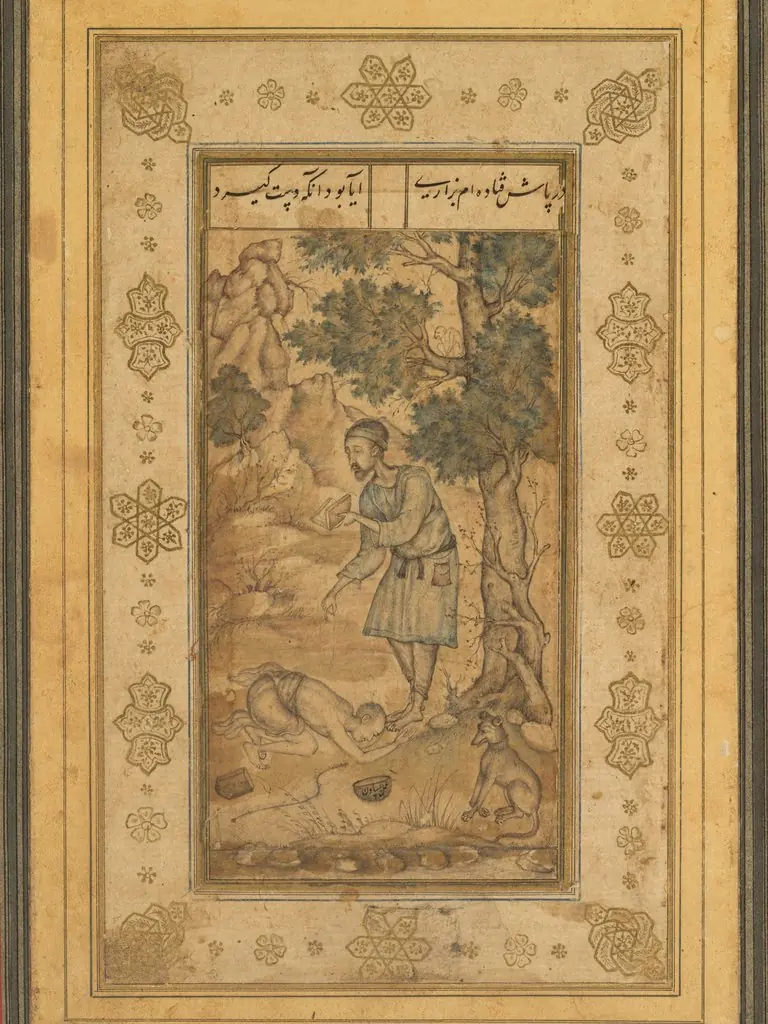 A mendicant bowing before a holy man, from the Prince Salim Album
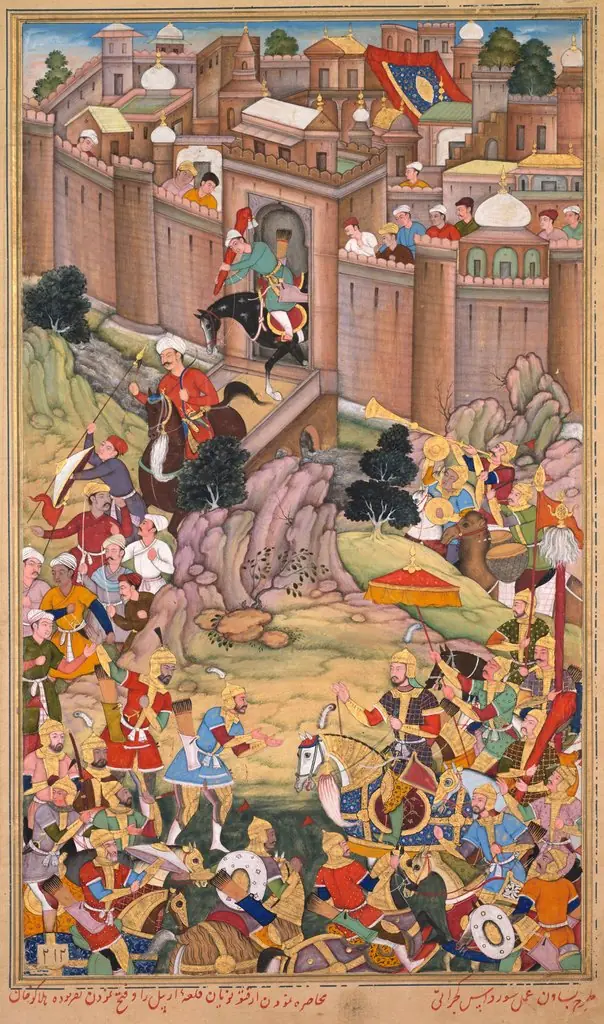 The siege of Arbela in the era of Hulagu Khan, from a Chingiz-nama (Book of Chingiz Khan) of the Jami al-tavarikh (Compendium of Chronicles) of Rashid al-Din (Persian, 1247–1318)
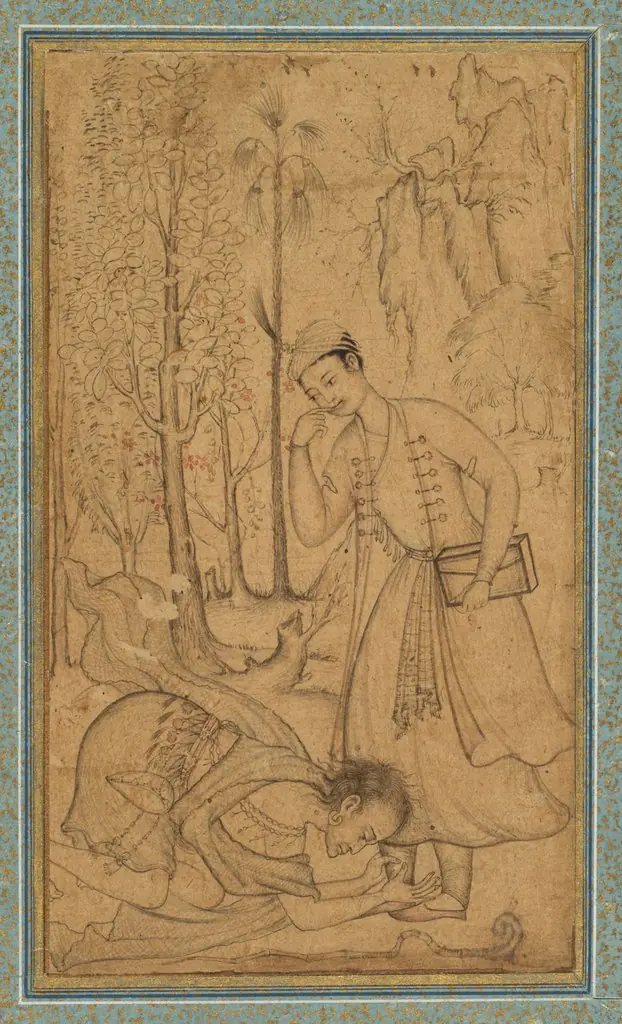 A holy man prostrating himself before a learned prince
 A feast for Babur hosted by his half-brother Jahangir Mirza in Ghazni in May 1505, from a Babur-nama (Memoirs of Babur)
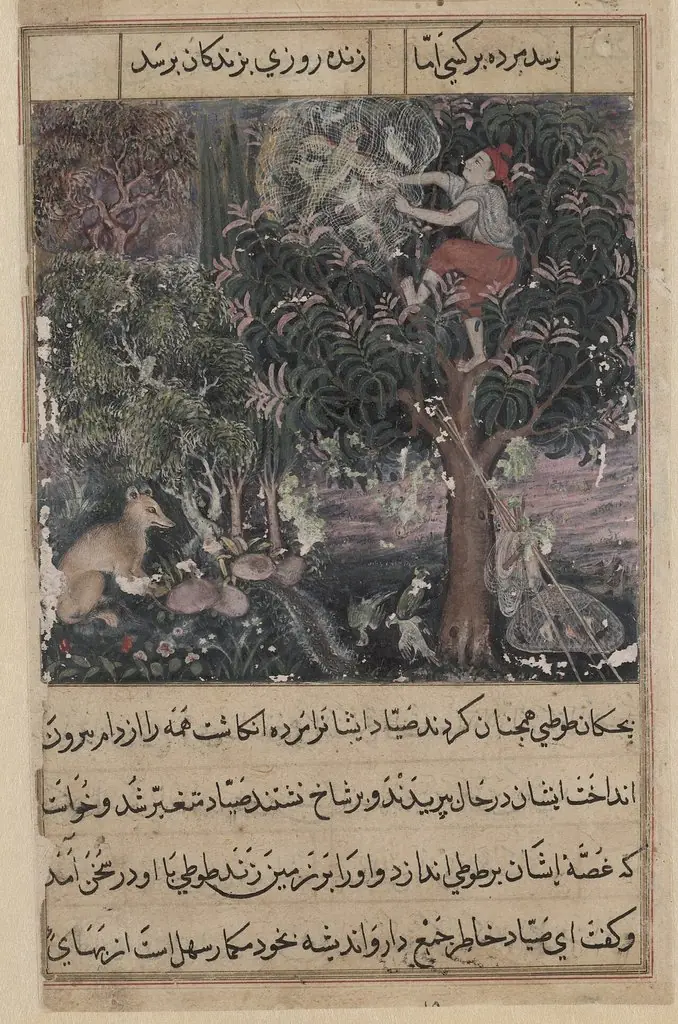 The hunter throws away the baby parrots, who pretend to be dead, and captures the mother, from a Tuti-nama (Tales of a Parrot): Fifth Night
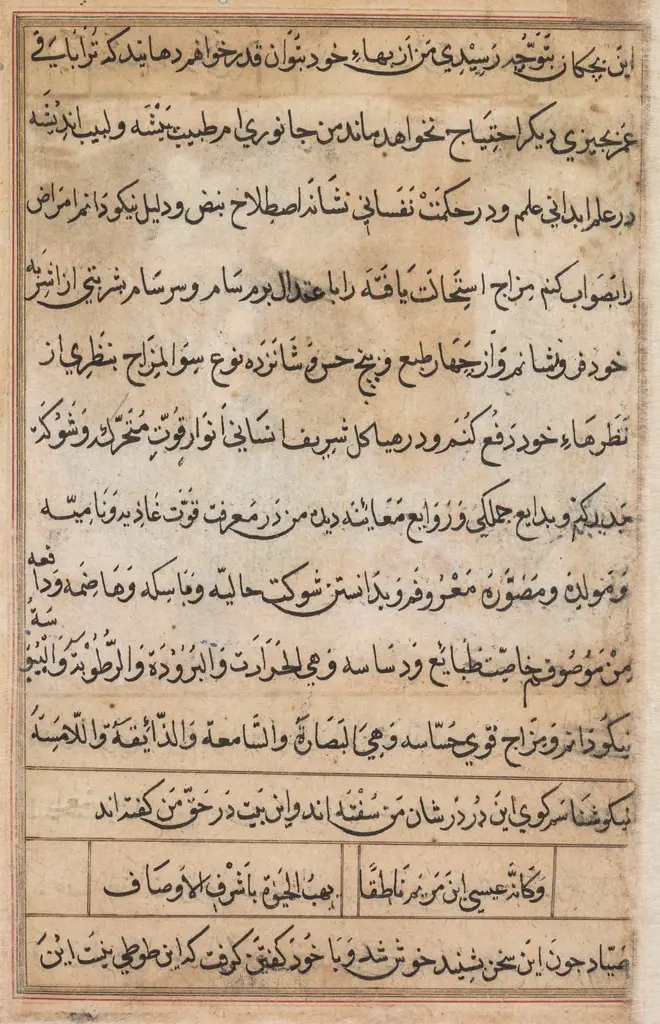 Page from Tales of a Parrot (Tuti-nama): text page
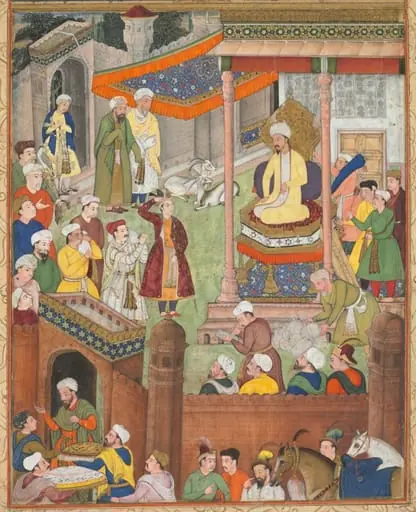 Babur receives booty and Humayun’s salute after the victory over Sultan Ibrahim in 1526, from an Akbar-nama (Book of Akbar) of Abu’l Fazl (Indian, 1551–1602)
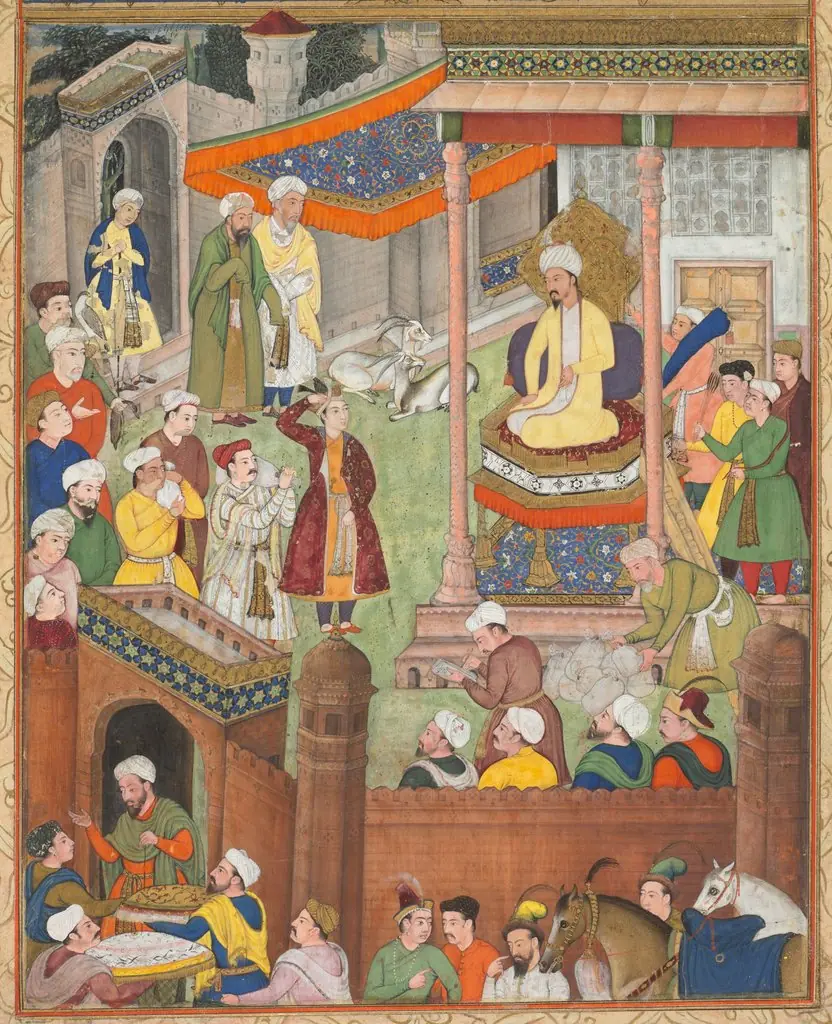 Babur receives booty and Humayun’s salute after the victory over Sultan Ibrahim in 1526, from an Akbar-nama (Book of Akbar) of Abu’l Fazl (Indian, 1551–1602)
 An Ambassador before Humayun
 Untitled