Artwork
Templum Fortunae Virilis [The Temple of Portunus]
![Templum Fortunae Virilis [The Temple of Portunus], by Nicolas Beatrizet, ink, 1550](https://artifactworldgallery.com/img/nicolas-beatrizet--templum-fortunae-virilis-the-temple-of-portunus--e7d66fe3775fa1c7-w1024.webp)
Templum Fortunae Virilis [The Temple of Portunus] is an ink print by the Renaissance artist Nicolas Beatrizet. It dates from 1550 and is held in the collection of the National Gallery of Art.
About this work
Overview
Beatrizet, a skilled engraver active in Rome, translated stone monuments into precise ink-on-paper compositions for scholarly and artistic audiences.
Created in 1550 by Nicolas Beatrizet, this engraving depicts the ancient Roman structure known as the Temple of Portunus. Rendered in fine linear detail, the work belongs to a Renaissance tradition of documenting classical architecture through print. Beatrizet, a skilled engraver active in Rome, translated stone monuments into precise ink-on-paper compositions for scholarly and artistic audiences.
Subject & Meaning
The temple portrayed is dedicated to Portunus, the Roman god of keys, doors, and livestock. The engraving captures its architectural form—rectangular plan, Ionic columns, and a pedimented roof—as a symbol of enduring Roman civic and religious identity. The Latin inscription in the foreground likely identifies the structure or honors its patron, reinforcing its role as a historical record rather than a purely decorative image.
Technique & Style
Beatrizet employed fine, controlled lines to render the temple’s carved capitals, brickwork, and stone textures. The background is left untextured, a deliberate contrast that draws focus to the architectural precision. The engraving’s clarity and attention to proportional accuracy reflect Renaissance humanist ideals, where antiquity was studied not just as ornament but as a model of order and design.
History & Provenance
Beatrizet produced this engraving during his time in Rome, where he collaborated with antiquarians and publishers to disseminate images of ancient ruins. The print was likely part of a broader series intended for collectors and architects. Its survival in multiple museum collections suggests it was widely circulated and valued as a reference tool in the study of classical antiquities.
Context
In mid-16th-century Rome, interest in ancient monuments surged among scholars and artists. Engravings like this one served as visual archives, preserving structures that were deteriorating or being repurposed. Beatrizet’s work aligned with efforts by figures like Pirro Ligorio to document Rome’s ruins systematically, contributing to the revival of classical forms in contemporary architecture.
Legacy
This engraving became a reference for later architects and antiquarians studying Roman temple design. Its clarity and fidelity helped standardize visual representations of the Temple of Portunus in academic texts. Though not original to the ancient period, Beatrizet’s interpretation shaped how generations understood and reconstructed the building’s appearance.
Artist & collection


![Castello S. Angelo di Roma [Castel Sant'Angelo in Rome], by Nicolas Beatrizet](https://artifactworldgallery.com/img/nicolas-beatrizet--castello-s-angelo-di-roma-castel-sant-angelo-in-rome--6c77d3bfe127c436-w320.webp)
![Pantheum Romanum [The Roman Pantheon], by Nicolas Beatrizet](https://artifactworldgallery.com/img/nicolas-beatrizet--pantheum-romanum-the-roman-pantheon--8069db7dd8e6f190-w320.webp)
![Orthographia Partis Interioris Templi Divi Petri [Interior View of Saint Peter's Basilica], by Étienne Dupérac](https://artifactworldgallery.com/img/etienne-duperac--orthographia-partis-interioris-templi-divi-petri-interior-vi--59b448ec2f3049cc-w320.webp) Orthographia Partis Interioris Templi Divi Petri [Interior View of Saint Peter's Basilica]
Orthographia Partis Interioris Templi Divi Petri [Interior View of Saint Peter's Basilica]![Orthographia Partis Exterioris Templi Divi Petri [Exterior View of Saint Peter's Basilica], by Étienne Dupérac](https://artifactworldgallery.com/img/etienne-duperac--orthographia-partis-exterioris-templi-divi-petri-exterior-vi--97a194b60abe7fac-w320.webp) Orthographia Partis Exterioris Templi Divi Petri [Exterior View of Saint Peter's Basilica]
Orthographia Partis Exterioris Templi Divi Petri [Exterior View of Saint Peter's Basilica]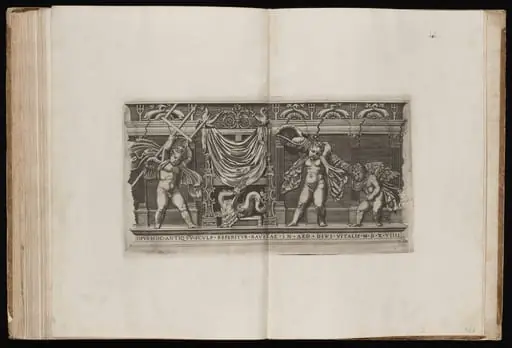 The Throne of Neptune from San Vitale in Ravenna
![Balnei Laterani [The Lateran Baptistry], by Italian 16th Century](https://artifactworldgallery.com/img/italian-16th-century--balnei-laterani-the-lateran-baptistry--7b73728472928663-w320.webp) Balnei Laterani [The Lateran Baptistry]
Balnei Laterani [The Lateran Baptistry]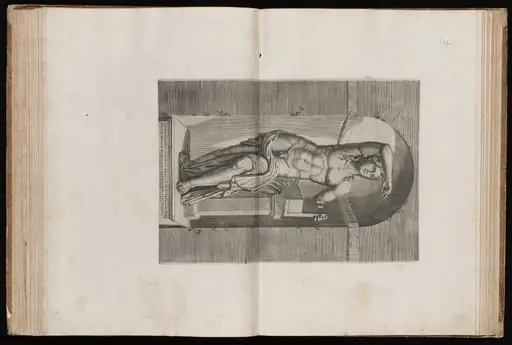 The Farnese Apollo, called 'Hermaphroditus'
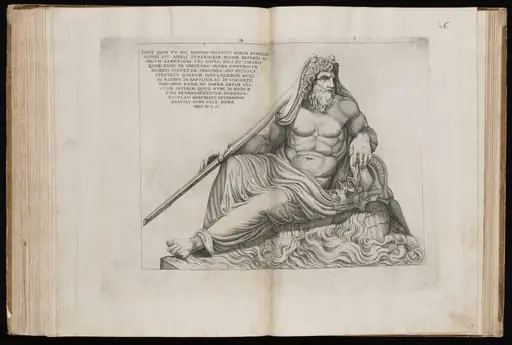 The Statue of Oceanus
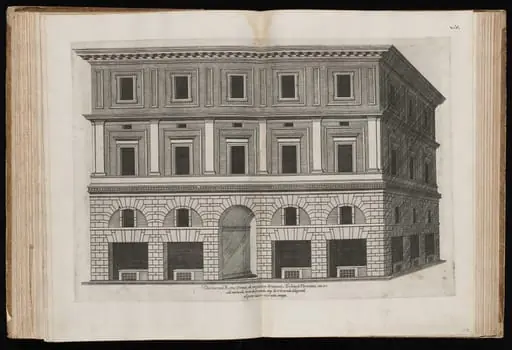 Palazzo Alberini
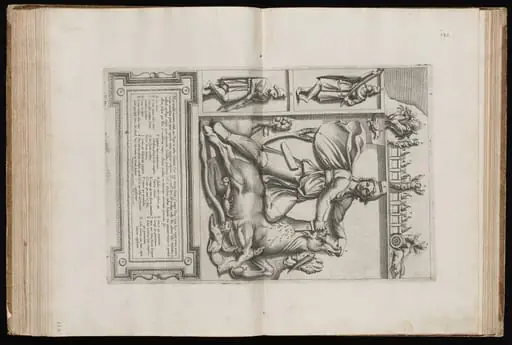 The Mithras Relief