Artwork
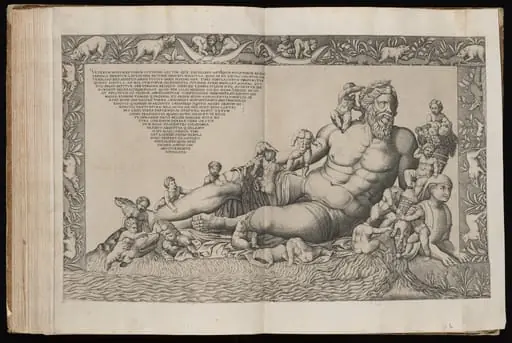
The River God Nile
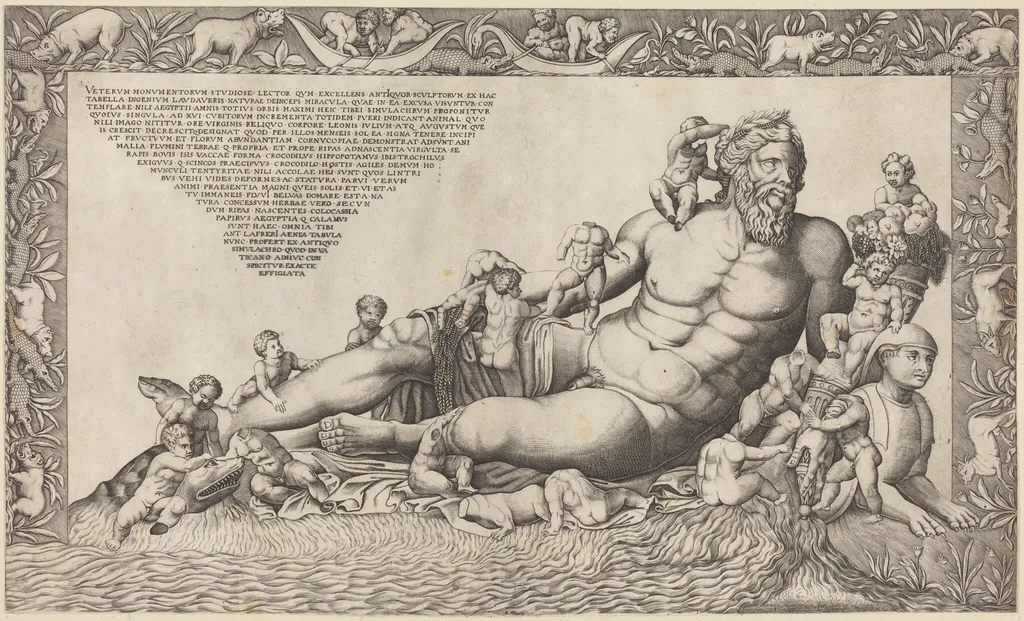
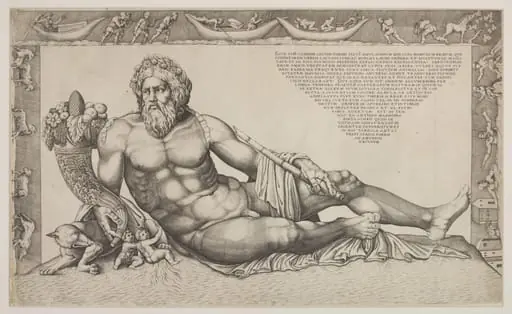
The River God Nile is an ink print by the Renaissance artist Nicolas Beatrizet. It dates from 1540 and is held in the collection of the National Gallery of Art.
About this work
Overview
Nicolas Beatrizet’s 1540 engraving, titled The River God Nile, depicts a mythological personification of the Egyptian river. Rendered on laid paper, the print presents a bearded, seated figure with a fish‑like tail, surrounded by a lively group of children and animals amid a watery, vegetated landscape.
Subject & Meaning
The central figure represents the Nile as a river deity, a common Renaissance motif linking classical antiquity with contemporary interests in natural forces. The inclusion of youthful attendants and fauna underscores the river’s fertility and its role as a life‑giving source.
Technique & Style
Beatrizet employs fine, incised lines to model the figures and foliage, achieving a high degree of texture and depth. The engraving’s meticulous hatching creates tonal variation, while the composition balances the monumental god with the surrounding animated scene, reflecting the period’s emphasis on realism and anatomical accuracy.
History & Provenance
Created in the mid‑sixteenth century, the print is attributed to Beatrizet, a French engraver active in Rome. It survives in several museum collections, indicating its circulation among collectors of classical and mythological subjects during the Renaissance.
Context
The work aligns with the broader Renaissance fascination with antiquity, where artists revived mythological themes to explore humanist ideas. Depictions of river gods served both decorative and educational purposes, illustrating the natural world’s abundance through allegorical representation.
Legacy
Beatrizet’s engraving contributes to the visual vocabulary of river deities that persisted into later European art. Its detailed execution exemplifies the technical skill of early printmakers, influencing subsequent generations of engravers who sought to combine narrative complexity with fine line work.
Artist & collection


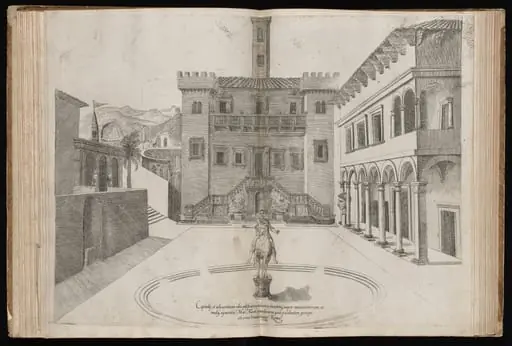
![Castello S. Angelo di Roma [Castel Sant'Angelo in Rome], by Nicolas Beatrizet](https://artifactworldgallery.com/img/nicolas-beatrizet--castello-s-angelo-di-roma-castel-sant-angelo-in-rome--6c77d3bfe127c436-w320.webp)
![Pantheum Romanum [The Roman Pantheon], by Nicolas Beatrizet](https://artifactworldgallery.com/img/nicolas-beatrizet--pantheum-romanum-the-roman-pantheon--8069db7dd8e6f190-w320.webp)
![Battle of the Sea Gods [left half], by Andrea Mantegna](https://artifactworldgallery.com/img/andrea-mantegna--battle-of-the-sea-gods-left-half--084dd803fb0016b2-w320.webp)