Artwork
River Tiber
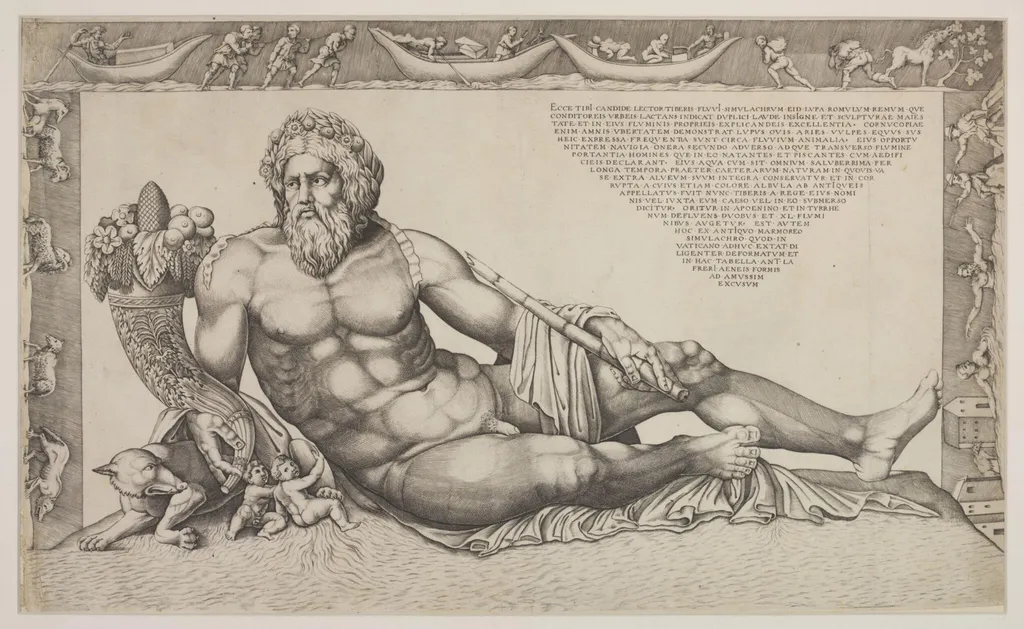
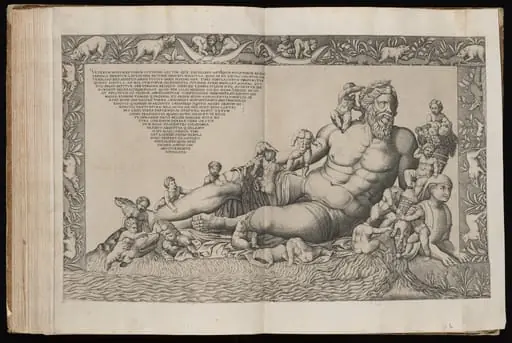
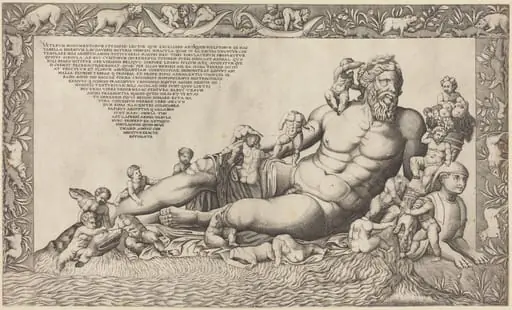
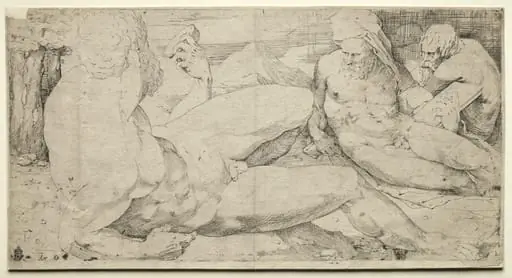
River Tiber is a print by the Renaissance artist Nicolas Beatrizet. It dates from 1520 and is held in the collection of the Victoria and Albert Museum.
About this work
Overview
This print portrays the River Tiber as a reclining male figure, embodying the river’s mythological significance in Roman tradition.
This print portrays the River Tiber as a reclining male figure, embodying the river’s mythological significance in Roman tradition. Accompanied by the infants Romulus and Remus and a nursing wolf, the scene anchors the city’s founding legend. Rendered in ink on paper, it reflects the second state of the engraving, preceding the addition of the printer’s imprint. The composition integrates natural elements with allegorical figures to convey civic origin.
Subject & Meaning
The River Tiber is depicted as an aged, muscular man with a flowing beard, symbolizing the river’s ancient and enduring presence. At his side, the twins Romulus and Remus, suckled by a wolf, evoke Rome’s mythical birth. Surrounding waves and distant boat scenes suggest the river’s role in trade and transport. The imagery merges divine personification with foundational myth, reinforcing the river’s sacred status in Roman identity.
Technique & Style
The artist employs chiaroscuro to model the figure’s anatomy and the wolf’s fur, using bold contrasts of light and shadow to enhance volume and texture. Fine linework defines the rocky shore and turbulent water, while delicate details in the background—such as boats and animals—add narrative depth without clutter. The print’s precision reflects mastery of engraving, balancing dramatic intensity with controlled detail.
History & Provenance
This is the second known state of the engraving, produced before the printer Henricus van Schoel added his imprint. Earlier impressions likely circulated among collectors and scholars interested in Roman antiquities. The absence of the printer’s mark suggests an intermediate phase in the print’s publication history, possibly used for distribution prior to commercial release.
Context
Created during a period of renewed interest in classical antiquity, the image aligns with humanist efforts to revive Roman myths through visual art. The River Tiber’s personification was a common motif in Renaissance and early modern iconography, often used to legitimize civic pride. This print contributes to a broader tradition of allegorical river deities in European print culture.
Legacy
The print preserves a visual language that linked geography with myth, influencing later depictions of river gods in European art. Its technical refinement and narrative clarity made it a reference for artists studying classical allegory. Though not widely reproduced, it remains a documented example of how print media transmitted foundational Roman stories across the early modern world.
Artist & collection


![Castello S. Angelo di Roma [Castel Sant'Angelo in Rome], by Nicolas Beatrizet](https://artifactworldgallery.com/img/nicolas-beatrizet--castello-s-angelo-di-roma-castel-sant-angelo-in-rome--6c77d3bfe127c436-w320.webp)
![Pantheum Romanum [The Roman Pantheon], by Nicolas Beatrizet](https://artifactworldgallery.com/img/nicolas-beatrizet--pantheum-romanum-the-roman-pantheon--8069db7dd8e6f190-w320.webp)