Artwork
Saint Rudolfus
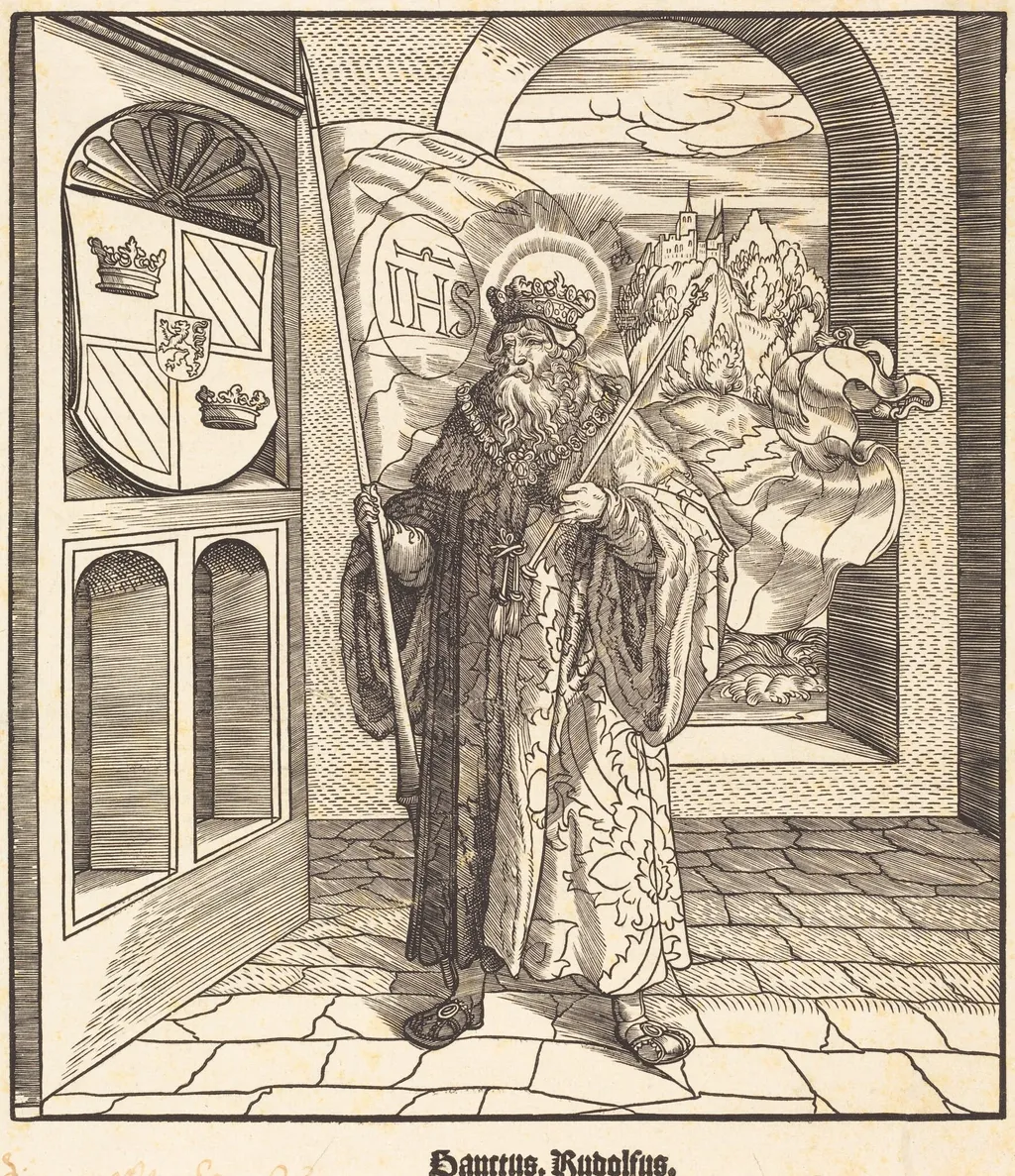
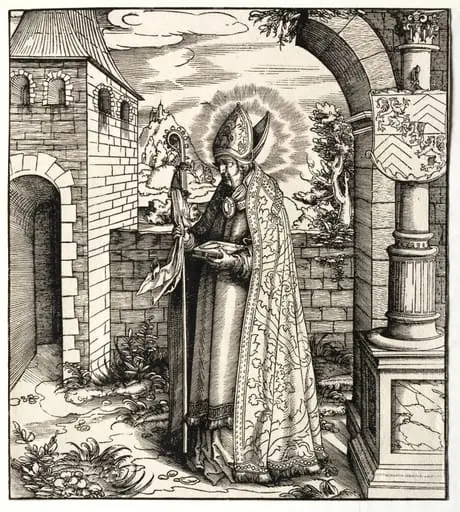
Saint Rudolfus is an ink print by the Renaissance artist Leonhard Beck. It dates from 1517 and is held in the collection of the National Gallery of Art.
About this work
This woodcut, created by Leonhard Beck in 1516/1518, is a representation of Saint Rudolfus, showcasing the artist's skill in Renaissance art.
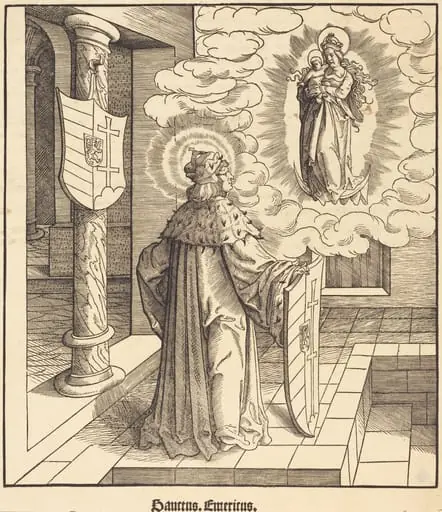
The image depicts a saintly figure, Saint Rudolfus, standing in a stone-paved courtyard. He is dressed in a long, dark robe with a white cloak draped over his shoulders, and wears a crown on his head. In his right hand, he holds a staff, and in his left, a sword.
To the left of the saint, a wall features a large, arched window with a coat of arms displayed above it. The coat of arms consists of a shield divided into four sections, each containing a different symbol.
This woodcut, created by Leonhard Beck in 1516/1518, is a representation of Saint Rudolfus, showcasing the artist's skill in Renaissance art. If you're interested in learning more about this style, you might want to explore the Renaissance movement next.
Overview
Leonhard Beck, an early‑sixteenth‑century Augsburg artist, produced the woodcut Saint Rudolfus around 1517. Executed as a single‑plate print, the image presents the eponymous saint in a formal, architectural setting, reflecting the religious iconography common to the period.
Subject & Meaning
The figure is identified as Saint Rudolfus, shown standing on a stone‑paved courtyard. He wears a dark robe beneath a white mantle, a crown rests on his head, and he holds a staff in his right hand and a sword in his left, symbols of his ecclesiastical authority and martyrdom.
Technique & Style
Beck’s handling of line and hatching demonstrates the influence of his training with his father, miniaturist Georg Beck, and his later work alongside Hans Holbein the Elder. The crisp contours and careful modeling of drapery reveal a mature command of Renaissance print conventions.
History & Provenance
The woodcut was produced during Beck’s involvement in Emperor Maximilian I’s extensive woodcut programmes, which served the ruler’s self‑portraiture and propaganda efforts. Though the original block’s ownership is unclear, the print has been documented in several early modern collections.
Context
Augsburg’s thriving print workshops in the early 1500s provided a fertile environment for artists like Beck to engage in both devotional and courtly commissions. The inclusion of a heraldic shield in the background reflects the era’s intertwining of religious imagery with civic and noble symbolism.
Artist & collection
Artist
Leonhard Beck (c. 1480 – 1542) was a painter and woodcuts designer in Augsburg, Germany. He was the son of Georg Beck, a miniaturist who was active in Augsburg c. 1490–1512/15. Leonhard collaborated with his father on…