Artwork
The Woman with the Jug, Standing
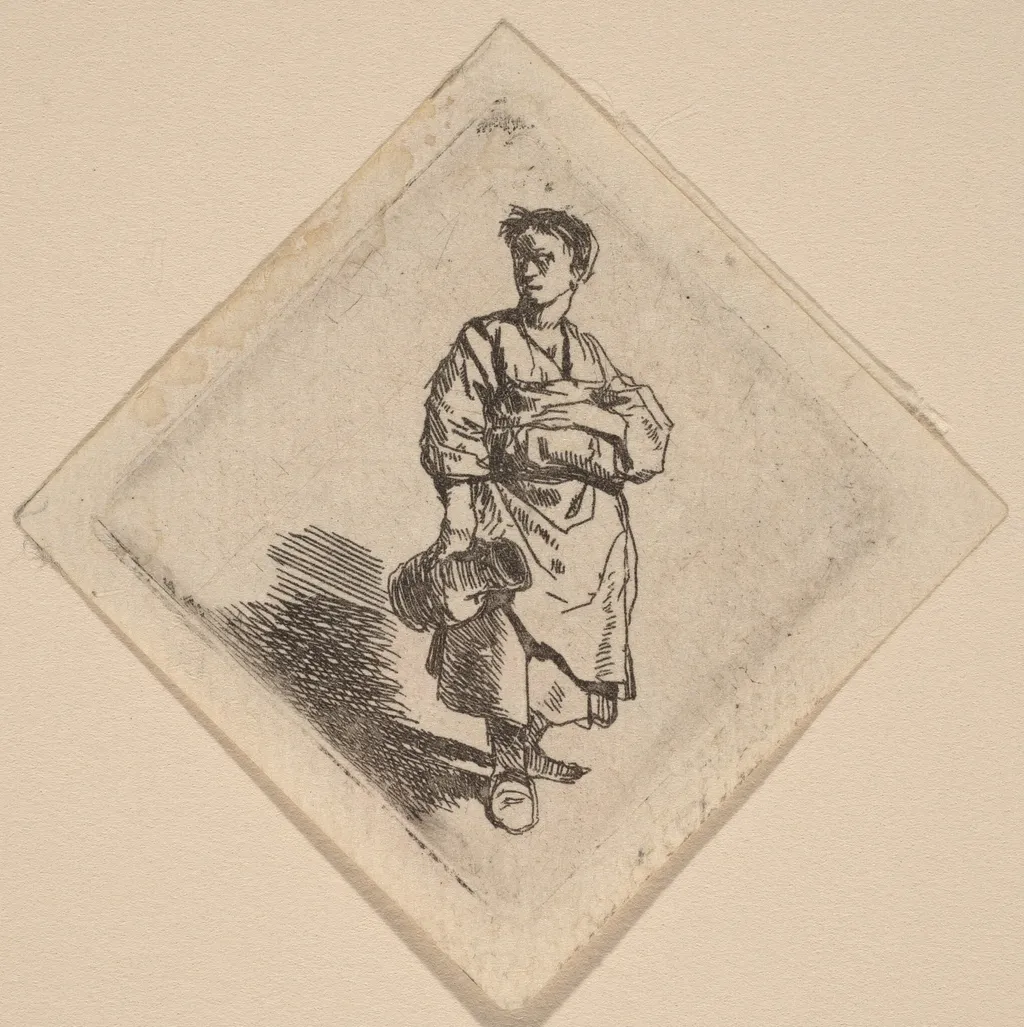
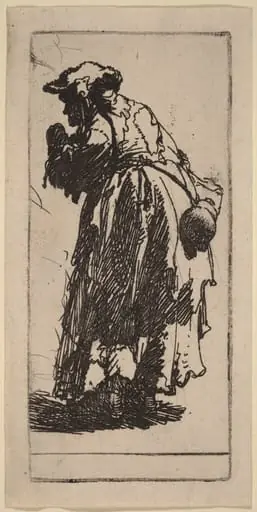
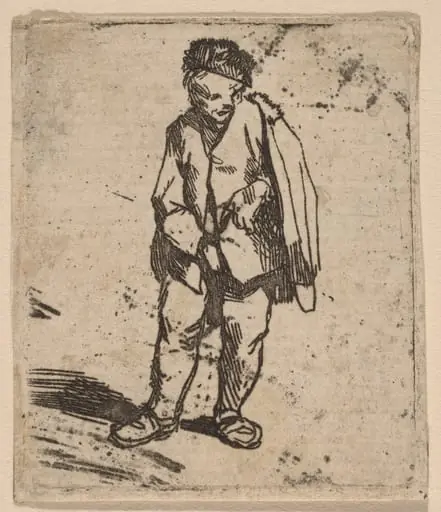
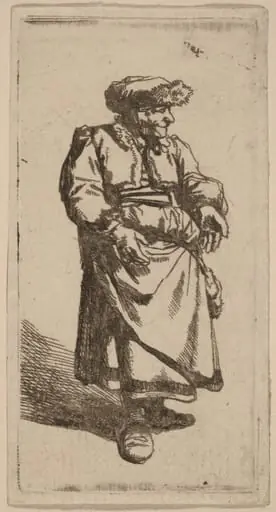
The Woman with the Jug, Standing is an ink print by the Baroque artist Cornelis Pietersz Bega. It dates from 1648 and is held in the collection of the National Gallery of Art.
About this work
Overview
Created in 1648 by Cornelis Pietersz Bega, this etching captures a quiet moment of domestic labor. Bega, active in Haarlem during the Dutch Golden Age, specialized in intimate genre scenes rendered through printmaking. Unlike large-scale paintings, this work relies on the precision and tonal range possible in etching to convey movement and presence without elaborate detail.
Subject & Meaning
The figure is a woman engaged in routine household activity: carrying a jug while holding a cloth, her posture suggesting motion between tasks. Her modest attire and unadorned demeanor reflect the everyday lives of working women in 17th-century Dutch society. The absence of narrative context invites contemplation of quiet dignity in ordinary labor, a recurring theme in Bega’s oeuvre.
Technique & Style
Fine cross-hatching defines the folds of her dress and the weight of the jug, while sparse background lines imply space without distraction.
Bega employed etching to achieve subtle gradations of light and texture. Fine cross-hatching defines the folds of her dress and the weight of the jug, while sparse background lines imply space without distraction. The figure’s stance is rendered with economical strokes, emphasizing natural posture over theatricality. This restrained approach highlights the artist’s skill in conveying realism through minimal means.
History & Provenance
Bega, trained under Adriaen van Ostade and the son of a sculptor and goldsmith, developed a distinctive style in printmaking during the 1640s. This etching belongs to a series of small-scale works produced in Haarlem, where he focused on domestic subjects. While its early ownership is undocumented, it aligns with the broader circulation of Dutch etchings among collectors and artists of the period.
Context
In mid-17th-century Holland, printmaking flourished as a medium for accessible art. Etchings like this one allowed artists to reach wider audiences beyond wealthy patrons. Bega’s focus on unidealized figures reflected a cultural interest in the moral and aesthetic value of everyday life, distinguishing Dutch genre art from the grand narratives of Italian or Flemish traditions.
Legacy
Bega’s etchings, including this one, contributed to the elevation of genre subjects in print form. His ability to convey emotion and motion with few lines influenced later artists interested in intimate realism. Though less celebrated than his contemporaries, his work remains a quiet testament to the artistic potential of ordinary moments in Dutch visual culture.
Artist & collection
Artist
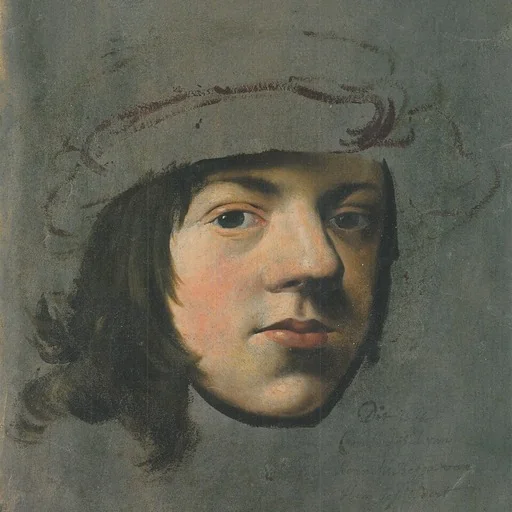
Cornelis Pietersz Bega, or Cornelis Pietersz Begijn (1631/32 – 27 August 1664) was a Dutch Golden Age painter and engraver.