Artwork
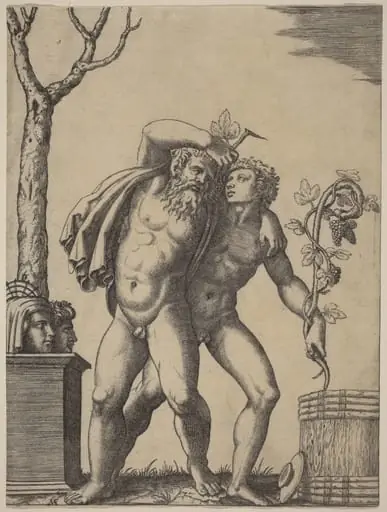
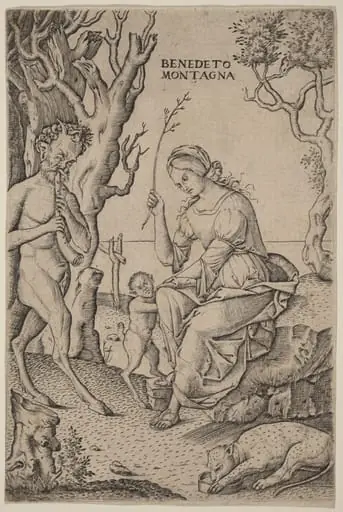
Faun and Child
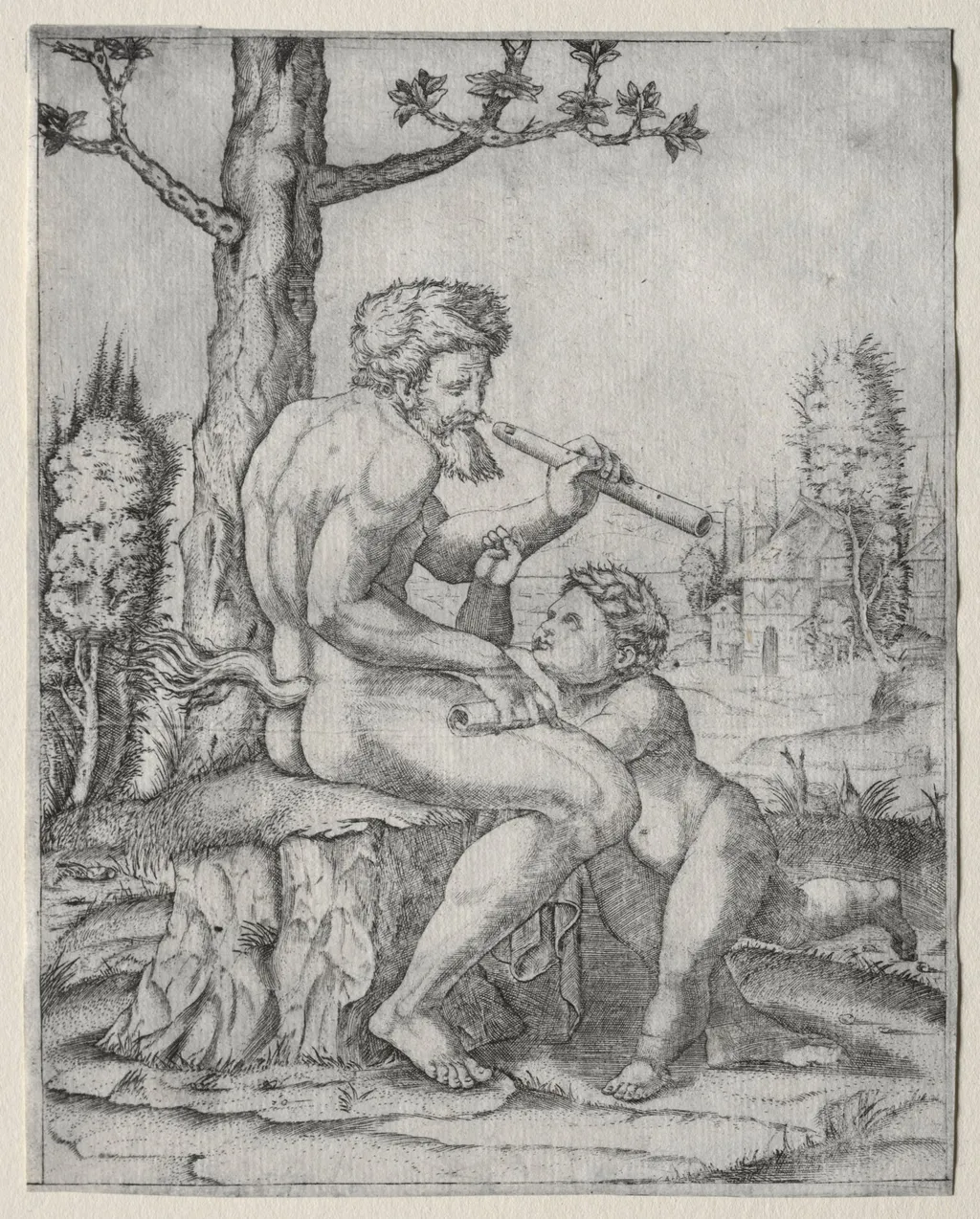
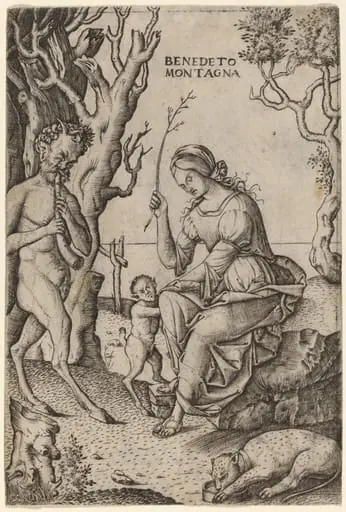
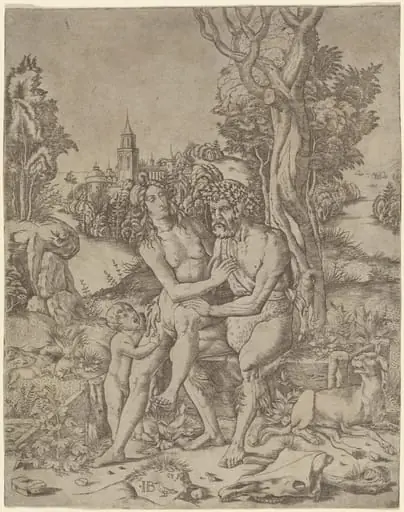
Faun and Child is a print by the Renaissance artist Marcantonio Raimondi. It dates from 1509 and is held in the collection of the Cleveland Museum of Art.
About this work
Overview
Faun and Child is an engraving produced around 1509 by Marcantonio Raimondi, an Italian printmaker active during the High Renaissance.
Faun and Child is an engraving produced around 1509 by Marcantonio Raimondi, an Italian printmaker active during the High Renaissance. The work is part of the collection at The Cleveland Museum of Art. Executed in fine linear detail, it depicts a mythological figure and a child in a quiet, natural setting. The composition reflects Raimondi’s skill in translating painterly ideas into the medium of print, aligning with broader Renaissance interests in classical themes and precise draftsmanship.
Subject & Meaning
The central figure, a bearded man with a leafy crown and wild curls, suggests a faun or satyr—a creature from classical mythology associated with forests and music. He plays a pipe while a young boy kneels beside him, gazing upward in quiet wonder. The scene evokes a moment of transmission: the older, wilder being sharing an ancient sound with the innocent observer. The interaction implies a gentle, non-threatening connection between nature and childhood, free from overt narrative or moralizing.
Technique & Style
Raimondi employed fine, controlled engraving lines to render textures with remarkable clarity: the tufts of hair, the delicate veins of leaves, and the roughness of the rock. The background is minimized, with a distant structure and twisted tree serving only to frame the figures. The precision of the lines and the absence of shading reflect the engraver’s focus on contour and pattern, characteristic of early 16th-century Italian printmaking and influenced by the linear clarity of Raphael’s designs.
History & Provenance
The print was made in the early 1500s, during Raimondi’s collaboration with Raphael in Rome, when he reproduced the master’s compositions in print. While this particular image does not directly copy a known Raphael design, its style and subject reflect the same classical revival circulating in Roman artistic circles. The Cleveland Museum of Art acquired the work as part of its broader collection of Renaissance prints, preserving its historical and technical significance.
Context
In early 16th-century Italy, interest in classical antiquity fueled artistic exploration of mythological subjects. Printmaking allowed these ideas to circulate beyond elite patrons, reaching a wider audience. Raimondi’s work, including Faun and Child, contributed to this dissemination. The image’s simplicity and focus on a solitary, natural moment contrast with the grandeur of contemporary frescoes, offering instead an intimate, contemplative vision of myth.
Legacy
Raimondi’s engravings helped standardize the reproduction of classical themes in print, influencing generations of Northern European artists. Faun and Child, though not widely known today, exemplifies the quiet elegance of his approach: myth rendered with restraint, emotion conveyed through gesture rather than drama. Its preservation in major collections underscores its role as a quiet but significant artifact of Renaissance print culture.
Artist & collection

Artist
Marcantonio Raimondi, often called simply Marcantonio (c. 1470/82 – c. 1534), was an Italian engraver, known for being the first important printmaker whose body of work consists largely of prints copying paintings. He…