Artwork
Satyr Playing the Lyre
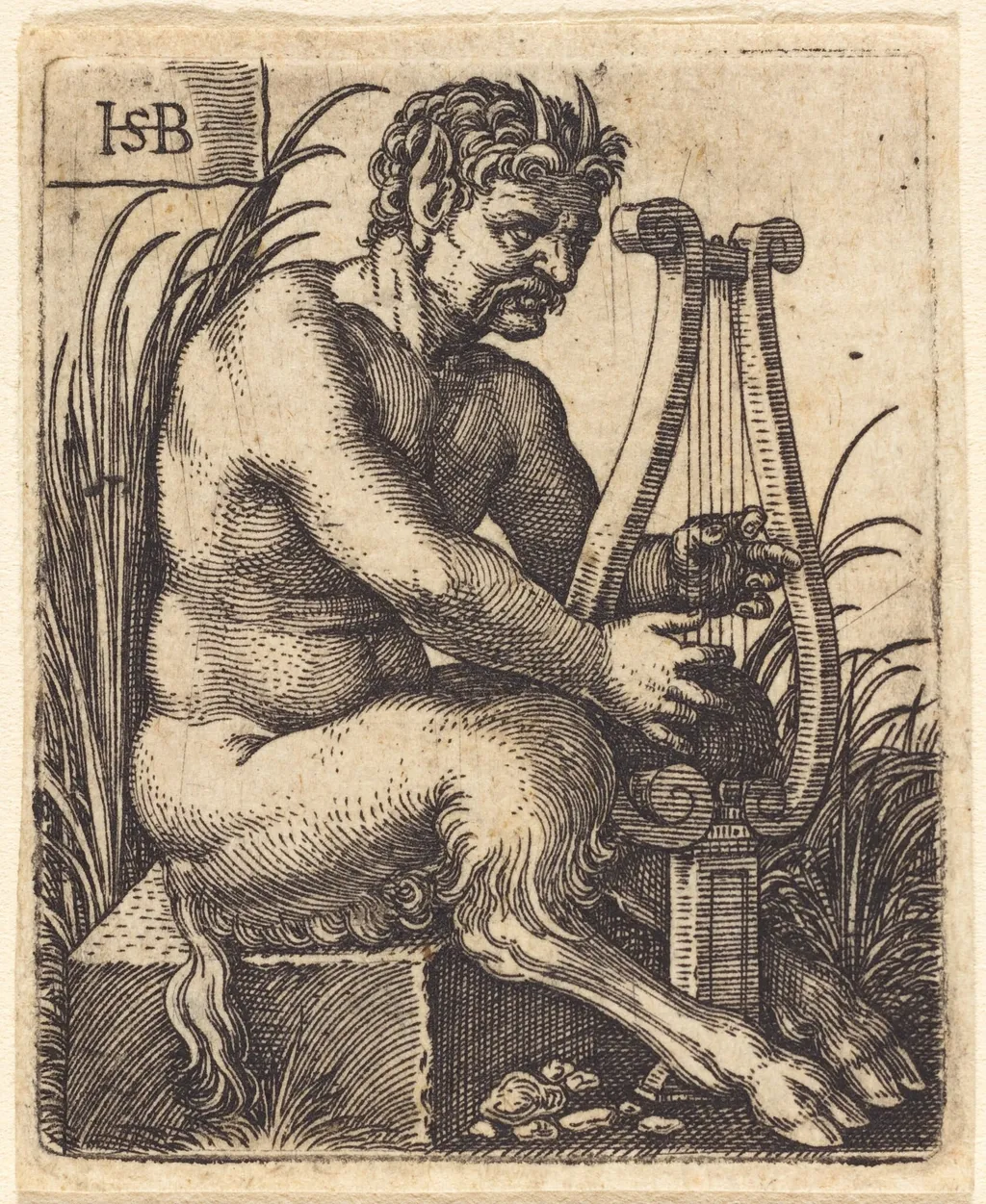
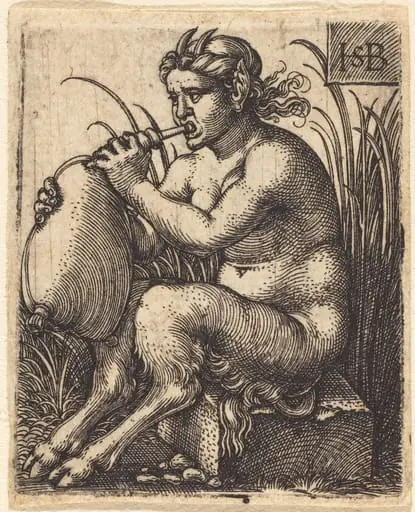
Satyr Playing the Lyre is an ink print by the Renaissance artist Sebald Beham. It dates from 1534 and is held in the collection of the National Gallery of Art.
About this work
Sebald Beham carved this exact image into metal sometime between 1530 and 1539.
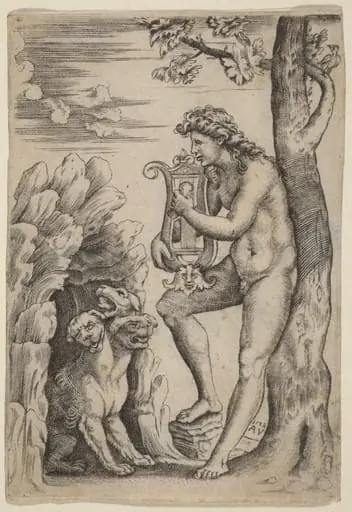
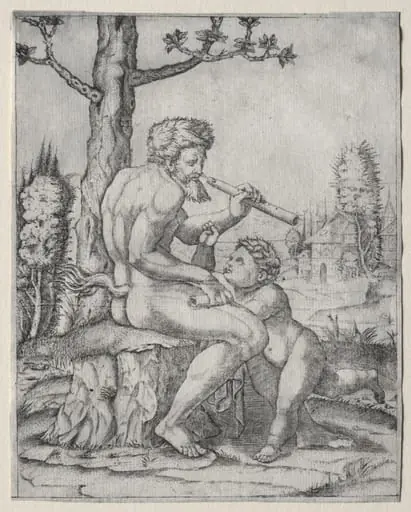
A satyr leans forward playing a lyre. His shaggy legs and pointed ears stand out against the plain background. His body twists slightly, showing off movement.
Engravings like this were made by carving into metal plates. Ink fills the lines, then the plate is pressed onto paper. Sebald Beham carved this exact image into metal sometime between 1530 and 1539.
Look up Beham, Sebald to see more of his work.
Overview
Created between 1530 and 1539, *Satyr Playing the Lyre* is an engraving by the German artist Sebald Beham. A member of the group known as the 'Little Masters,' Beham specialized in small, finely detailed prints that reflected the technical sophistication of early 16th-century German printmaking. This work exemplifies his skill in rendering delicate lines and expressive forms on a modest scale, typical of the medium’s rise after Albrecht Dürer’s influence.
Subject & Meaning
The image depicts a satyr, a mythological forest spirit, bent forward as he plays a lyre. His animalistic features—pointed ears, shaggy legs, and tufted tail—contrast with the refined gesture of music-making. The scene evokes classical antiquity’s blending of wild nature and cultivated art, a recurring theme in Renaissance humanist circles. The satyr’s posture suggests both physical vigor and lyrical sensitivity, bridging the primal and the poetic.
Technique & Style
Beham employed fine-line engraving to render texture and motion with precision. The satyr’s fur, the lyre’s strings, and the subtle contours of his twisting body are defined by tightly controlled incisions in a copper plate. The plain background isolates the figure, directing focus to his dynamic form. Ink pressed onto paper captures every nuance of the carved lines, showcasing the printmaker’s control over tone and detail without reliance on shading or color.
History & Provenance
The engraving was produced during Beham’s most active period in Nuremberg, a center for print production in the German Renaissance. While specific early ownership records are sparse, the work aligns with a broader market for small mythological prints collected by educated patrons. Beham’s prints circulated widely, often reprinted or copied, contributing to the dissemination of classical themes across Europe in the decades following its creation.
Context
In the 1530s, German artists increasingly turned to mythological subjects as expressions of humanist ideals, moving beyond religious imagery. Beham’s engagement with satyrs and other classical figures reflected this shift, influenced by revived interest in ancient texts and sculpture. His small-scale engravings catered to private collectors who valued intellectual allusion and technical virtuosity over monumental scale.
Legacy
Beham’s *Satyr Playing the Lyre* remains a representative example of the Little Masters’ contribution to print culture. His ability to convey narrative and movement within tight compositional limits influenced later engravers. Though overshadowed by larger figures like Dürer, his precise technique and thematic choices helped sustain the popularity of mythological prints well into the late Renaissance.
Artist & collection
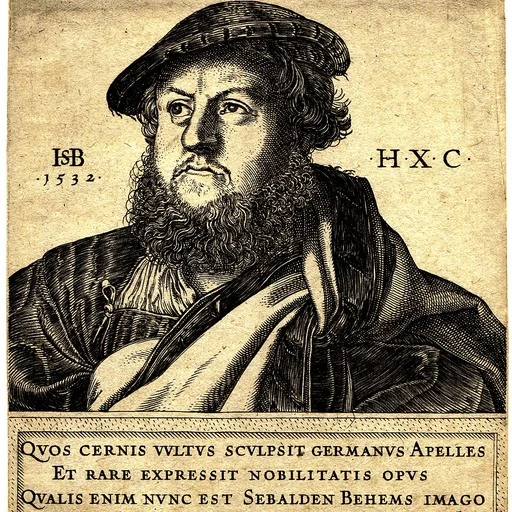
Artist
Sebald Beham (1500–1550) was a German painter and printmaker, mainly known for his very small engravings.