Artwork
July and August
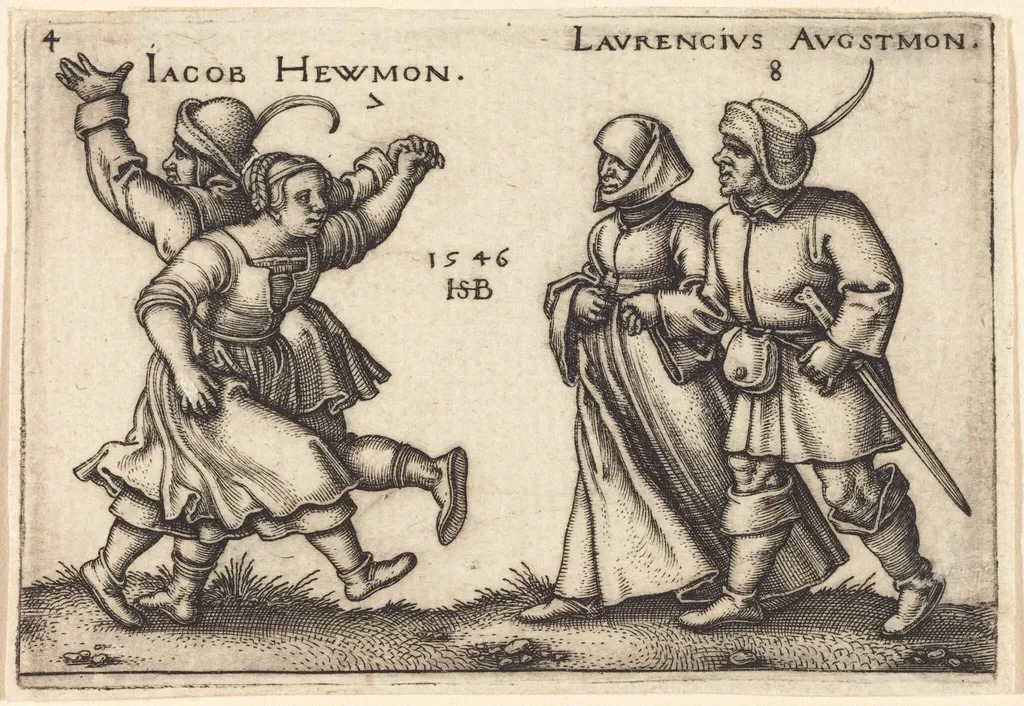
July and August is an ink print by the Renaissance artist Sebald Beham. It dates from 1546 and is held in the collection of the National Gallery of Art.
About this work
Overview
July and August is a 1546 engraving by Sebald Beham, a German artist known for intricate, small-scale prints. This work exemplifies his technical skill in the medium.
Subject & Meaning
The engraving depicts four figures: two armed men, possibly representing military aspects of the months, and two robed individuals, identified by inscriptions as Jacob Hewmon (July) and Laurencius Augstmon (August). Their serious demeanor and the earthy setting may symbolize the labors or themes associated with these summer months.
Technique & Style
Beham employed sharp, detailed lines to achieve depth, texture, and shading, characteristic of his mastery of engraving. The technique involved carving the design into a metal plate to produce the print.
History & Provenance
Created in 1546, July and August reflects Beham's contribution to the German printmaking tradition, following in the footsteps of Albrecht Dürer. As one of the 'Little Masters,' Beham was renowned for his small, meticulously crafted prints.
Context
This work is part of a broader 16th-century European tradition of personifying months, often incorporating allegorical or occupational elements. Beham's approach blends realism with symbolic representation.
Legacy
July and August contributes to Beham's legacy as a prolific and skilled engraver of the Northern Renaissance, influencing subsequent generations of printmakers with his precise and detailed technique.
Artist & collection
Artist
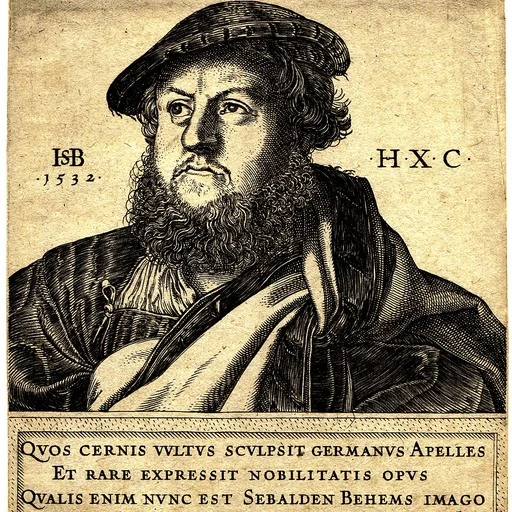
Sebald Beham (1500–1550) was a German painter and printmaker, mainly known for his very small engravings.


 September and October
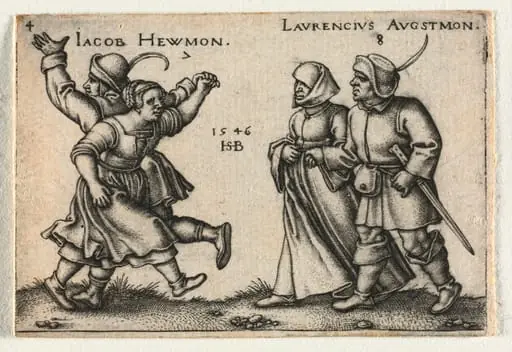 The Peasant Wedding or the Twelve Months: 7 Jacob Hewmon 8-Laurencius Augstmon
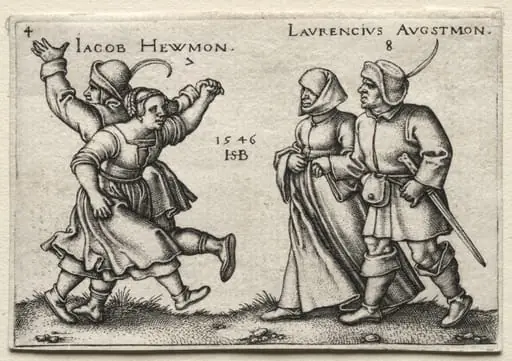 The Village Wedding: Jacob Hewmon
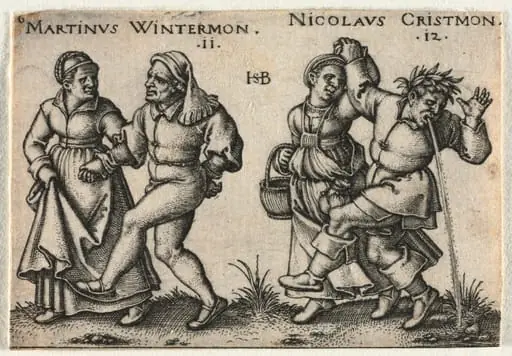 The Peasant Wedding or the Twelve Months: 11-Martinus Wintermon 12-Nicolaus Cristmon
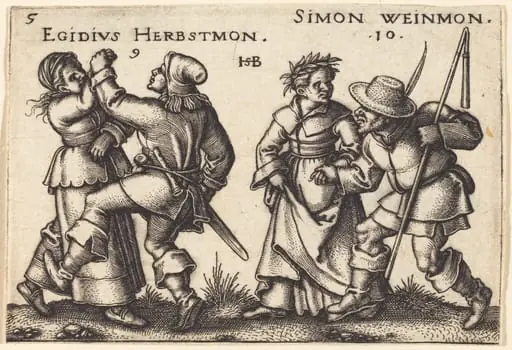
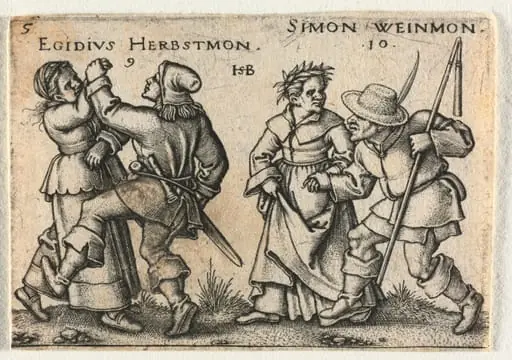 The Peasant Wedding or the Twelve Months: 9-Egidius Herbstmon 10-Simon Weinmon
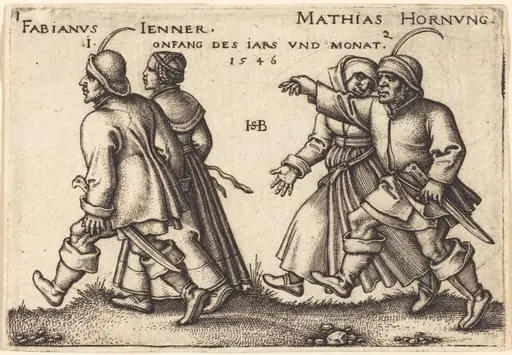 January and February
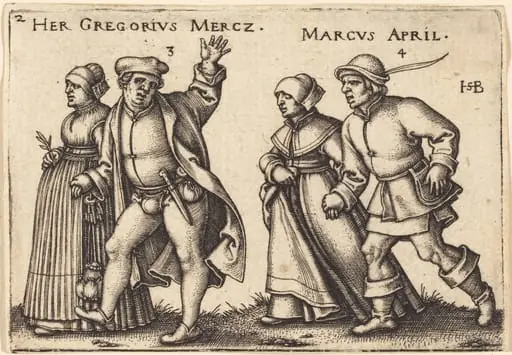 March and April
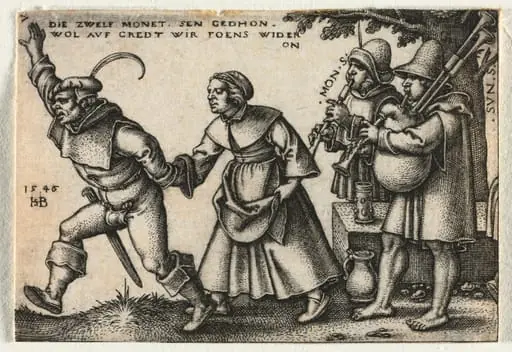 The Peasant Wedding or the Twelve Months: No. 7
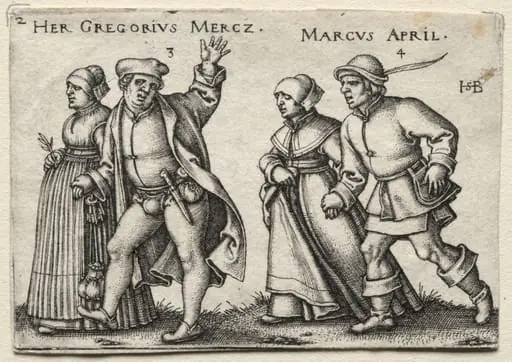 The Village Wedding: Her Gregorius Mercz
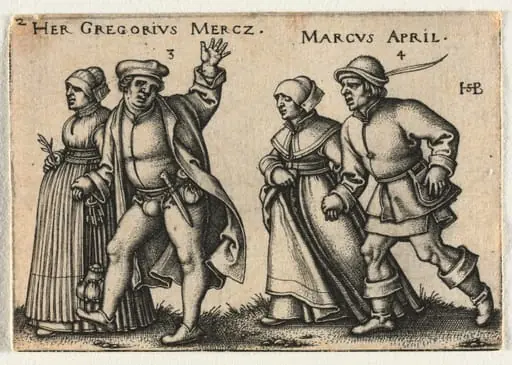 The Peasant Wedding or the Twelve Months: 3-Her Gregorius Mercz 4-Marcus April
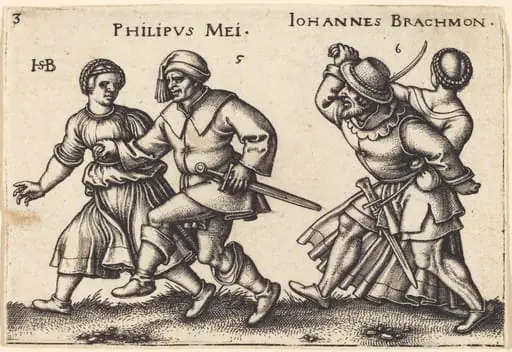 May and June
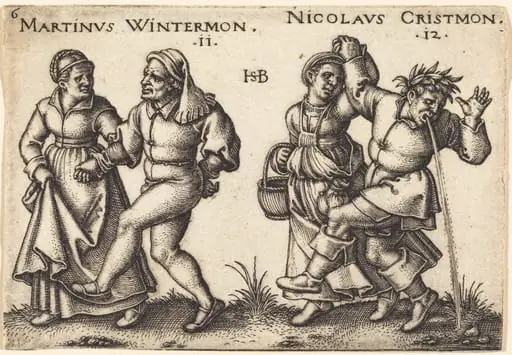 November and December