Artwork
September and October
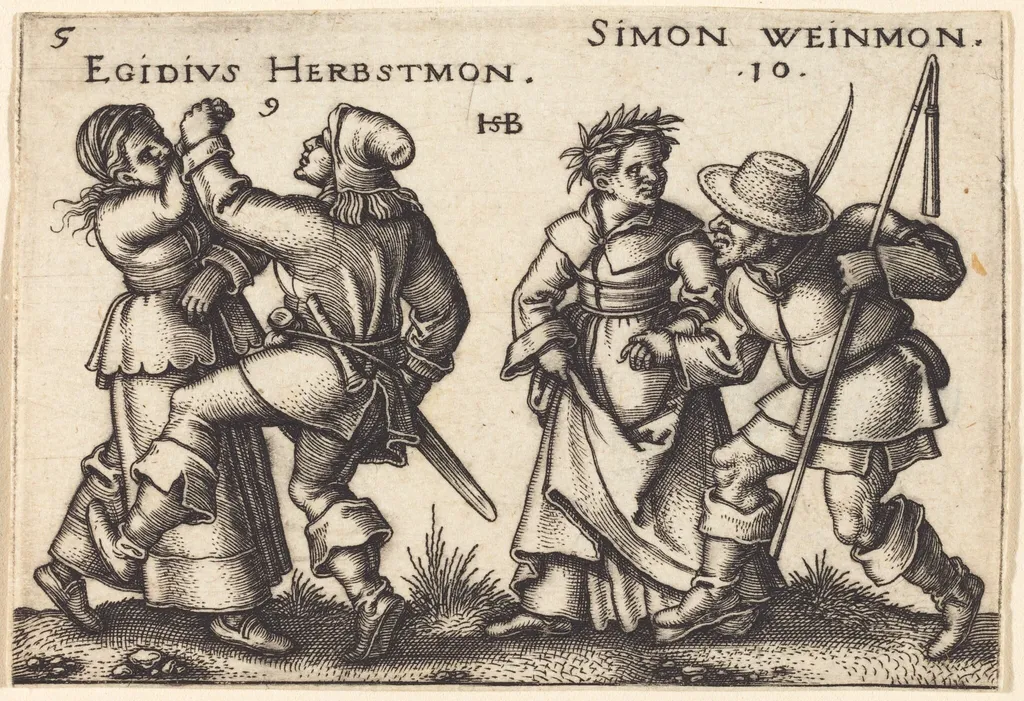
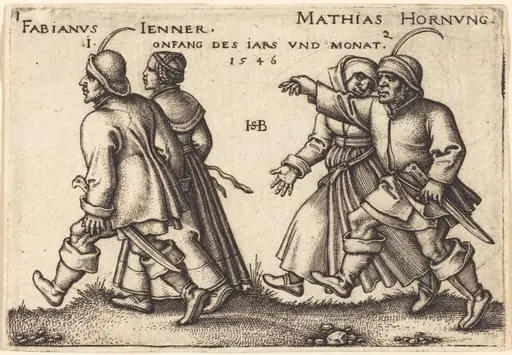
September and October is an ink print by the Renaissance artist Sebald Beham. It dates from 1546 and is held in the collection of the National Gallery of Art.
About this work
Overview
Sebald Beham’s print *September and October* was executed in 1546 as an engraving. Measuring only a few centimeters across, the work belongs to the group of highly detailed miniature prints for which Beham and his contemporaries were renowned. The image presents a compact, black‑and‑white composition that captures a moment of tension within an outdoor setting.
Subject & Meaning
The scene combines four figures—two men armed with a sword and a spear and two women whose raised arms suggest resistance. While the title links the image to the harvest months of September and October, the depiction of conflict may allude to seasonal struggles, such as labor disputes or mythic narratives associated with the changing year.
Technique & Style
Beham employed the engraving process, incising fine lines into a copper plate before printing onto paper. His use of precise hatching creates a sense of volume and movement, rendering musculature, drapery, and uneven ground with remarkable clarity. The miniature scale demands a high level of control, characteristic of the “Little Masters” circle.
History & Provenance
Born in Nuremberg, Beham later worked in Frankfurt, where his reputation for intricate prints grew amid a thriving German print market following Albrecht Dürer. *September and October* is documented in several early modern collections, reflecting the artist’s commercial success and the demand for portable, detailed prints among collectors of the period.
Context
The print emerges from a mid‑16th‑century German environment in which engraving served both artistic and informational purposes. Beham’s work aligns with a broader trend of producing small, affordable images that could circulate widely, offering visual commentary on everyday life, seasonal cycles, and social tensions.
Artist & collection
Artist
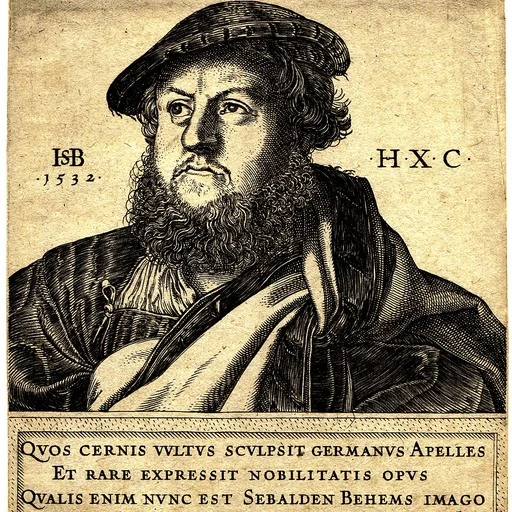
Sebald Beham (1500–1550) was a German painter and printmaker, mainly known for his very small engravings.


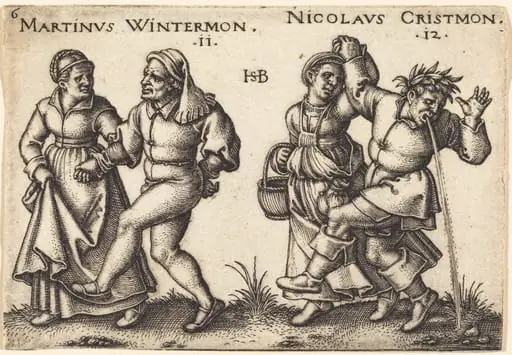 November and December
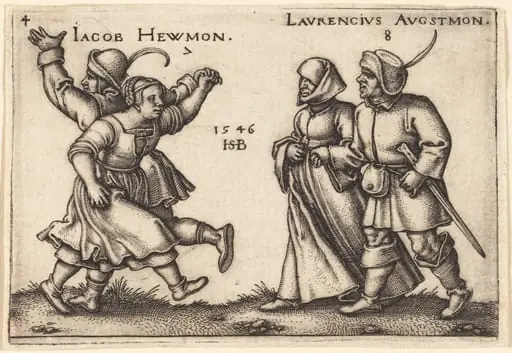 July and August
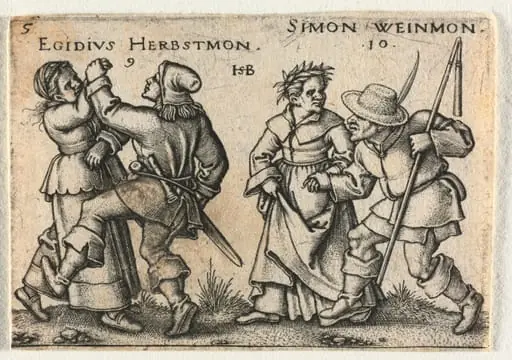 The Peasant Wedding or the Twelve Months: 9-Egidius Herbstmon 10-Simon Weinmon
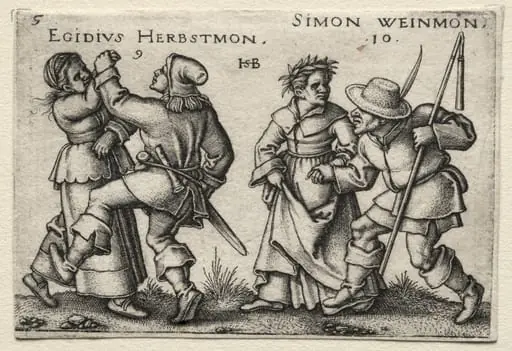 The Village Wedding: Egidius Herbstmon
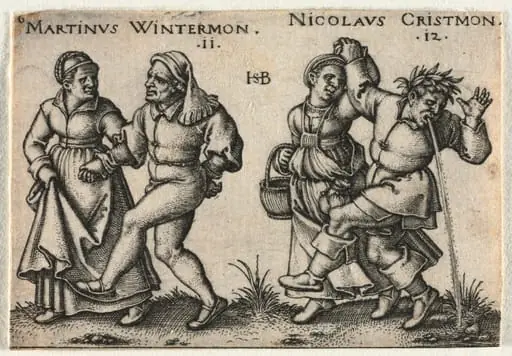 The Peasant Wedding or the Twelve Months: 11-Martinus Wintermon 12-Nicolaus Cristmon
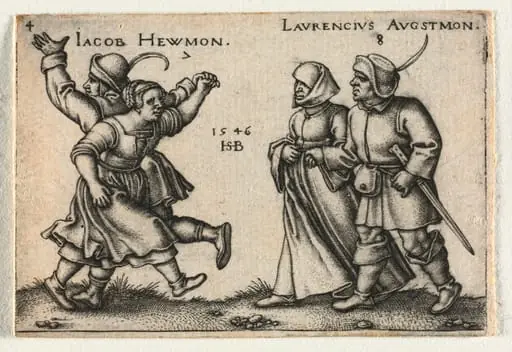 The Peasant Wedding or the Twelve Months: 7 Jacob Hewmon 8-Laurencius Augstmon
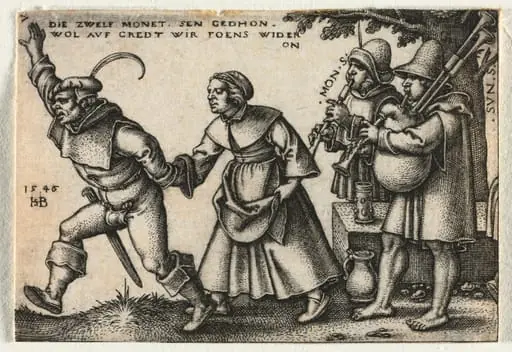 The Peasant Wedding or the Twelve Months: No. 7
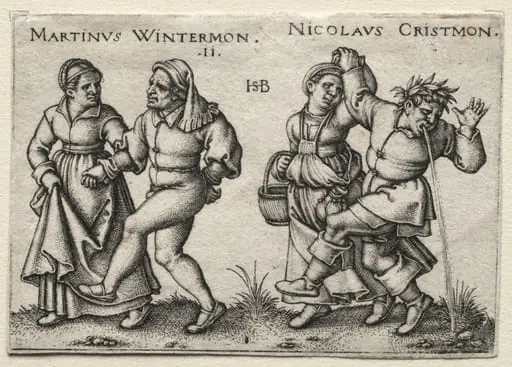 The Village Wedding: Martinus Wintermon
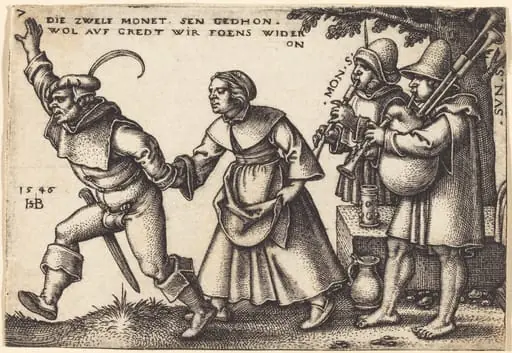 The Year's End
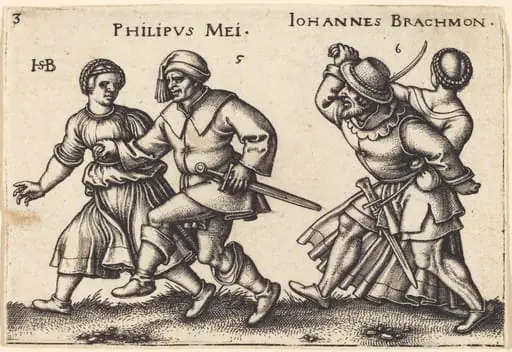 May and June
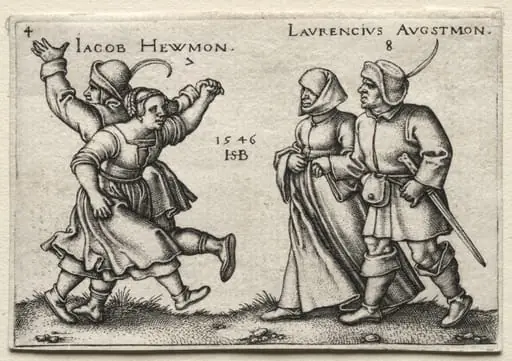 The Village Wedding: Jacob Hewmon
 January and February