Artwork
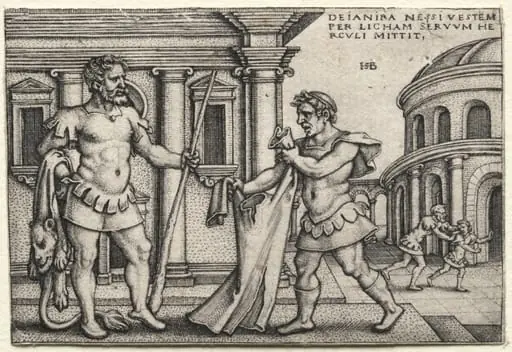
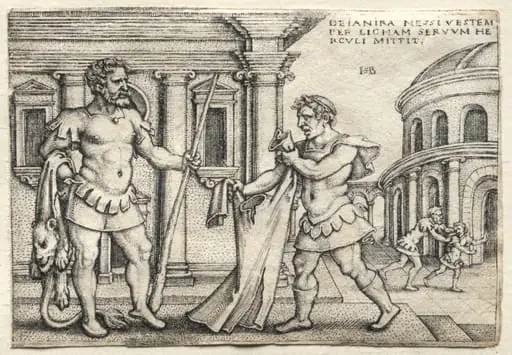
Lichas Presenting Nessus' Tunic to Hercules
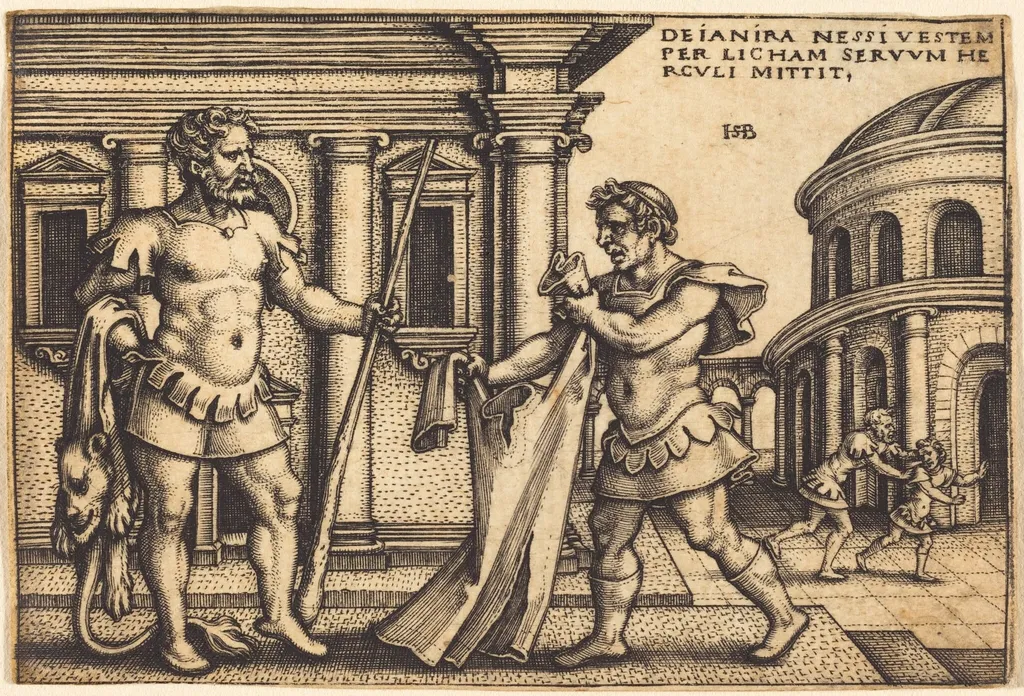
Lichas Presenting Nessus' Tunic to Hercules is an ink print by the Renaissance artist Sebald Beham. It dates from 1545 and is held in the collection of the National Gallery of Art.
About this work
Overview
The composition is tightly framed, emphasizing narrative clarity over grandeur, and reflects Beham’s mastery of fine-line engraving techniques.
Created in 1545 by the German printmaker Sebald Beham, this engraving captures a moment from Greek myth with precise, miniature detail. Beham, a leading figure among the Little Masters, produced this work in Nuremberg during a period when small-scale engravings were prized for their technical finesse. The composition is tightly framed, emphasizing narrative clarity over grandeur, and reflects Beham’s mastery of fine-line engraving techniques.
Subject & Meaning
The scene illustrates Lichas, a messenger, offering a bloodstained tunic to Hercules, unaware it was poisoned by the centaur Nessus. The tunic, presented as a gift, carries a deadly betrayal—its origin tied to Nessus’s deceit after attempting to abduct Hercules’ wife. Hercules’ startled expression and clenched club suggest dawning horror, transforming the moment into a cautionary tableau about hidden treachery disguised as benevolence.
Technique & Style
Beham employed fine, controlled engraving lines to render texture and volume with remarkable subtlety. Cross-hatching defines Hercules’ musculature, giving his skin a lifelike tension, while delicate contours outline the figures’ garments and the distant landscape. The background features miniature figures that anchor the scene in a believable space, demonstrating Beham’s skill in compressing depth and detail into a small format without sacrificing clarity.
History & Provenance
Sebald Beham, active in Nuremberg and later Frankfurt, produced hundreds of engravings and woodcuts between the 1520s and 1540s. This print, dated 1545, belongs to his mature phase, when his style became more refined and narrative-driven. Though few original impressions survive in public collections, the work was widely circulated among collectors and artists who admired his technical precision and mythological themes.
Context
In mid-16th-century Germany, mythological subjects were popular in prints, serving both aesthetic and moral purposes. Beham’s work aligned with humanist interests in classical antiquity, while also embedding ethical warnings. His small-scale engravings catered to private collectors and scholars, offering intimate, contemplative images distinct from large-scale paintings or frescoes of the era.
Legacy
Beham’s engravings influenced later Northern Renaissance printmakers through their meticulous technique and psychological nuance. Though overshadowed by contemporaries like Dürer, his ability to convey complex narratives in miniature formats preserved a tradition of intimate storytelling in print. This engraving remains a testament to the power of fine line work to evoke emotion and moral ambiguity within constrained spaces.
Artist & collection
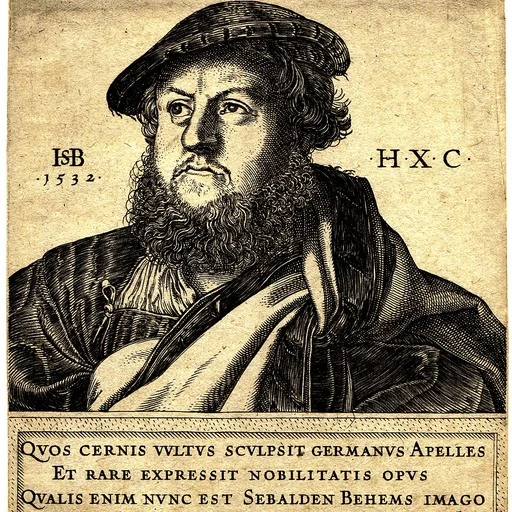
Artist
Sebald Beham (1500–1550) was a German painter and printmaker, mainly known for his very small engravings.


 The Labors of Hercules: Hercules Receiving the Garment Steeped in Nessus's Blood
 The Slaughter of the Priests of Samaria
 David before Saul
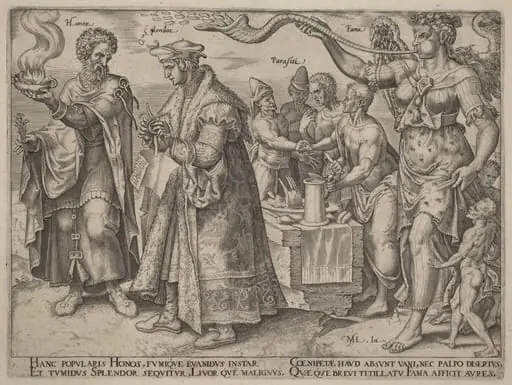 The Deceptive Effects of Wealth
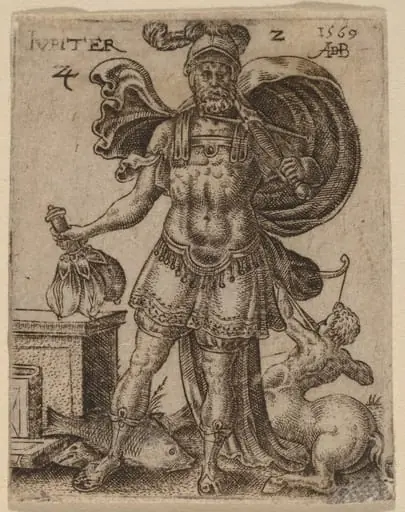 Jupiter
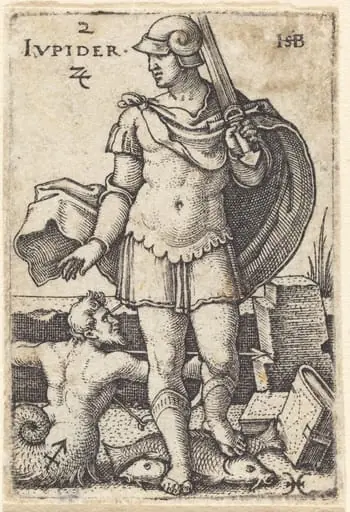 Jupiter
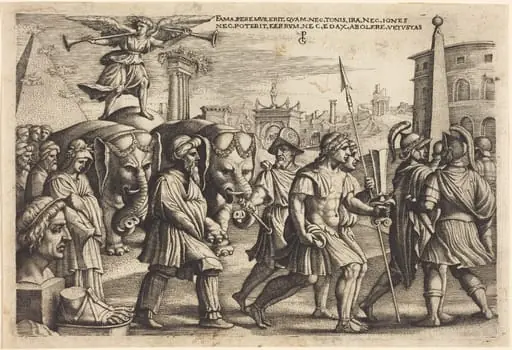 The Triumph of Fame
 The Conversion of Saint Paul
 Departure of the Prodigal Son
 Les divers pourtraicts et figures VIII
 Saint Stephen before the Council
 The Labors of Hercules: Hercules Receiving the Garment Steeped in Nessus' Blood