Artwork
Saint Andrew
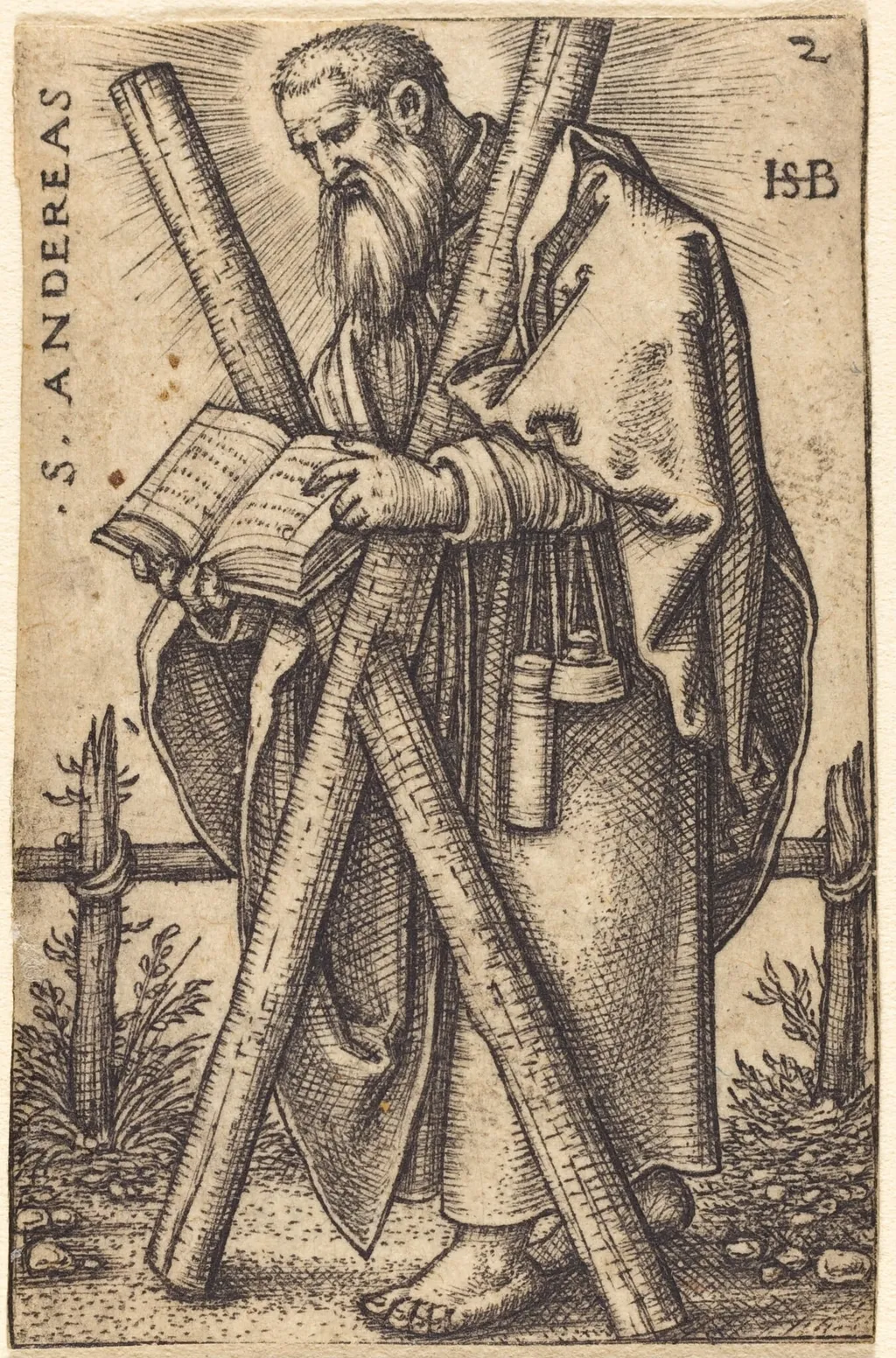
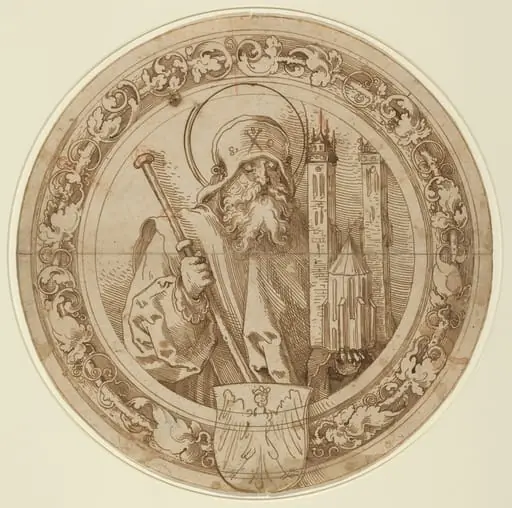
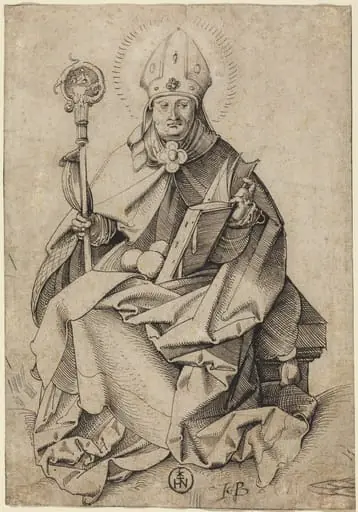
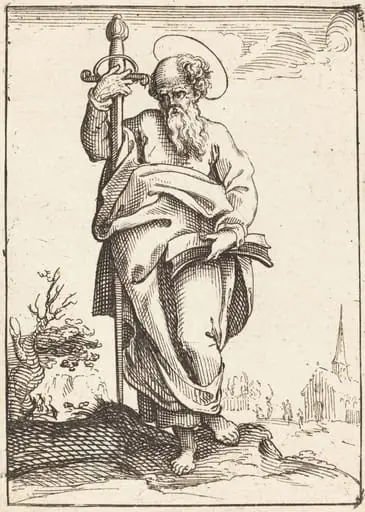
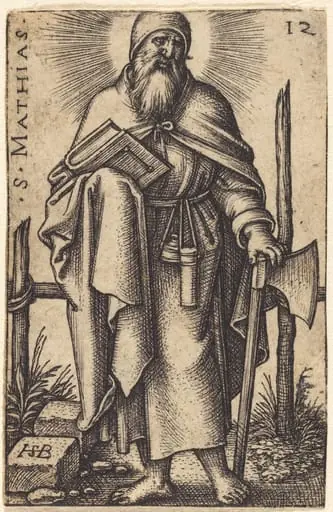
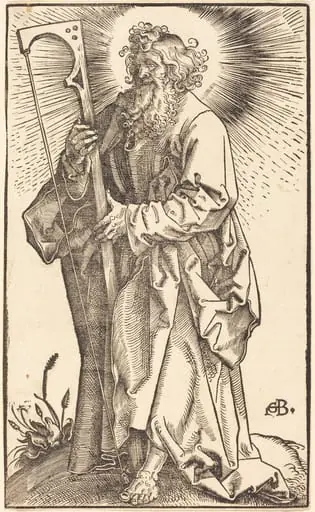
Saint Andrew is an ink print by the Renaissance artist Sebald Beham. It dates from 1546 and is held in the collection of the National Gallery of Art.
About this work
Overview
A member of the group known as the Little Masters, Beham specialized in small, finely detailed prints that reflected the legacy of Albrecht Dürer.
Sebald Beham, a German artist active in the mid-16th century, produced this engraving of Saint Andrew in 1546. A member of the group known as the Little Masters, Beham specialized in small, finely detailed prints that reflected the legacy of Albrecht Dürer. Working primarily in Nuremberg and later Frankfurt, he contributed significantly to the development of printmaking as a vehicle for religious imagery during the Reformation era.
Subject & Meaning
The engraving depicts Saint Andrew, one of Christ’s apostles, standing in quiet contemplation. He is shown without elaborate symbolism, emphasizing humility and spiritual stillness. The absence of dramatic narrative or celestial elements reflects a shift toward introspective religious representation common in Protestant regions, where imagery favored simplicity over ornate devotion.
Technique & Style
Beham employed fine, controlled lines typical of engraving to render texture, form, and spatial depth. The surface is densely worked with cross-hatching and delicate contours, giving the figure and background a tactile realism. His precision in handling the burin allowed for intricate detail within a compact format, showcasing the technical mastery expected of the Little Masters.
History & Provenance
Created during Beham’s time in Frankfurt, the engraving emerged from a period of religious upheaval in the Holy Roman Empire. Though originally produced for private collectors and clerical patrons, its survival in multiple institutional collections suggests early recognition of its craftsmanship. No definitive record of its first owner exists, but its circulation aligns with the broader trade in German prints of the period.
Context
In the decades following the Reformation, religious imagery in Protestant territories moved away from saintly glorification toward moral and devotional clarity. Beham’s restrained portrayal of Saint Andrew reflects this shift, aligning with reformist ideals that valued personal piety over ceremonial display. His work bridged the ornate traditions of the late Gothic and the emerging clarity of Northern Renaissance humanism.
Legacy
Beham’s engravings, including this one, influenced later generations of printmakers through their technical rigor and compositional economy. Though less celebrated than Dürer, his contributions helped sustain the artistic viability of small-scale prints in an era of religious transformation. His work remains a key reference for understanding the evolution of Northern European print culture in the 16th century.
Artist & collection
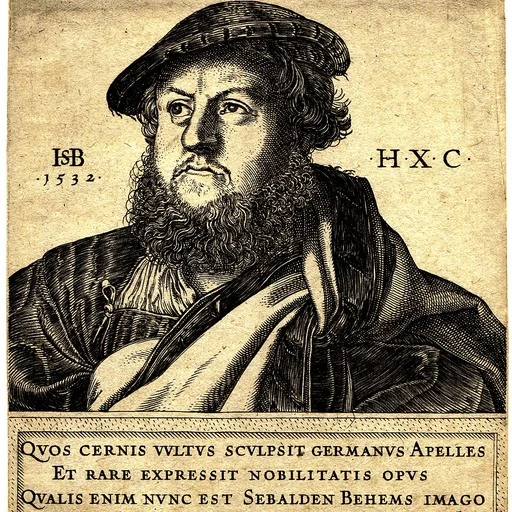
Artist
Sebald Beham (1500–1550) was a German painter and printmaker, mainly known for his very small engravings.