Artwork
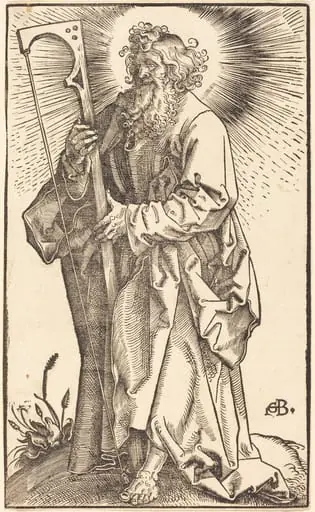
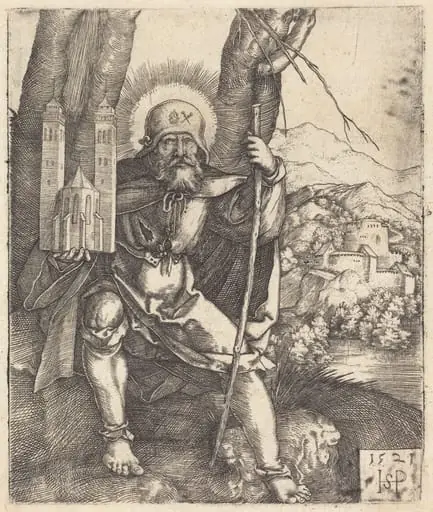
Saint Jerome Standing
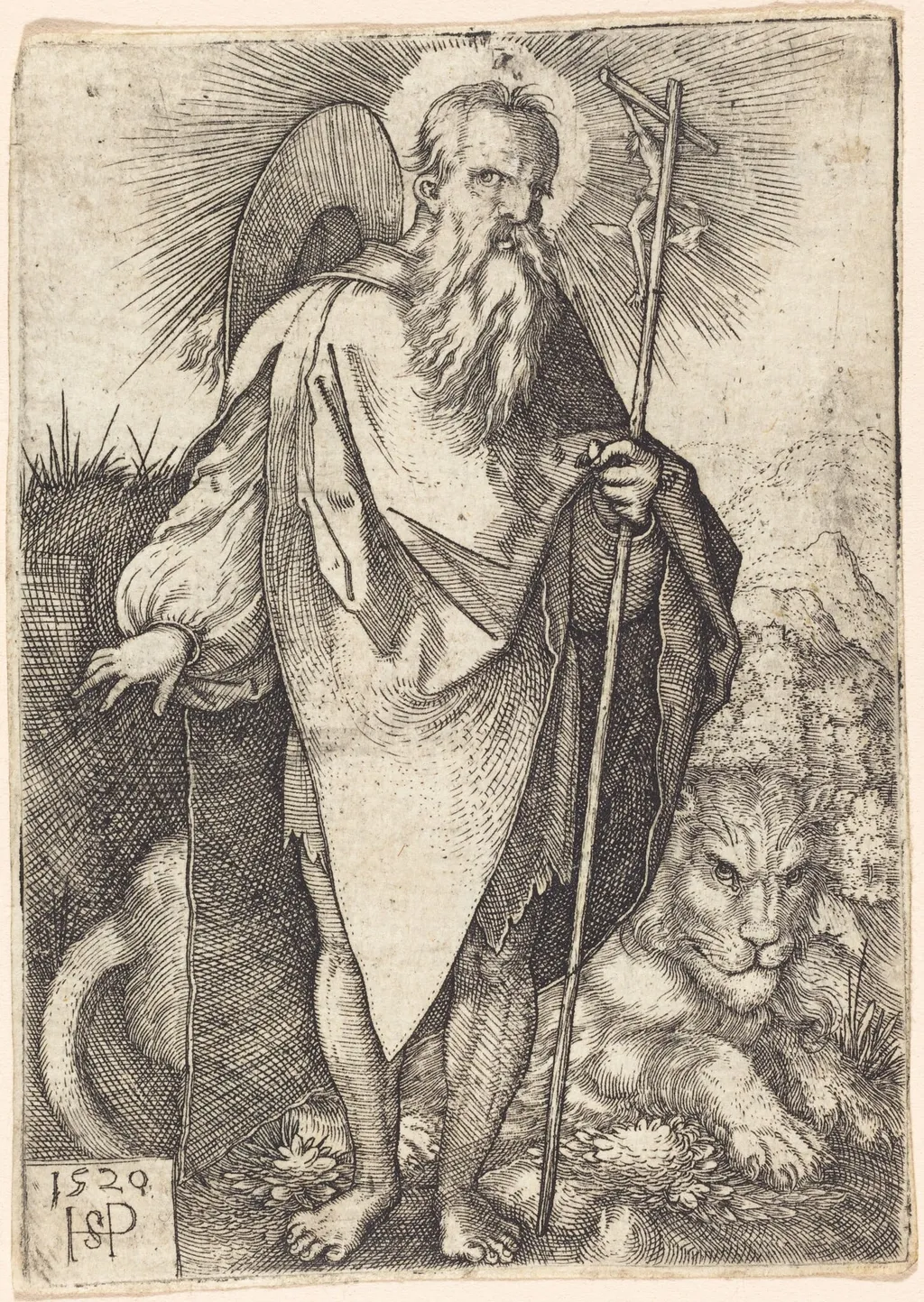
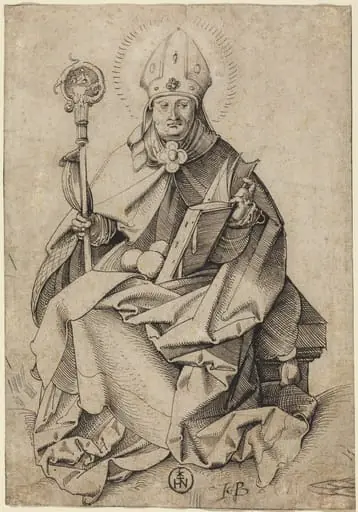
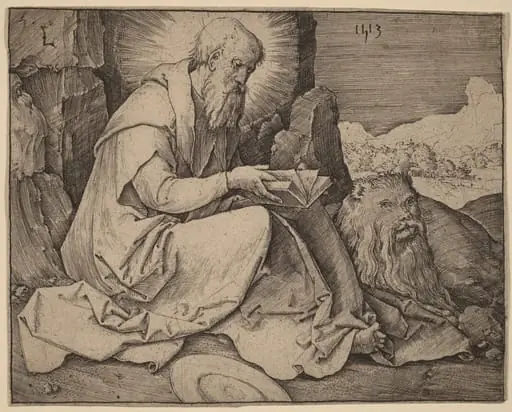
Saint Jerome Standing is an ink print by the Renaissance artist Sebald Beham. It dates from 1520 and is held in the collection of the National Gallery of Art.
About this work
This style of drawing with lots of crisscrossed lines is called cross-hatching—it creates shadows and depth without color.
This black-and-white print shows an older man with a long white beard and curly hair. He’s standing, holding a walking stick in one hand and a rock in the other. Behind him, a lion’s head peeks out from the grass, looking up at him. The man’s robe drapes loosely, and the background has rough, textured lines that look like hills or clouds.
The year "1520" is written in the corner, and the artist’s initials are there too. This style of drawing with lots of crisscrossed lines is called cross-hatching—it creates shadows and depth without color.
Next, check out how engraving works to make these detailed prints.
Overview
Sebald Beham, a Nuremberg‑born German printmaker active in the early sixteenth century, produced the engraving Saint Jerome Standing circa 1520. Executed in black ink on paper, the work presents a compact, highly detailed image typical of Beham’s miniature prints.
Subject & Meaning
The composition portrays Saint Jerome, the scholarly Church Father, in a full‑length stance. He holds a staff in one hand and a stone in the other, attributes linked to his ascetic life and the legend of him beating his heart with a rock. A lion’s head emerges from the surrounding foliage, recalling the traditional story of Jerome’s taming of a lion.
Technique & Style
Beham employed fine cross‑hatching to model the figure’s flesh, drapery, and background, achieving tonal variation without pigment. The engraving’s surface is densely worked, with intricate line work that renders the texture of the beard, the folds of the robe, and the rugged terrain behind the saint.
History & Provenance
The print bears the date 1520 and the artist’s monogram in the lower corner, confirming its early‑career date. As a member of the “Little Masters,” Beham produced works for a market of collectors who favored small, portable prints, and this piece circulated among such private collections in the decades following its issue.
Context
Beham’s output reflects the influence of Albrecht Dürer’s print innovations while maintaining a distinct, highly finished aesthetic. The focus on a solitary saint aligns with contemporary devotional trends, where intimate, personal images supported private meditation.
Legacy
Saint Jerome Standing exemplifies the precision and scale that defined the Little Masters’ contribution to Northern Renaissance printmaking, illustrating how engravers could convey complex iconography within a compact format.
Own this work as a print
Artist & collection
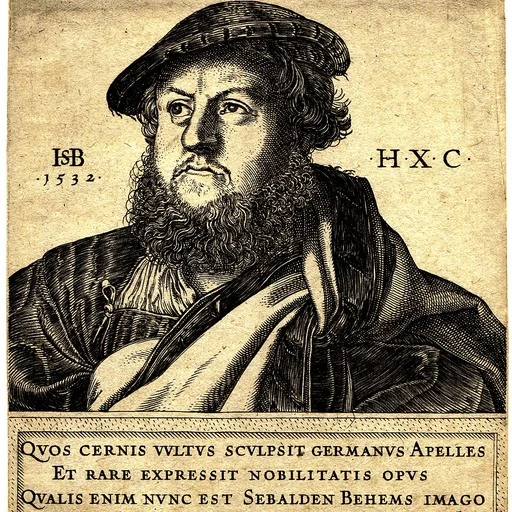
Artist
Sebald Beham (1500–1550) was a German painter and printmaker, mainly known for his very small engravings.