Artwork
The Shepherd
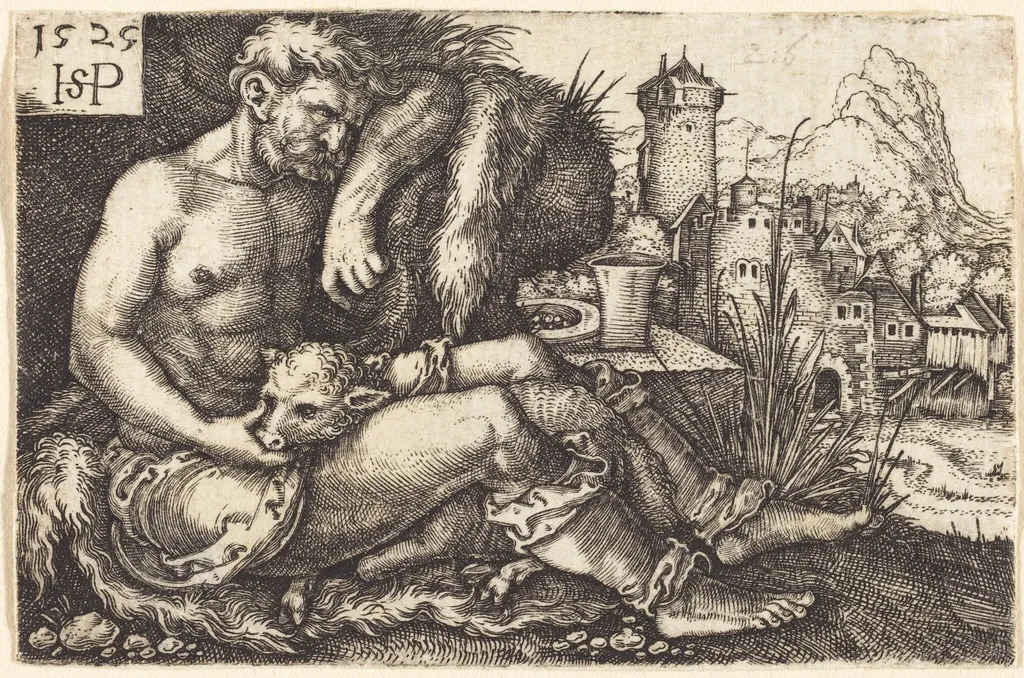
The Shepherd is an ink print by the Renaissance artist Sebald Beham. It dates from 1525 and is held in the collection of the National Gallery of Art.
About this work
Overview
Sebald Beham’s 1525 engraving titled *The Shepherd* presents a compact, densely detailed scene. A bearded figure is ensnared in a tangle of vines and thorns, while a sheep lies at his feet and a ram stands nearby. Beyond the foreground, a castle and a small village perch on a hill, linked by a winding path.
Subject & Meaning
The composition juxtaposes disorder and serenity: the chaotic foliage that imprisons the shepherd contrasts with the tranquil settlement in the distance. The presence of both a sheep and a ram emphasizes the pastoral theme, while the entanglement may suggest the hardships of rural life or a moral allegory about human struggle within nature.
Technique & Style
Beham employs precise, incisive lines and deep cross‑hatching to render texture, particularly in the man’s beard and the surrounding vegetation. The engraving’s fine detailing reflects the artist’s reputation for miniature works, achieving a high level of intricacy on a relatively small plate.
History & Provenance
Created during Beham’s early period in Nuremberg, the print exemplifies the output of the so‑called “Little Masters,” a group noted for their small‑scale, highly finished prints. After his Nuremberg years, Beham relocated to Frankfurt, where he continued to produce similar works.
Context
In the early sixteenth century, engraving emerged as a favored medium for disseminating detailed imagery. Artists like Beham carved designs into copper plates, allowing multiple impressions. *The Shepherd* illustrates the technical possibilities of the medium, showcasing how intricate narrative scenes could be reproduced for a broader audience.
Artist & collection
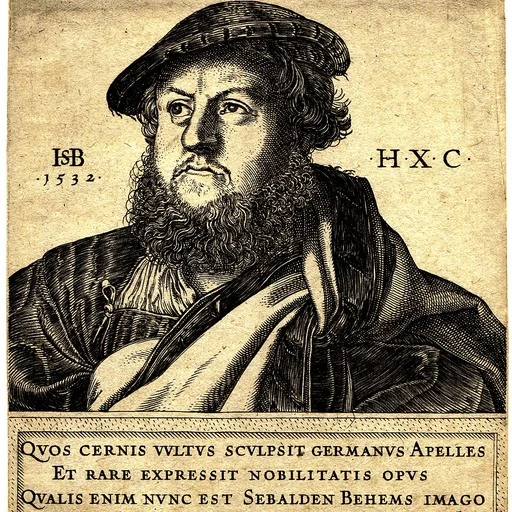
Artist
Sebald Beham (1500–1550) was a German painter and printmaker, mainly known for his very small engravings.


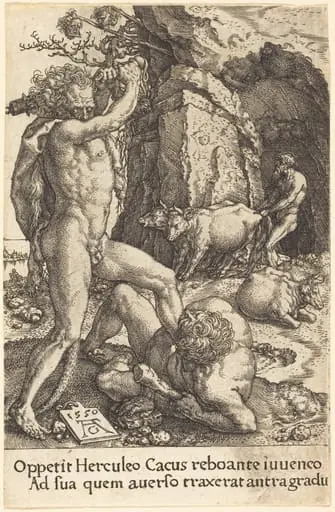 Hercules Killing Cacus
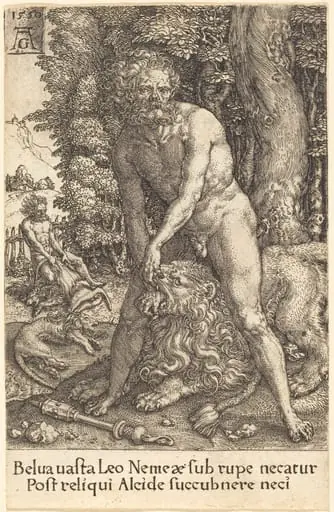 Hercules Slaying the Lion of Nemea
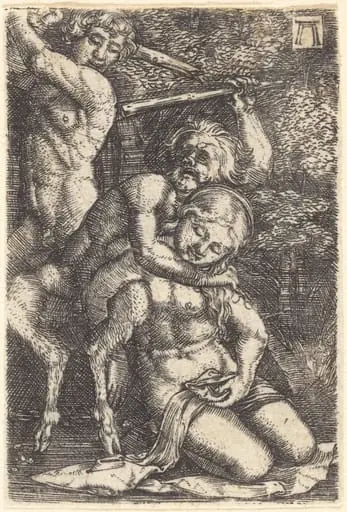 Two Satyrs Fighting about a Nymph
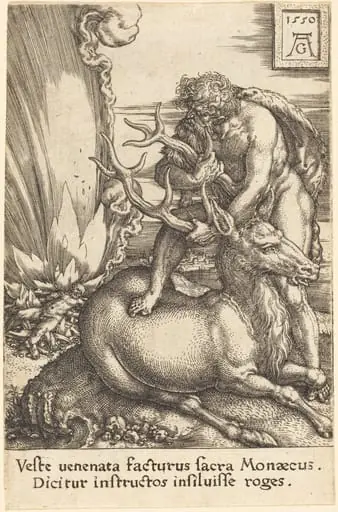 Hercules and the Hind
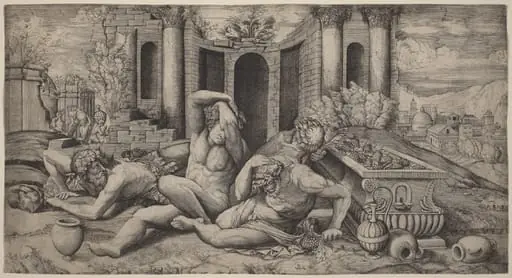 The Wine Bibbers
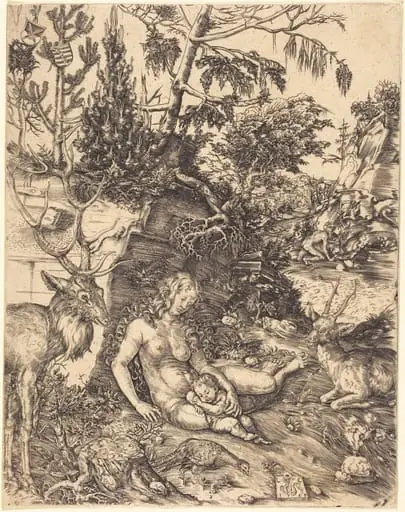 The Penance of Saint John Chrysostom
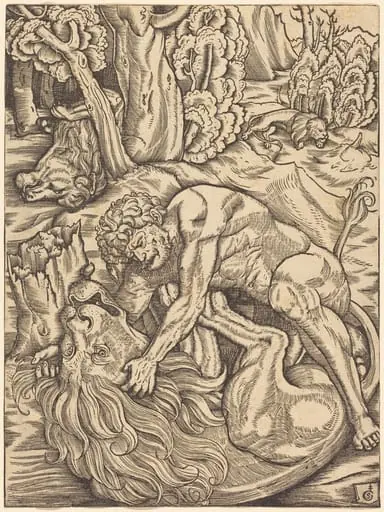 Hercules and the Nemean Lion
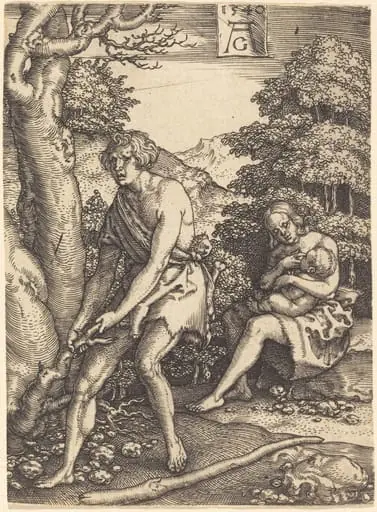 Adam and Eve at Work
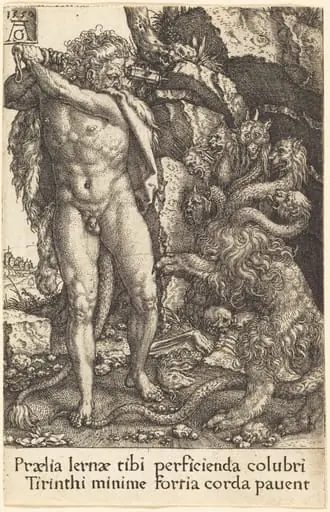 Hercules Fighting with the Hydra of Lernea
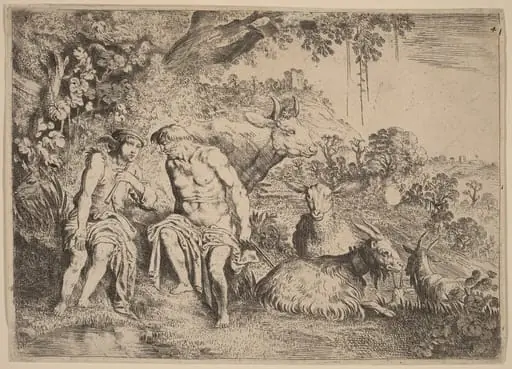 Mercury Lulling Argus to Sleep
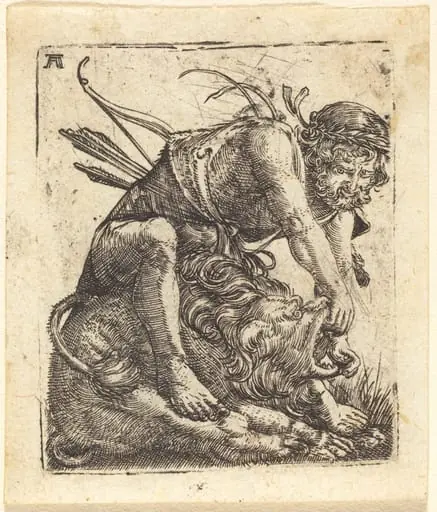 Hercules Overcoming the Nemean Lion
 Group of Five Figures