Artwork
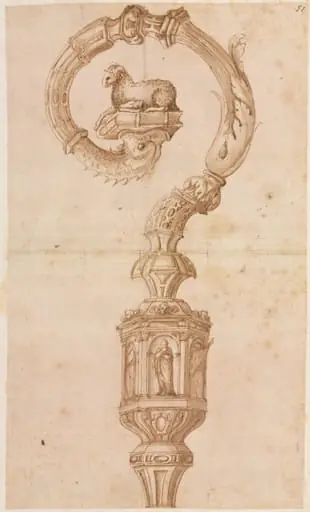
Design for a Candelabrum, Allegorical Figure of Abundance, Ornamental Relief Design
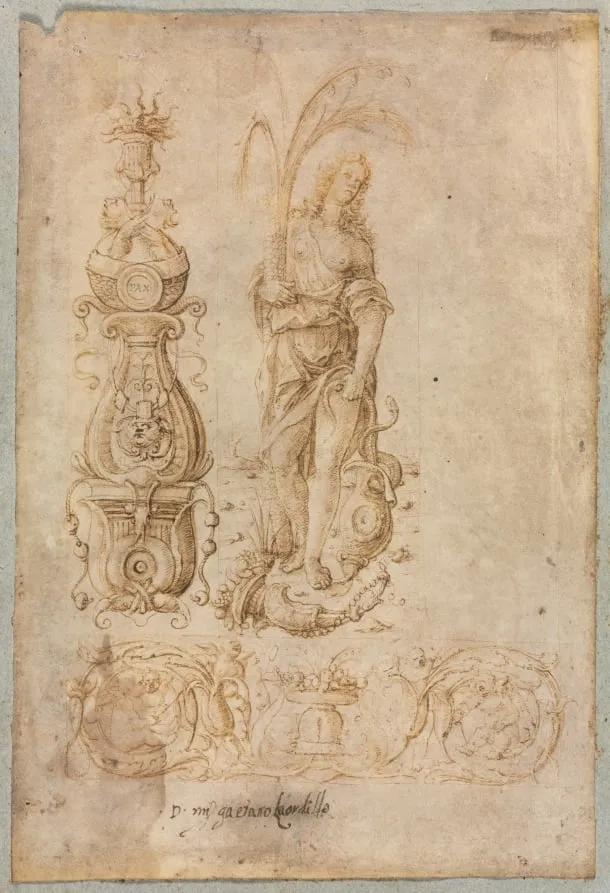
Design for a Candelabrum, Allegorical Figure of Abundance, Ornamental Relief Design is a drawing by the Renaissance artist Bernardo Parentino. It dates from 1494 and is held in the collection of the Cleveland Museum of Art.
About this work
Overview
Created around 1494 by Bernardo Parentino, this drawing functions as a preparatory design for a decorative candelabrum.
Created around 1494 by Bernardo Parentino, this drawing functions as a preparatory design for a decorative candelabrum. Rooted in the artistic traditions of the Venetian Republic, it merges classical allegory with ornamental craftsmanship. The composition centers on a female figure representing abundance, integrated into a structured framework meant for metalwork or relief carving, reflecting the Renaissance practice of uniting fine art with utilitarian objects.
Subject & Meaning
The central figure embodies Abundance, a classical allegory rendered in human form. She stands atop a marine creature, holding a sheaf of wheat—symbolizing fertility and prosperity. Her flowing garments and dynamic posture convey vitality, while the sea creature introduces a mythic element, common in Renaissance iconography. The design avoids overt religious reference, instead drawing on secular humanist ideals to celebrate earthly plenty and natural harmony.
Technique & Style
Parentino employed fine linear draftsmanship to define the figure and intricate candelabrum details. The contours are fluid yet precise, emphasizing movement in the drapery and the curling foliage of the base. The background is left lightly rendered, focusing attention on the central forms. The style reflects his training under Andrea Mantegna, combining classical proportions with a decorative sensibility suited to applied arts.
History & Provenance
Parentino, active in Padua during the late 15th century, was part of a network of artists producing designs for decorative objects in the Venetian sphere. This drawing likely served as a model for metalworkers or stucco artisans. While its exact commission remains undocumented, its existence attests to the demand for refined, humanist-inspired designs in domestic and ecclesiastical interiors of the period.
Context
In late 15th-century northern Italy, artists increasingly translated mythological and allegorical themes into functional art. Candelabra, once purely utilitarian, became vehicles for intellectual and aesthetic expression. Parentino’s design aligns with broader trends in Padua and Venice, where classical revival intersected with artisanal production, elevating everyday objects through symbolic and formal sophistication.
Legacy
Though Parentino’s painted works are scarce, this drawing illustrates how Renaissance draftsmen contributed to the material culture of their time. It exemplifies the blurred boundary between fine and decorative arts, influencing later generations of designers who sought to embed allegory into household furnishings. The piece remains a testament to the period’s belief in art’s capacity to elevate the mundane.
Artist & collection
Artist
Bernardo Parentino, also known as Bernardo Parenzano (Italian; Croatian: Bernard Porečan) (c.

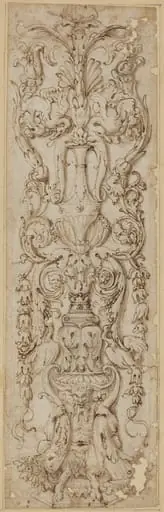 Grotesque with a Satyr
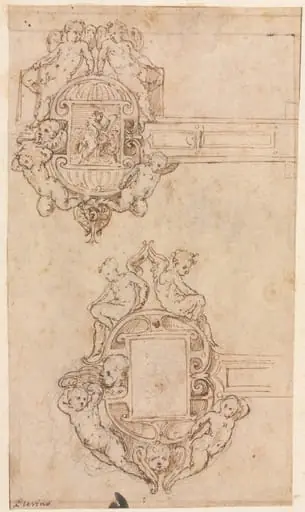 Design for Decorative Hinges (recto)
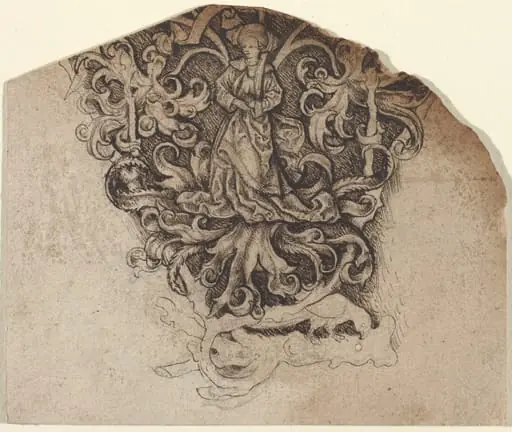 Gothic Ornament with a Lady and a Parrot
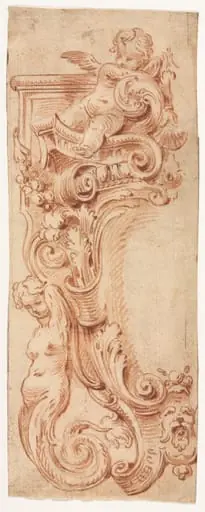 Design for a Cartouche
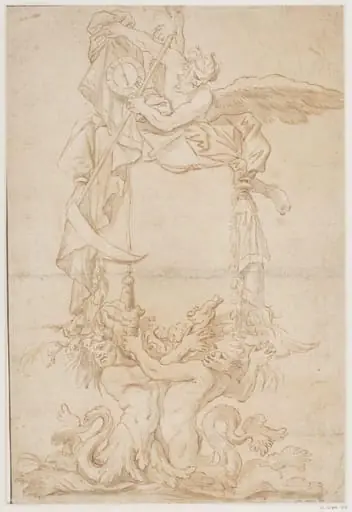 Ornamental design, probably for a title page: a figure of Time resting on a cartouche held up by a pair of tritons and holding a clock
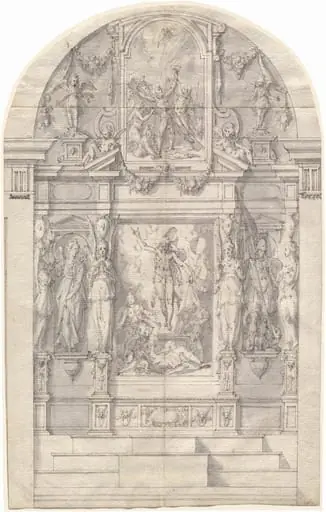 An Elaborate Altar with the Resurrection of Christ and the Martyrdom of Saint Andrew
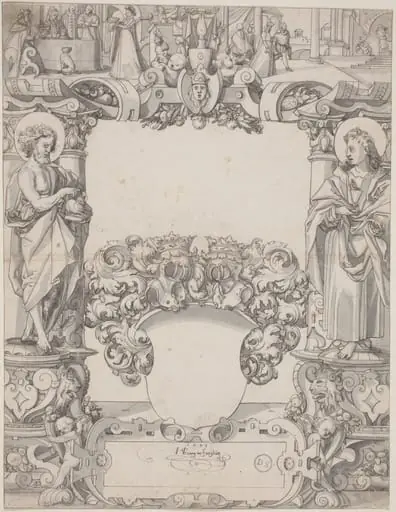 Glass Design with Saint John the Baptist and Saint John the Evangelist
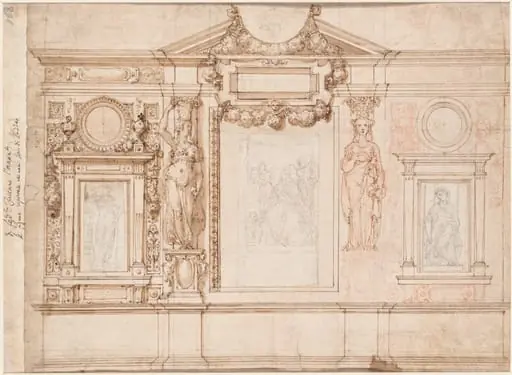 Design for a Wall Decoration with Pasted-in Sketches after Raphael (verso)
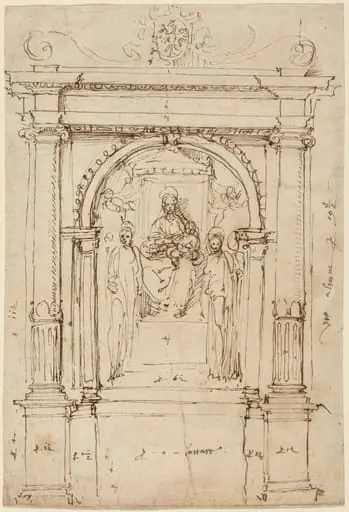 Altarpiece of the Madonna and Child with Saints, in Its Architectural Setting
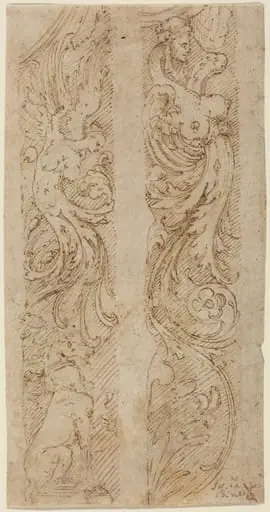 Grotesque Decorations for Wall Panels
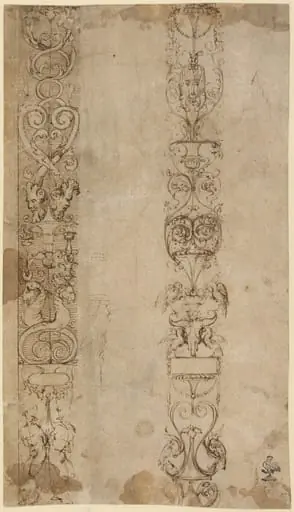 Grotteschi
 Design for a Crozier