Artwork
Grotesque Decorations for Wall Panels
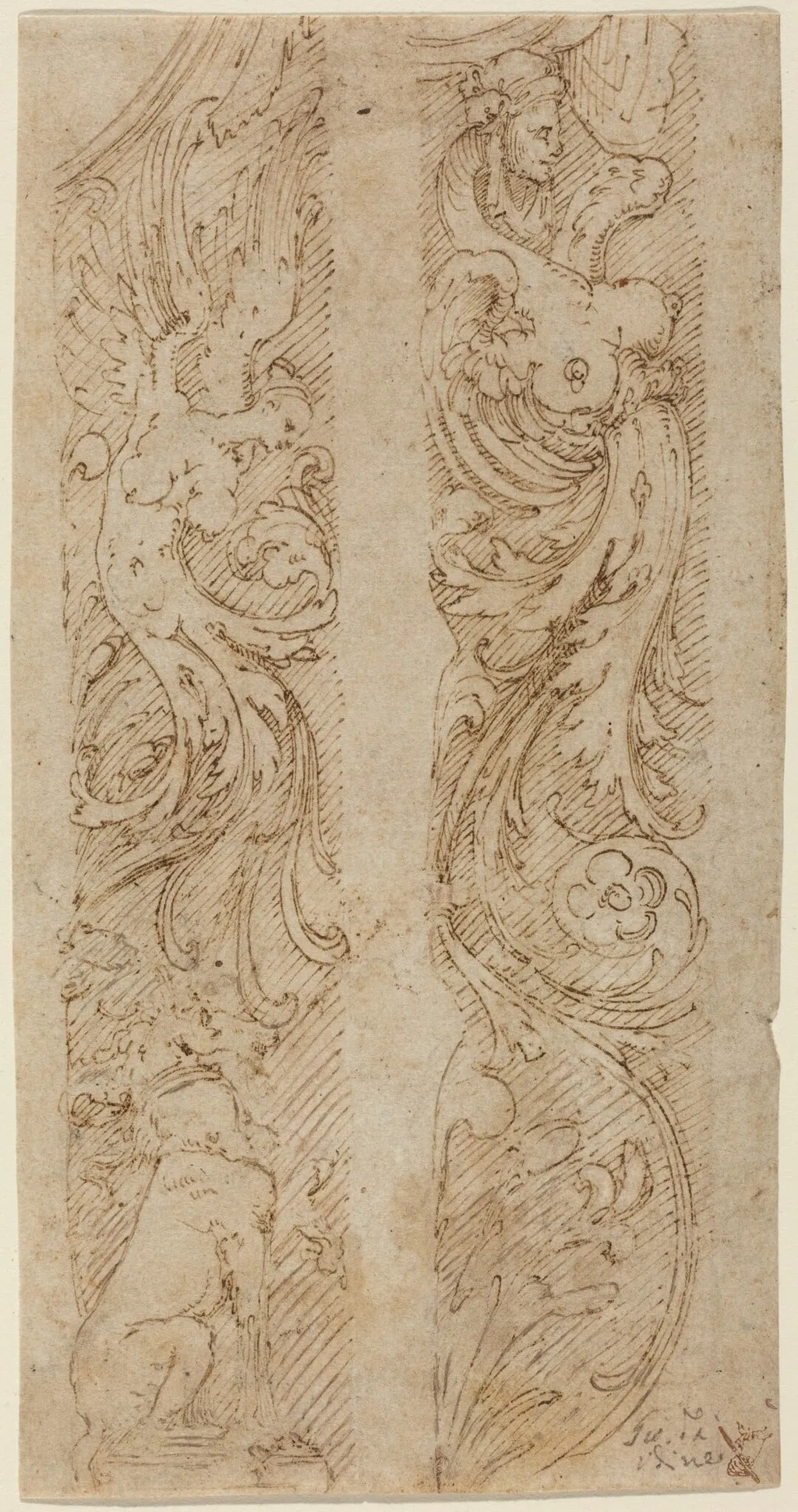
Grotesque Decorations for Wall Panels is an ink drawing by the Renaissance artist Giovanni da Udine. It dates from 1530 and is held in the collection of the National Gallery of Art.
About this work
Overview
Created circa 1530, this pen-and-brown-ink drawing on laid paper presents two elongated panels densely covered with interlacing, fanciful motifs.
Created circa 1530, this pen-and-brown-ink drawing on laid paper presents two elongated panels densely covered with interlacing, fanciful motifs. The composition is dominated by swirling forms that incorporate miniature foliage, stylized faces, and hybrid creatures, all rendered with a vigorous, sketch‑like hand. The work exemplifies the kind of ornamental study that would later be transferred to wall surfaces in Renaissance interiors.
Subject & Meaning
The drawing functions as a design template rather than a narrative scene. Its ornamental vocabulary—ornate scrolls, vegetal sprigs, grotesque masks, and fantastical beasts—reflects a fascination with the exotic and the decorative. By juxtaposing natural elements with imagined figures, the artist explores the tension between order and imagination that characterized Renaissance decorative programs.
Technique & Style
Executed with pen in brown ink, the artist employs cross‑hatching and varied line density to suggest volume and shadow across the intricate patterns. The use of laid paper provides a subtle texture that interacts with the ink’s tonal range. The rapid, almost improvisational line work reveals a study phase, intended to be refined and transferred onto architectural surfaces.
History & Provenance
Attributed to Giovanni da Udine, a native of Udine born in 1487 who worked closely with Raphael, the drawing aligns with his known role in reviving Roman ornamental schemes. Though the original commission is undocumented, the piece likely served as a preparatory sketch for wall decoration projects in early‑sixteenth‑century Italian palaces.
Context
During the High Renaissance, a renewed interest in ancient Roman decorative motifs prompted artists like Udine to produce pattern books and design sketches. These studies supplied architects and craftsmen with a repertoire of grotesques—stylized, hybrid figures—that could be adapted to frescoes, stucco, and wood paneling, integrating classical references into contemporary interiors.
Artist & collection

Artist
Giovanni Nanni, also Giovanni de' Ricamatori, better known as Giovanni da Udine (1487–1564), was an Italian painter and architect born in Udine. A painter also named Giovanni da Udine was exiled from his native city in 1472.

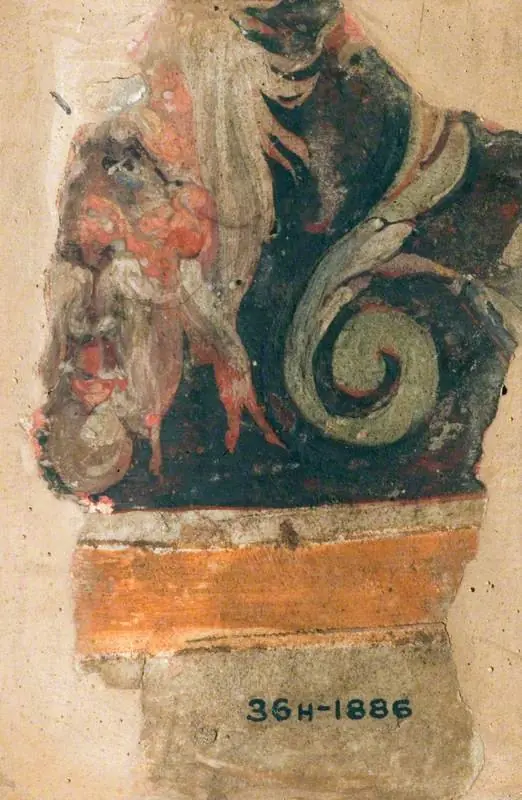 Decorative Pattern (fragment of a wall decoration)
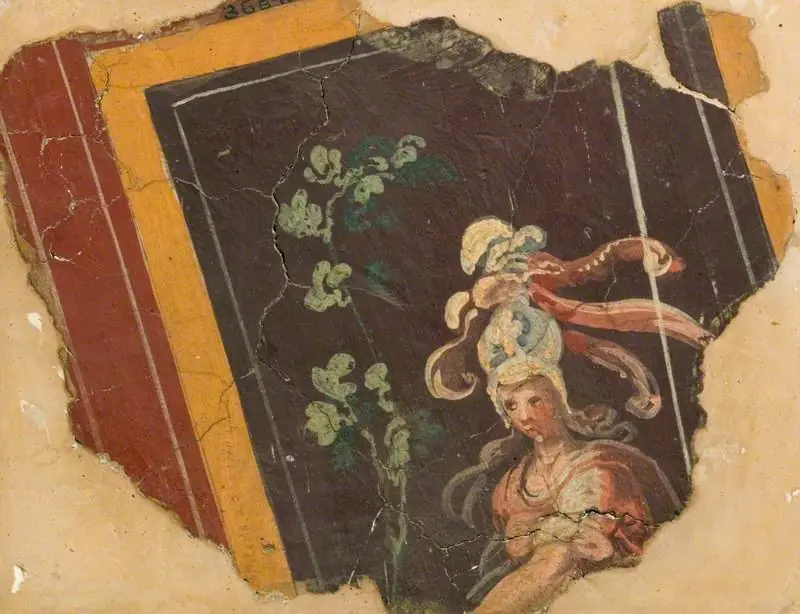 Upper Half of a Decorative Figure, with the Remnant of a Rectangular Frame (fragment of a wall decoration)
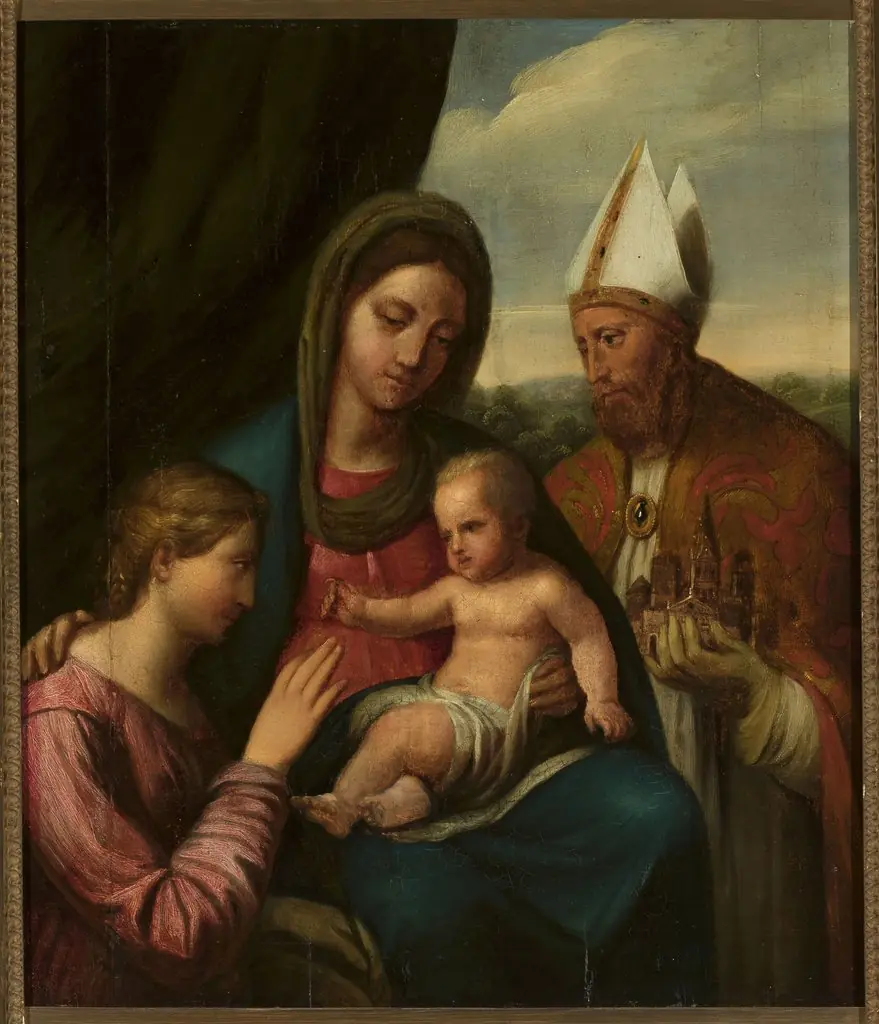 Mystical marriage of St. Catherine
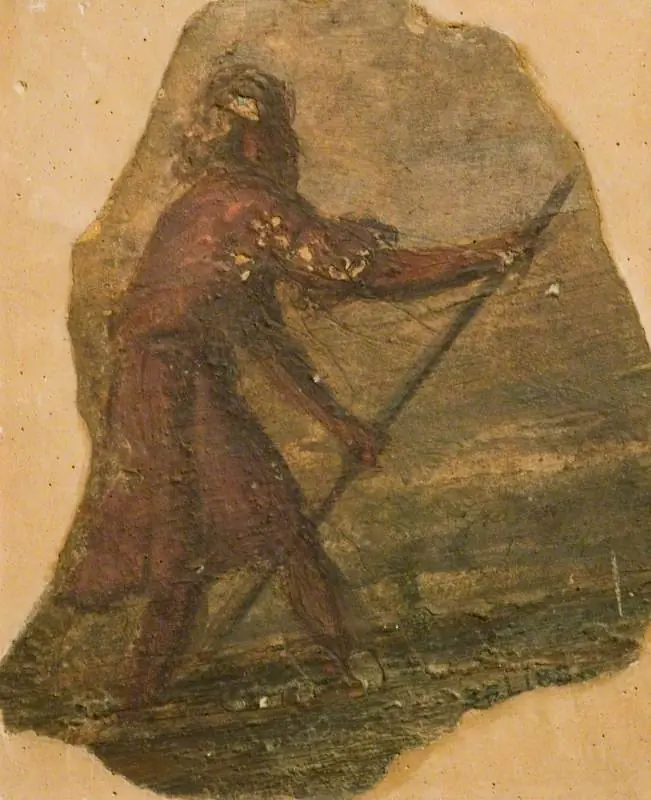 A Figure in the Attitude of Punting (fragment of a wall decoration)
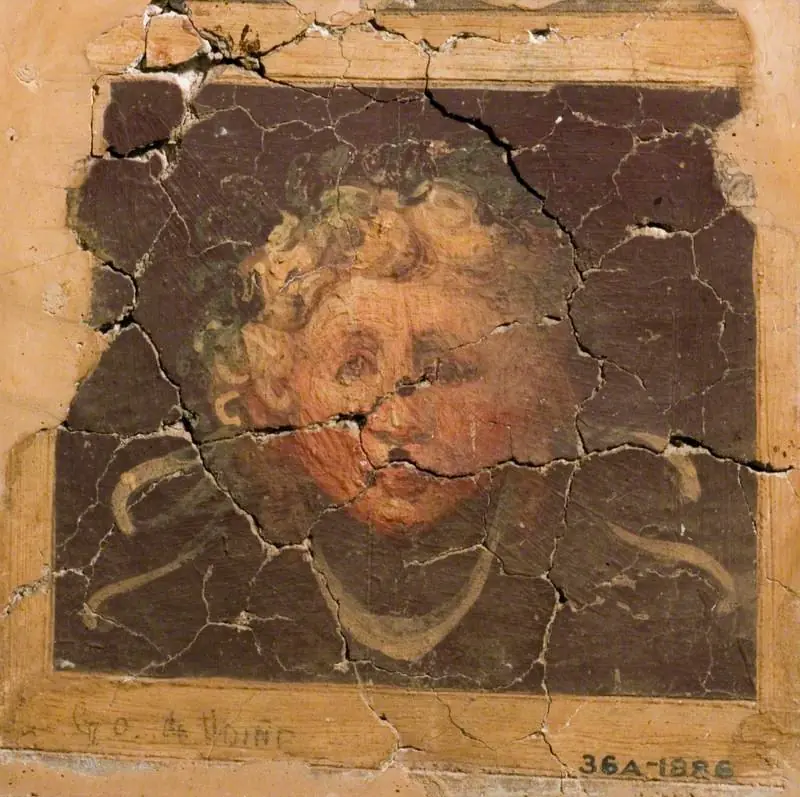 Female Head Framed by a Pattern of Ribbons (fragment of a wall decoration)
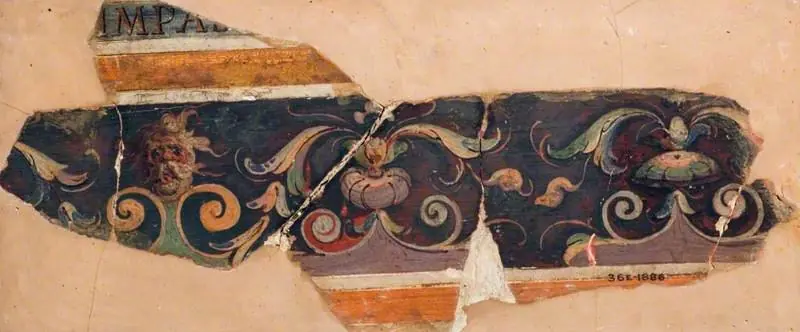 Part of a Decorative Frieze (fragment of a wall decoration)
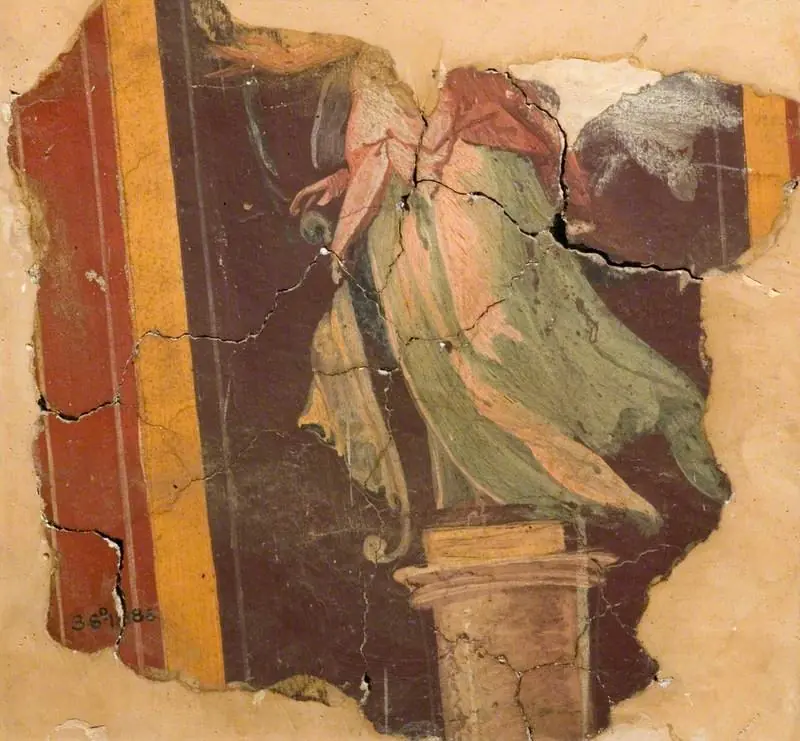 Lower Half of a Decorative Figure (fragment of a wall decoration)
 Grotteschi
 Grotesque with a Satyr
 Design for a Cartouche
 Design for Decorative Hinges (recto)
 An Elaborately Sculpted Frame
 Two Kings and a Woman Leaving an Elaborate Palace
 Design for a Frieze with a Putto and Acanthus Leaves
 An Architectural Study with an Atlantid
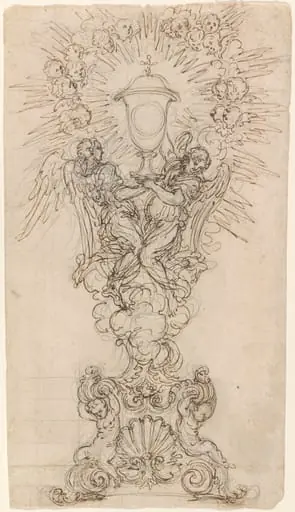 A Monstrance with Two Angels Supporting a Chalice
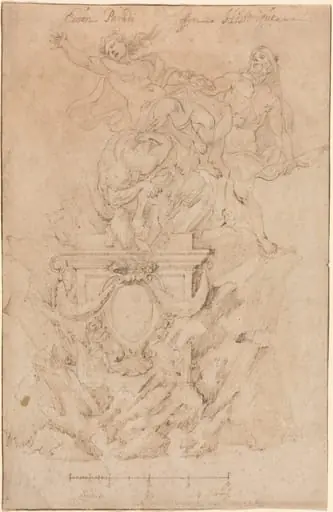 The Rescue of Deianeira
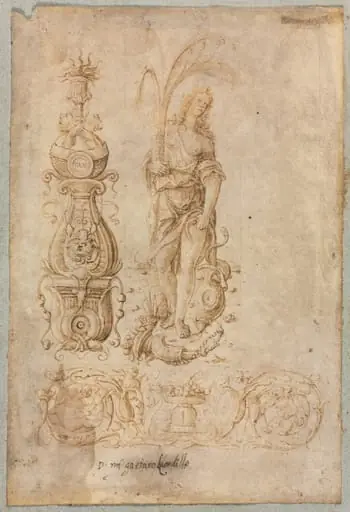 Design for a Candelabrum, Allegorical Figure of Abundance, Ornamental Relief Design
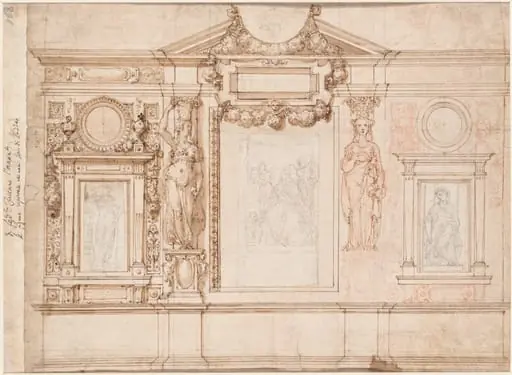 Design for a Wall Decoration with Pasted-in Sketches after Raphael (verso)