Artwork
Hot Springs
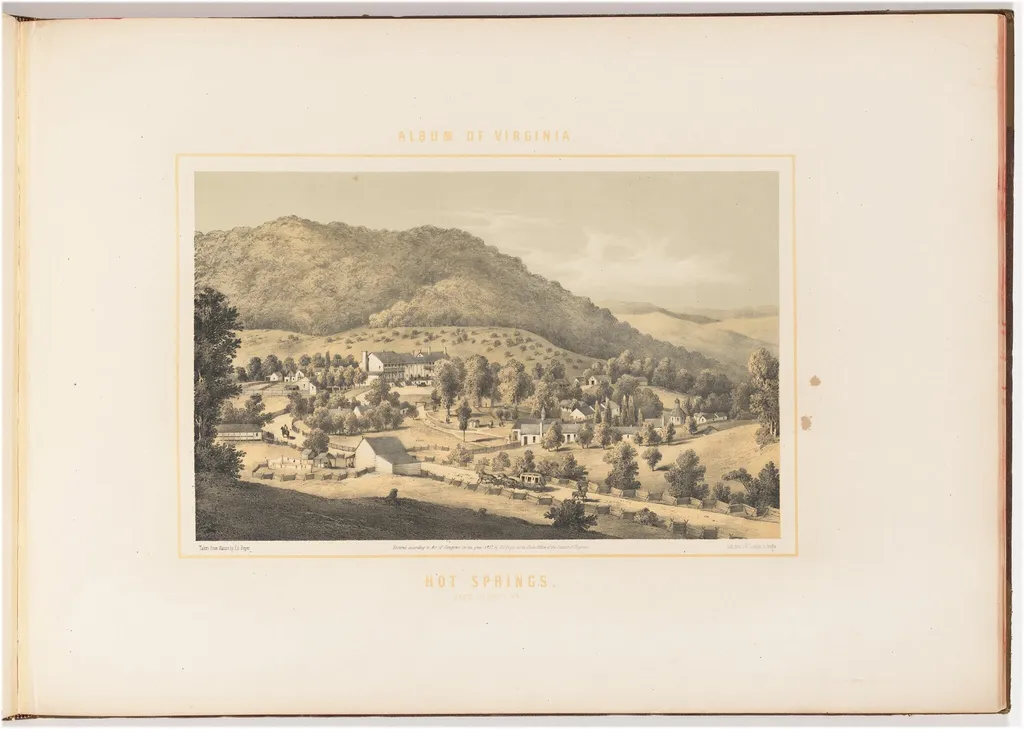
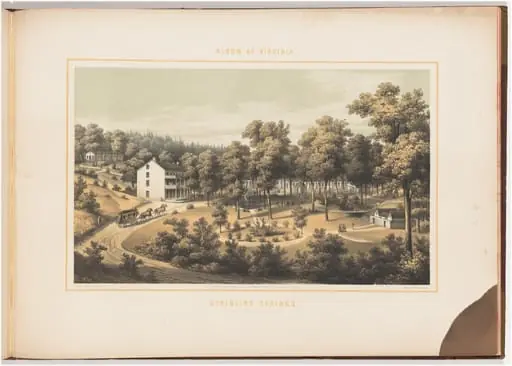
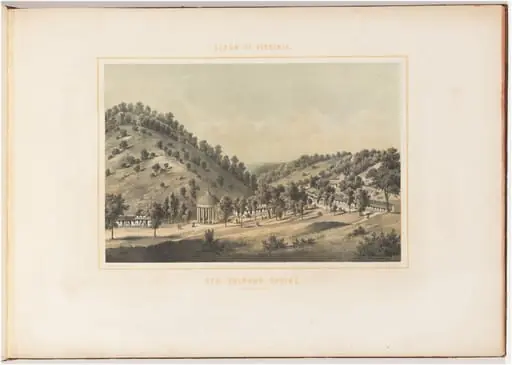
Hot Springs is an ink print by the Impressionist artist Edward Beyer. It dates from 1857 and is held in the collection of the National Gallery of Art.
About this work
Overview
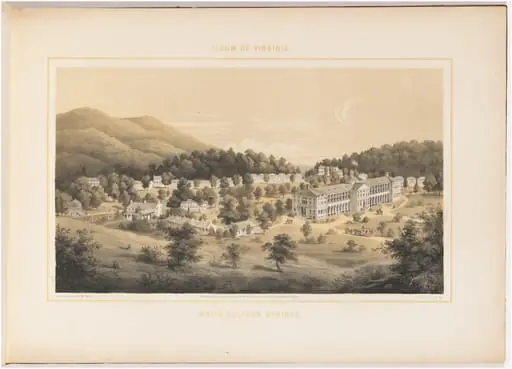
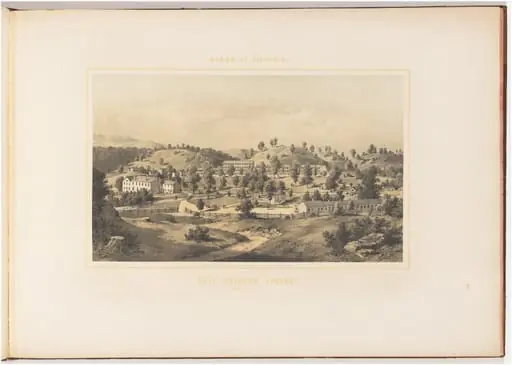
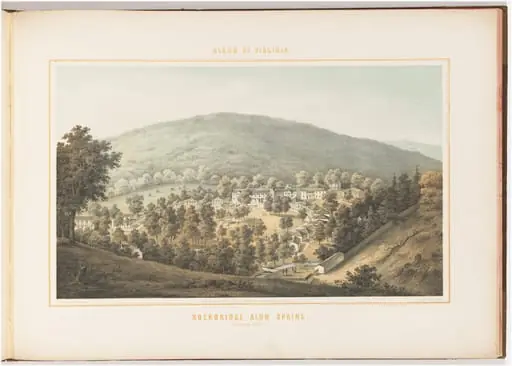
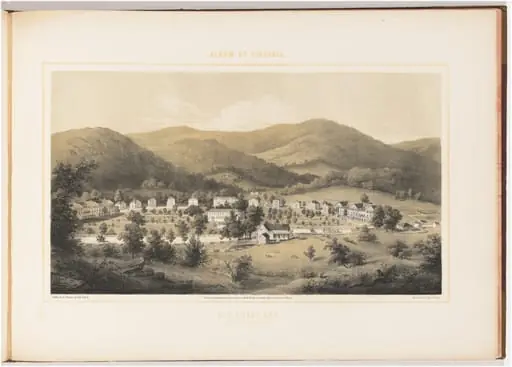
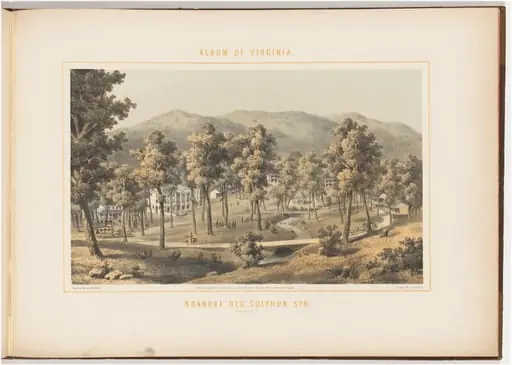
Created in 1857, *Hot Springs* is a color lithograph executed on wove paper by the German‑born artist Edward Beyer, who worked primarily in the United States. The print presents a tranquil landscape dominated by a small settlement nestled among rolling hills, trees, and a natural spring, rendered in a muted palette of earth tones.
Subject & Meaning
The composition centers on a modest town set within a verdant valley, its structures dispersed among fields and woodland. In the distance, gentle hills and distant mountains frame the scene, while the eponymous springs suggest a source of water and repose. The work reflects a 19th‑century fascination with documenting the American terrain and its pastoral settlements.
Technique & Style
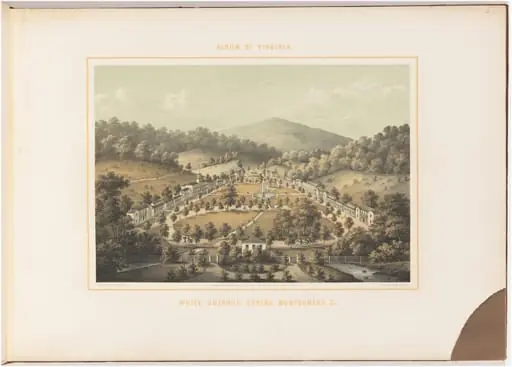
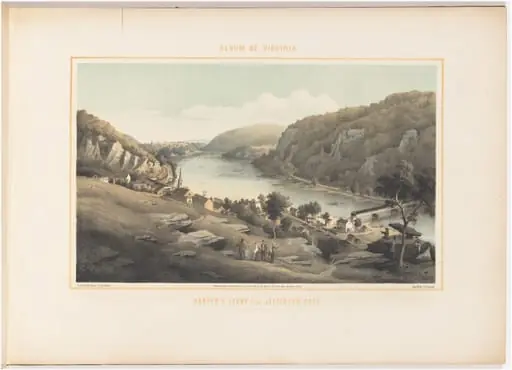
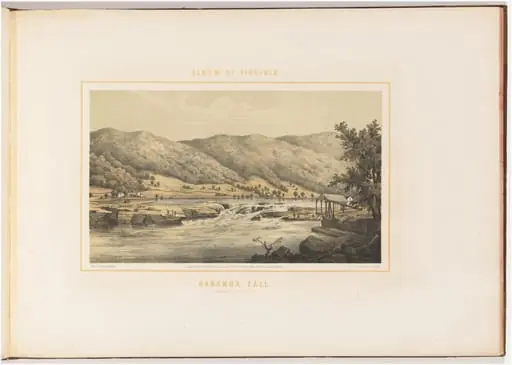
Beyer employed the color lithography process, layering multiple stones to achieve a range of hues on the wove paper surface. The image is characterized by precise, realistic detailing and a restrained color scheme of browns, greens, and grays, emphasizing texture and depth without resorting to the loose brushwork associated with later Impressionist approaches.
History & Provenance
Produced during Beyer’s active period in the United States, the lithograph aligns with his broader output of Southern landscapes prior to the Civil War. While specific ownership records are limited, the print has been cited in surveys of mid‑19th‑century American topographical art, illustrating the period’s interest in lithographic reproduction of scenic views.
Artist & collection
Artist
Edward Beyer (1820–1865) was a German landscape painter who was active in the United States and became known for his depiction of the Antebellum South.