Artwork
Emperors Charles V and Ferdinand I
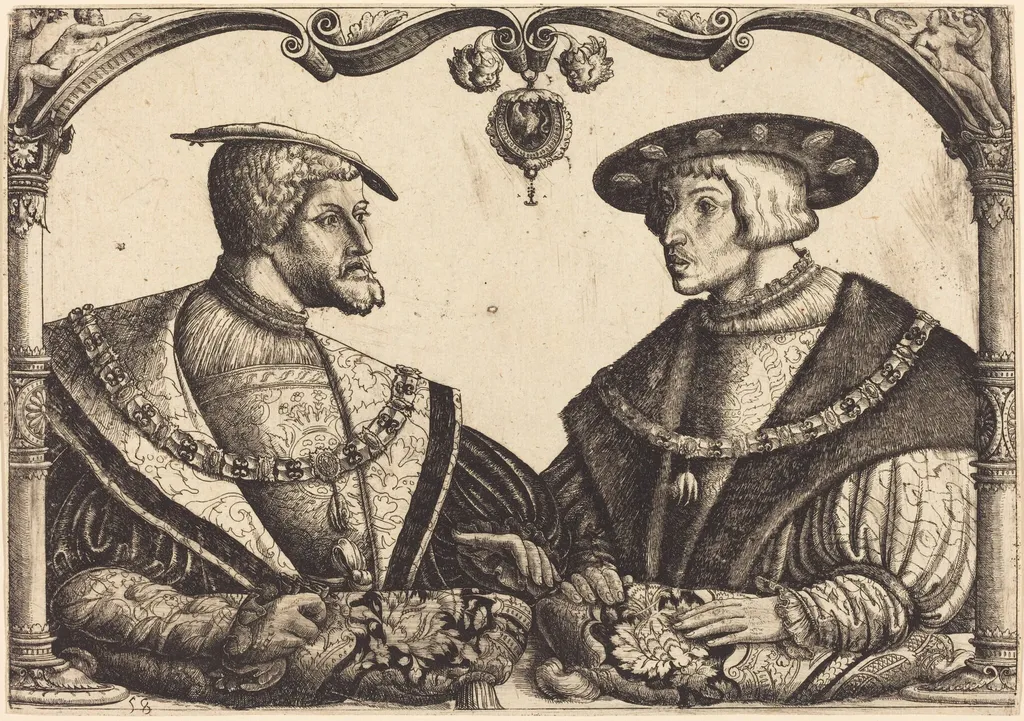
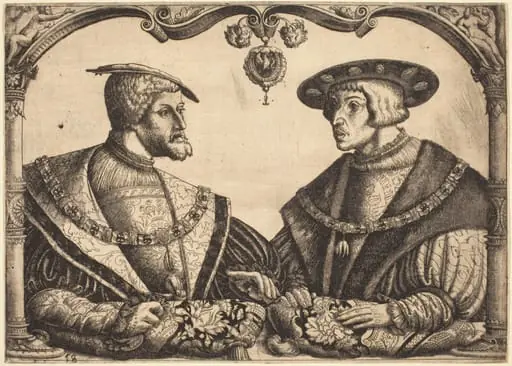
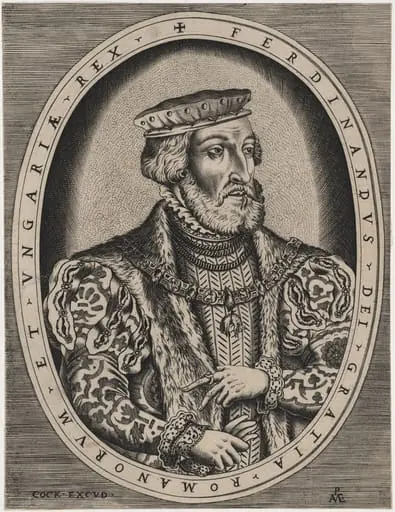
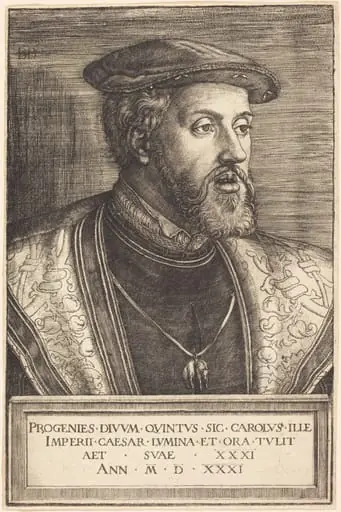
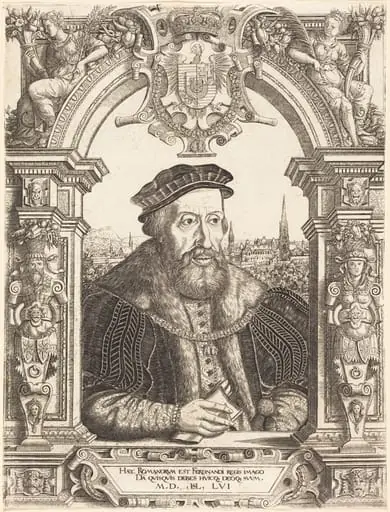
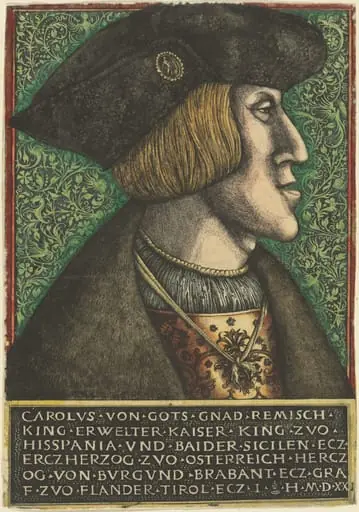
Emperors Charles V and Ferdinand I is an ink print by the Renaissance artist Christoph Bockstorfer. It dates from 1531 and is held in the collection of the National Gallery of Art.
About this work
Overview
Executed in iron, the print belongs to the early 16th-century tradition of reproductive engraving, used to disseminate images of ruling figures.
Created around 1531, this etching by Christoph Bockstorfer depicts the Holy Roman Emperors Charles V and Ferdinand I. Executed in iron, the print belongs to the early 16th-century tradition of reproductive engraving, used to disseminate images of ruling figures. The work reflects the growing demand for visual representations of imperial authority beyond painted portraits, leveraging the precision and reproducibility of etching as a medium.
Subject & Meaning
The print portrays Charles V and his brother Ferdinand I side by side, likely emphasizing their shared imperial role and dynastic continuity. Charles, as the senior emperor, and Ferdinand, who would later succeed him in the Austrian hereditary lands, are presented with formal dignity. Their juxtaposition reinforces the Habsburg strategy of consolidating power through familial alliance and institutional stability during a period of religious and political upheaval.
Technique & Style
Bockstorfer employed etching on iron, a method involving acid-resistant grounds and incised lines to transfer imagery onto a metal plate. The technique allowed for fine, controlled detail, suitable for rendering facial features and armor. The style is restrained and linear, prioritizing clarity and likeness over expressive flourish, aligning with the documentary aims of court portraiture in the early Reformation era.
History & Provenance
The etching was produced during Charles V’s reign, likely for distribution among nobility or imperial officials. Its survival suggests it was preserved in aristocratic or institutional collections, possibly within Habsburg territories. While no definitive early ownership records are widely documented, its existence reflects the broader circulation of printed imperial imagery in Central Europe during the 1530s.
Context
In the early 1530s, the Holy Roman Empire faced challenges from Protestant reformers and external threats. Visual propaganda, including prints, became vital for asserting imperial legitimacy. Bockstorfer’s work fits within a wave of printed portraits commissioned to project unity and continuity, countering fragmentation by reinforcing the Habsburgs’ divine right and dynastic cohesion through accessible imagery.
Legacy
Though not widely reproduced in modern scholarship, the etching remains a tangible example of how printmaking served political messaging in the 16th century. It contributes to the understanding of how rulers leveraged new technologies to shape public perception. Bockstorfer’s work, alongside contemporaries, helped establish etching as a tool for imperial representation beyond the elite sphere of painting.
Artist & collection