Artwork
Amoris virus hominem...
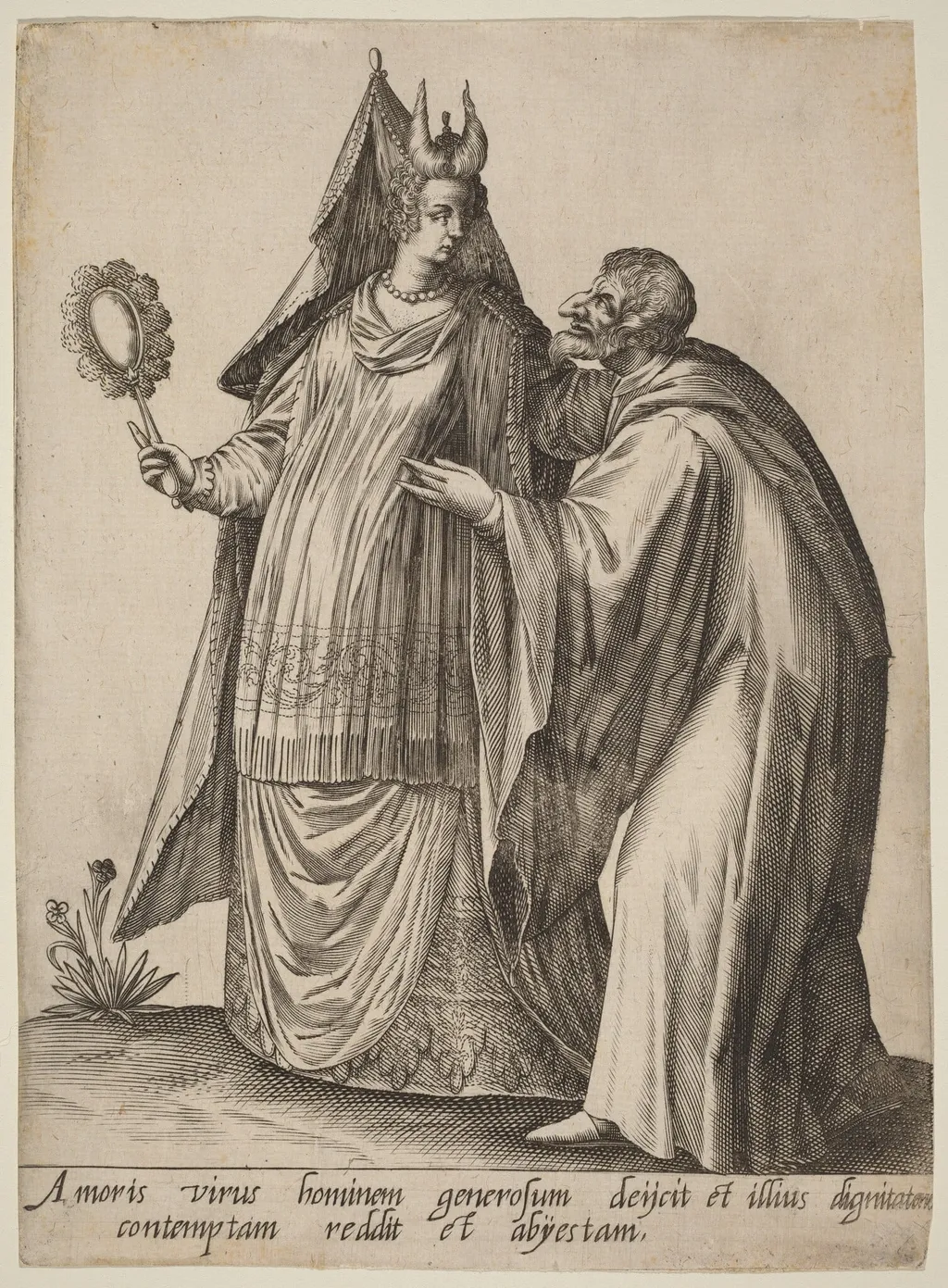
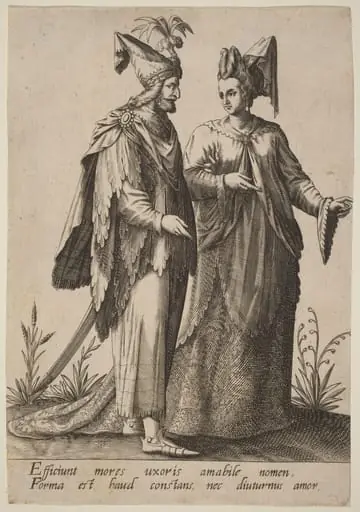
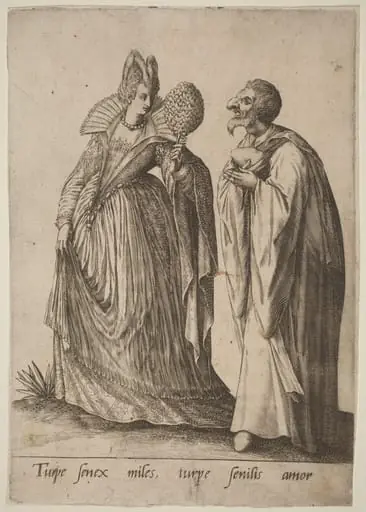
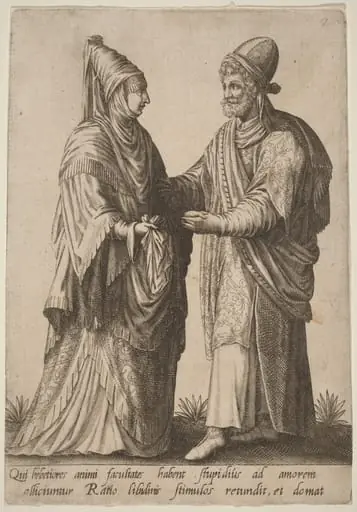
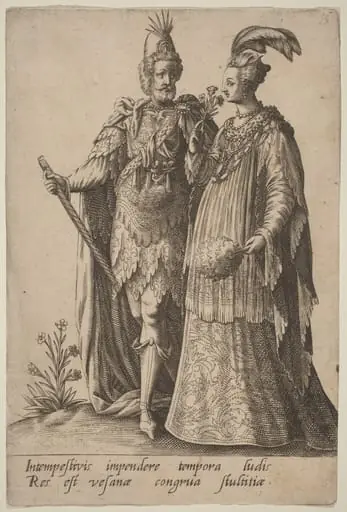
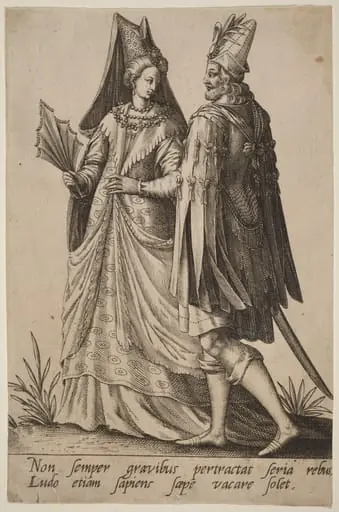
Amoris virus hominem... is an ink print by the Renaissance artist Robert Boissard. It dates from 1597 and is held in the collection of the National Gallery of Art.
About this work
Overview
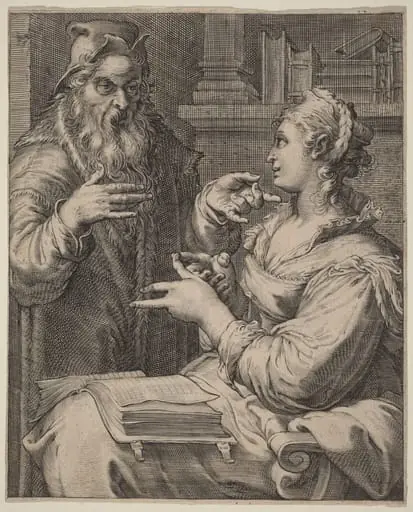
Robert Boissard’s 1597 engraving, titled *Amoris virus hominem…*, presents a modestly lit interior where a woman in a heavy robe and hooded cloak holds a small mirror, while a man leans toward her with a solemn expression. The composition is anchored by a plain floor and a solitary potted plant in the corner, all rendered in fine line work typical of the period.
Subject & Meaning
The juxtaposition of the woman’s reflective object and her austere attire suggests an allegorical commentary on vanity or pride. The man’s attentive gaze reinforces a moralizing tone, echoed by a Latin inscription beneath the scene that appears to deliver a cautionary lesson about love’s corrupting influence, though the exact phrasing remains partially illegible.
Technique & Style
Executed as an engraving, the work relies on intricate incised lines to model light, texture, and depth. Boissard’s handling of chiaroscuro—contrasting the dim interior with the illuminated surfaces of the mirror and fabric—demonstrates the precision of early modern printmaking, where tonal variation is achieved through dense cross‑hatching and stippling.
History & Provenance
Created in the late sixteenth century, the print reflects the didactic genre popular in Northern Europe, where moralizing scenes were disseminated through affordable prints. While specific ownership records are scarce, the work is catalogued among Boissard’s extant prints and appears in several nineteenth‑century collections of Renaissance engravings.
Context
Boissard operated within a network of engravers who translated moral and religious themes into portable images for a growing literate public. The Latin caption aligns the piece with contemporary emblem books, which paired symbolic illustrations with explanatory verses to instruct viewers on ethical conduct.
Legacy
Although not widely reproduced, the engraving exemplifies the didactic function of early modern prints and contributes to scholarly understanding of how visual art reinforced moral discourse in the pre‑modern era. Its detailed line work continues to be referenced in studies of Renaissance engraving techniques.
Artist & collection