Artwork
Marie-Antoinette
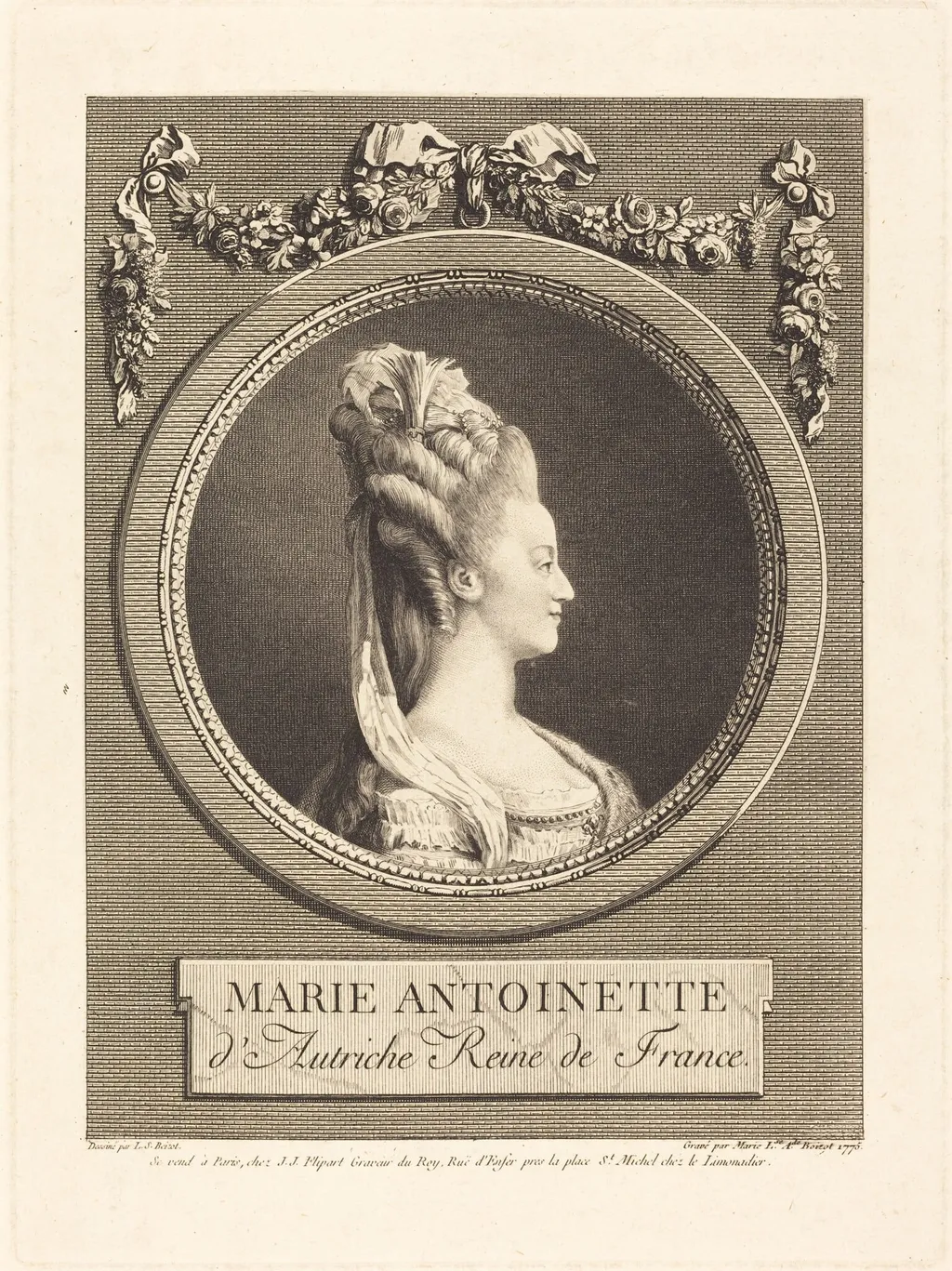
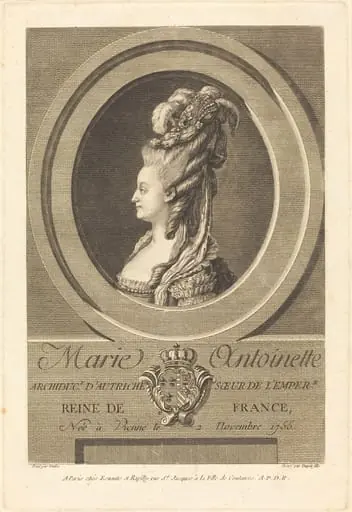
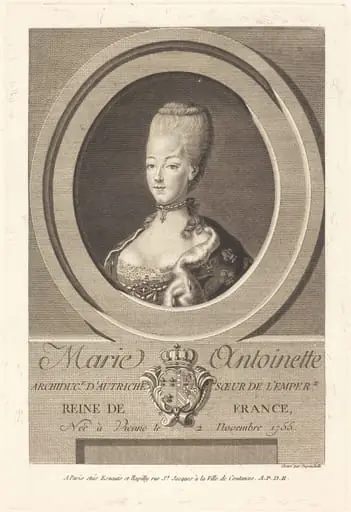
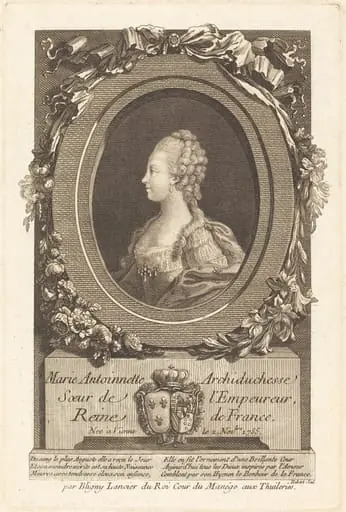
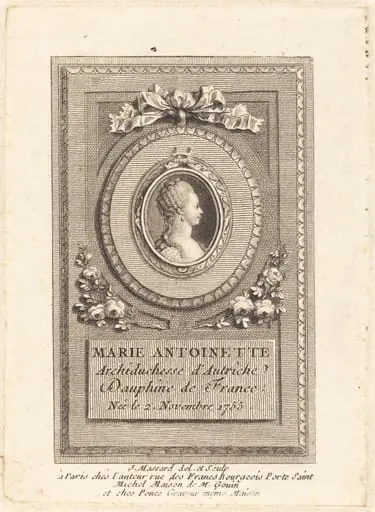
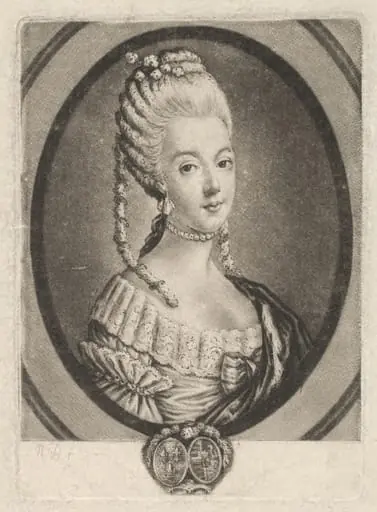
Marie-Antoinette is an ink print by the Romanticist artist Marie Louise Adelaide Boizot. It dates from 1775 and is held in the collection of the National Gallery of Art.
About this work
Overview
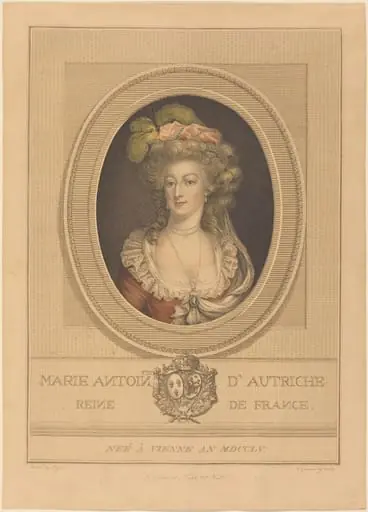
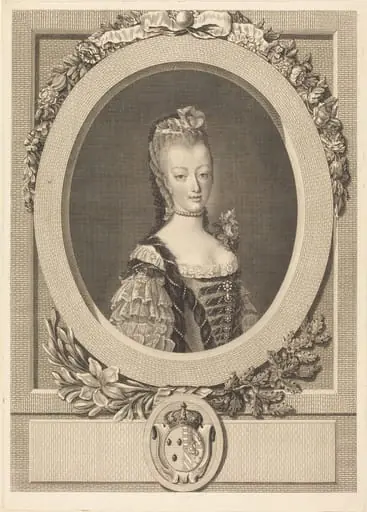
This print presents a portrait of a woman with an elaborate, curled coiffure, dressed in an ornate gown trimmed with lace and accented by a pearl necklace. The composition is enclosed by a decorative frame featuring floral motifs and swirling patterns, and the inscription below identifies the sitter as Marie‑Antoinette, Queen of France.
Subject & Meaning
The image depicts Marie‑Antoinette, the future queen consort of Louis XVI, emphasizing her aristocratic status through luxurious attire and refined accessories. The inclusion of regal titles underscores her political position, while the decorative border reinforces the courtly elegance associated with the French monarchy of the late eighteenth century.
Technique & Style
Executed as an engraving on laid paper, the work was produced by incising lines into a metal plate, allowing the artist to render fine details such as the lace trim and hair curls. The stark black‑and‑white palette highlights contrast and texture, characteristic of eighteenth‑century printmaking that favored precise line work over tonal shading.
History & Provenance
Created in 1775 by the French artist Marie‑Louise Adelaide Boïzot, the print emerged shortly before Marie‑Antoinette’s marriage to the dauphin. Boïzot, known for her portrait engravings, likely produced the image for circulation among courtly patrons, contributing to the visual dissemination of the queen’s likeness during her early years in France.
Artist & collection