Artwork
Marie Antoinette d'Autriche Reine de France
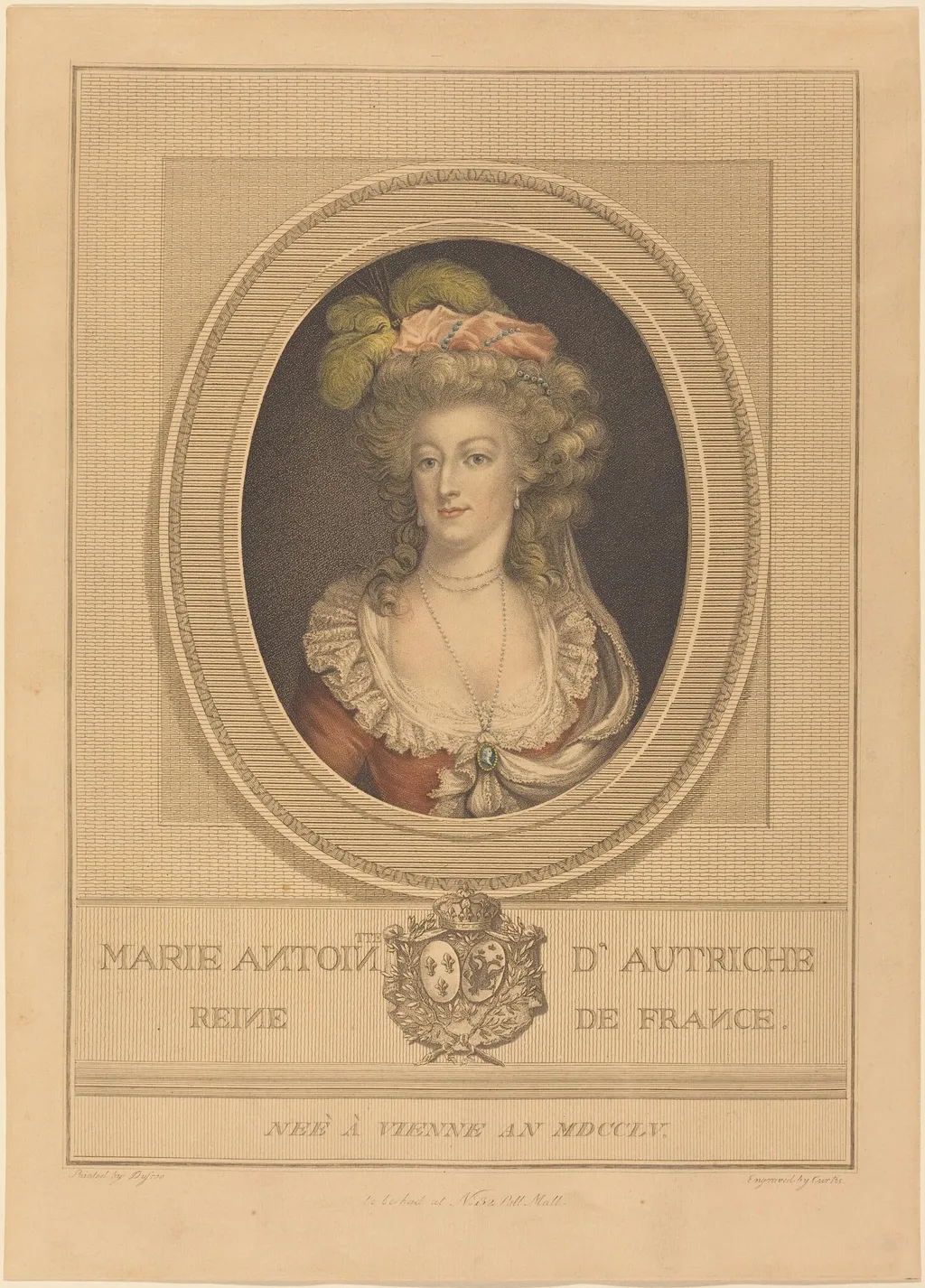
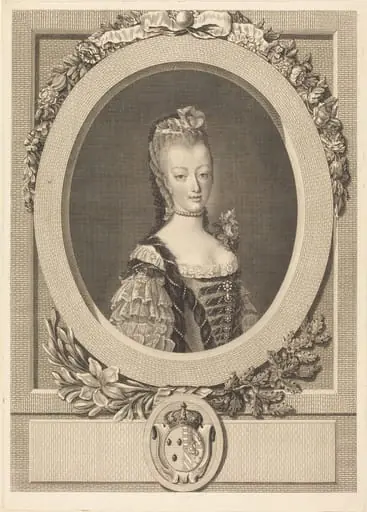
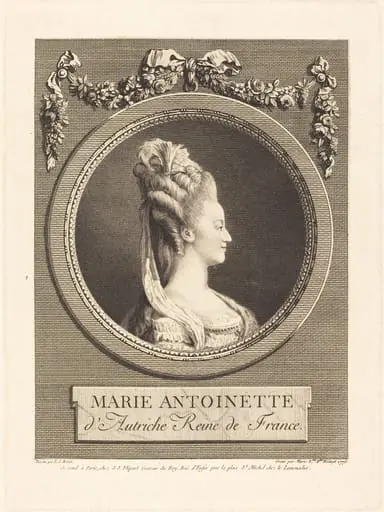
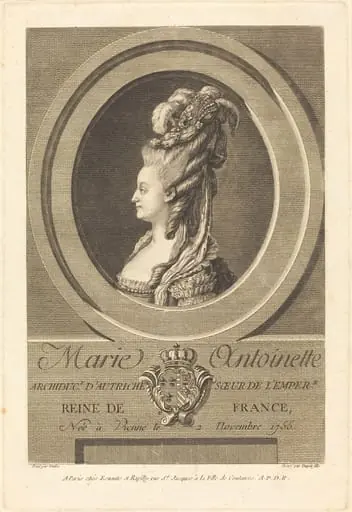
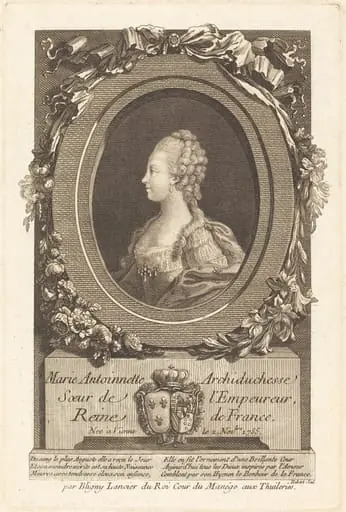
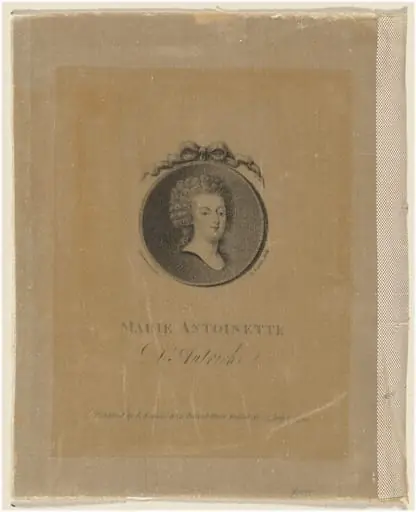
Marie Antoinette d'Autriche Reine de France is an ink print by the Romanticist artist J. Curtis. It dates from 1801 and is held in the collection of the National Gallery of Art. Created in 1801 by the English printmaker J.
About this work
Overview
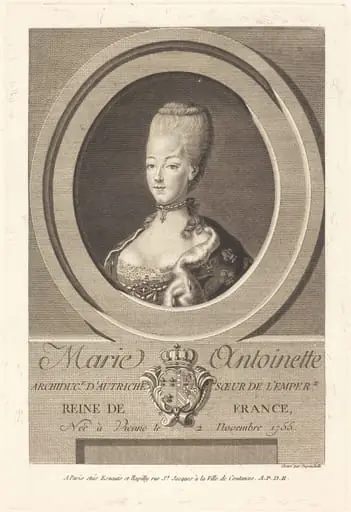
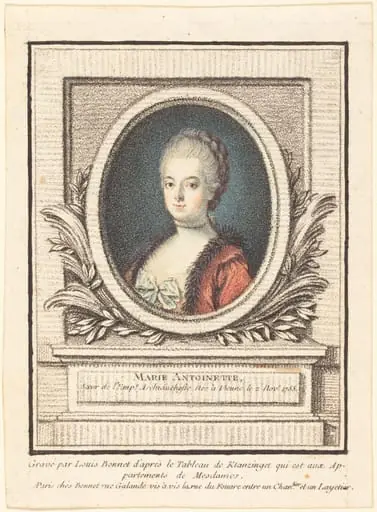
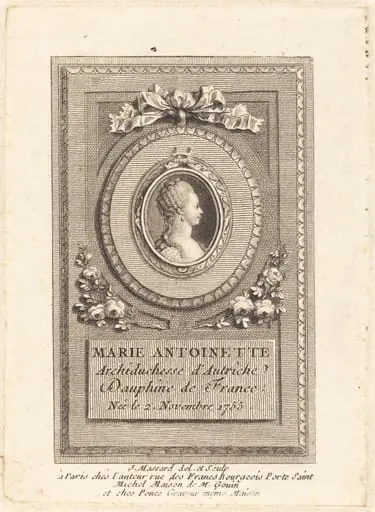
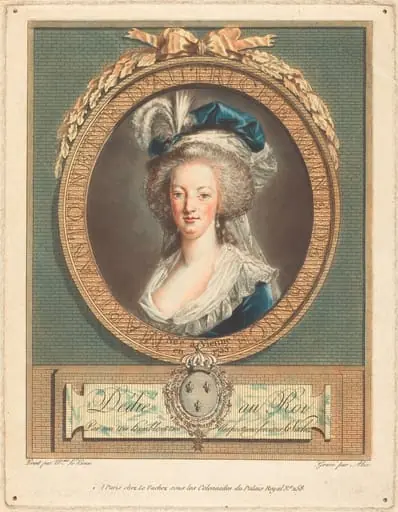
Created in 1801 by the English printmaker J. Curtis, this work is an etched and stipple portrait on laid paper that has been hand‑coloured. It presents a likeness of Marie Antoinette, the Austrian-born queen of France, rendered in a format typical of early‑19th‑century commemorative prints.
Subject & Meaning
The image portrays the former queen with her hair gathered into an updo, accented by a pink ribbon and a few stray curls that frame her face. She wears a white gown trimmed with a red sash and a prominent necklace, her gaze directed straight ahead with a composed, neutral expression, suggesting a dignified yet restrained presence.
Technique & Style
Curtis employed a combination of etching and stipple engraving, allowing for delicate tonal variations, before applying hand‑applied colour to enhance the fabrics and accessories. The chiaroscuro of the dark background against the illuminated figure reflects the Romantic interest in dramatic contrast and individual character.
History & Provenance
The print was produced shortly after the turn of the century, a period when interest in the tragic fate of Marie Antoinette resurfaced in European art and literature. It likely circulated as a decorative or commemorative item, though specific ownership records for this particular impression are not documented.
Context
Emerging during the Romantic era, the portrait aligns with the movement’s focus on personal emotion and historical nostalgia. By emphasizing the queen’s solitary demeanor and elegant attire, the work participates in the broader 19th‑century fascination with figures of the French Revolution.
Legacy
While not a singularly celebrated masterpiece, the print exemplifies early Romantic printmaking techniques and contributes to the visual record of Marie Antoinette’s posthumous representation in European culture.
Artist & collection