Artwork
Marie-Antoinette
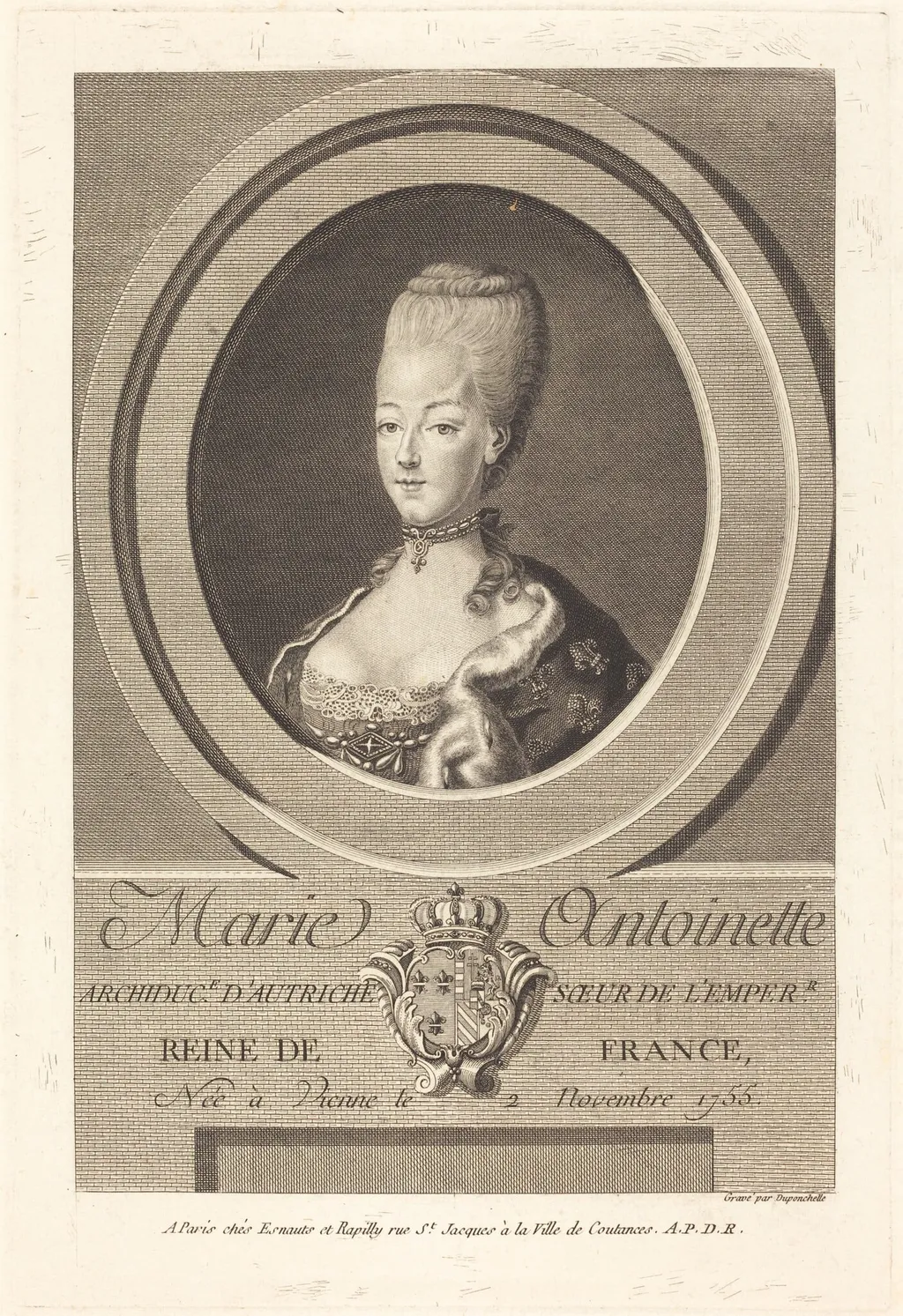
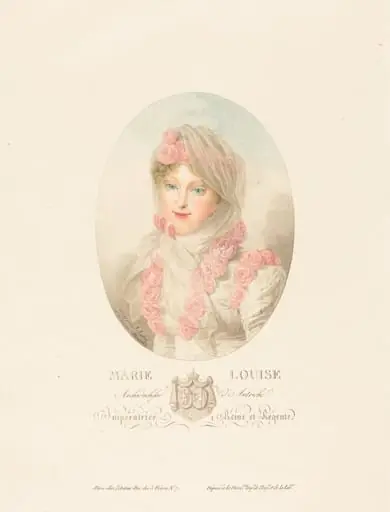
Marie-Antoinette is an ink print by the Romanticist artist Charles-Eugene Duponchel. It dates from 1774 and is held in the collection of the National Gallery of Art. Created in 1774, this print presents a portrait of Marie‑Antoinette, styled as the Queen of France.
About this work
Overview
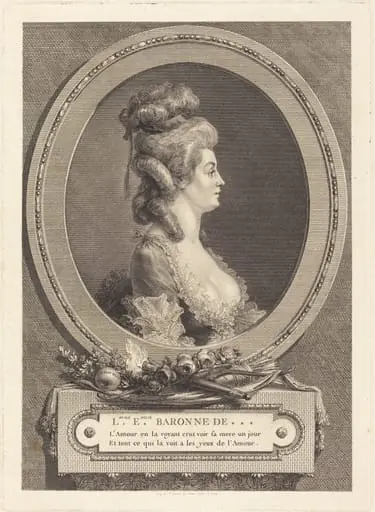
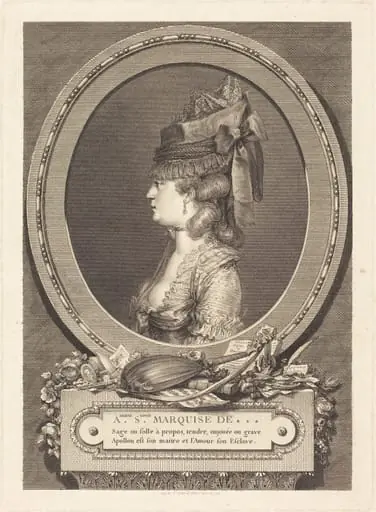
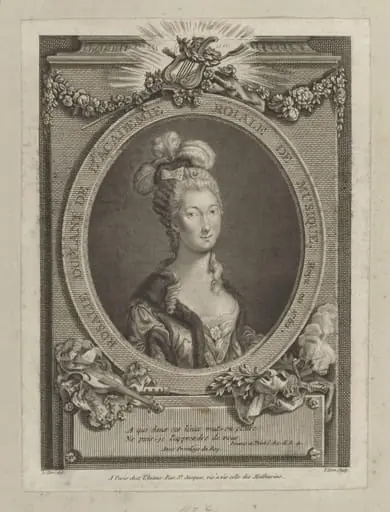
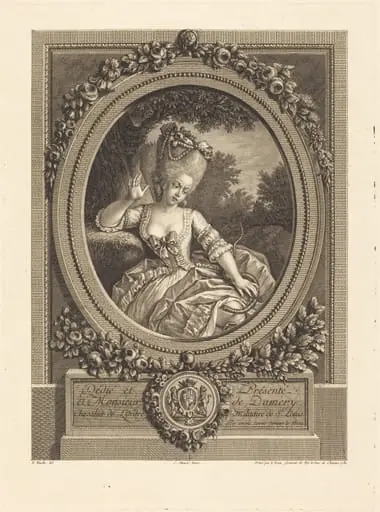
Created in 1774, this print presents a portrait of Marie‑Antoinette, styled as the Queen of France. Executed by Charles‑Eugène Duponchel, the work combines etching and engraving on laid paper, resulting in a monochrome image framed by a circular border and accompanied by French legend and a crown symbol beneath the portrait.
Subject & Meaning
The figure is depicted with a towering powdered wig, a low‑cut neckline, and a delicate lace shawl draped across her shoulders, complemented by a necklace. The formal attire and regal insignia underscore her status, while the composition’s restrained elegance reflects the conventions of eighteenth‑century royal portraiture.
Technique & Style
Duponchel employed both etching and engraving, allowing for fine line work and tonal variation across the laid‑paper surface. The careful delineation of facial features, textiles, and decorative border exemplifies the meticulous draftsmanship typical of French courtly prints, where clarity and precision were prized over painterly effects.
History & Provenance
The print originates from the period shortly before Marie‑Antoinette’s ascension to the French throne, serving as a visual affirmation of her royal identity. While specific ownership records are scarce, the work is attributed to Duponchel, a known printmaker of the era, and survives in museum collections that document French royal iconography.
Artist & collection


 Marie-Antoinette
 Marie-Antoinette
 Marie-Antoinette
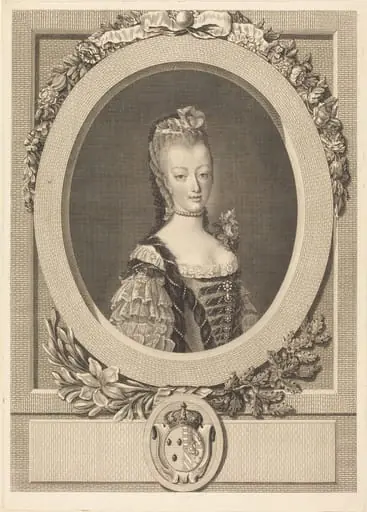 Marie-Antoinette of France
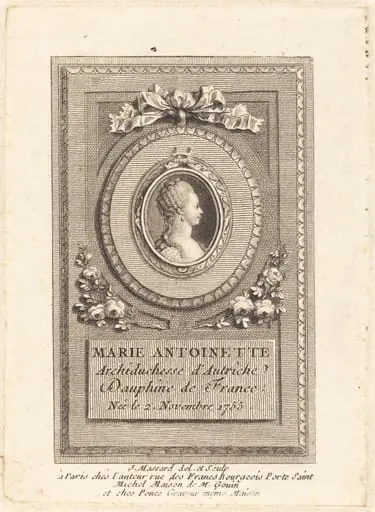 Marie-Antoinette
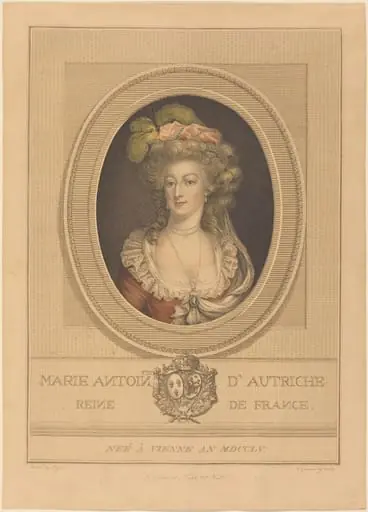 Marie Antoinette d'Autriche Reine de France
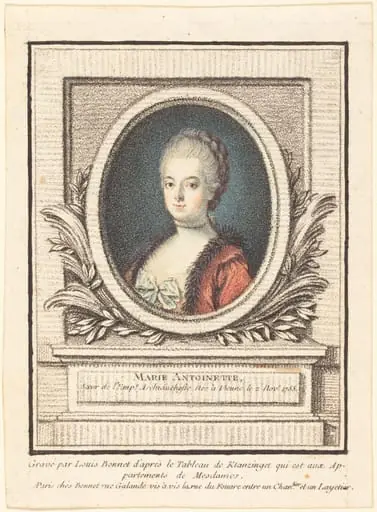 Marie-Antoinette, Dauphine
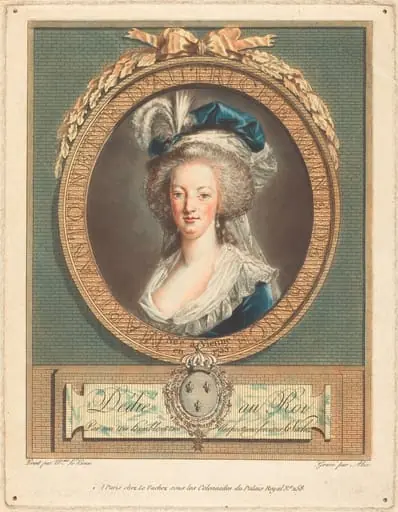 Queen Marie-Antoinette
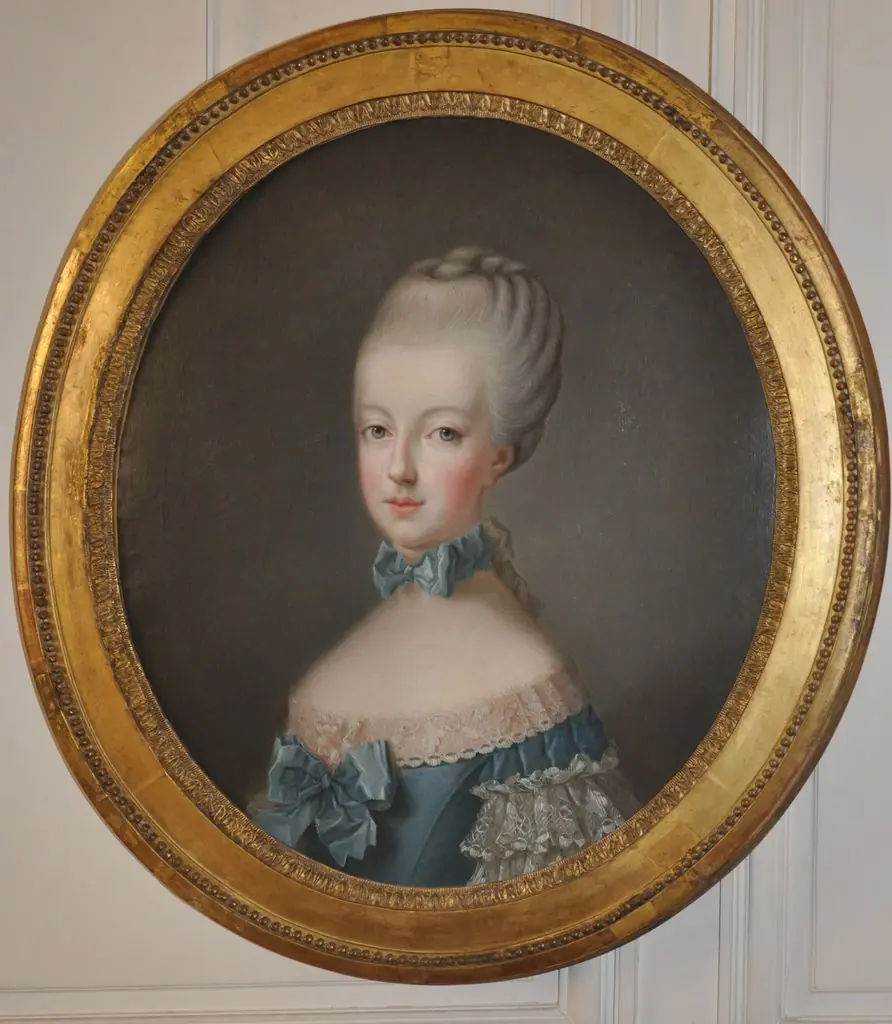 Portrait of Marie-Antoinette
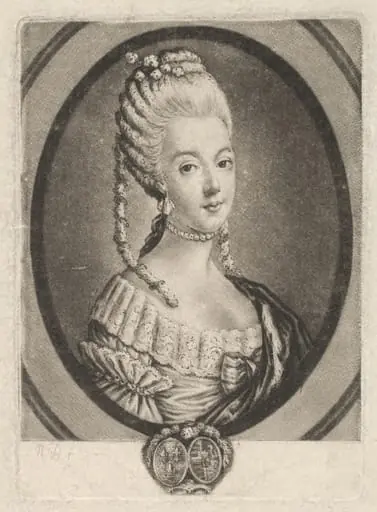 Marie-Antoinette
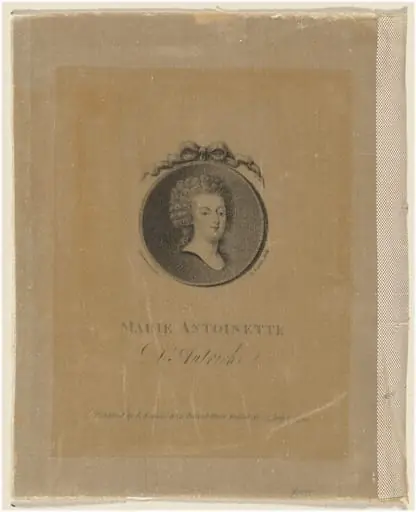 Marie Antoinette d'Autriche (Marie Antoinette of Austria)
 Marie-Louise, Empress of the French