Artwork
Marie-Antoinette
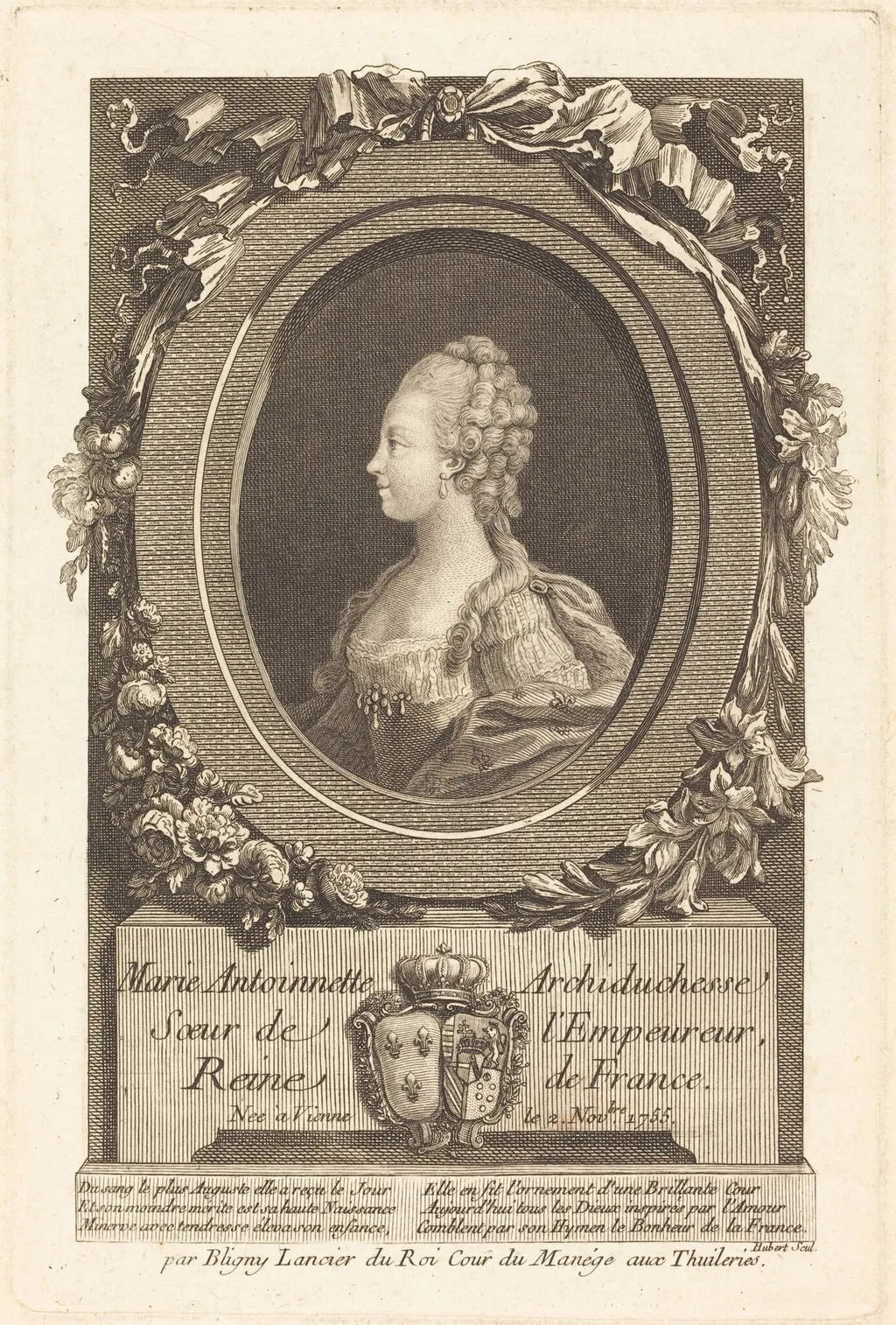
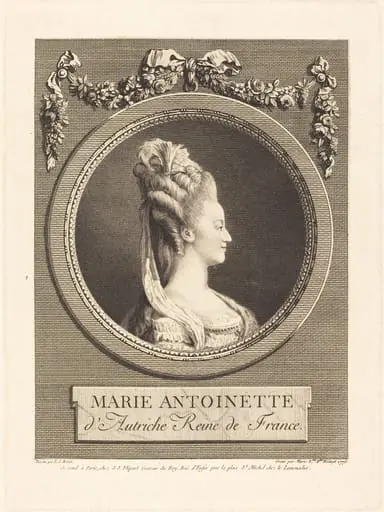
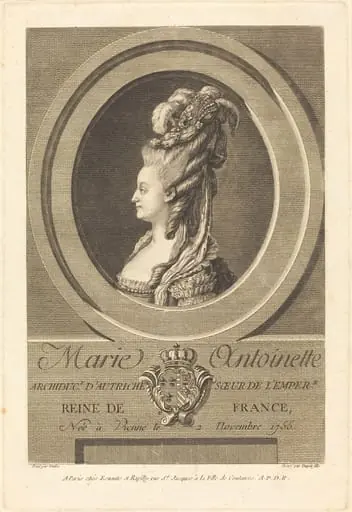
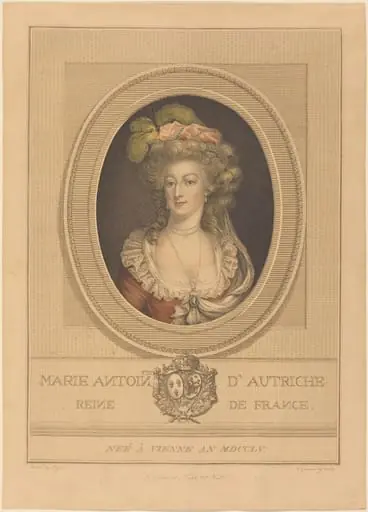
Marie-Antoinette is an ink print by the Romanticist artist François Hubert. It dates from 1770 and is held in the collection of the National Gallery of Art.
About this work
Overview
The image includes her title as Archduchess and Empress, reflecting her dual status as Austrian royalty and French queen consort.
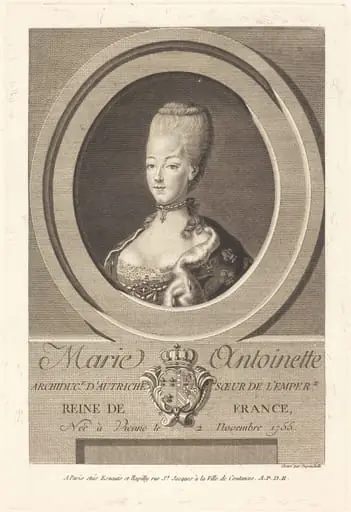
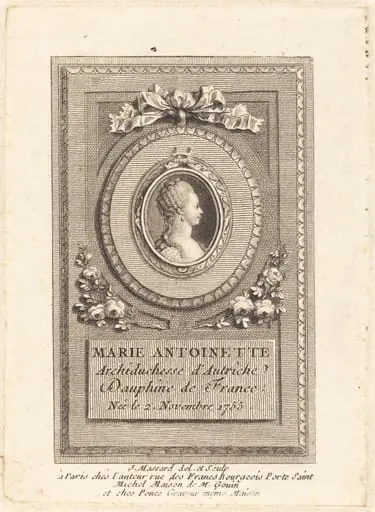
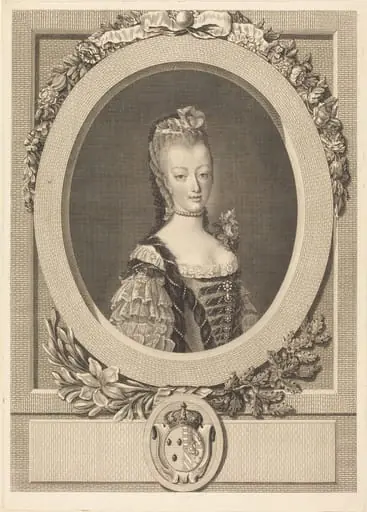
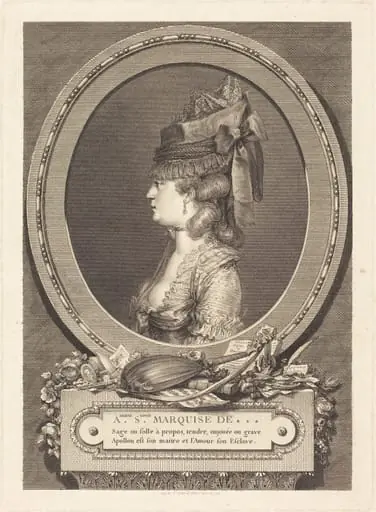
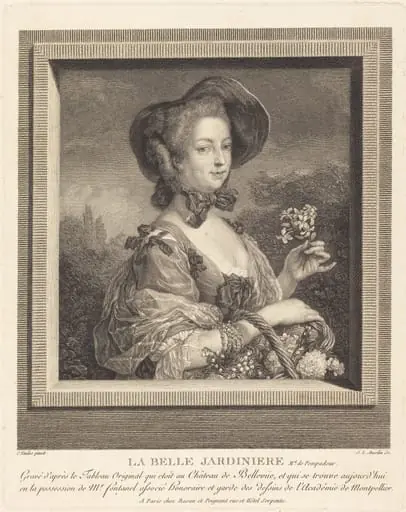
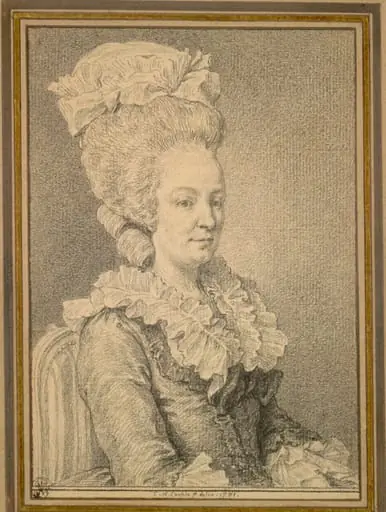
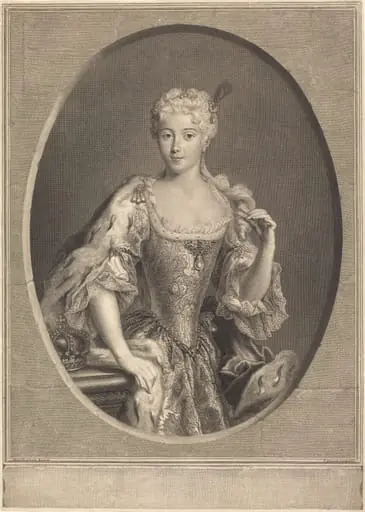
This 1770 print by François Hubert depicts Marie-Antoinette shortly after her marriage to the future Louis XVI. Executed in etching and engraving on laid paper, it presents a formal portrait framed by ornamental floral motifs. The image includes her title as Archduchess and Empress, reflecting her dual status as Austrian royalty and French queen consort. The artist’s name appears at the base, consistent with conventions of the period for identifying printmakers.
Subject & Meaning
The portrait captures Marie-Antoinette in the early stage of her public role in France, emphasizing her noble lineage and new position. Her modest attire, with a high collar and delicate ruffles, conveys propriety rather than extravagance, aligning with expectations for a royal bride. The inclusion of a crown and heraldic shield reinforces her dynastic significance, while the Latinized titles affirm her elevated status within the French court.
Technique & Style
Hubert employed fine-line etching and engraving to render subtle tonal variations and intricate details, particularly in the lace of the collar and the curling hair. The composition is symmetrical and restrained, typical of official portraiture in the late 18th century. The decorative border, composed of scrolling vines and floral elements, frames the figure without distracting from her centered presence, reflecting the precision valued in reproductive prints of the era.
History & Provenance
Created in 1770, the print was likely produced to commemorate Marie-Antoinette’s arrival in France and her marriage to the Dauphin. Such portraits circulated among the aristocracy and print collectors as symbols of royal legitimacy. While no specific early ownership records are documented, similar prints from this period were widely distributed in Parisian print shops and royal households, serving both political and personal commemorative functions.
Context
In the years before the French Revolution, official portraits of royalty were mass-produced to cultivate public familiarity and loyalty. This print belongs to a genre of reproductive engravings that translated painted likenesses into accessible formats. Hubert’s work reflects the role of printmakers in shaping royal imagery, balancing idealized representation with the technical constraints and aesthetic norms of the time.
Legacy
Though not widely known today, this print exemplifies the role of print media in constructing royal identity during the ancien régime. It preserves a visual record of Marie-Antoinette’s early public persona before her image became politicized by revolutionary propaganda. As a historical artifact, it offers insight into how monarchy was visually sustained through controlled, widely distributed imagery.
Artist & collection