Artwork
Perspective View of the Interior of a Metropolitan Church
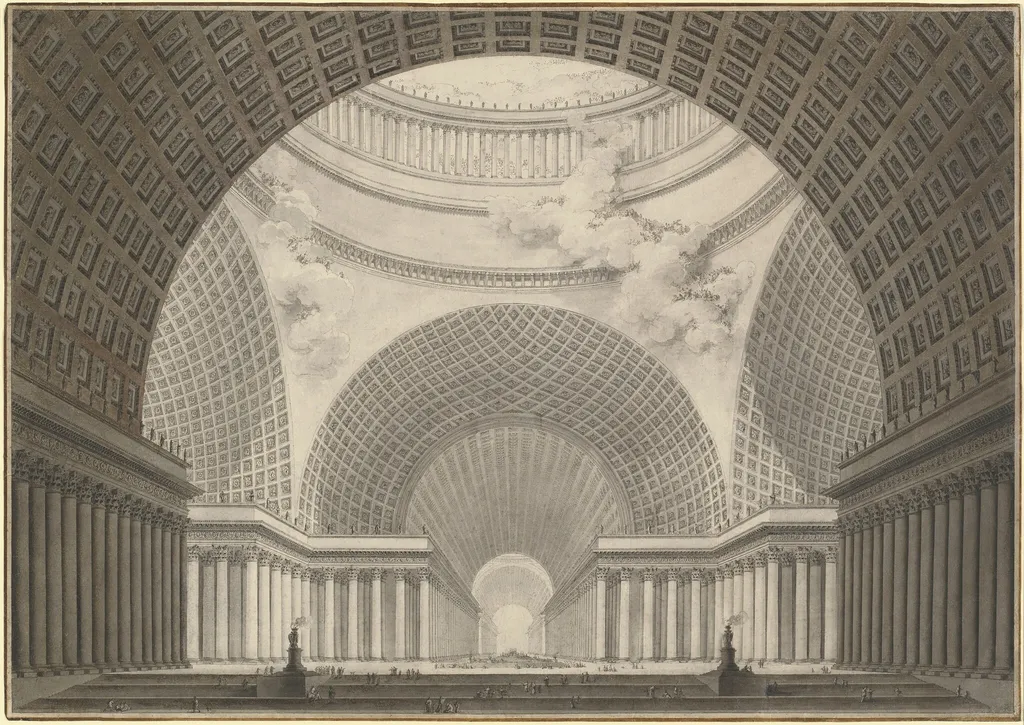
Perspective View of the Interior of a Metropolitan Church is an ink drawing by the Romanticist artist Etienne-Louis Boullée. It dates from 1780 and is held in the collection of the National Gallery of Art.
About this work
The painting is called Perspective View of the Interior of a Metropolitan Church.
It was made by Boullée between 1780 and 1781.
The artist used a mix of pen, ink, and wash to create the image, which is now held at the National Gallery of Art, Washington, and is associated with the Romanticism movement.
To learn more, look up the movement: Romanticism.
Overview
Etienne‑Louis Boullée’s drawing titled *Perspective View of the Interior of a Metropolitan Church* presents a detailed interior architectural scene rendered in a linear perspective. Executed between 1780 and 1781, the work measures the spatial depth of a grand ecclesiastical space through precise drafting, offering a study of proportion and light within a monumental setting.
Technique & Style
The composition combines pen and black ink with a subtle gray‑brown wash applied over an initial graphite sketch on laid paper. A thin brown chalk line frames the image, reinforcing its architectural focus. The careful balance of line work and wash reflects Boullée’s interest in rational design, while the atmospheric tones hint at the emotive qualities linked to Romantic sensibilities.
History & Provenance
After its creation in the early 1780s, the drawing entered the collection of the National Gallery of Art in Washington, D.C., where it remains on view. Its acquisition history traces the work’s movement from private ownership to a public institution, ensuring its preservation as part of the museum’s holdings of 18th‑century French drawing.
Context
Produced during a period when French architects were exploring visionary concepts of monumental space, the drawing aligns with Boullée’s broader theoretical projects that imagined idealized civic and religious structures. Though not a finished building, the study exemplifies the era’s fascination with grand scale, rational geometry, and the emotional impact of architecture, themes later echoed in Romantic architectural discourse.
Artist & collection


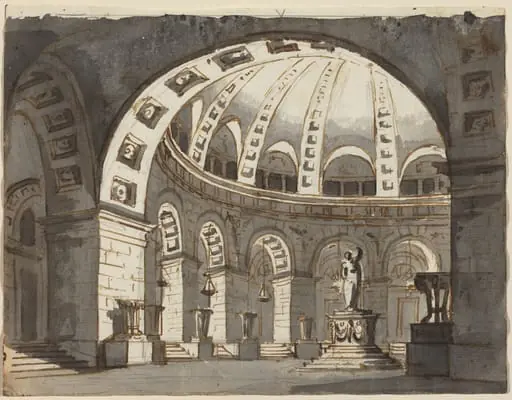 Stage Design
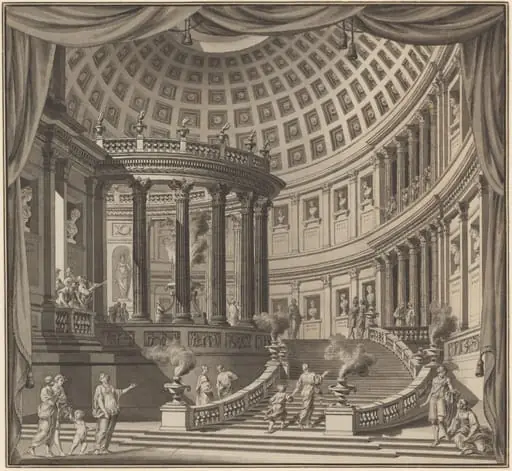 Design for a Stage Curtain: The Interior of an Elaborate Temple Dedicated to Illustrious Men
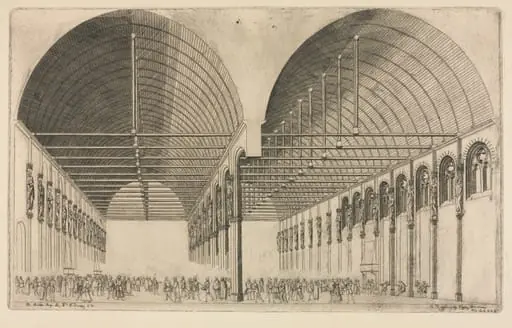 The Antechamber of the Palace of Justice, Paris
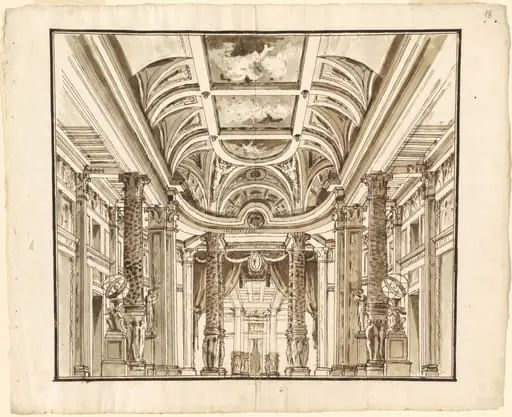 Fantasy of a Great Hall with Basketweave Columns
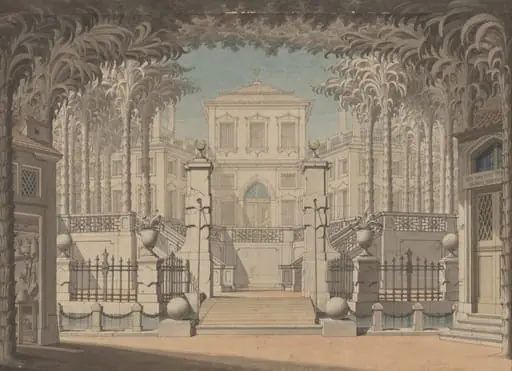 A Turkish Palace (Probably for Mozart's "Abduction from the Seraglio")
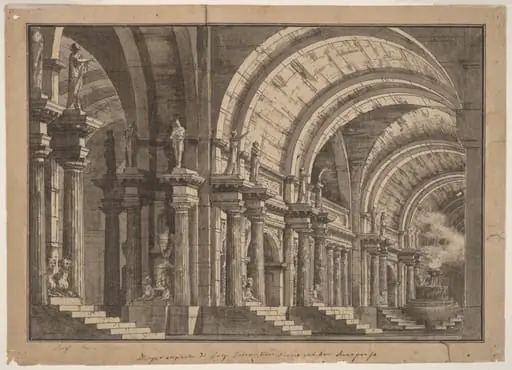 A Monumental Vaulted Hall with a Smoking Altar
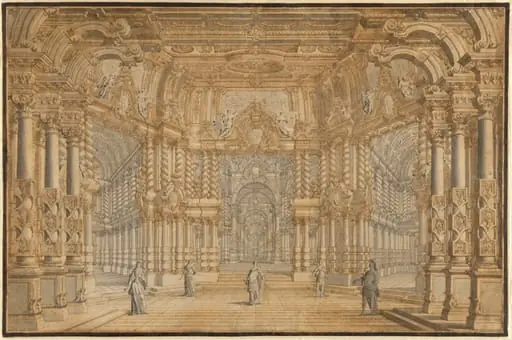 A Stage Design for an Opera with Actors
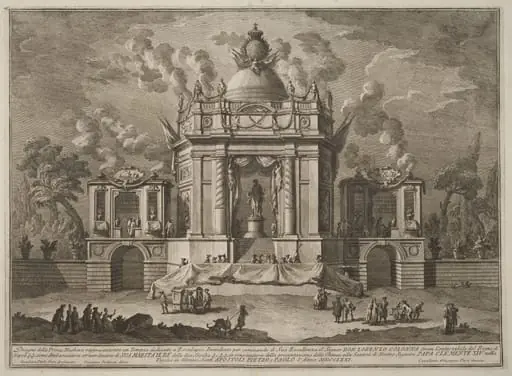 The Prima Macchina for the Chinea of 1771: The Temple of Asclepius
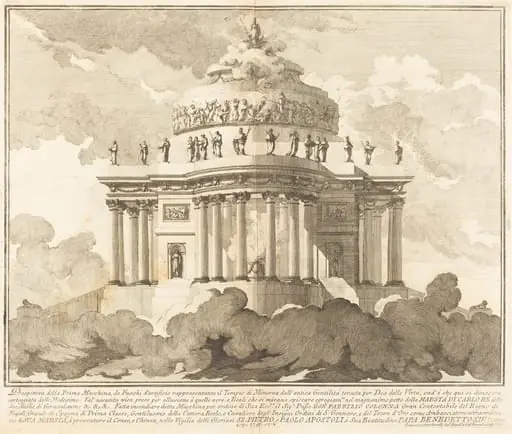 The Prima Macchina for the Chinea of 1746: The Temple of Minerva
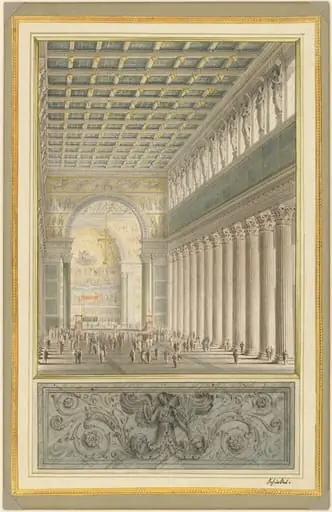 The Nave, Apse, and Crossing of a Cathedral for Berlin
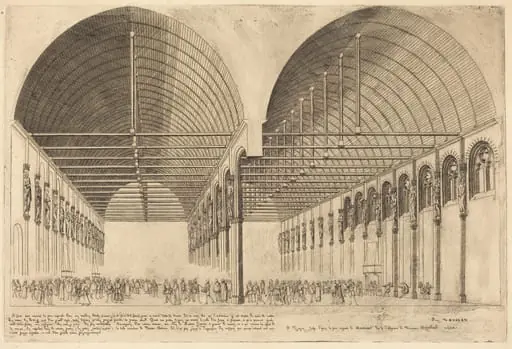 La salle des pas-perdus à l'ancien Palais-de-Justice, Paris (The Antechamber of the Palace of Justice, Paris)
 Logge del Vaticano