Artwork
Virgin Bowing to Instruments of the Passion
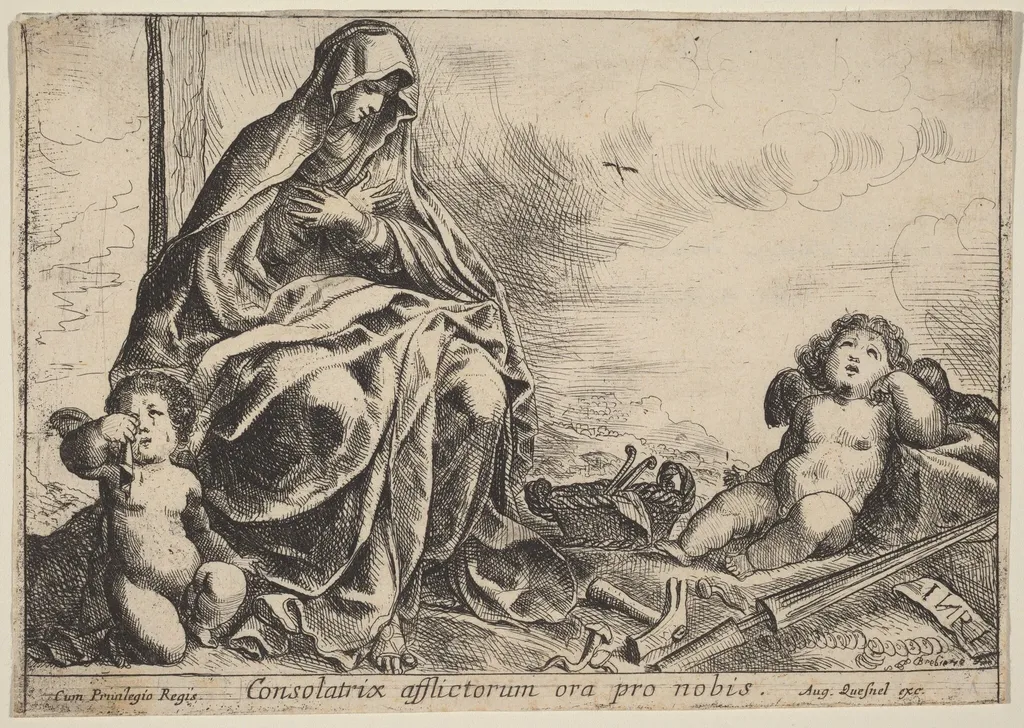
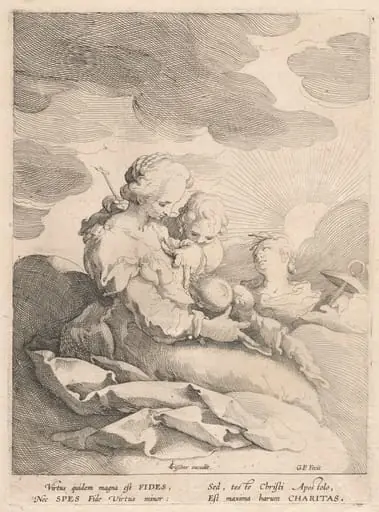
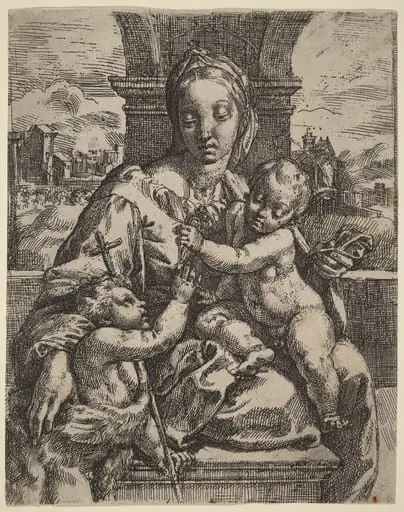
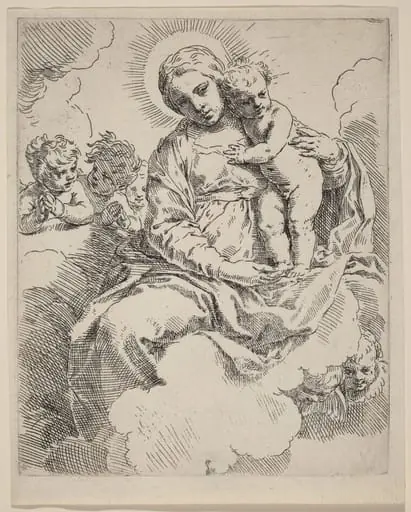
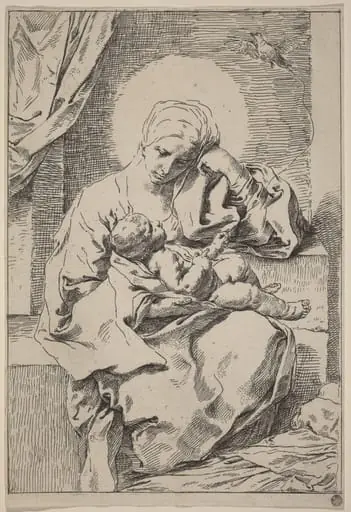
Virgin Bowing to Instruments of the Passion is an ink print by the Renaissance artist Pierre Brebiette. It dates from 1624 and is held in the collection of the National Gallery of Art.
About this work
Overview
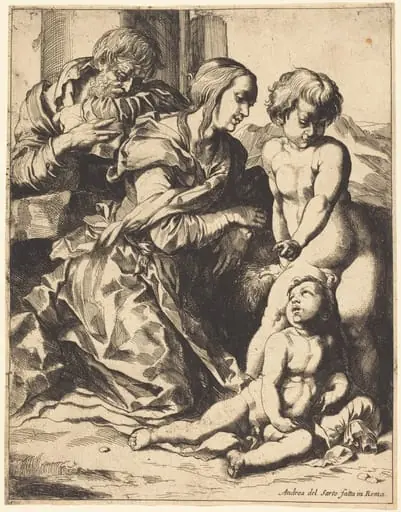
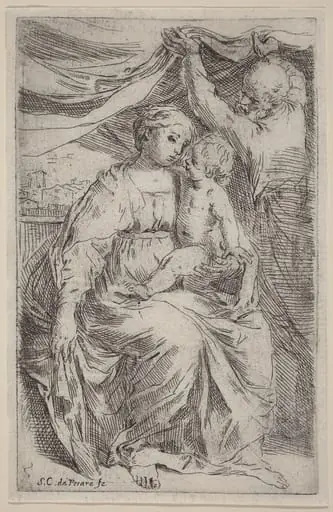
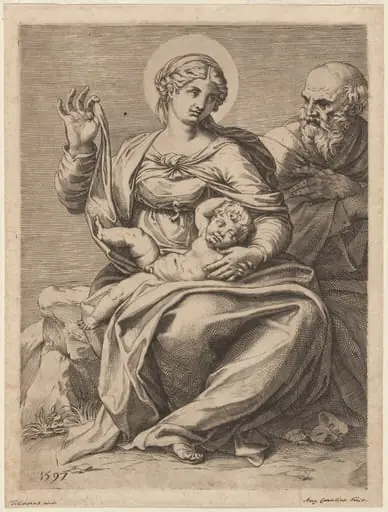
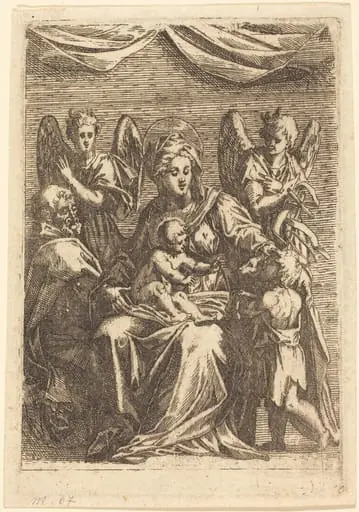
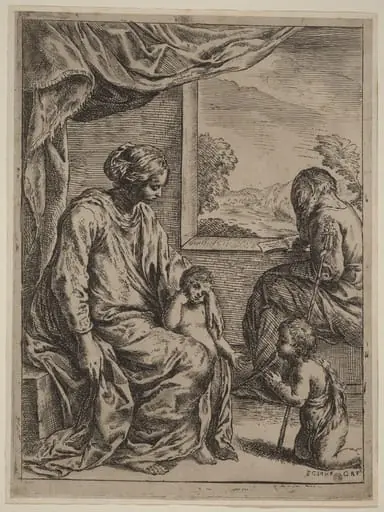
Pierre Brebiette’s 1624 etching presents a composed tableau in which the Virgin Mary kneels before a collection of Passion symbols. She is cloaked in a draped garment and hood, her posture reverent, while two cherubic figures flank her on either side. The composition balances solemnity with a gentle, contemplative atmosphere, inviting reflection on the themes of sacrifice and devotion.
Subject & Meaning
The central figure, the Virgin, is positioned before a cross, a crown of thorns, and a spear—objects traditionally associated with Christ’s crucifixion. By bowing to these implements, Mary embodies a meditative acceptance of the suffering that underlies Christian salvation. The accompanying cherubs, rendered with youthful innocence, reinforce the notion of pure, intercessory prayer.
Technique & Style
Executed as an etching, the work relies on fine incised lines to render the delicate folds of the Virgin’s robe and the intricate details of the Passion instruments. Brebiette’s handling of light and shadow through hatching creates a soft tonal range, characteristic of early 17th‑century printmaking that bridges Mannerist elegance and emerging Baroque sensibilities.
History & Provenance
Created in 1624, the print emerges from Brebiette’s relatively brief career in French engraving. While specific ownership records are scarce, the etching appears in several 17th‑century collections of devotional prints, suggesting it circulated among private patrons interested in intimate religious imagery.
Context
The image reflects the Counter‑Reformation’s emphasis on personal piety and the veneration of the Virgin as an intercessor. By juxtaposing Mary with the instruments of Christ’s Passion, the work aligns with contemporary devotional practices that encouraged the faithful to contemplate the physical reality of the crucifixion through visual means.
Artist & collection