Artwork
The Toilet of Thetis
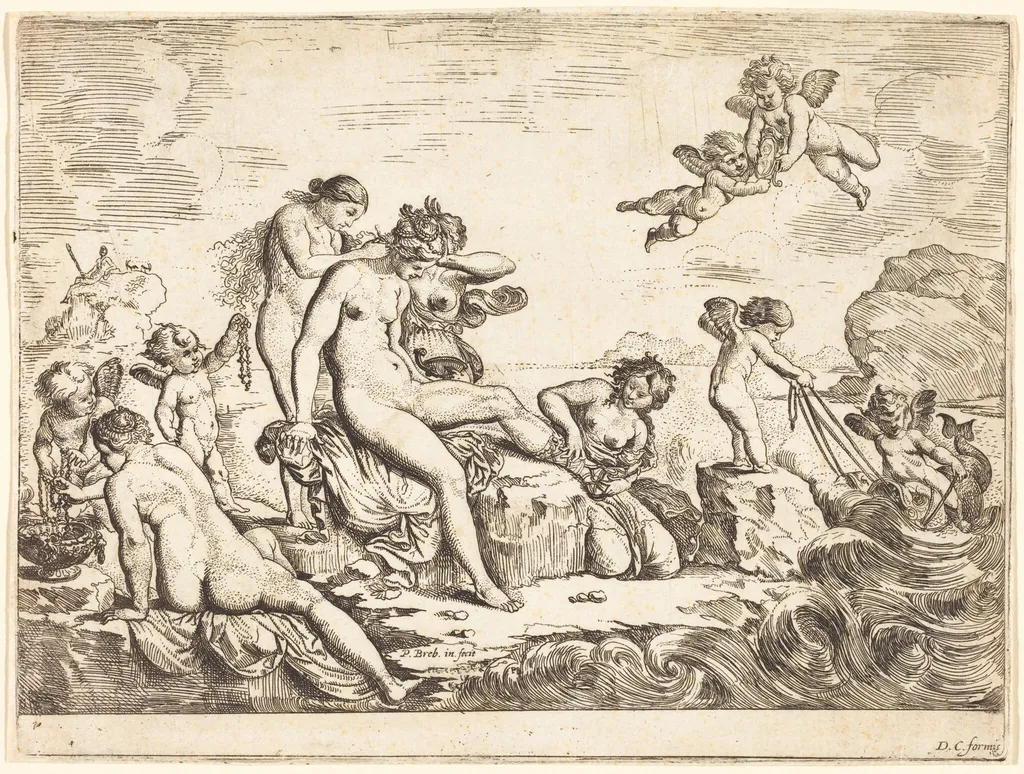
The Toilet of Thetis is an ink print by the Baroque artist Pierre Brebiette. It dates from 1625 and is held in the collection of the National Gallery of Art.
About this work
Overview
Pierre Brebiette’s *The Toilet of Thetis* is an etching dated 1625, executed on laid paper. The composition presents a dynamic, multi-figured scene set in a maritime environment, where human and mythological elements converge. The print exemplifies the artist’s engagement with classical narratives through intricate line work and spatial organization.
Subject & Meaning
The etching depicts Thetis, a sea nymph from Greek mythology, seated on a rock while attending to the infant Achilles. Surrounding figures—some armed, others in states of agitation—suggest the moment’s tension, likely referencing the prophecy of Achilles’ future. A winged cherub hovers above, reinforcing the mythological framework and the scene’s allegorical weight.
Technique & Style
Brebiette employs fine, controlled lines to delineate figures, drapery, and water, characteristic of etching’s capacity for detail.
Brebiette employs fine, controlled lines to delineate figures, drapery, and water, characteristic of etching’s capacity for detail. The undulating waves at the base contrast with the solidity of the central figures, while the laid paper’s grid-like texture remains visible, a hallmark of the medium. The composition balances figural density with spatial depth, typical of early 17th-century printmaking.
History & Provenance
Created in 1625, *The Toilet of Thetis* emerges from Brebiette’s active period as a printmaker in France. The work reflects the era’s fascination with mythological subjects, often disseminated through reproductive prints. Its survival in multiple impressions indicates its circulation among collectors, though specific early ownership remains unrecorded.
Context
The etching belongs to a broader tradition of mythological illustration in European printmaking, where artists reinterpreted classical texts for visual audiences. Brebiette’s scene aligns with contemporary interests in allegory and narrative drama, serving both decorative and didactic purposes. The choice of Thetis—a figure tied to fate and heroism—resonates with 17th-century themes of destiny and human vulnerability.
Own this work as a print
Artist & collection


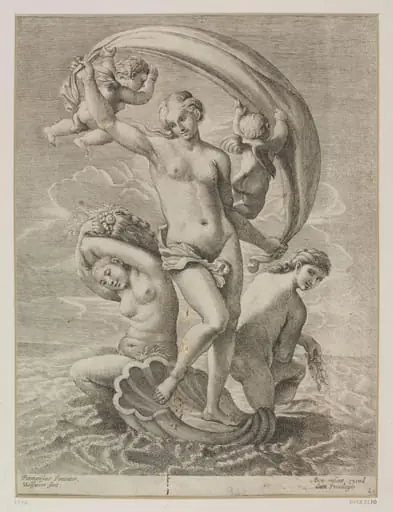 The Triumph of Galatea
 Six Nymphs and Two Cupids in a Landscape
 Landscape with a Satyr Family and Classical Sculpture
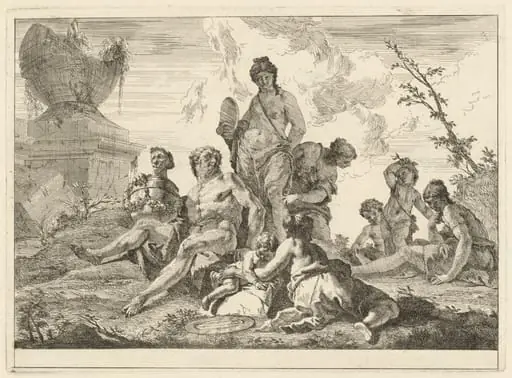 Venus and Vulcan with Three Nymphs and Three Cupids
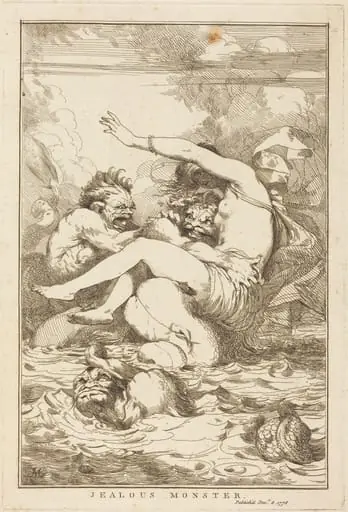 Jealous Monster
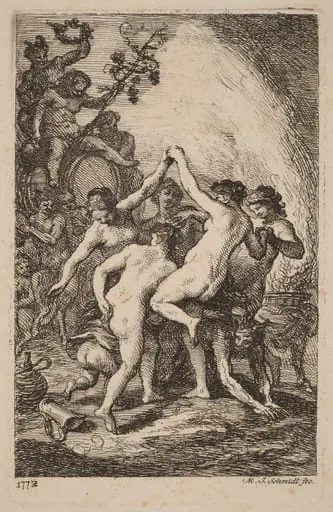 The Triumph of Bacchus with Dancing Nymphs
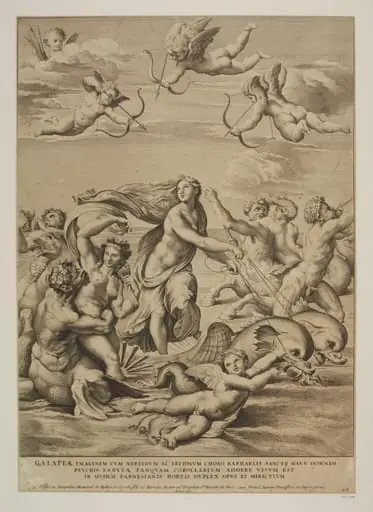 The Triumph of Galatea
 Ixion Deceived by Juno
 Andromeda (Andromède)
 Venus or Galatea Supported by Dolphins
 The Triumph of Neptune and Thetis