Artwork
Putti and Satyrs Shooting Arrows
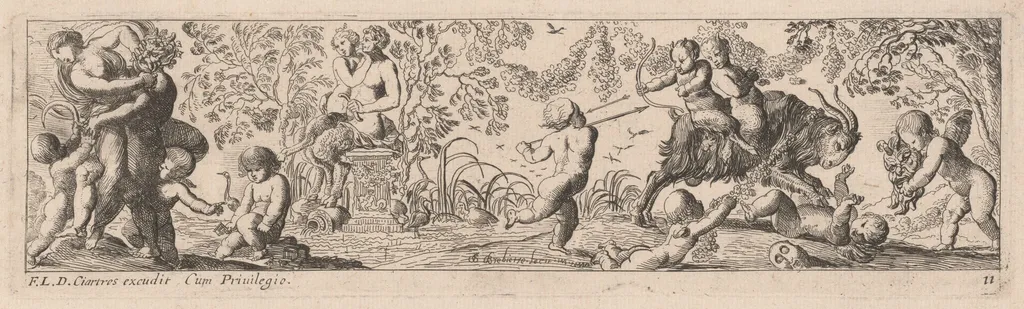
Putti and Satyrs Shooting Arrows is an ink print by the Baroque artist Pierre Brebiette. It dates from 1626 and is held in the collection of the National Gallery of Art.
About this work
Overview
Created in 1626, this etching by Pierre Brebiette depicts a mythologically charged forest scene populated by putti and satyrs engaged in chaotic activity.
Created in 1626, this etching by Pierre Brebiette depicts a mythologically charged forest scene populated by putti and satyrs engaged in chaotic activity. Rendered in ink on laid paper, the composition relies on fine, incised lines to convey motion and texture. Unlike painted works, the image is produced through the etching process, where a metal plate is carved and inked to transfer the design onto paper, resulting in a sharply defined, monochromatic print.
Subject & Meaning
The scene blends classical mythological figures—winged putti, half-human satyrs, and a seated woman—into a dynamic, almost theatrical confrontation. The figures appear engaged in playful or violent archery, suggesting themes of desire, mischief, or divine intervention. The presence of a seated woman amid the commotion may reference a mythic moment of capture or observation, though no specific narrative is confirmed, leaving interpretation open to symbolic readings of nature and impulse.
Technique & Style
Brebiette employed etching to achieve intricate detail and energetic line work. Sharp, controlled strokes define the musculature of figures, the tension in bowstrings, and the flutter of wings. The background is filled with dense, cross-hatched trees and rocks, creating depth without color. The absence of wash or paint emphasizes the precision of the etched line, characteristic of early 17th-century Northern European printmaking, where clarity and movement were prioritized over tonal variation.
History & Provenance
The print was produced in 1626 during Brebiette’s active period in France, though little is documented about his life or the original ownership of this work. It likely circulated among collectors of mythological prints, valued for its technical skill and imaginative subject matter. No major institutional records trace its early provenance, and surviving impressions are rare, suggesting limited initial distribution or later dispersal.
Context
Brebiette’s work emerged amid a European revival of classical themes in printmaking, influenced by Italian Mannerism and Northern engraving traditions. His focus on mythological hybrids and animated scenes aligns with contemporaries like Hendrick Goltzius and Agostino Carracci, who explored similar subjects. The print reflects a taste for elaborate, allegorical imagery among educated patrons, even as it diverges from religious or historical norms dominant in official commissions.
Legacy
Though Brebiette is not widely known today, this etching remains a representative example of early Baroque printmaking’s fascination with myth and movement. Its survival in museum and private collections underscores its technical merit and the enduring appeal of mythological fantasy in graphic art. It contributes to the broader understanding of how lesser-known artists helped sustain the popularity of print-based storytelling in the 17th century.
Artist & collection


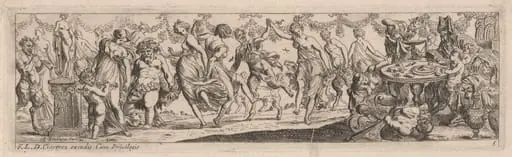
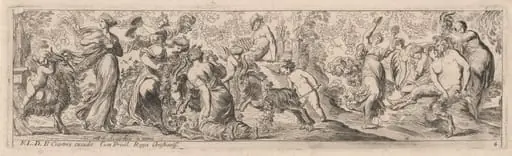 Putto Herding Goats through Garlands
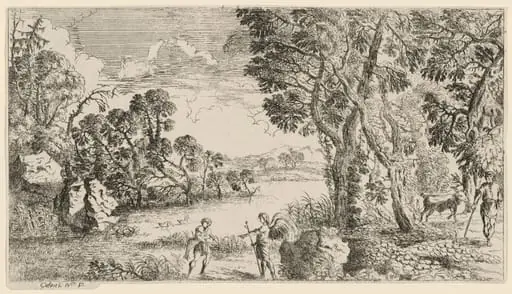 River Landscape with Tobias and the Angel
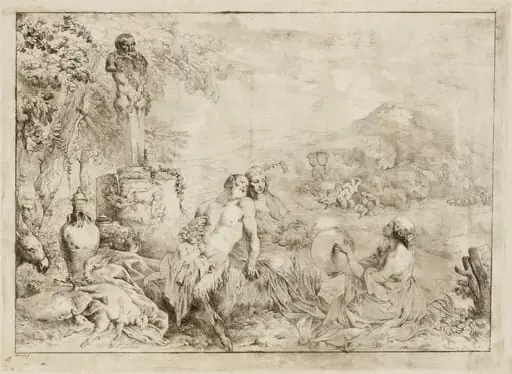 Landscape with a Satyr Family and Classical Sculpture
![Temporalis Aeternitas [Second Version], by Italian 17th Century](https://artifactworldgallery.com/img/italian-17th-century--temporalis-aeternitas-second-version--2b55857961773f67-w320.webp) Temporalis Aeternitas [Second Version]
Temporalis Aeternitas [Second Version]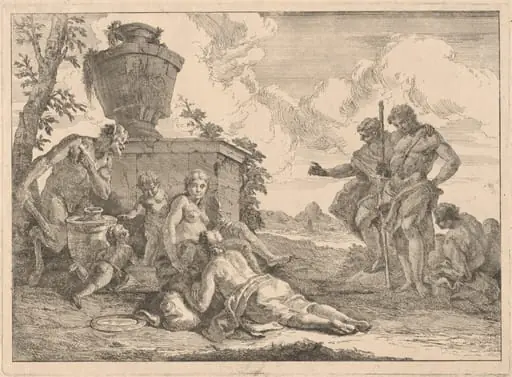 A Satyr with a Staff and Seven Other Figures
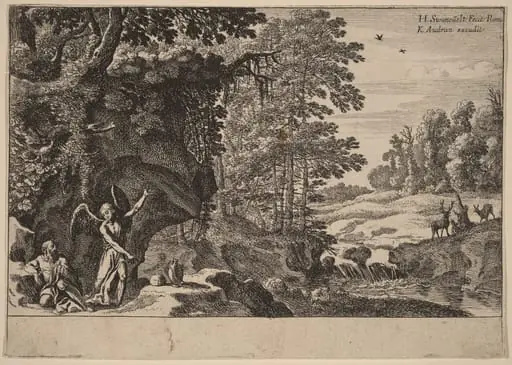 Elijah in the Wilderness
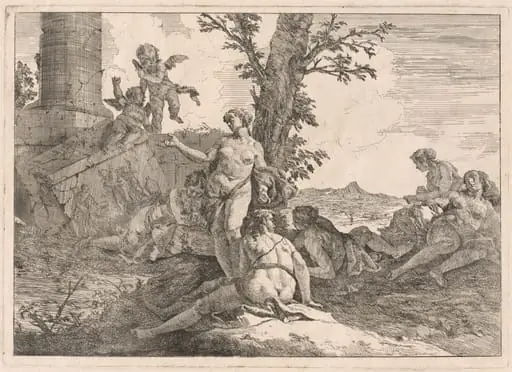 Six Nymphs and Two Cupids in a Landscape
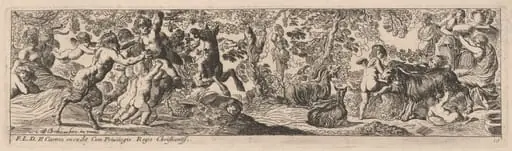 Satyrs and Putti Playing with Animals