Artwork
Woman Whipping a Satyr
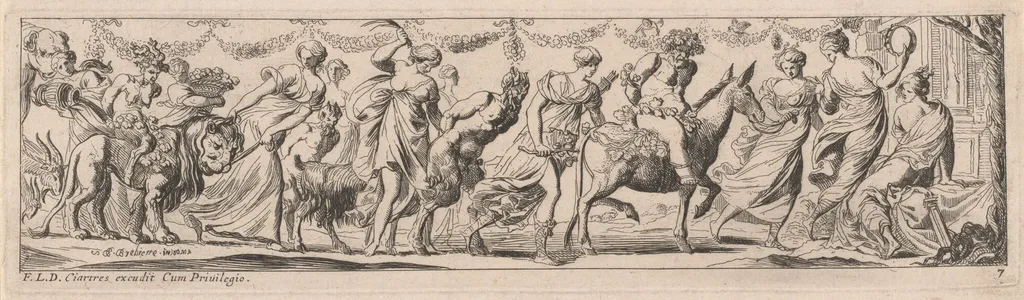
Woman Whipping a Satyr is an ink print by the Baroque artist Pierre Brebiette. It dates from 1626 and is held in the collection of the National Gallery of Art.
About this work
Overview
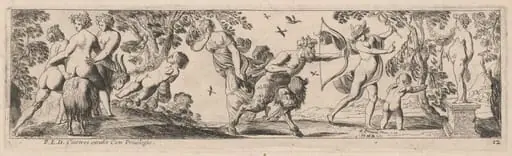
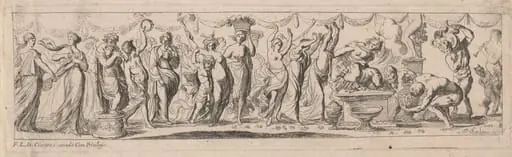
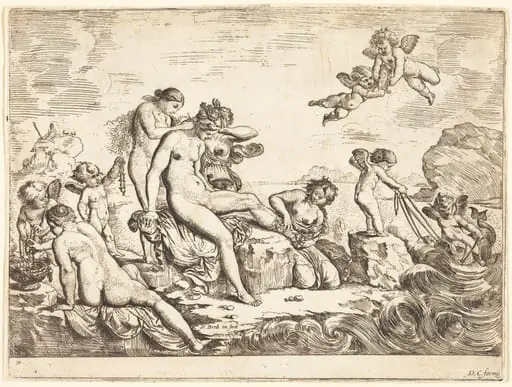
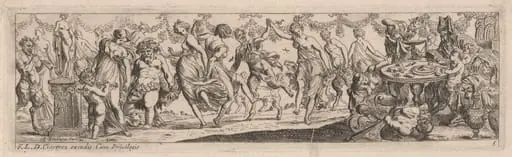
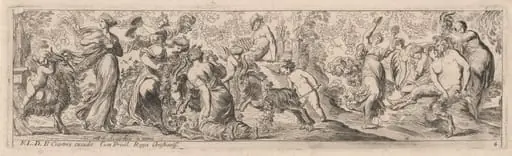
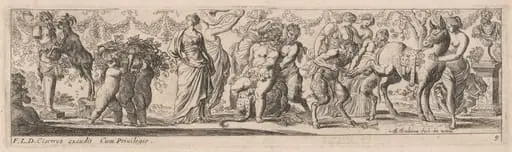
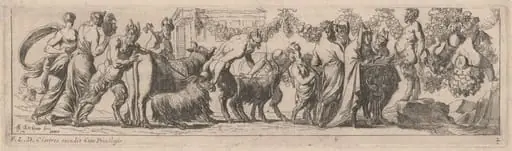
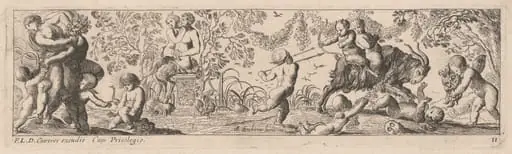
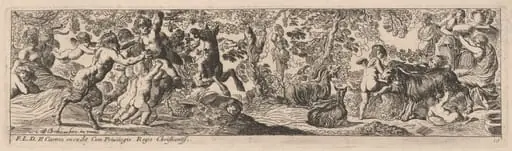
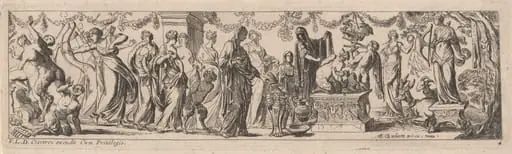
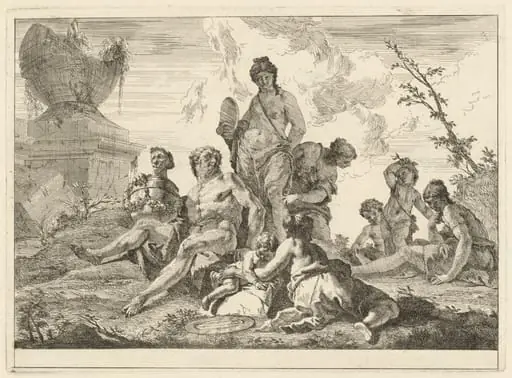
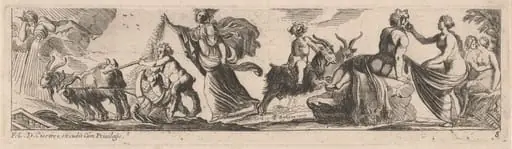
Pierre Brebiette’s 1626 etching titled *Woman Whipping a Satyr* presents a bustling woodland tableau rendered on laid paper. The composition is densely populated with nude figures engaged in combat, dance, and animal handling, while a central female figure dominates the scene, striking a goat‑like satyr with a long rod.
Subject & Meaning
The central woman, poised in an angry, commanding stance, appears to impose order amid the surrounding chaos. The juxtaposition of disciplined aggression against the frenzied activity of the other figures suggests a narrative of control versus wildness, a common theme in early‑modern allegorical prints.
Technique & Style
Executed as an etching, the work relies on incised lines that vary from fine, swirling strokes in the foliage and sky to bold, decisive cuts outlining the figures. This contrast of delicate background textures with sharp, energetic contours gives the scene a sense of rapid movement and heightened drama.
History & Provenance
Created in 1626, the print is an early example of Brebiette’s printmaking, a period when French artists were exploring mythological and pastoral subjects through the medium of etching. The work has been documented in several 19th‑century collections of French prints, though its precise ownership trail remains limited.
Context
The depiction of a satyr—a creature from classical mythology—being disciplined by a woman reflects the era’s fascination with antiquity and the moralizing potential of myth. Such images were popular in the Baroque period, where dynamic compositions and vigorous line work were employed to convey emotional intensity.
Artist & collection