Artwork
Sacrifice of a Satyr
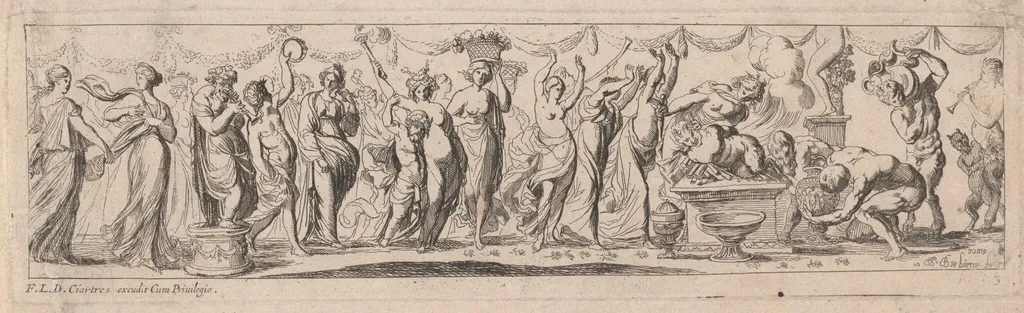
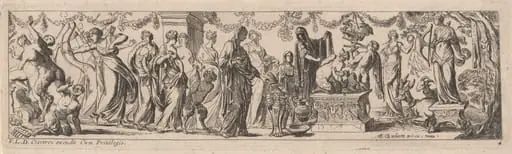
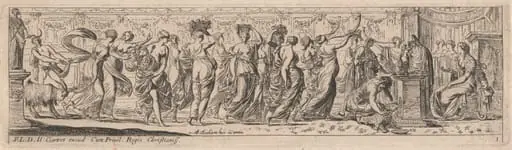
Sacrifice of a Satyr is an ink print by the Baroque artist Pierre Brebiette. It dates from 1626 and is held in the collection of the National Gallery of Art.
About this work
Overview
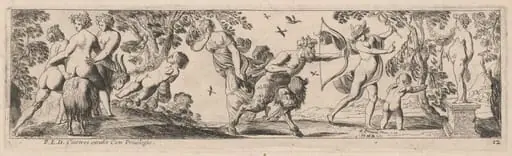
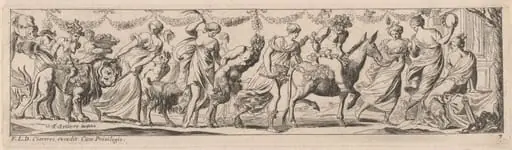
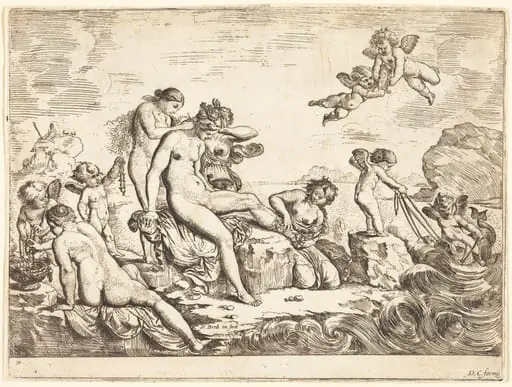
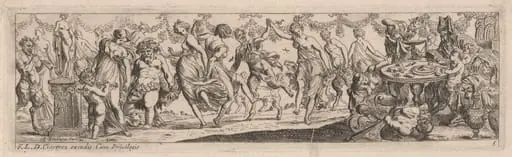
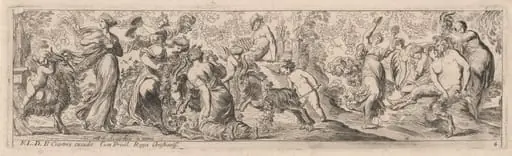
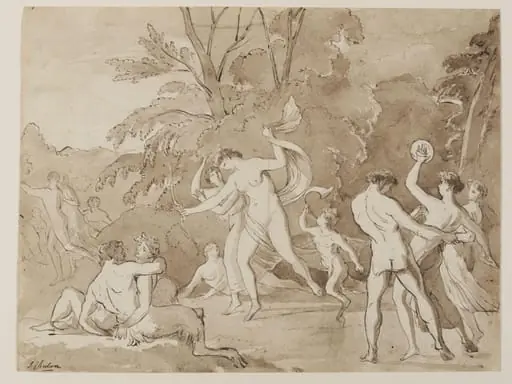
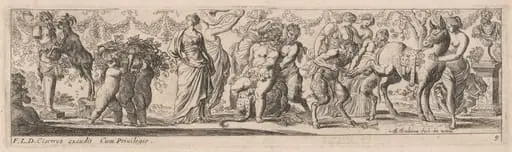
Pierre Brebiette’s 1626 etching, titled Sacrifice of a Satyr, presents a densely populated tableau on laid paper. The composition is divided into three zones: left‑hand figures bearing torches and banners, a central group of nude revelers, and a right‑hand altar where a bound satyr is the focal point. Atmospheric clouds and the suggestion of ruined architecture frame the chaotic scene.
Subject & Meaning
The work depicts a ritualized sacrifice in which a half‑human, half‑goat satyr is restrained on an altar while surrounding participants—both clothed and naked—engage in frenzied gestures. The satyr’s terrified expression contrasts with the indifference of the crowd, suggesting themes of power, victimisation, and the spectacle of ritual violence.
Technique & Style
Executed as an etching, Brebiette incised fine lines into a copper plate, producing a range of tonal values on the laid‑paper support. The artist employs dense cross‑hatching for shadowed areas and lighter, more open strokes for the swirling clouds, creating depth and a sense of movement within the crowded composition.
History & Provenance
Created in 1626, the print belongs to the early Baroque period in France, a time when mythological subjects were popular in printmaking. The etching is documented in several 17th‑century collections, though its precise ownership trail before entering modern museum holdings remains limited to catalog references.
Artist & collection