Artwork
Euntes in Emaus (The Pilgrims to Emmaus)
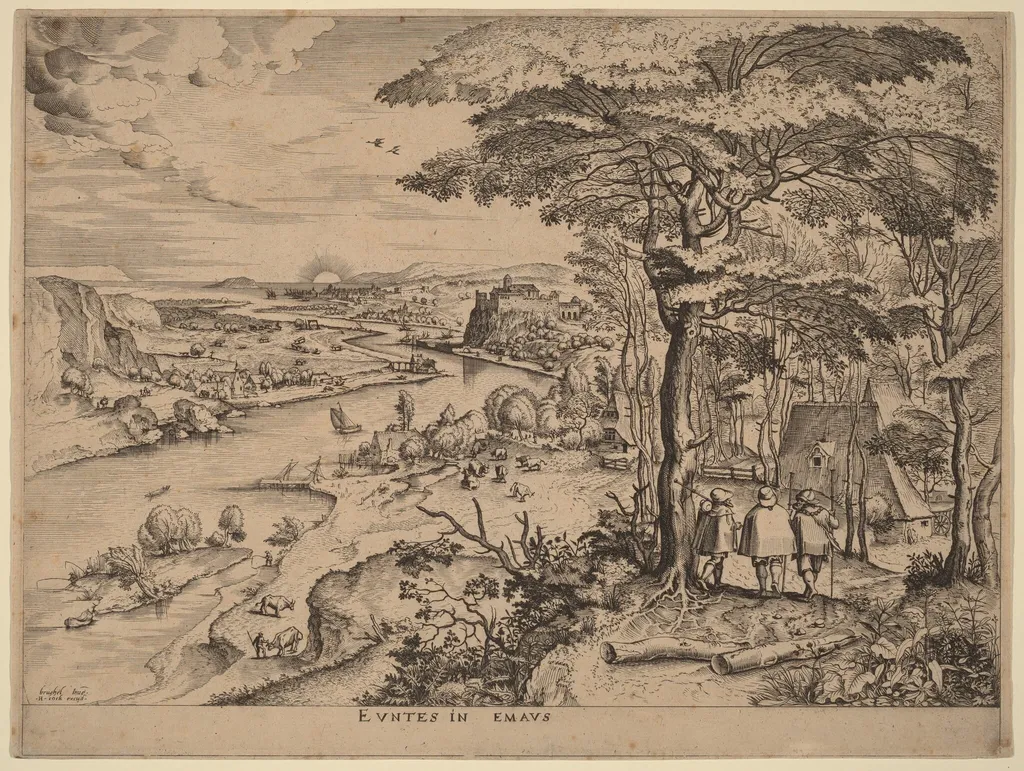
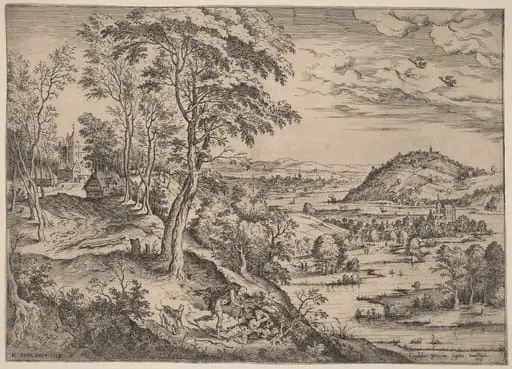
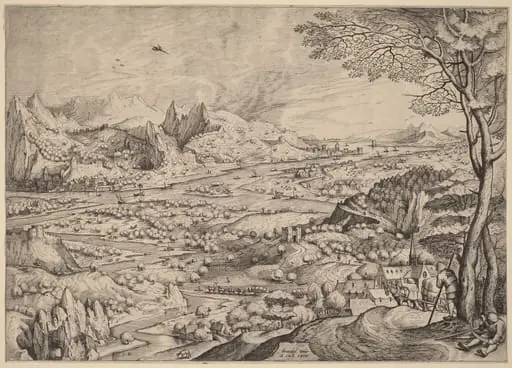
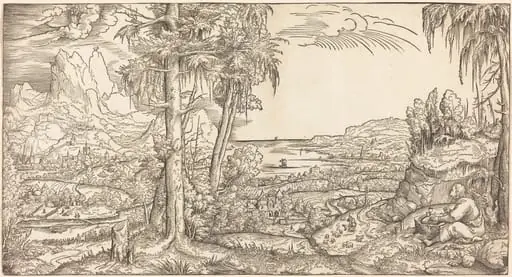
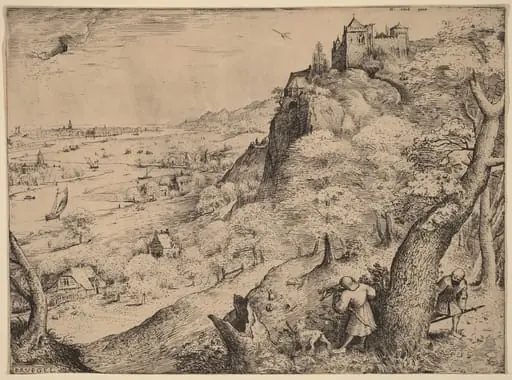
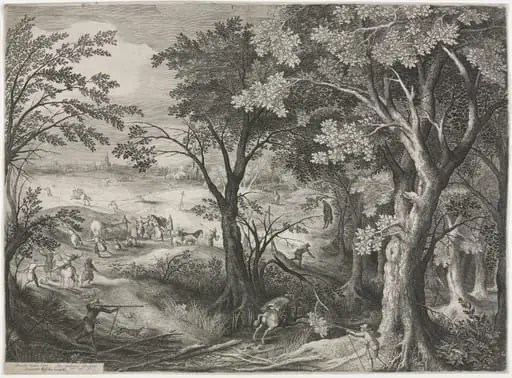
Euntes in Emaus (The Pilgrims to Emmaus) is an ink print by the Renaissance artist Johannes van Doetechum the Elder. It dates from 1556 and is held in the collection of the National Gallery of Art. Created circa 1556, *Euntes in Emaus* is a print that combines etching and engraving techniques.
About this work
Overview
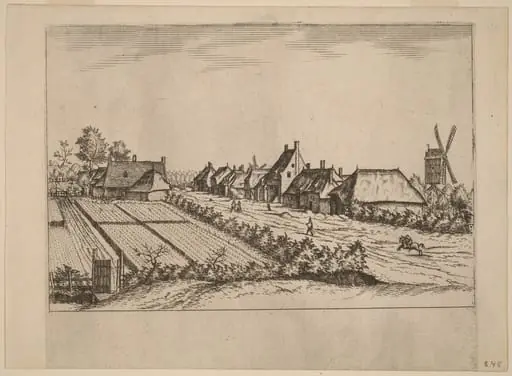
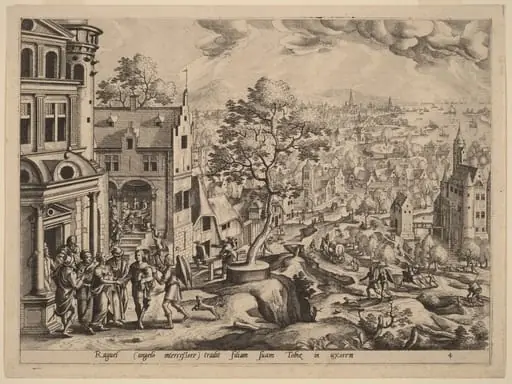
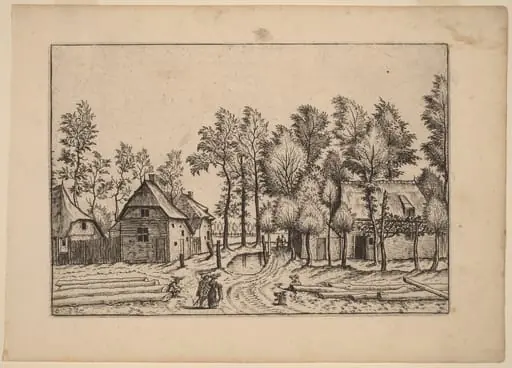
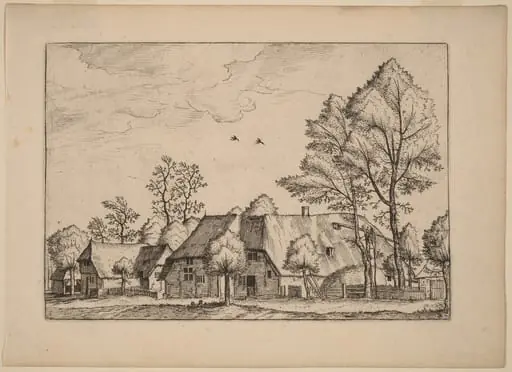
Created circa 1556, *Euntes in Emaus* is a print that combines etching and engraving techniques. The image presents a quiet countryside scene in which three figures walk along a path beside a meandering river, with a distant village visible beyond a line of trees and hills. The sky is overcast, dotted with a few birds, giving the composition a calm, contemplative mood.
Subject & Meaning
The work illustrates the biblical episode of the two disciples traveling to Emmaus after the resurrection of Christ. Although three figures appear, the central focus remains on the journey itself, symbolising spiritual discovery and the unfolding of divine revelation in an ordinary landscape. The serene setting underscores the narrative’s themes of contemplation and revelation.
Technique & Style
Van Doetecum employed a dual printmaking process: delicate etching lines to render atmospheric elements such as clouds and distant foliage, and deeper engraved strokes for the foreground figures and architectural details. The blend of these methods yields a nuanced tonal range typical of mid‑sixteenth‑century Northern Renaissance prints, where fine line work conveys both texture and depth.
History & Provenance
The print’s early ownership records are scarce, but it circulated among collectors of religious imagery in the Low Countries.
Johannes van Doetecum the Elder, a Dutch engraver and cartographer born in Deventer, produced the image during his early career before relocating to Haarlem in 1578. He frequently collaborated with his brother Lucas on series of prints, and his oeuvre includes reproductions of Pieter Bruegel the Elder’s genre scenes as well as detailed city maps. The print’s early ownership records are scarce, but it circulated among collectors of religious imagery in the Low Countries.
Context
The print reflects the broader Renaissance interest in integrating biblical narratives with realistic, everyday settings. By placing the Emmaus episode within a recognizable Dutch landscape, van Doetecum aligns with contemporary efforts to make sacred stories accessible to a lay audience, merging devotional content with the period’s growing emphasis on naturalistic detail.
Artist & collection

Artist
Johannes van Doetechum the Elder
Joannes van Doetecum the Elder (1530 – 1605) was a Dutch engraver-cartographer known for his etched works after genre scenes by Pieter Bruegel the Elder and maps of various cities in the Netherlands.