Artwork
Ornament
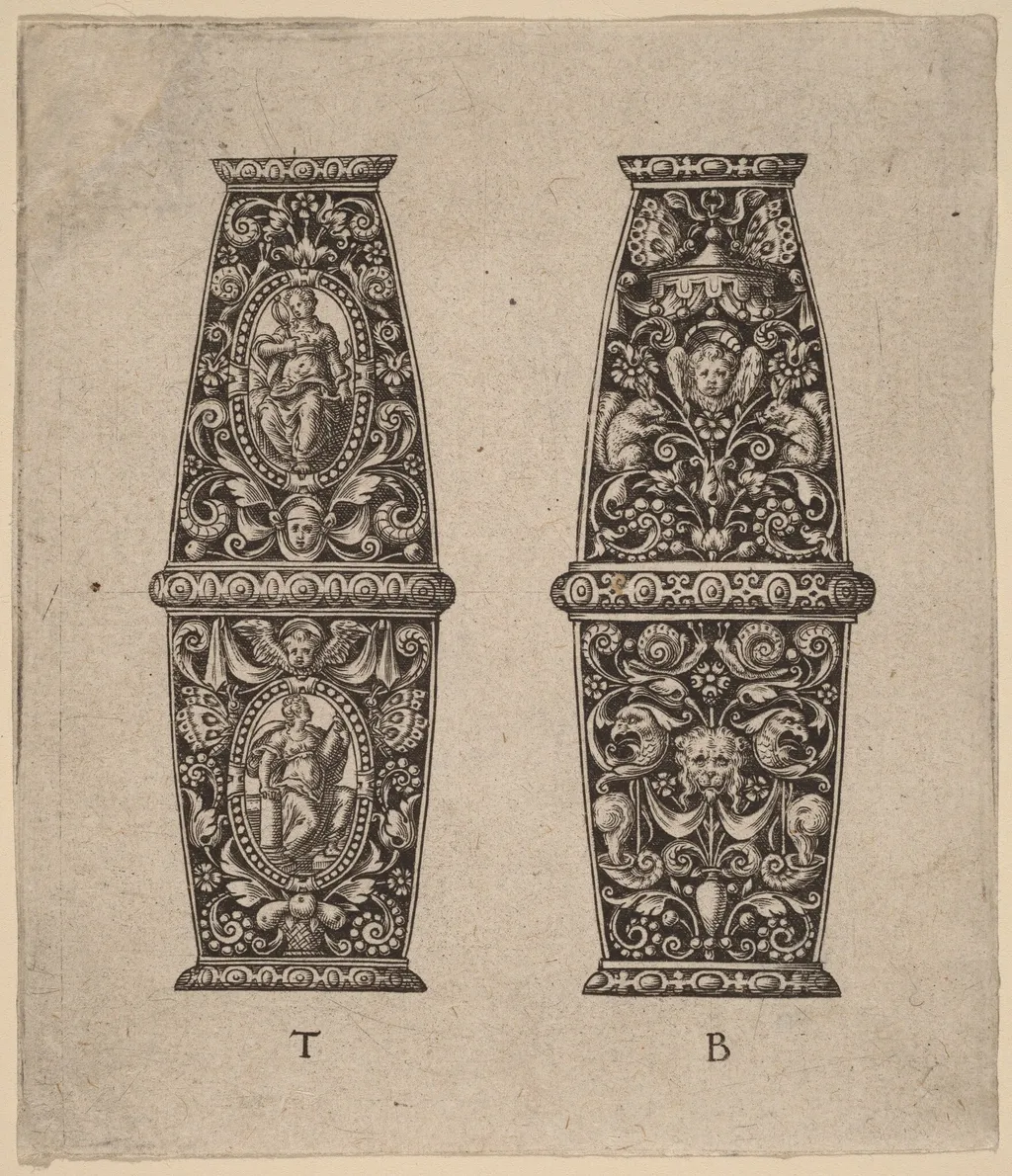
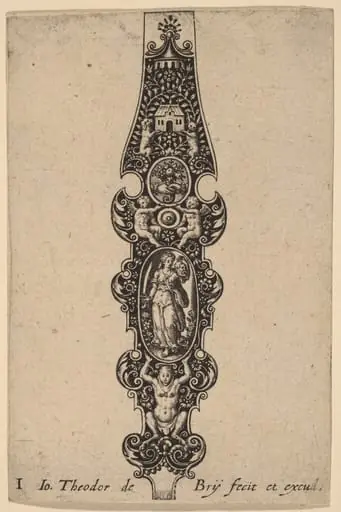
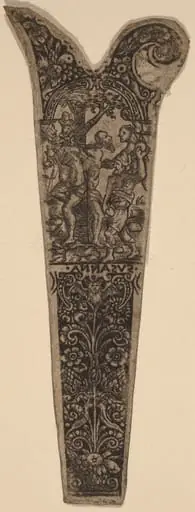
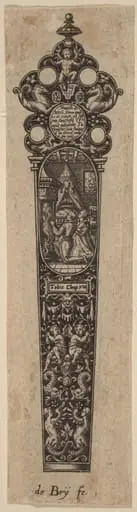
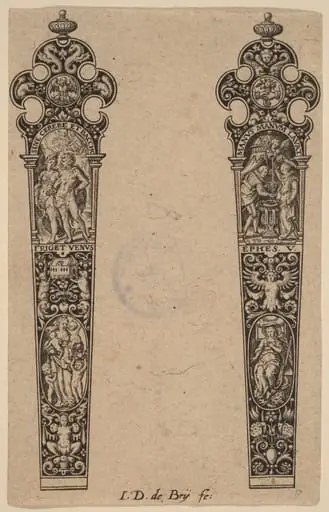
Ornament is an ink print by the Renaissance artist Theodor de Bry. It dates from 1563 and is held in the collection of the National Gallery of Art.
About this work
Overview
Created in 1563 by Theodor de Bry, *Ornament* is an engraving that exemplifies the precision and decorative intensity characteristic of Renaissance printmaking.
Created in 1563 by Theodor de Bry, *Ornament* is an engraving that exemplifies the precision and decorative intensity characteristic of Renaissance printmaking. As a Walloon artist displaced by religious persecution, de Bry developed his craft across several European cities before establishing himself in Frankfurt. This work stands apart from his more widely known expedition illustrations, focusing instead on intricate surface design as a study in form and detail.
Subject & Meaning
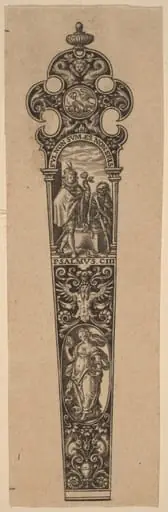
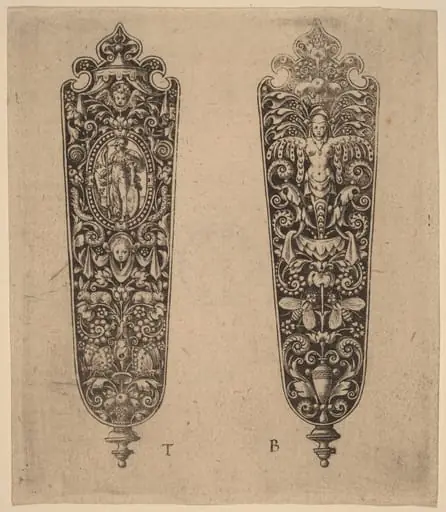
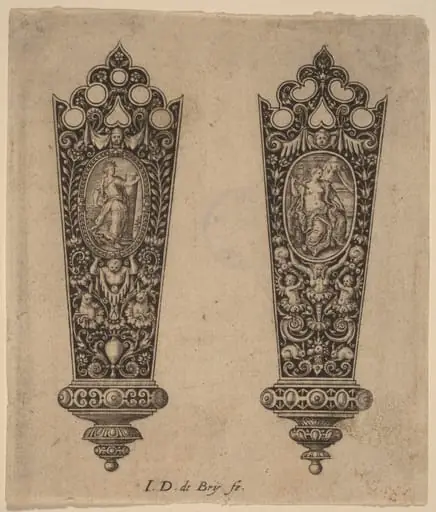
The piece depicts two tall vases rendered in fine black ink, each adorned with densely packed motifs: swirling vines, floral elements, and miniature human figures. The left vase includes small narrative scenes enclosed in circular frames, while the right favors abstract ornamentation like stylized faces and blossoms. These designs reflect Renaissance fascination with classical antiquity and the decorative arts, serving as a visual catalog of ornamental possibilities rather than a narrative statement.
Technique & Style
De Bry employed engraving to achieve fine, controlled lines that model form through hatching and cross-contour shading. The intricate patterns on the vases are rendered with meticulous precision, creating a sense of three-dimensionality despite the flat paper surface. This technique, common among Northern European printmakers, allowed for the reproduction of complex designs with clarity, making such works valuable references for artisans and designers of the period.
History & Provenance
De Bry produced *Ornament* during his early years in Frankfurt, after fleeing the Spanish Netherlands due to his Protestant beliefs. While he later gained recognition for publishing illustrated accounts of New World voyages, this engraving belongs to a lesser-known phase of his career focused on decorative motifs. It likely circulated as a standalone print or was included in pattern books used by craftsmen, though its exact early ownership remains undocumented.
Context
In mid-16th-century Europe, engraved ornament books were widely circulated among artists, goldsmiths, and architects as sources of design inspiration. De Bry’s work aligns with this tradition, drawing from classical and Mannerist sources to create elaborate, repeatable forms. His engagement with such subjects reflects the period’s broader interest in systematizing visual vocabulary, particularly in cities like Frankfurt, which served as hubs for print distribution and artistic exchange.
Legacy
Though overshadowed by de Bry’s colonial-era publications, *Ornament* illustrates his foundational skill as a draftsman and engraver. It preserves a snapshot of Renaissance decorative aesthetics and the technical rigor demanded of printmakers. The work contributes to understanding how visual motifs traveled across media—from metalwork to printed pages—shaping artistic practice across Europe in the decades before the rise of the illustrated book as a dominant form.
Artist & collection
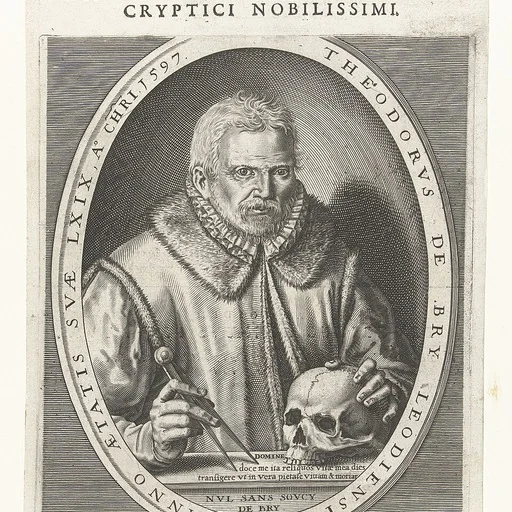
Artist
Theodor de Bry (also Theodorus de Bry; 1528 – 27 March 1598) was a Walloon engraver, goldsmith, editor and publisher, famous for his depictions of early European expeditions to the Americas.