Artwork
Saint Constantine and Saint Elena
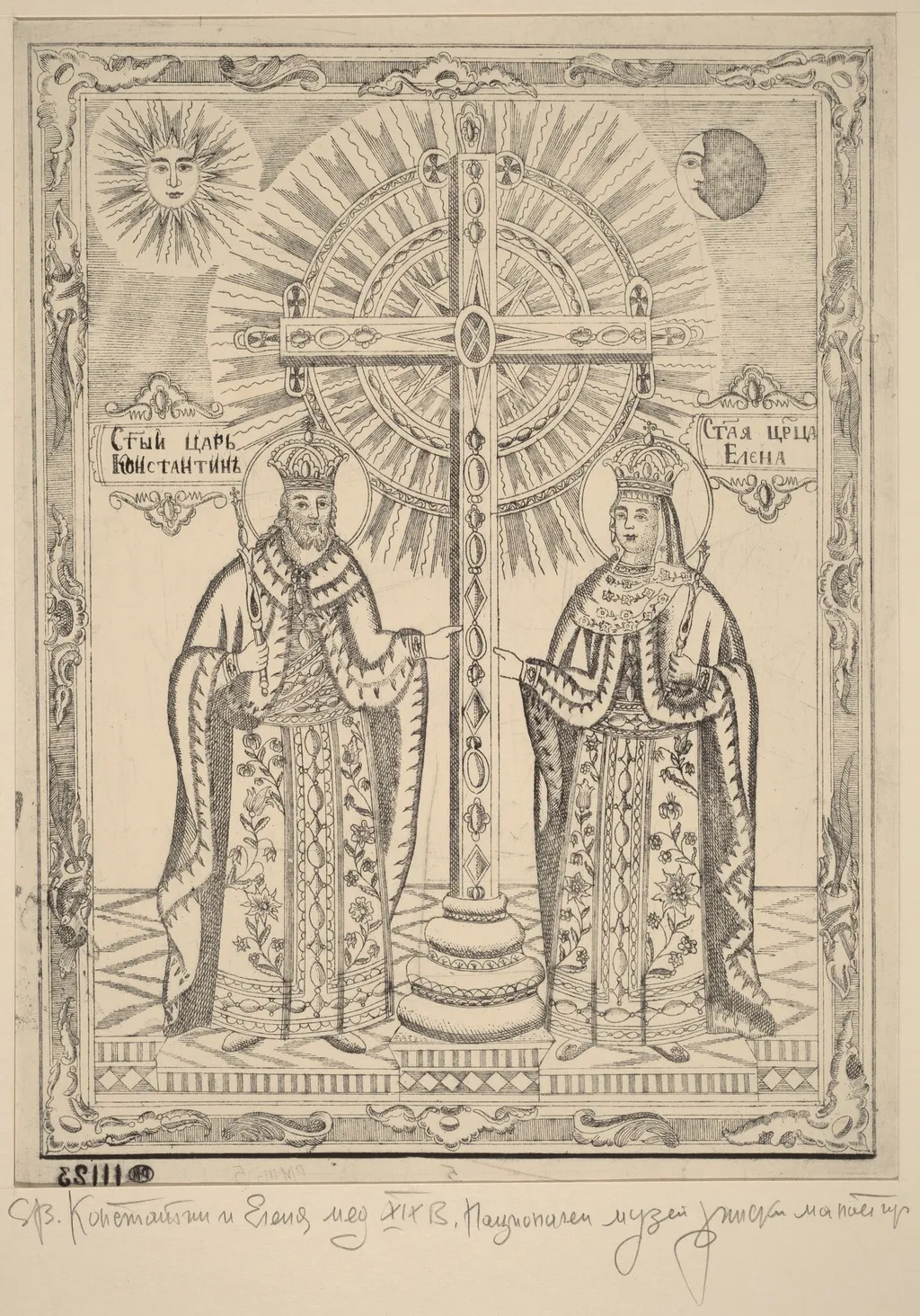
Saint Constantine and Saint Elena is a print by the Romanticist artist Bulgarian 19th Century. It dates from 1850 and is held in the collection of the National Gallery of Art.
About this work
Overview
Though the figures lived in the 4th century, the image was produced long after their lifetimes using industrial printing methods.
This print is a photo-mechanical reproduction depicting Saint Constantine and Saint Elena, created in the 19th century. Though the figures lived in the 4th century, the image was produced long after their lifetimes using industrial printing methods. Made on paper rather than canvas, it was designed for widespread distribution, allowing ordinary households to possess devotional imagery of revered Christian figures.
Subject & Meaning
The two saints are shown together, symbolizing their shared role in the Christianization of the Roman Empire. Constantine holds a cross, emblematic of his imperial endorsement of Christianity, while Elena, traditionally associated with the True Cross, cradles a small reliquary. Their proximity and contrasting attire—gold against dark fabric—emphasize spiritual authority and divine favor, reinforcing their status as foundational figures in European Christian identity.
Technique & Style
The image was produced using photo-mechanical processes common in the 1800s, enabling mass reproduction with consistent detail. The gold glow of the cross is rendered through selective toning or ink application, creating luminous contrast against the somber robes. Figures are rendered in a simplified, frontal pose typical of devotional prints, prioritizing symbolic clarity over naturalistic depth or individual expression.
History & Provenance
The original source of the composition remains unverified, but such prints were commonly circulated by religious publishers in 19th-century Europe and America. This particular example is held in the collection of the National Gallery of Art in Washington, D.C., where it serves as evidence of how religious iconography was adapted for domestic use during the rise of industrial print culture.
Context
In the 19th century, advances in printing technology made religious imagery accessible beyond churches and monasteries. Families displayed these prints as objects of private devotion, reflecting widespread reverence for Constantine and Elena as patrons of Christian empire and relics. Their veneration was tied to national and spiritual identity, especially in regions with strong Orthodox or Catholic traditions.
Legacy
This print exemplifies the democratization of sacred imagery in the modern era. By translating traditional iconography into reproducible form, it helped sustain devotional practices among laypeople. Though no longer central to worship, such works remain valuable as cultural artifacts, illustrating how religious memory was preserved and transmitted through everyday objects.
Artist & collection

Artist
This guy painted saints so often his brush practically lived in a church. He never signed his work—too busy copying old icons to care about credit—but the National Gallery kept one anyway, a stiff-backed Saint…

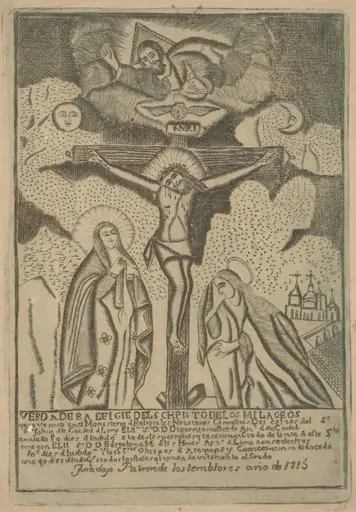 Señor de los Milagros (Lord of Miracles)
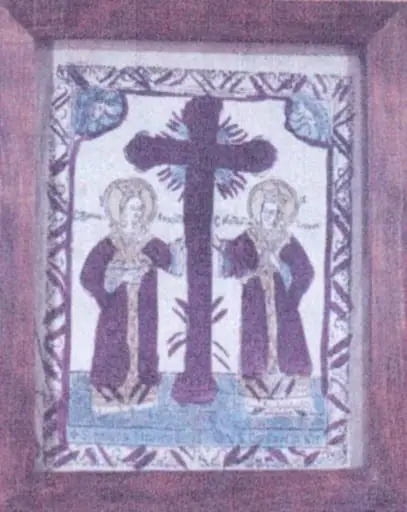 Sfinții Constantin și Elena
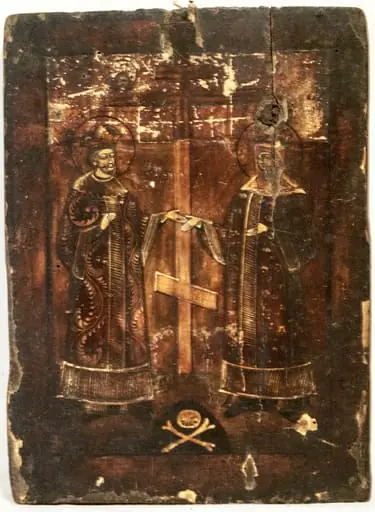 Sfinții împărați Constantin și Elena sunt redați conform erminiilor, de o parte și de alta a crucii răstignirii(aici de tip rusesc, cu 6 brațe), cruce găsită de împărăteasa Elena la Ierusalim. La baza crucii, craniul lui Adam, sugerând răscumpărarea păcatelor omenirii prin jertfa lui Iisus. Cei doi poartă coroane și veșminte împărătești, bogat decorate cu motive fitomorfe, la împărat în volute mari, la sfânta Elena mici, punctiforme. Gestul mâinilor, de arătare a crucii. În partea stângă a crucii, pe latura de sus, imediat sub chenar, chipul lui Iisus, așa cum s-a imprimat pe mahrama Veronicăi. Cromatica specifică, tonuri de roșu, brun, valorate de fondul foiței(aplicată în partea de sus, incluzând coroanele celor doi sfinți. Bordura roșiatică o înscrie în categoria icoanelor de tip krasnushka, caracteristice pentru centrul Holui. Pe spatele icoanei lipit un timbru al miliției RPR cu numele Zoe Apostolescu cu cerneală neagră..
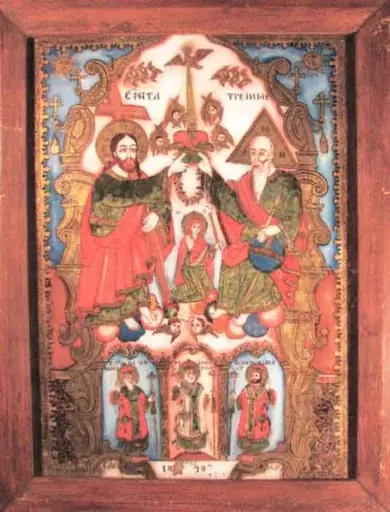 Sfânta Treime
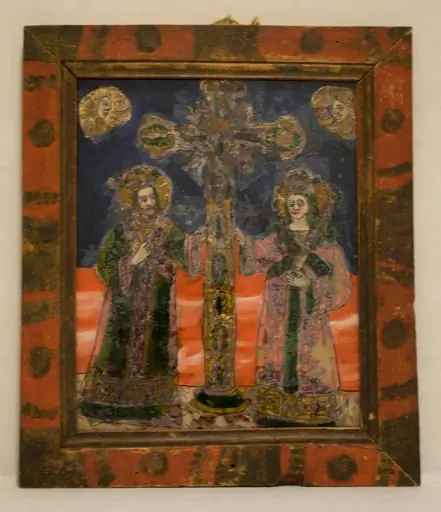 Icoana este pictată "în oglindă", pe un suport de sticlă de formă dreptunghiulară în ax vertical. Compoziția îi reprezintă pe Sfinții Împărați Constantin și Elena, susținând crucea pe care a fost răstignit Isus, cruce găsită de Împărăteasa Elena la Ierusalim. Crucea, aflată pe un postament circular, are brațele trilobate și raze care pornesc de la întretăierea brațelor. Este bogat ornamentată cu motive geometrice și florale stilizate pictată neîngrijit în alternanțe cromatice de verde smarald și galben, auriu. Cei doi sfinți sunt reprezentați cu însemnele împărătești, coroane pe cap și sceptru în mână. Veșmintele bogat ornamentate prin desenul cu condeiul, cu motive florale și fitomorfe , șiruri de romburi cu laturile duble încheiate cu cercuri.Aureolele aurite, cu marginea din desen vălurită. Apare aici și perspectiva, Crucea și sfinții fiind așezate pe o pardoseală, în spate până aproape la jumătatea icoanei un amestec de orange cu alb dând tridimensionalitate compoziției. Restul câmpului este de un albastru intens, cu reprezentări ale soarelui și lunii în cele două colțuri.Cele două astre sunt antropomorfizate, asemănătoare. Paleta cromatică variată: roșu, negru, alb, verde-oliv, gri, albastru, galben, orange, auriu, culorile intense. Desenul trasat cu condeiul este foarte încărcat și destul de neglijent, la fel umplerea cu culoare. Rama orange, ornamentată cu puncte și benzi transversale de grosimi diferite, de culoare verde.Dosul din șipci orizontale fixate de ramă.
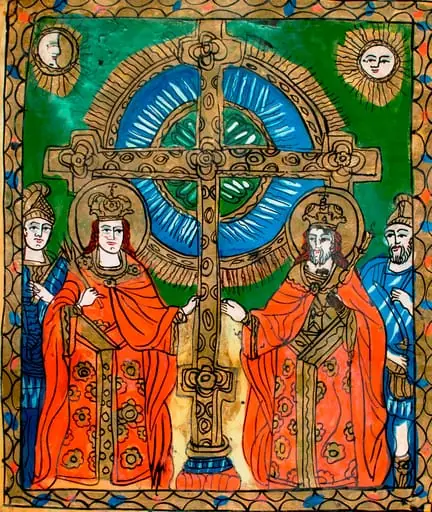 Icoana este pictată "în oglindă", pe un suport de sticlă de formă dreptunghiulară în ax vertical. Sfinții Împărați Constantin și Elena(1/1), susținând crucea pe care a fost răstignit Isus, cruce găsită de Împărăteasa Elena la Ierusalim. Crucea, dreaptă, cu brațele trilobate, aurită, decorată cu cercuri și semicercuri duble și flori la intersecția brațelor,este plasată pe un postament înalt, în centrul compoziției, având lungimea egală cu cea a suprafeței pictate.De la întretăierea brațelor iradiază cercuri concentrice de raze în culori reci, albastru, bleu, cel exterior auriu. Sfânta Elena(stânga) și sfântul Constantin(dreapta), plasați sub brațele crucii, reprezentați cu veșminte împărătești(tunici roșii brodate cu motive florale aurite, mantii lungi roșii, capă aurită pe umeri), coroane pe cap, aurite, la fel cu nimbul. Împăratul Constantin are în mâna stângă un sceptru, împărăteasa ține o ramură în mâna liberă. Amândoi sunt tineri, cu părul lung, roșcat-castaniu revărsat pe umeri. Sf. Constantin are barba scurtă. Cei doi împărați sunt flancați de un soldat roman și unul dac, în vestimentația militară specifică, având săbii în mâini. Acest Amănunt, cromatica și modul de realizare al desenului duc atribuirea către un zugrav cult. În colțurile de sus sunt redate luna și soarele antropomorfizate, într-un cerc aurit aplicat neglijent. Fondul este verde închis, cu degardeuri, la baza crucii zonă de culoare gălbuie. Întreaga compoziție este încadrată de un chenar dublu, cel de la interior aurit, cu două rânduri de semicercuri dispuse longitudinal, cel exterior de culoare roz gălbui. Desenul este dezordonat, cu linii redundante, culoarea aplicată inexact, nerespectând desenul. Compoziția este echilibrată, expresivă. Rama, din lemn de brad, culoare închisă.Îmbinare oblică la colțuri. Dosul - scânduri de brad, dispuse orizonal și fixate în cuie.
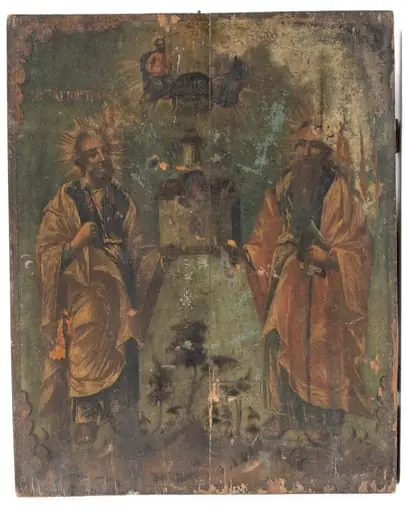 Sfinții Andrei și Haralambie
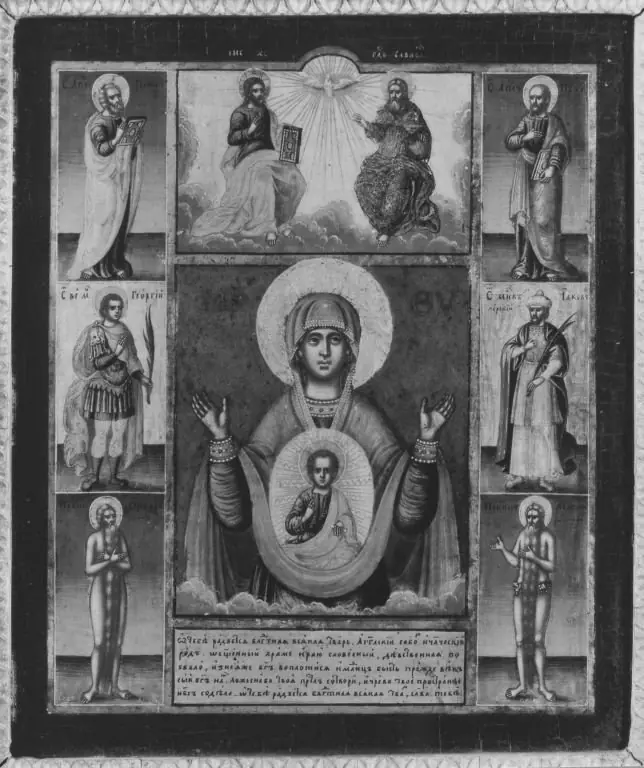 Virgin and Child; Holy Trinity and Saints
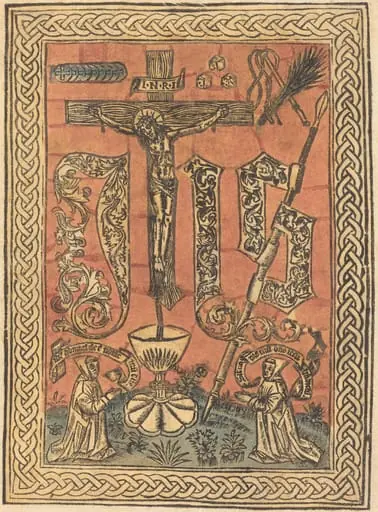 The Sacred Monogram
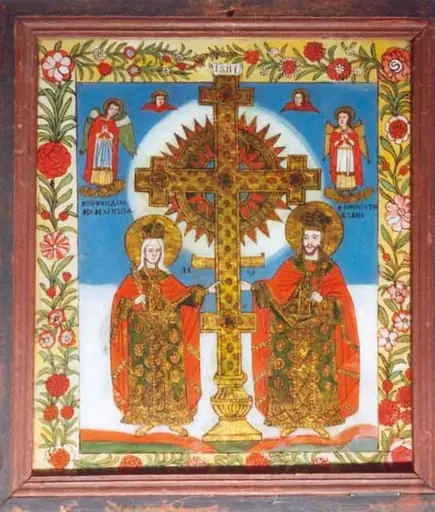 Sfinții Constantin și Elena
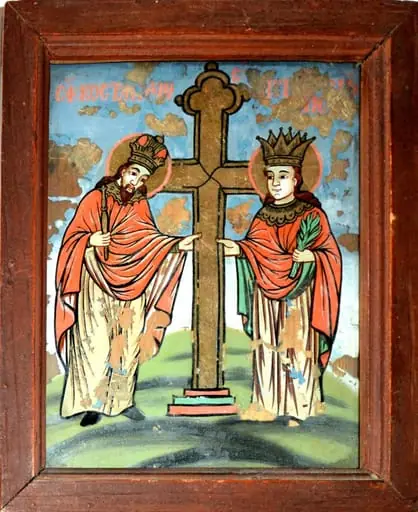 Sfinții împărați Constantin și Elena
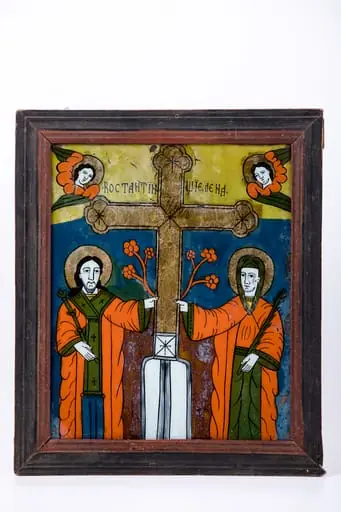 În centrul icoanei este Crucea albă la bază și bronzie în rest, cu capetele brațelor împodobite trilobat, iar în dreapta crucii este Sfântul Împărat Constantin, și în stânga este Împărăteasa Elena, mama sa. În spatele Crucii, sunt flori roșii agățătoare și unduitoare dintr-o grhirlandă de trandafiri. Crucea găsită este susținută cu bucurie de cei doi sfinți. Veșmintele Sfinților Constantin și Elena sunt într-o combinație de roșu vermillon și verde-iarbă de vară. Spațiul albastru-galben de lumină, din fondul icoanei, duce gândul la Crucea de lumină apărută pe cer In hoc signo vinces - prin acest semn vei învinge. Fondul icoanei este cerul albastru cobalt, lumina galbenă și o panglică albă, în josul crucii. În registrul superior, în colțurile stânga-dreapta sunt 2 îngeri serafimi. Cromatica este armonioasă, bogată și senină: roșu vermillon, galben-ocru, albastru cobalt, verde-iarbă de vară nuanță spanac-avocado, alb, negru. Icoana este de Nicula. Inscripția din româno-chirilică se traduce Constantin Elena.