Artwork
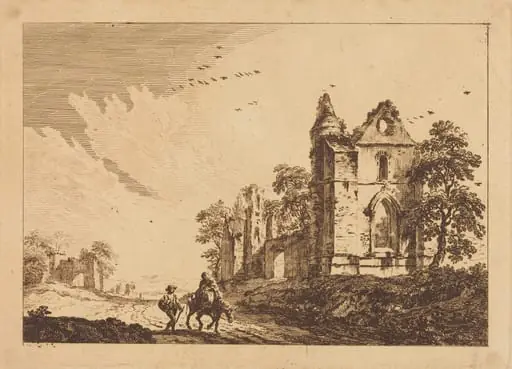
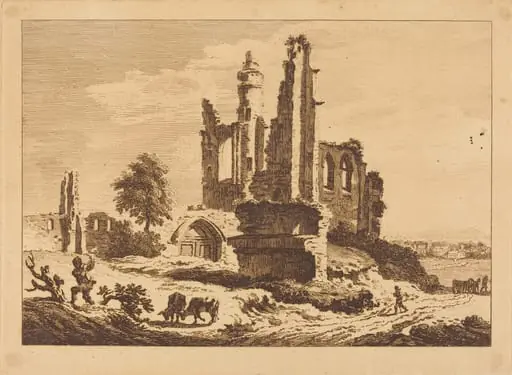
Ruins of a Church (Chapel of Eykenduynen near The Hague)
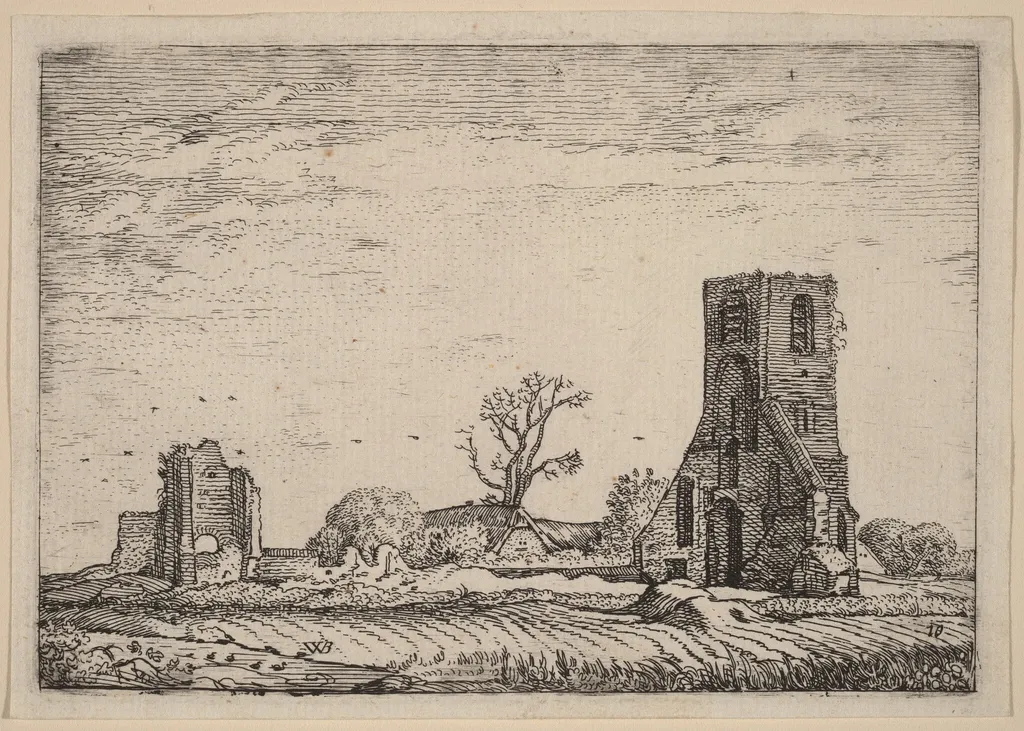
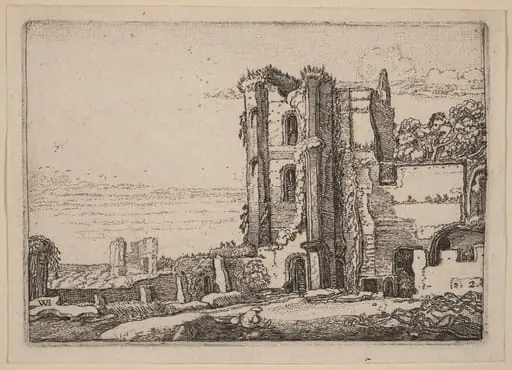
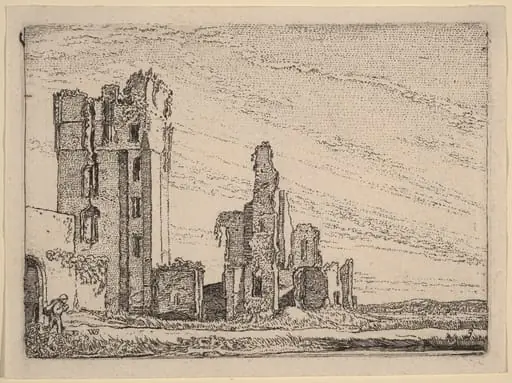
Ruins of a Church (Chapel of Eykenduynen near The Hague) is an ink print by the Baroque artist Willem Buytewech. It dates from 1621 and is held in the collection of the National Gallery of Art.
About this work
Overview
Created in 1621, this etching by Willem Buytewech depicts the remnants of a chapel near The Hague, once known as Eykenduynen. Rendered in monochrome, the print captures the quiet decay of two stone structures: a partial tower and a low wall with an arched opening. The scene is spare, devoid of figures, emphasizing the passage of time through architectural fragments and natural encroachment.
Subject & Meaning
No overt symbolism is present, but the stillness and solitude evoke a contemplative mood, typical of early 17th-century Dutch topographical prints.
The ruins suggest the aftermath of religious or political upheaval, common in the Dutch Republic after the Reformation. The chapel’s abandonment is underscored by the dead tree and scattered vegetation, implying nature’s reclamation of human structures. No overt symbolism is present, but the stillness and solitude evoke a contemplative mood, typical of early 17th-century Dutch topographical prints.
Technique & Style
Buytewech employed fine, controlled lines to render texture—crumbling masonry, rough-hewn wood, and uneven ground. The etching technique allowed for delicate gradations of tone, achieved by acid-biting the metal plate. Shadows are minimal, and detail is precise yet restrained, reflecting a documentary approach rather than dramatic embellishment. The composition is balanced, with vertical and horizontal elements guiding the eye across the ruined landscape.
History & Provenance
The chapel of Eykenduynen, located near The Hague, fell into disuse after the Protestant Reformation. Buytewech’s etching is among the earliest known depictions of the site, likely made during a period of renewed interest in regional antiquities. The print was probably produced for private collectors or as part of a series documenting local landmarks, though its early ownership records remain unclear.
Context
In early 17th-century Holland, interest in ruins and vernacular architecture grew alongside civic pride and historical awareness. Artists like Buytewech contributed to a visual record of places altered by war and religious change. This work aligns with a broader trend of topographical prints that valued accuracy over idealization, serving both aesthetic and archival purposes in a rapidly modernizing society.
Legacy
Buytewech’s etching stands as an early example of Dutch landscape printmaking that prioritizes observation over narrative. It influenced later artists who documented architectural decay with similar restraint. Though not widely reproduced, it remains a significant record of a vanished structure and a quiet testament to the cultural shift in how the Dutch viewed their own history.
Artist & collection