Artwork
Paradise
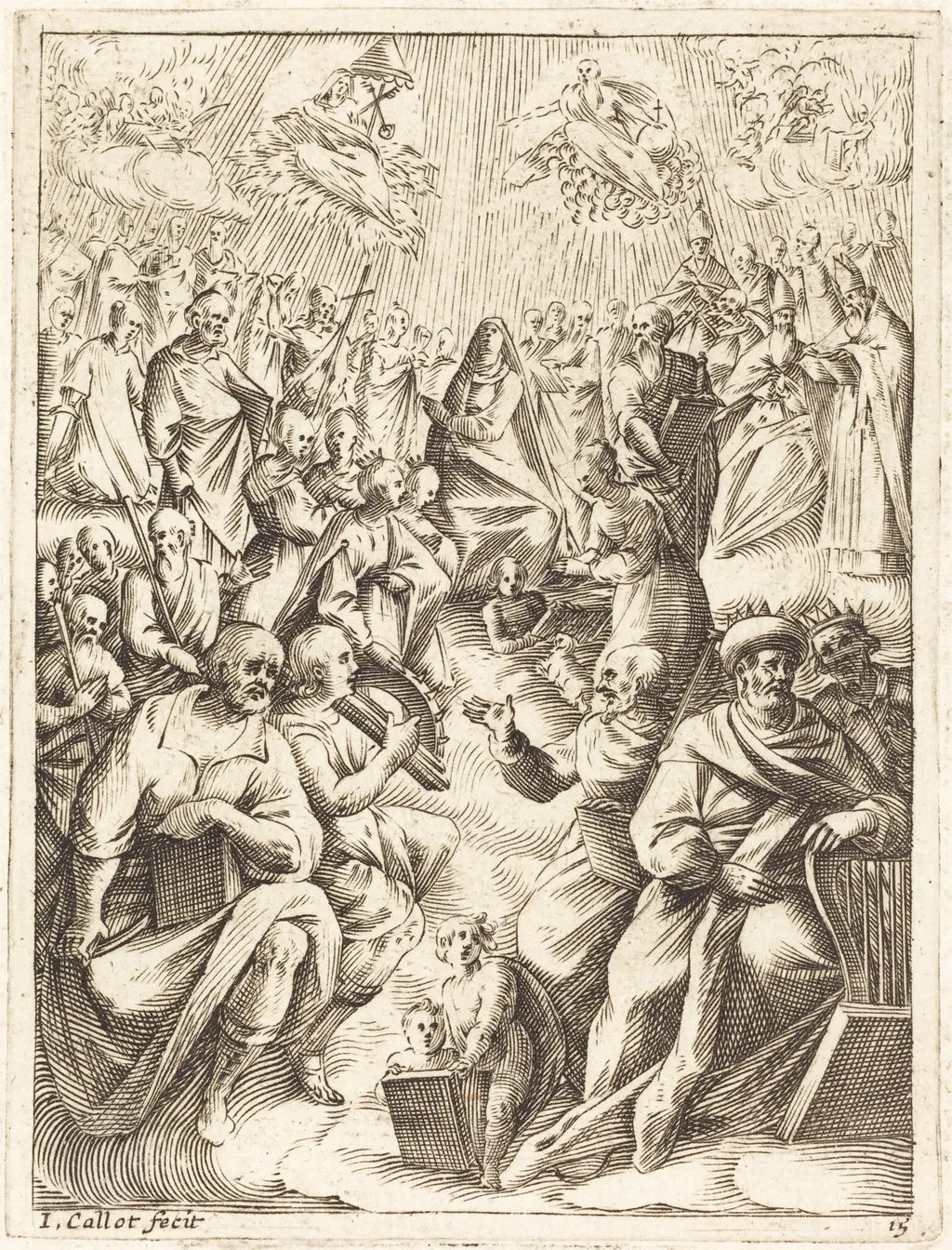
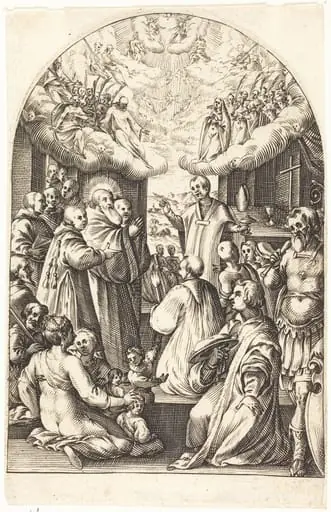
Paradise is an ink print by the Baroque artist Jacques Callot. It dates from 1610 and is held in the collection of the National Gallery of Art.
About this work
Overview
As a draftsman from the Duchy of Lorraine, Callot produced more than 1,400 prints, many depicting religious and social scenes with meticulous detail.
Jacques Callot’s *Paradise*, created in 1610, is an engraving on laid paper that exemplifies his mastery of fine-line technique. As a draftsman from the Duchy of Lorraine, Callot produced more than 1,400 prints, many depicting religious and social scenes with meticulous detail. This work belongs to a series of prints exploring spiritual themes, rendered through dense, layered engraving rather than broad brushwork.
Subject & Meaning
The scene depicts a throng of figures straining upward, their gestures suggesting desperate aspiration toward an unseen divine realm. Some gaze skyward, others crouch or turn away, their postures conveying varied responses to transcendence. The presence of baskets and small objects at the base hints at earthly attachments, contrasting with the upward motion above. The composition evokes a collective yearning, possibly referencing the biblical ascent to heaven or the soul’s arduous journey.
Technique & Style
Callot employed fine, closely spaced lines and cross-hatching to model form and suggest texture across the crowded figures and swirling background. The use of laid paper allowed for subtle tonal gradations, enhancing the illusion of depth and movement. His precision in rendering individual gestures and drapery, despite the small scale, demonstrates his technical command. The background’s chaotic, wind-like lines amplify the sense of spiritual turbulence.
History & Provenance
Created during Callot’s early career in Florence, *Paradise* reflects his exposure to Italian Mannerist and early Baroque visual traditions. The print was likely produced for a private or scholarly audience, as his works were circulated among collectors and artists. No definitive early ownership records survive, but the print’s survival in multiple museum collections suggests its early recognition among connoisseurs of Northern and Italian printmaking.
Context
In early 17th-century Europe, religious imagery remained central to print culture, even as secular themes gained ground. Callot’s engagement with biblical subjects aligned with Counter-Reformation interests in visual devotion, yet his focus on human emotion and physical struggle diverged from idealized representations. His detailed landscapes and crowded compositions echoed contemporary Northern engravings, while his technical innovation influenced later printmakers across Europe.
Legacy
Callot’s *Paradise* contributed to the elevation of engraving as a medium capable of complex narrative and emotional depth. His ability to render dense, dynamic scenes with fine lines became a model for later artists in France and the Netherlands. Though less widely known than his military scenes, this work remains a significant example of his capacity to translate spiritual themes into visually arresting, human-centered compositions.
Artist & collection

Artist
Jacques Callot was a baroque printmaker and draftsman from the Duchy of Lorraine.

 Holy Family at supper
 Restoration of the Aqueduct at Pisa
 Restoration of the Aqueduct at Pisa
 Square in Paris with Many Figures
 Square in Paris with Many Figures
 Horsemen Attacked by Robbers
 HOW WILL A COVERED PART BE CORRECTED?HOW WIKA A COVERED HEART DEED CORRECTED?
![Christ Walking on the Water [second plate], by Jacques Callot](https://artifactworldgallery.com/img/jacques-callot--christ-walking-on-the-water-second-plate--2069f3bfe4cb2126-w320.webp) Christ Walking on the Water [second plate]
Christ Walking on the Water [second plate]
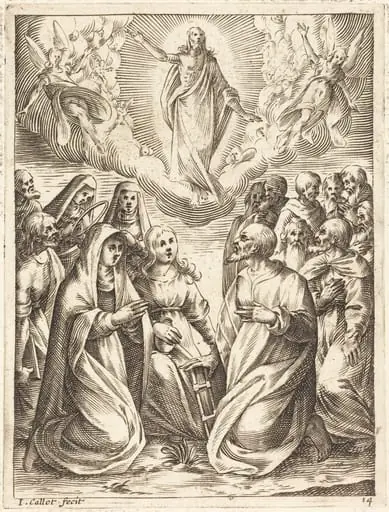 The Ascension
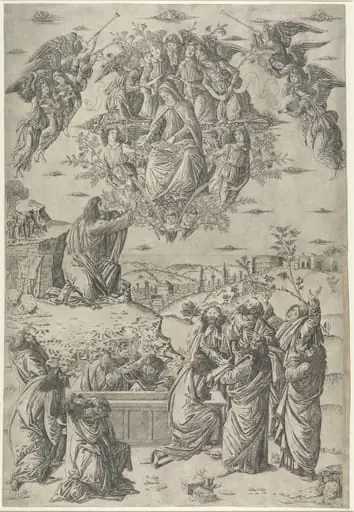 The Assumption of the Virgin
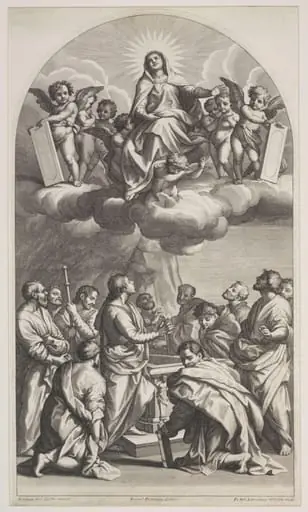 Assumption of the Virgin
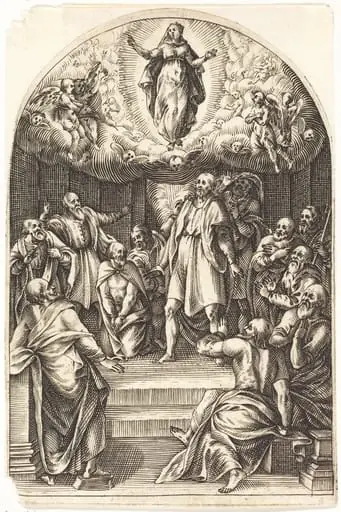 The Assumption
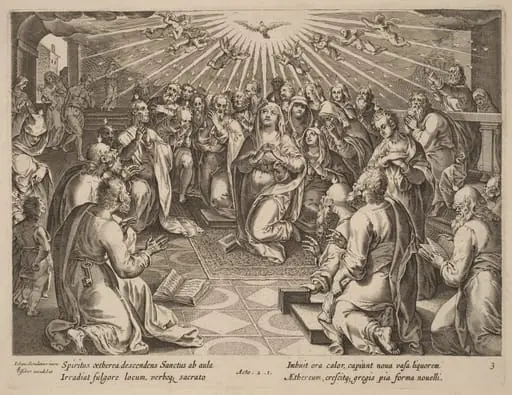 Pentecost
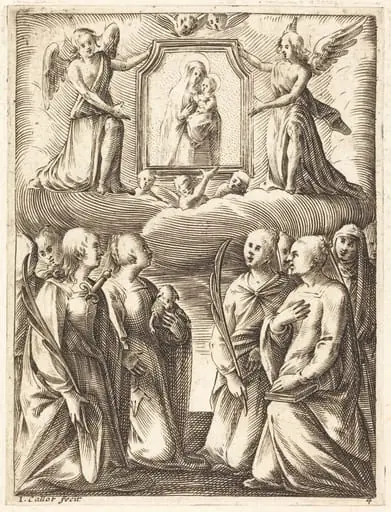 The Adoration of the Virgin and Child
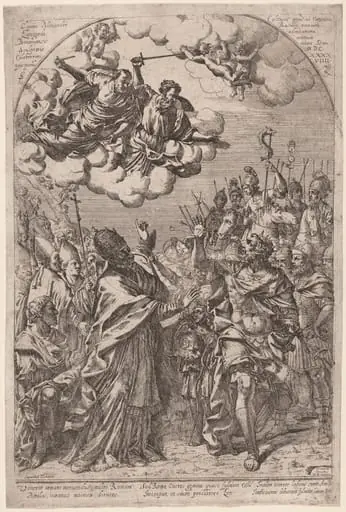 Attila at the Gates of Rome
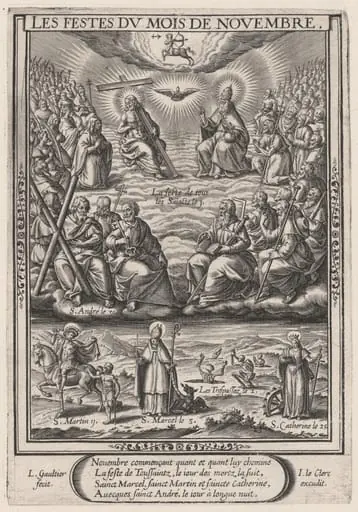 Les Festes du mois de November (November: All Saints)
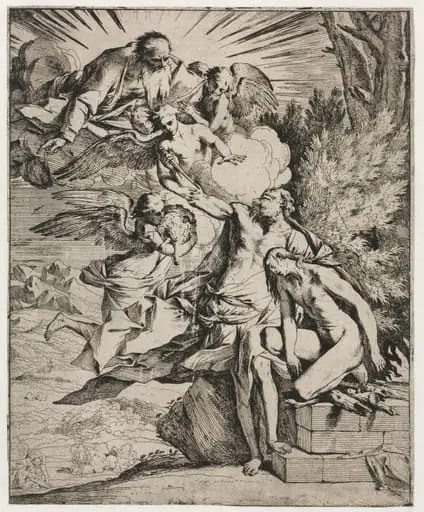 The Sacrifice of Abraham
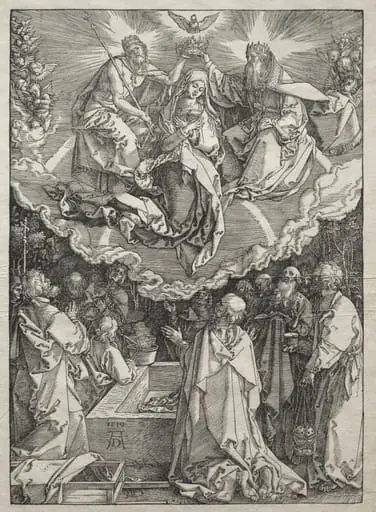 Life of the Virgin: Assumption of the Virgin
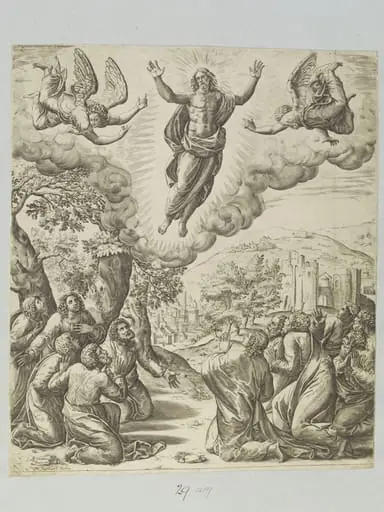 The Ascension
 Death of Saint Benedict