Artwork
Les Festes du mois de November (November: All Saints)
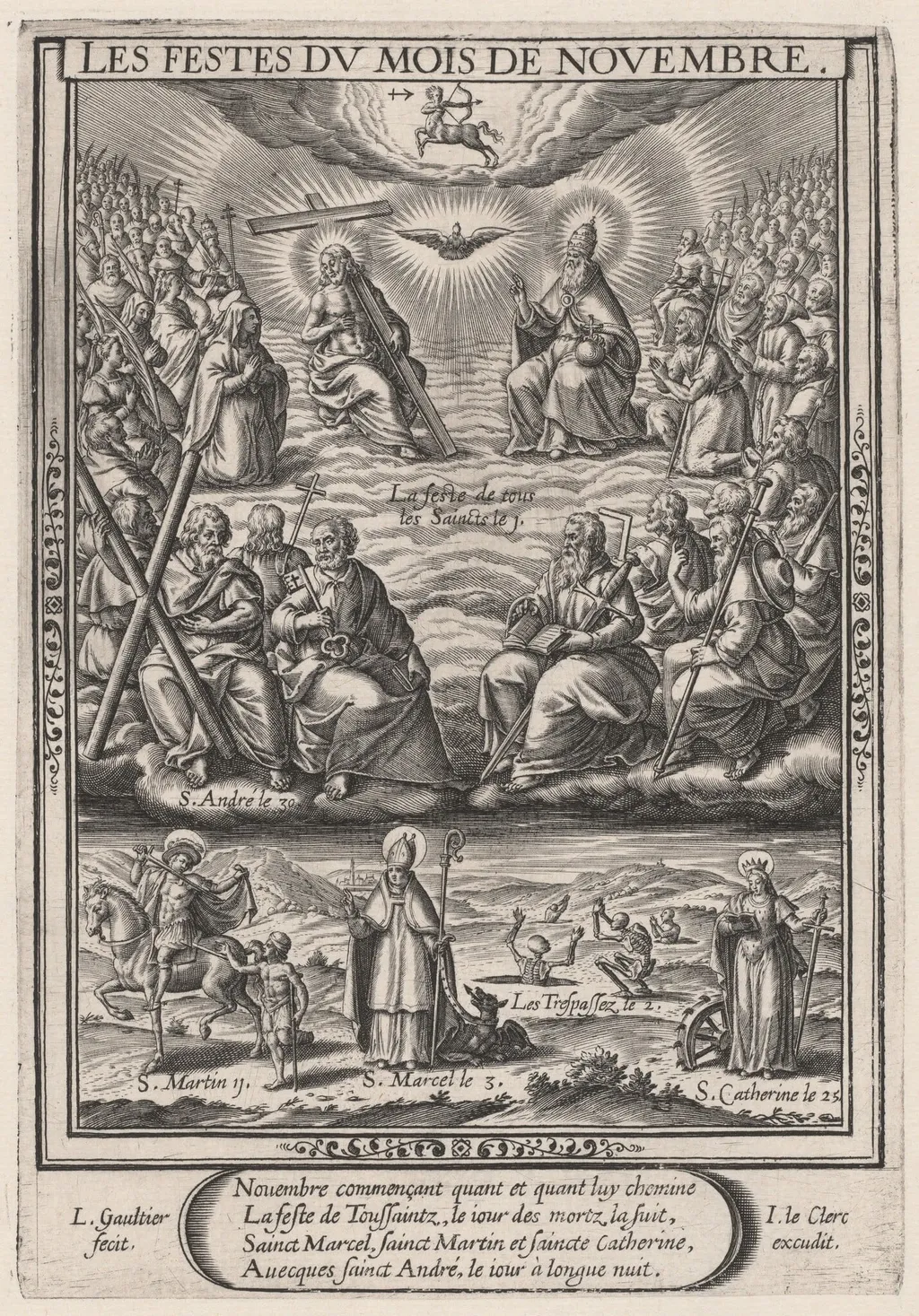
Les Festes du mois de November (November: All Saints) is an ink print by the Baroque artist Léonard Gaultier. It dates from 1603 and is held in the collection of the National Gallery of Art.
About this work
Overview
The work belongs to the tradition of Northern European printmaking, where detailed imagery was produced for devotional and educational purposes.
Created in 1603, this engraving by Léonard Gaultier is part of a series illustrating monthly observances. Rendered on laid paper, it measures 19.1 by 13.3 centimeters. The work belongs to the tradition of Northern European printmaking, where detailed imagery was produced for devotional and educational purposes. Its small scale suggests it was intended for private contemplation rather than public display.
Subject & Meaning
The scene depicts rituals associated with All Saints’ Day, a Catholic observance honoring the faithful departed. Figures are shown in quiet procession before a church, with symbolic elements such as candles and crosses reinforcing the theme of remembrance. The composition emphasizes communal piety, reflecting the spiritual customs of early 17th-century France, where such practices were deeply woven into daily life.
Technique & Style
Gaultier employed fine, controlled lines to build texture and depth through engraving, a method requiring precision on a metal plate. The laid paper, with its characteristic chain lines, enhances the tactile quality of the print. Delicate cross-hatching defines folds of clothing and architectural details, revealing the artist’s mastery of tonal gradation and spatial suggestion within a limited medium.
History & Provenance
The print was produced during a period when religious imagery remained prevalent despite growing Protestant influence in parts of Europe. Gaultier, active in Paris, was known for his religious and allegorical engravings. While specific early ownership records are sparse, the work’s survival in institutional collections indicates its continued recognition among collectors of early modern prints.
Context
This engraving emerged during the Counter-Reformation, when the Catholic Church encouraged visual representations to reinforce doctrine and devotion. Similar series of monthly scenes were circulated across Europe, often commissioned by publishers to meet demand for devotional aids. Gaultier’s work aligns with this trend, blending folk observance with ecclesiastical authority in accessible form.
Legacy
Though not widely reproduced in later centuries, the engraving remains a representative example of French printmaking at the turn of the 17th century. It contributes to scholarly understanding of how religious rituals were visually codified and disseminated. Its preservation in museum collections ensures continued study of its craftsmanship and cultural significance.
Artist & collection
Artist
Léonard Gaultier, or, as he sometimes signed himself, Galter, a French engraver, was born at Mainz about 1561, and died in Paris in 1641.

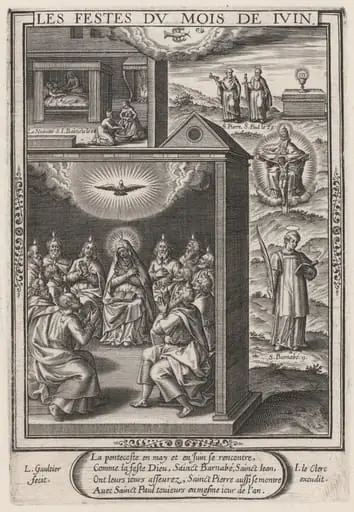 Les Festes du mois de Juin (June: The Pentecost)
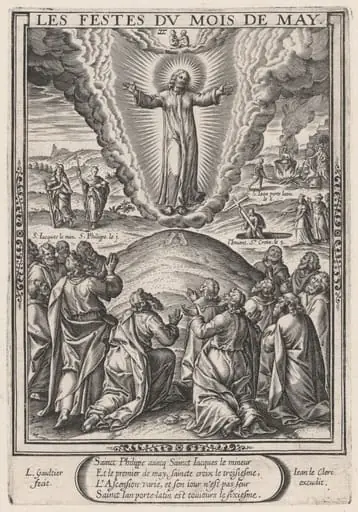 Les Festes du mois de Mai (May: The Ascension)
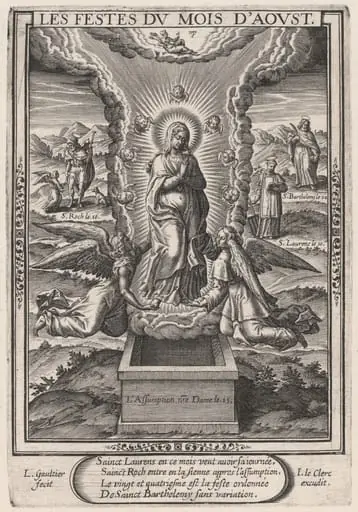 Les Festes du mois d'Aoust (August: The Assumption)
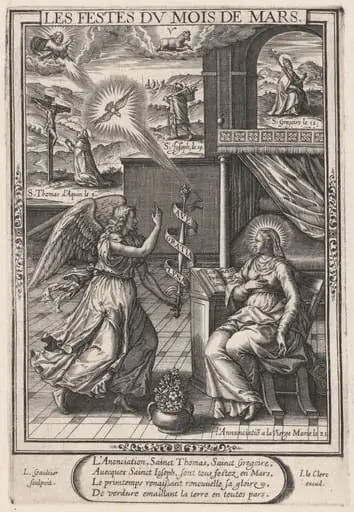 Les Festes du mois de Mars (March: The Annunciation)
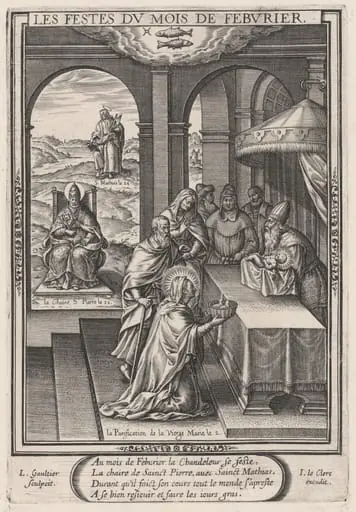 Les Festes du mois de Feburier (February: the Purification of the Virgin)
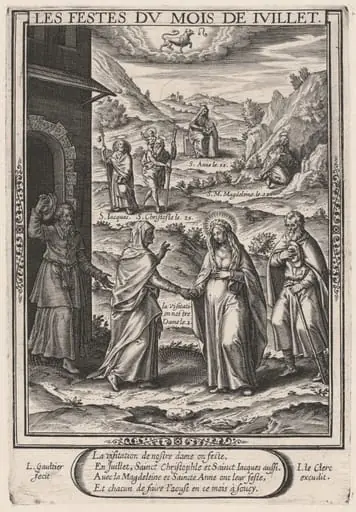 Les Festes du mois de Juillet (July: The Visitation)
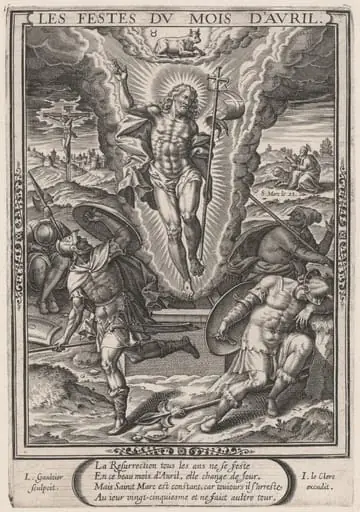 Les Festes du mois d'Avril (April: The Resurrection)
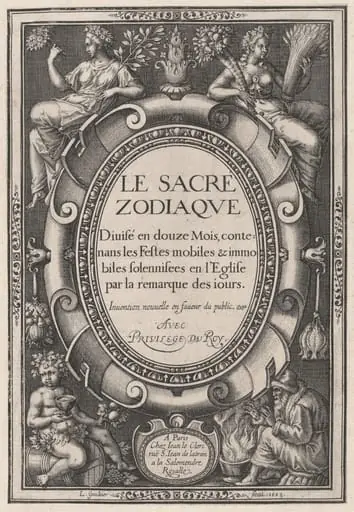
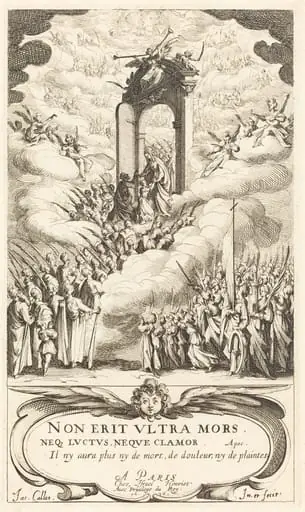 Frontispiece for "The Calendar of Saints"
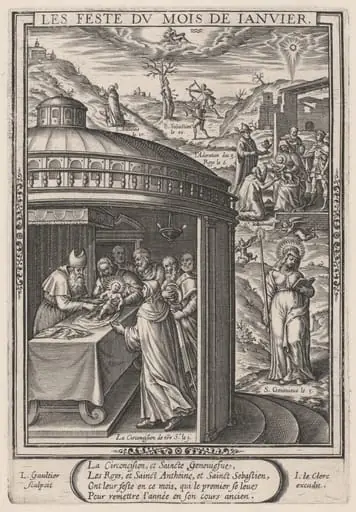 Les Feste du mois de Janvier (January: the Circumcision)
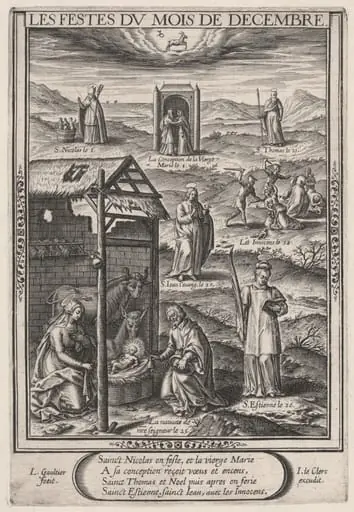 Les Festes du mois de Decembre (December: The Nativity)