Artwork
Street in Srinagar
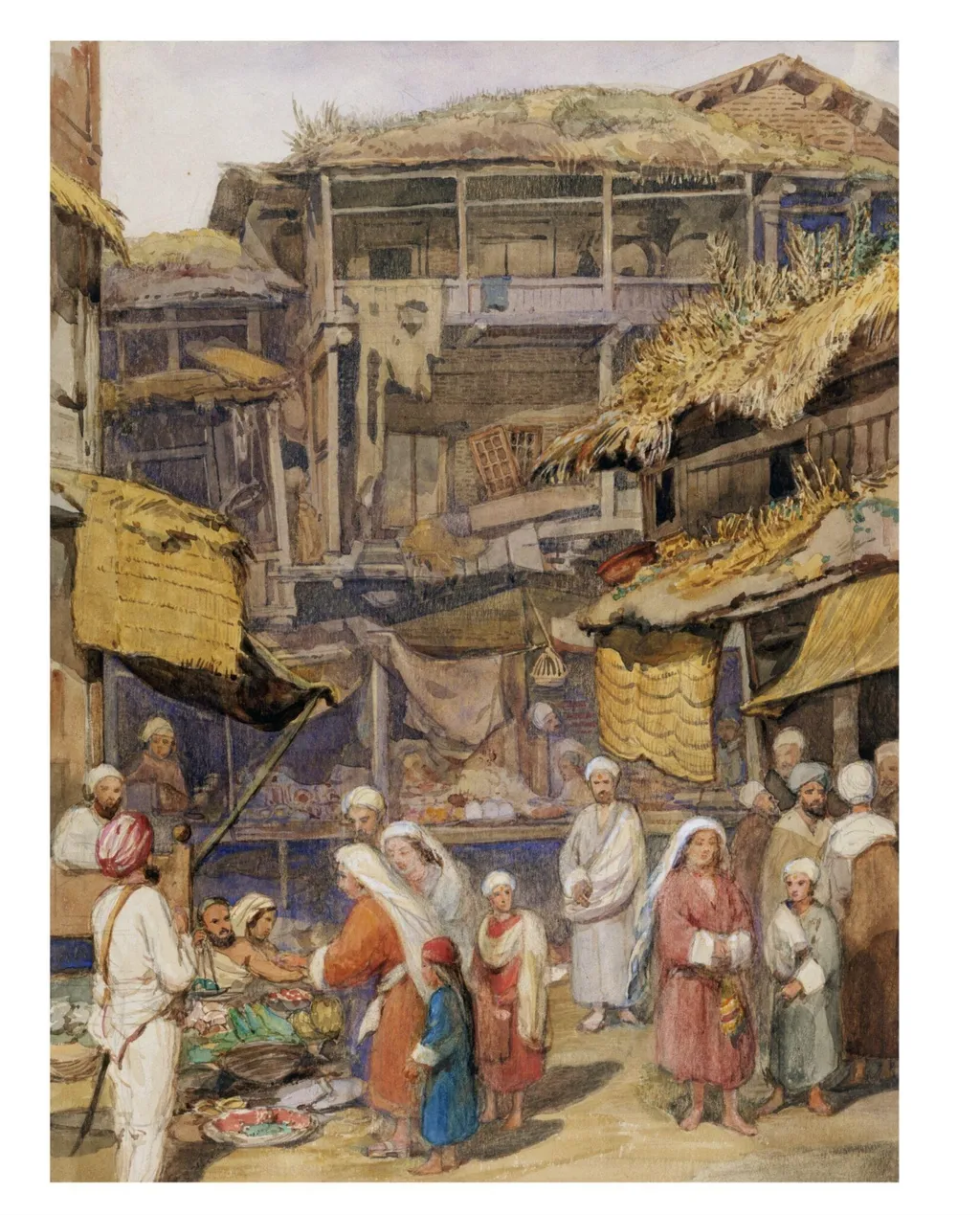
Street in Srinagar is a paint painting by the Impressionist artist William Carpenter. It dates from 1855 and is held in the collection of the Victoria and Albert Museum.
About this work
William Carpenter painted a street scene in Srinagar in 1855. It shows a market in Kashmir. The painting is held at the Victoria and Albert Museum.
Carpenter was born in 1818. He traveled to India in the 1850s and painted many local scenes. He often dressed in Indian clothing while working.
This painting mixes Impressionism and Realism. Look up the artist William Carpenter next.
Overview
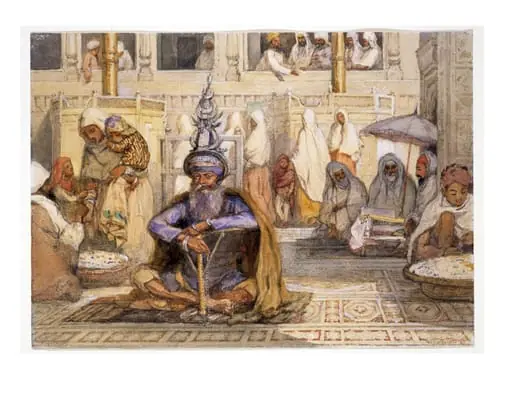
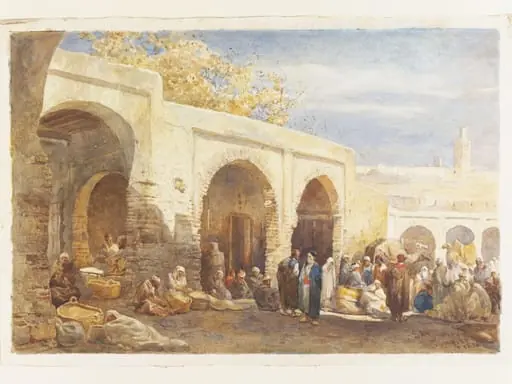
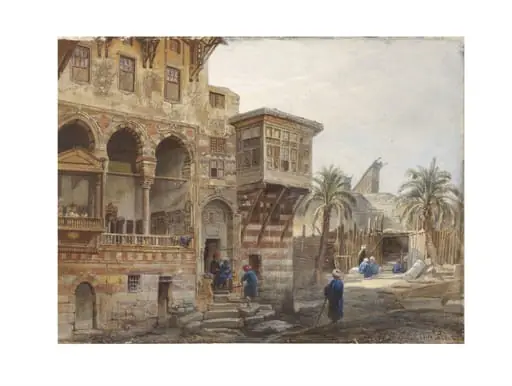
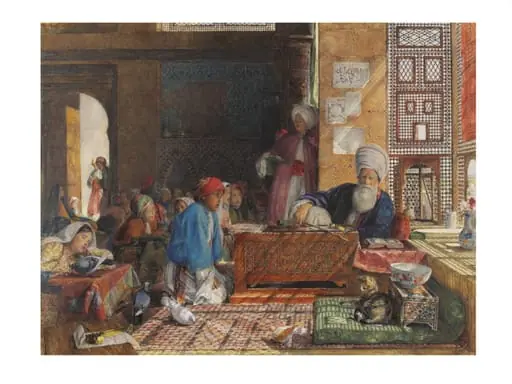
William Carpenter’s 1855 painting *Street in Srinagar* depicts a bustling urban scene in Kashmir, capturing the intersection of daily life and local commerce.
William Carpenter’s 1855 painting *Street in Srinagar* depicts a bustling urban scene in Kashmir, capturing the intersection of daily life and local commerce. Executed during an extended sojourn in South Asia, the work reflects Carpenter’s sustained engagement with the region’s landscapes and people. Now housed in the Victoria and Albert Museum, the painting exemplifies his observational approach to documenting colonial-era India.
Subject & Meaning
The composition centers on a market junction at the terminus of Srinagar’s second bridge, where figures engage in trade and movement. Carpenter’s focus on ordinary activity—rather than ceremonial or elite subjects—highlights the rhythms of local existence. The scene conveys a sense of immediacy, emphasizing the social fabric of nineteenth-century Kashmir through its depiction of vendors, pedestrians, and architectural details.
Technique & Style
Carpenter’s method blends realist precision with impressionistic looseness, particularly in the rendering of light and atmosphere. Brushwork varies between fine detailing—seen in textiles and architectural elements—and broader, more gestural strokes for figures and background. This hybrid approach underscores his ability to balance accuracy with a dynamic, almost fleeting quality, reflecting both Western academic traditions and an openness to local visual influences.
History & Provenance
Painted in 1855 during Carpenter’s travels across India, the work formed part of a larger body of sketches and finished paintings created between 1850 and 1856. After his return to England, the painting entered the collection of the Victoria and Albert Museum, where it remains. Its provenance reflects Carpenter’s broader artistic output, which documented colonial India during a period of heightened British imperial presence.
Context
Carpenter’s time in India coincided with the early years of direct British rule following the 1857 uprising. Unlike many contemporaries who focused on military or administrative themes, he immersed himself in local culture, often adopting Indian attire. His work offers a rare visual record of everyday life in regions like Kashmir, Punjab, and Rajasthan, providing insights into pre-modern urban environments and social practices.
Legacy
Though less celebrated than his portraits of Indian royalty, Carpenter’s street scenes contribute to a nuanced understanding of nineteenth-century South Asia. His paintings serve as historical documents, preserving fleeting moments of daily life under colonialism. The works also mark an early instance of Western artists engaging with Indian subjects beyond exoticized stereotypes, foreshadowing later ethnographic and travel-based artistic traditions.
Artist & collection
Artist
William Carpenter (1818–1899) was an English watercolour artist. He travelled for six or seven years in the 1850s painting scenes of India, its people and its life. The Victoria and Albert Museum bought over 280 of his…

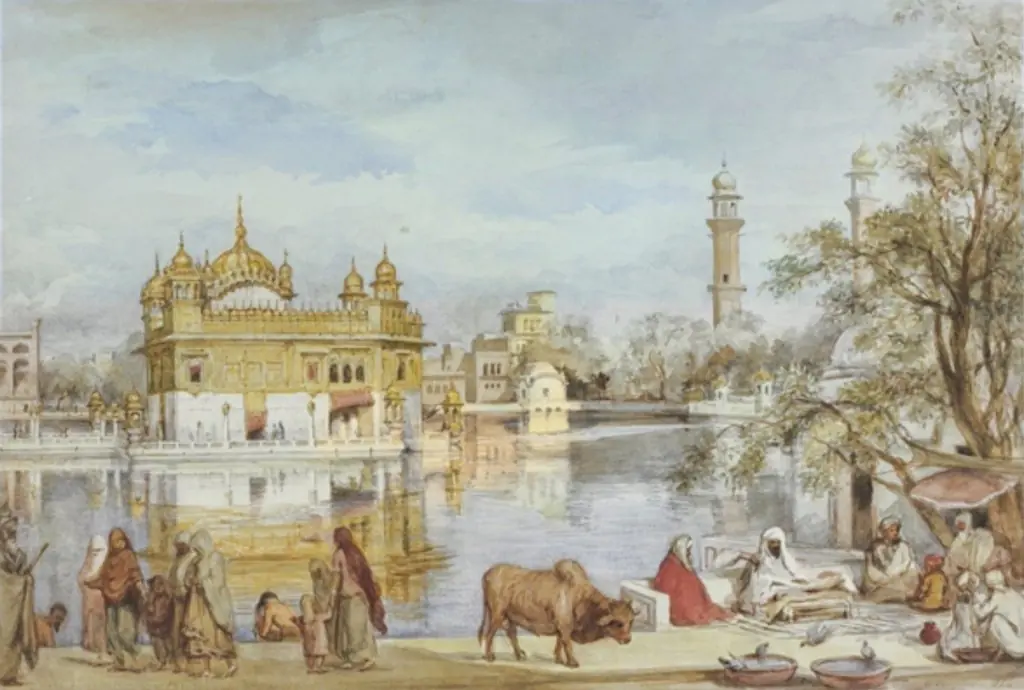 The Golden Temple, Amritsar
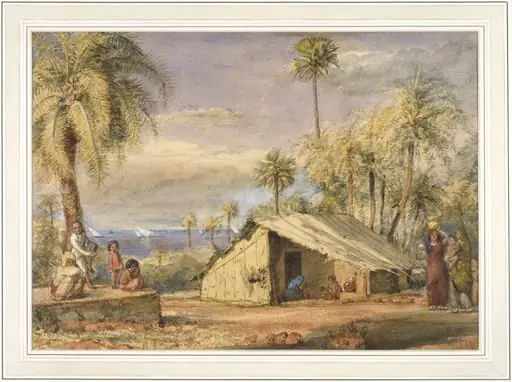 Toddywallah's hut in a grove of date palms near Breach Candy, Bombay
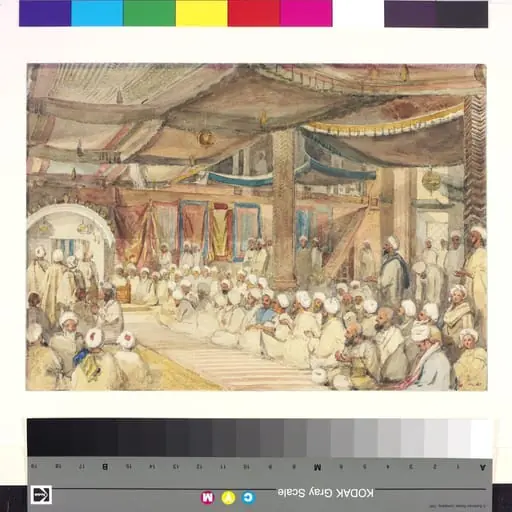 Interior of Shah Hamadan's Masjid during a religious ceremony
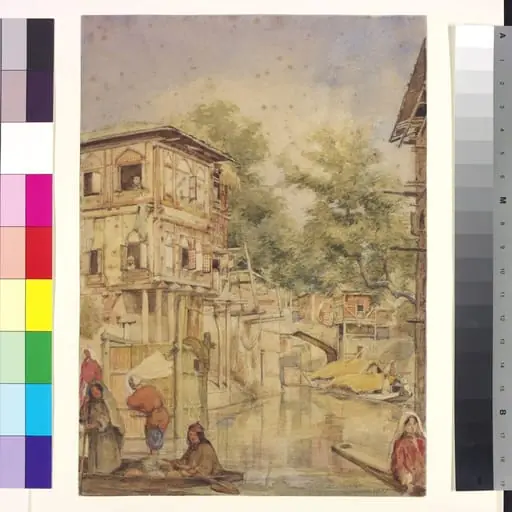 On the Mar Canal at Srinagar, Kashmir
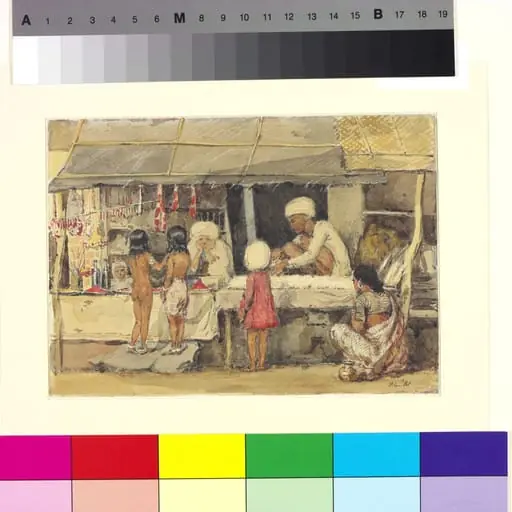 Shops for colours and flowers used at festivals, Sadr bazaar, Pune
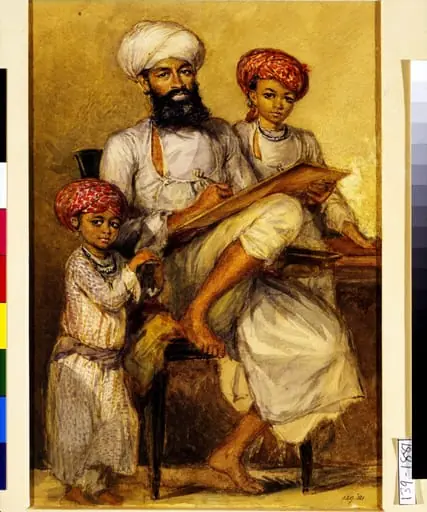 Portrait of Tara Chand, the court painter
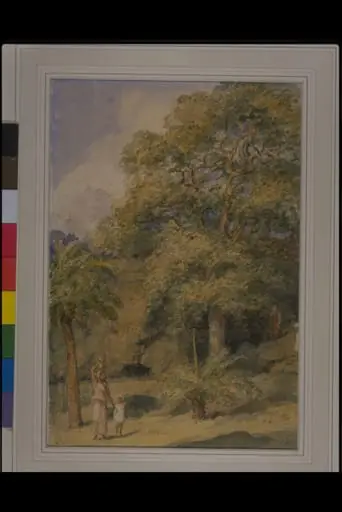 Study of a tamarind tree and date palms near Sir William Yardley's house at Breach Candy, Bombay
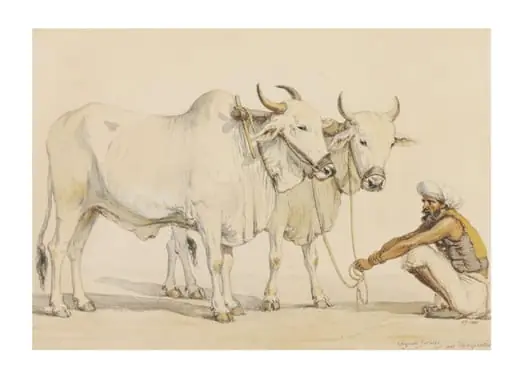 Two harnessed bullocks from Gujarat with their keeper