Artwork
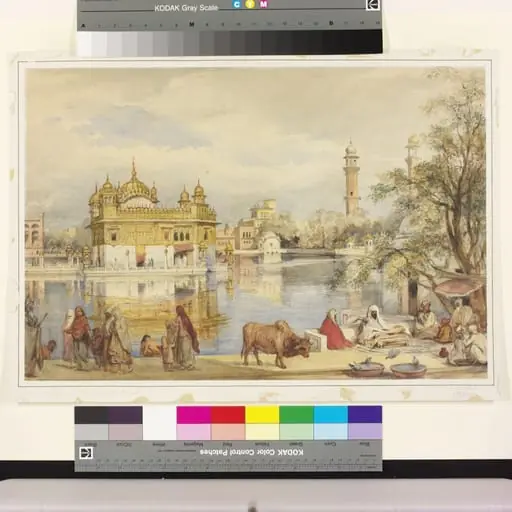
Tank & Marble Causeway the Sikh Temple Amritsar
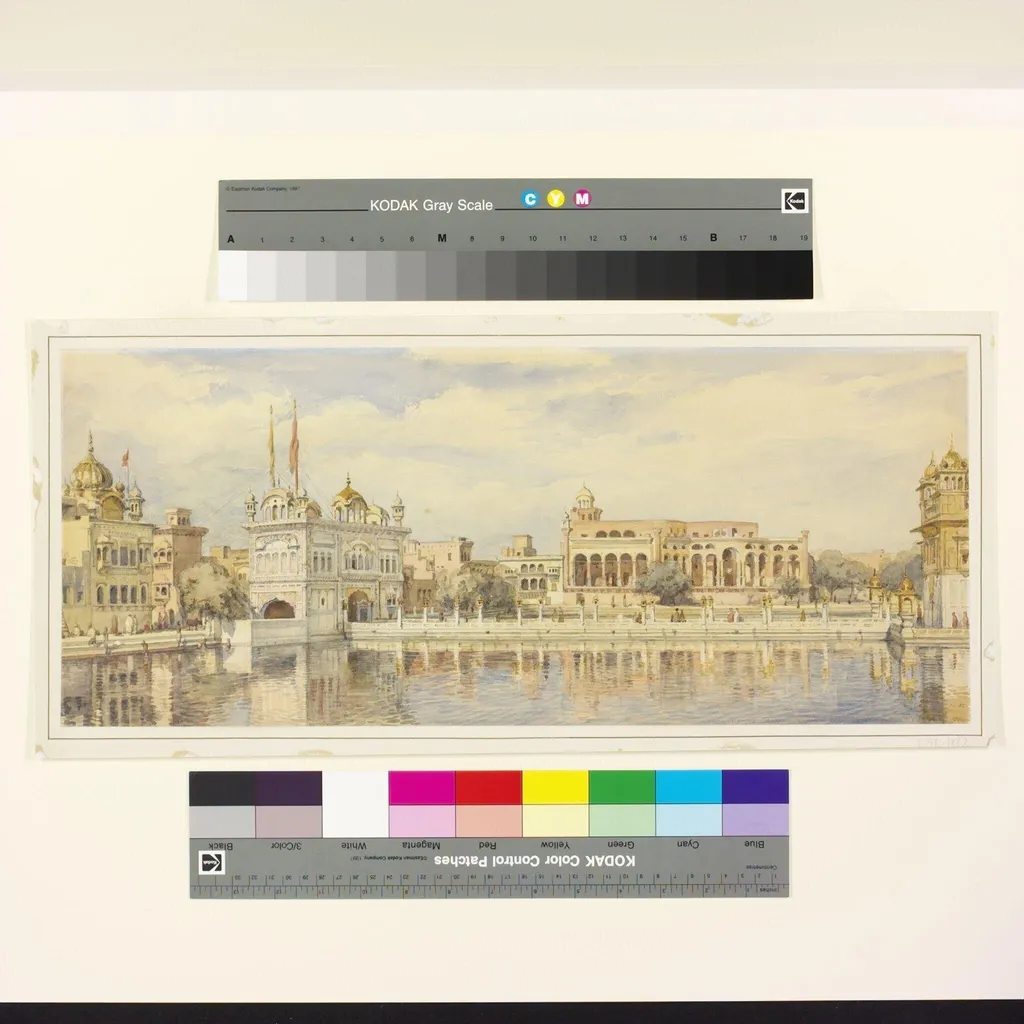
Tank & Marble Causeway the Sikh Temple Amritsar is a paint painting by the Impressionist artist William Carpenter. It dates from 1854 and is held in the collection of the Victoria and Albert Museum.
About this work
William Carpenter painted a wide view of the Sikh Temple in Amritsar. He worked in oil in the mid-1800s. The scene shows the marble causeway and a water tank near the temple.
Carpenter spent 1850–1856 traveling India in Indian dress. He made many paintings of local rulers and landscapes. This one likely dates from early 1854.
Look up the artist Carpenter, William next.
Overview
Tank & Marble Causeway the Sikh Temple Amritsar is an oil painting by William Carpenter, depicting a panoramic view of the Golden Temple in Amritsar, Punjab, focusing on its main gateway, marble causeway, and adjacent water tank.
Subject & Meaning
The painting captures a revered Sikh site, the Golden Temple, as rebuilt by Maharaja Ranjit Singh after repeated 18th-century destructions. The depiction highlights the temple's central causeway and tank, emphasizing its architectural and religious significance.
Technique & Style
Executed in oil in the mid-19th century, the work reflects Carpenter's observational approach to Indian landscapes and architecture during his 1850-1856 travels. The style is characteristic of European artists documenting Indian scenes during this period.
History & Provenance
Likely created in early 1854, the painting is part of Carpenter's body of work from his Indian sojourn. After traveling extensively in India, the artist returned to England in 1856, later moving to the USA before settling back in London until his death in 1899.
Context
This work is set within the broader context of European artistic exploration of India during the colonial era. Carpenter's adoption of Indian dress and his portraits of local rulers alongside landscapes like this, reflect a nuanced, if still colonial, engagement with Indian culture.
Legacy
While specific legacy details of this painting are not highlighted, it contributes to the historical visual record of the Golden Temple's 19th-century appearance and reflects Carpenter's contribution to the European artistic documentation of India during this period.
Artist & collection
Artist
William Carpenter (1818–1899) was an English watercolour artist. He travelled for six or seven years in the 1850s painting scenes of India, its people and its life. The Victoria and Albert Museum bought over 280 of his…

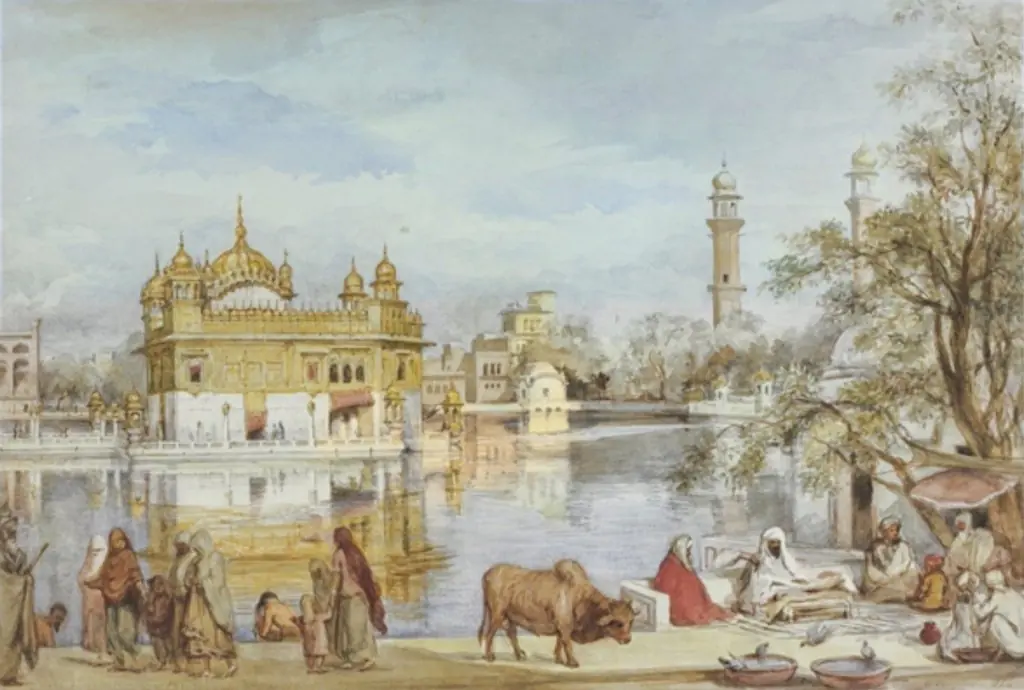 The Golden Temple, Amritsar
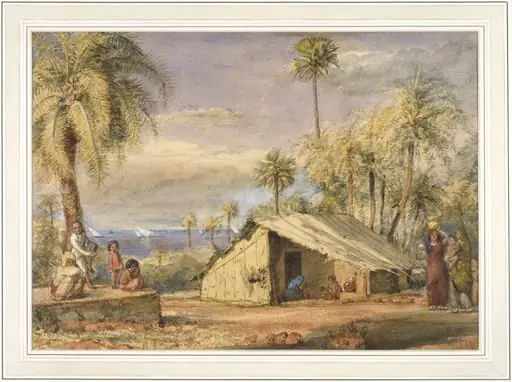 Toddywallah's hut in a grove of date palms near Breach Candy, Bombay
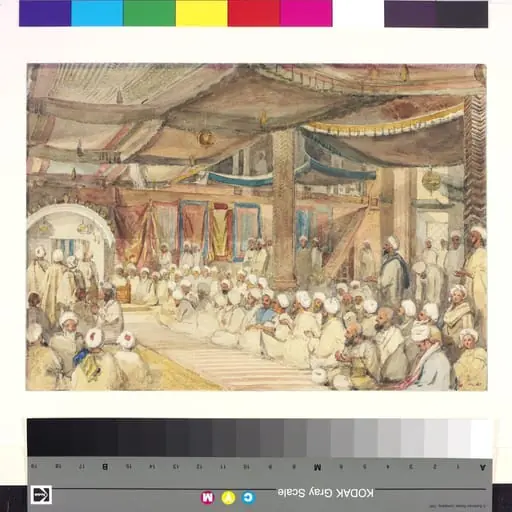 Interior of Shah Hamadan's Masjid during a religious ceremony
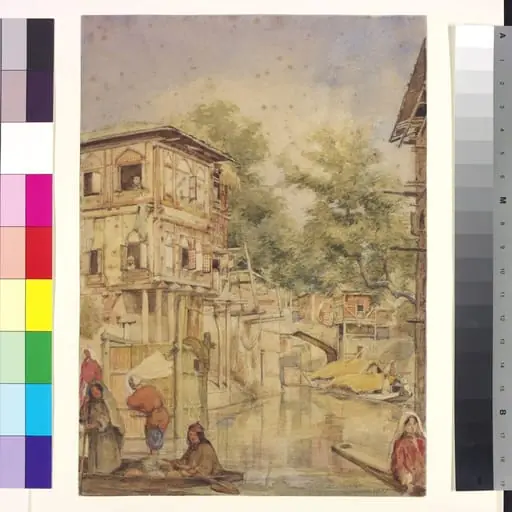 On the Mar Canal at Srinagar, Kashmir
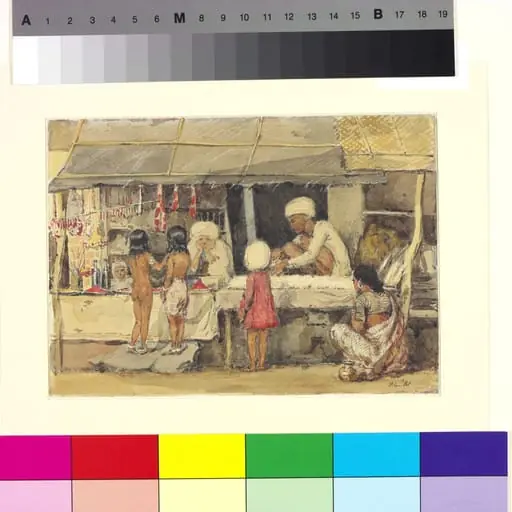 Shops for colours and flowers used at festivals, Sadr bazaar, Pune
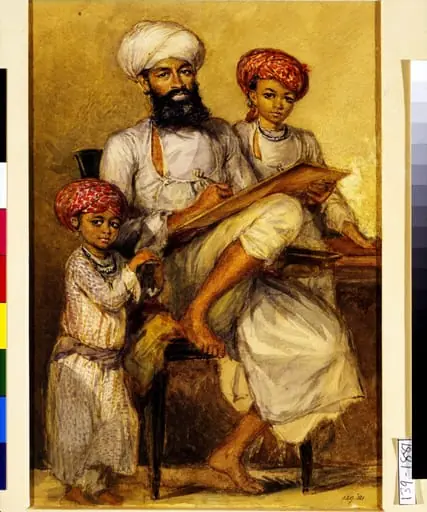 Portrait of Tara Chand, the court painter
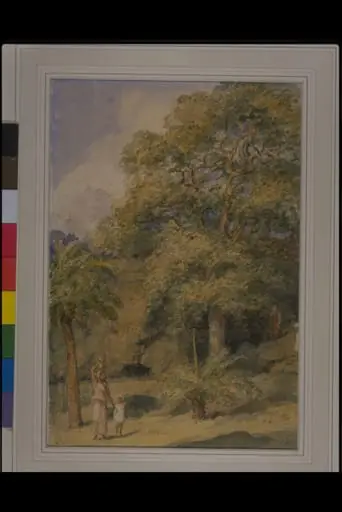 Study of a tamarind tree and date palms near Sir William Yardley's house at Breach Candy, Bombay
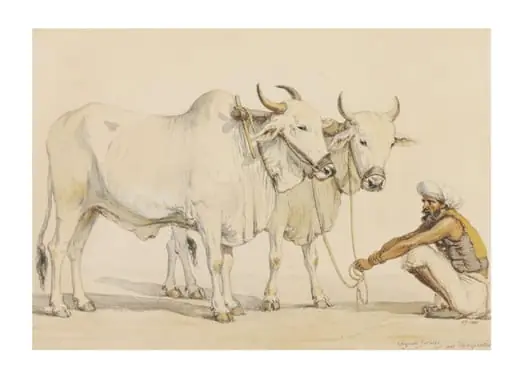 Two harnessed bullocks from Gujarat with their keeper