Artwork
White-headed Eagle
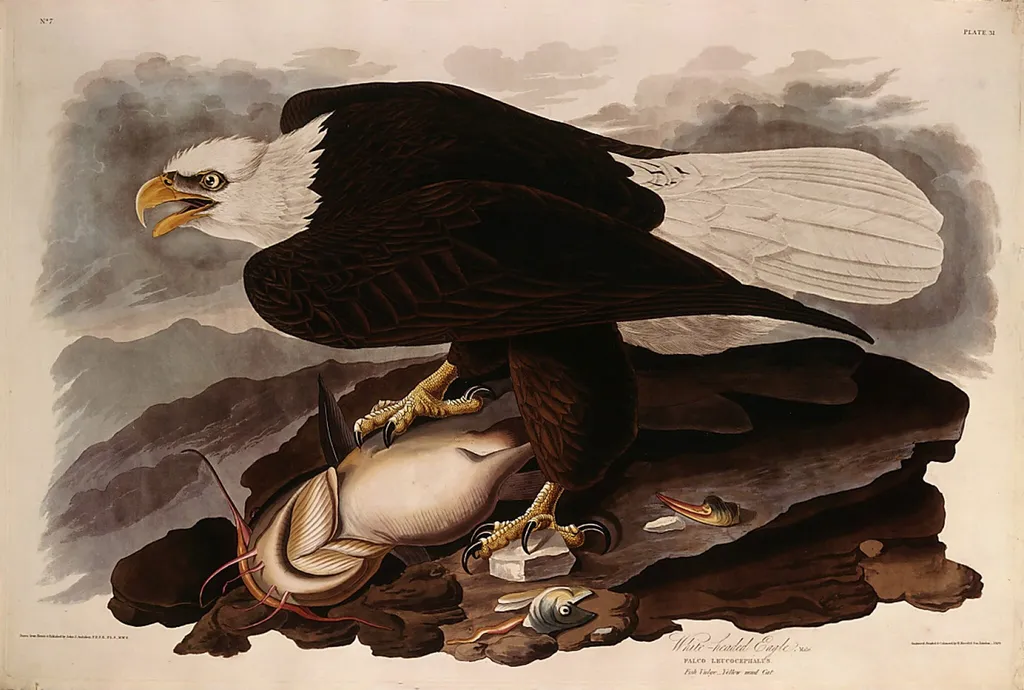
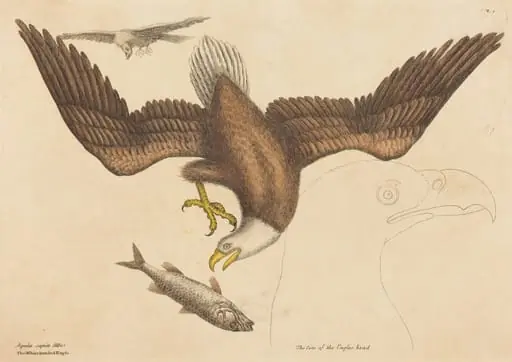
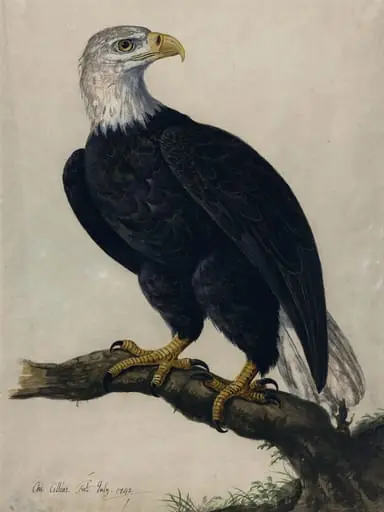
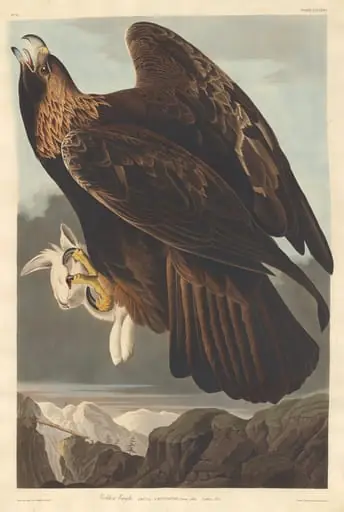
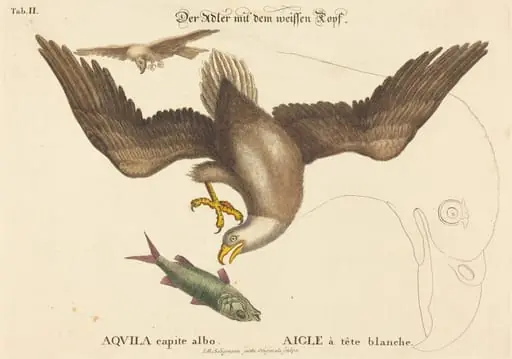
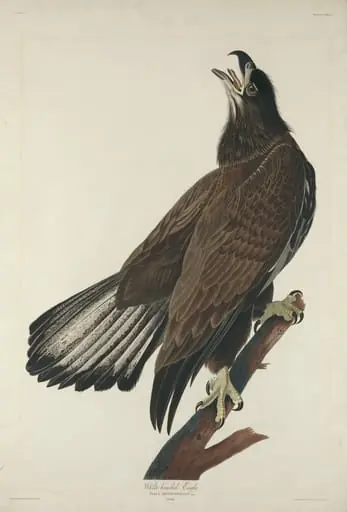
White-headed Eagle is an ink print by the Romanticist artist Robert Havell Jr.. It dates from 1828 and is held in the collection of the National Gallery of Art.
About this work
Overview
Created in 1828, *White-headed Eagle* is a hand‑colored print that combines engraving with aquatint on fine Whatman wove paper. The image portrays a bald eagle perched on a branch, its white head sharply contrasted against darker plumage, with individual feathers rendered in meticulous detail.
Subject & Meaning
The work focuses on a solitary white‑headed eagle, a symbol of strength and freedom in both European and American iconography. By isolating the bird on a simple branch, the composition emphasizes the creature’s natural majesty without narrative distraction.
Technique & Style
Robert Havell Jr. employed aquatint to achieve soft tonal gradations reminiscent of ink wash, then applied hand‑applied color to enhance the bird’s natural hues. The method reflects the Havell family’s long‑standing proficiency in aquatint, a process that allows subtle shading alongside the crisp lines of traditional engraving.
History & Provenance
The print is based on an original painting by John James Audubon, a collaboration that also involved Havell’s father, Robert Havell the Elder, who worked closely with Audubon on his celebrated natural history volumes. The Havell workshop’s involvement situates the piece within the early 19th‑century tradition of illustrated wildlife publications.
Context
Produced during a period of heightened interest in natural history, the engraving aligns with the broader European fascination with North American fauna. The Havell family, noted for their contributions to scientific illustration, helped disseminate Audubon’s images to a wider audience through such prints.
Legacy
*White-headed Eagle* exemplifies the technical skill and collaborative networks that defined early wildlife printing. It stands as a testament to the Havell dynasty’s role in shaping visual standards for natural history illustration in the nineteenth century.
Artist & collection

Artist
The Havell family of Reading, Berkshire, England, included a number of notable engravers, etchers and painters, as well as writers, publishers, educators, and musicians.