Artwork
Common Gallinule
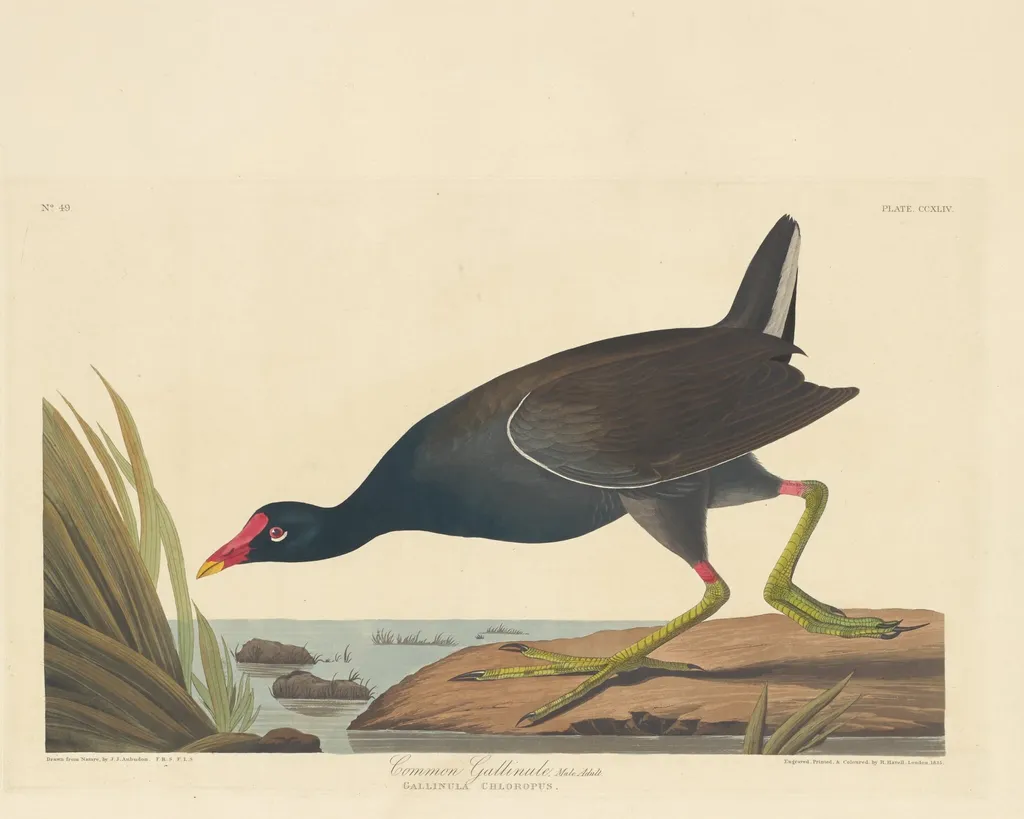
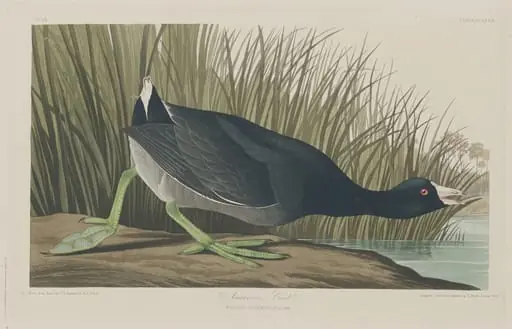
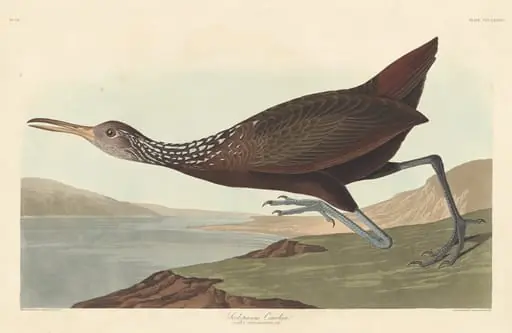
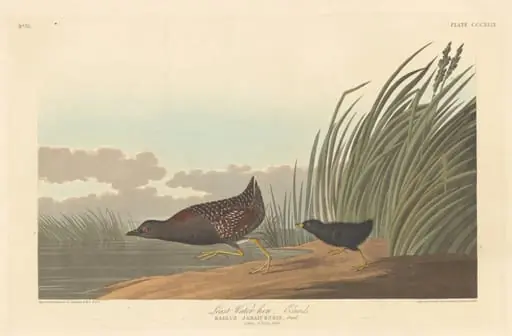
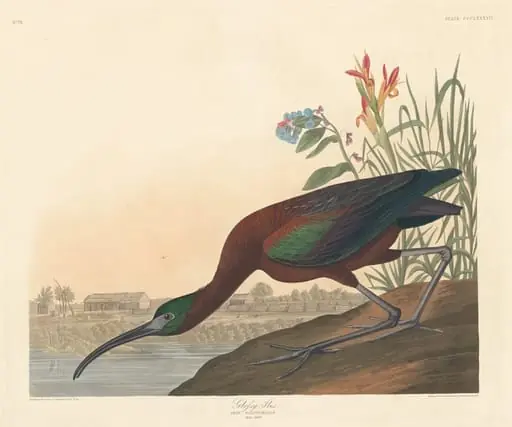
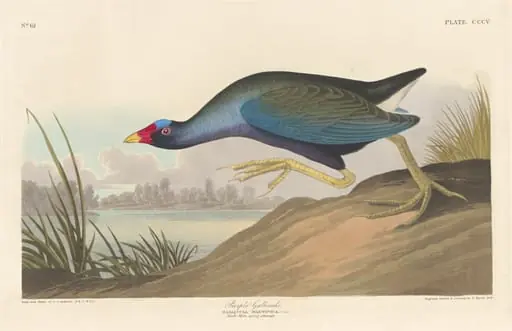
Common Gallinule is an ink print by the Romanticist artist Robert Havell Jr.. It dates from 1835 and is held in the collection of the National Gallery of Art.
About this work
Overview
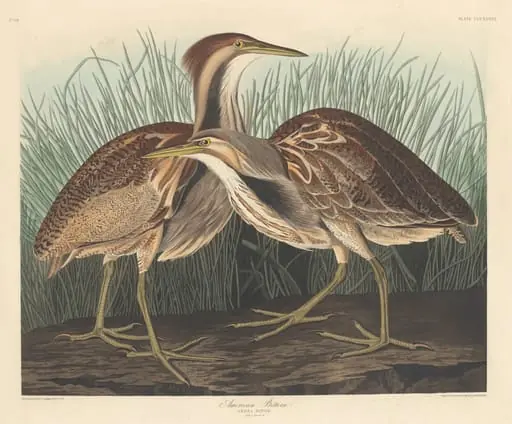
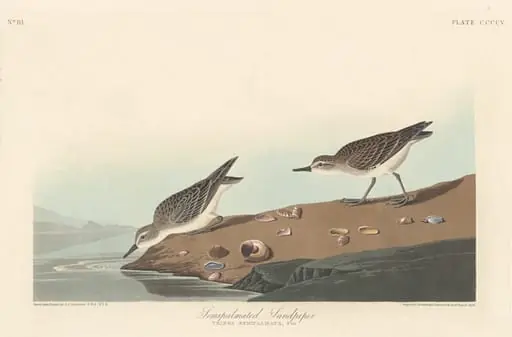
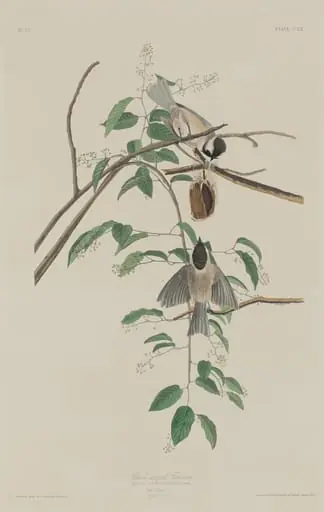
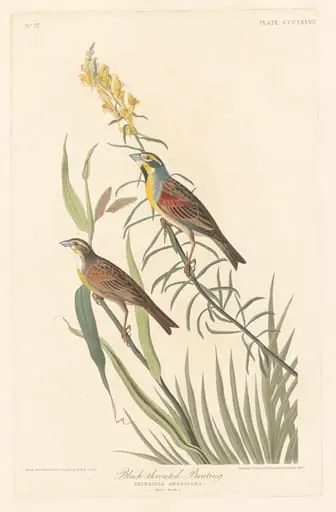
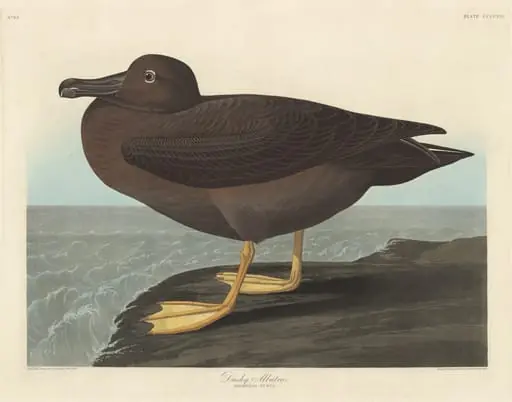
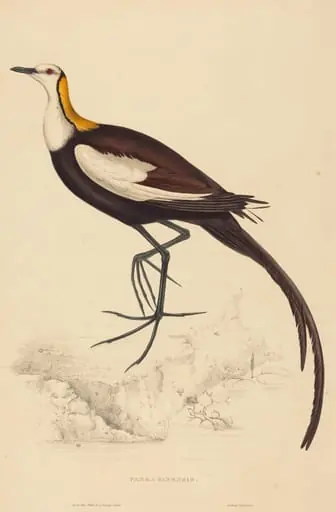
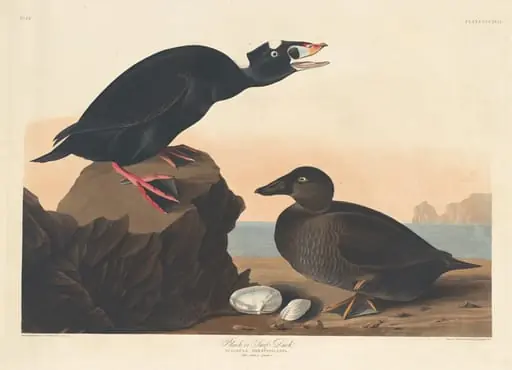
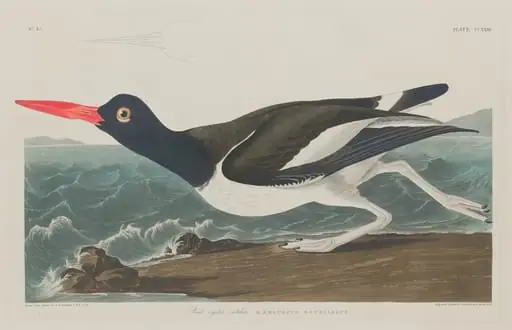
Common Gallinule is a hand-colored engraving and aquatint print created by Robert Havell Jr. in 1835 on Whatman wove paper. It showcases the artist's meticulous technique in capturing the likeness of a bird species.
Subject & Meaning
The print features a detailed depiction of a Common Gallinule, characterized by its dark plumage, bright red beak, yellow legs, and distinctive white stripe on its sides. The bird is set against a serene backdrop of green reeds, calm water, and rocky shore.
Technique & Style
Havell Jr. employed precise engraving and subtle aquatint to achieve flat, yet precise, color blocks with clean lines, eschewing shading. The work exemplifies the Havell family's renowned expertise in aquatint.
History & Provenance
Part of a family lineage of engravers and artists, Robert Havell Jr.'s work followed in the tradition established by his father, Robert Havell the Elder, and uncle, Luke Havell, reflecting their broader interest in Indian art and culture.
Context
While the direct cultural context of *Common Gallinule* is not explicitly Indian, the Havell family's engagement with Indian art and culture during this period suggests a broader artistic exchange influencing their oeuvre.
Legacy
*Common Gallinule* stands as a testament to the Havell family's contribution to the development of aquatint techniques in printmaking, inviting viewers to appreciate the precision of engraving as an artistic medium.
Artist & collection

Artist
The Havell family of Reading, Berkshire, England, included a number of notable engravers, etchers and painters, as well as writers, publishers, educators, and musicians.