Artwork
The Ribbon Snake (Coluber saurita)
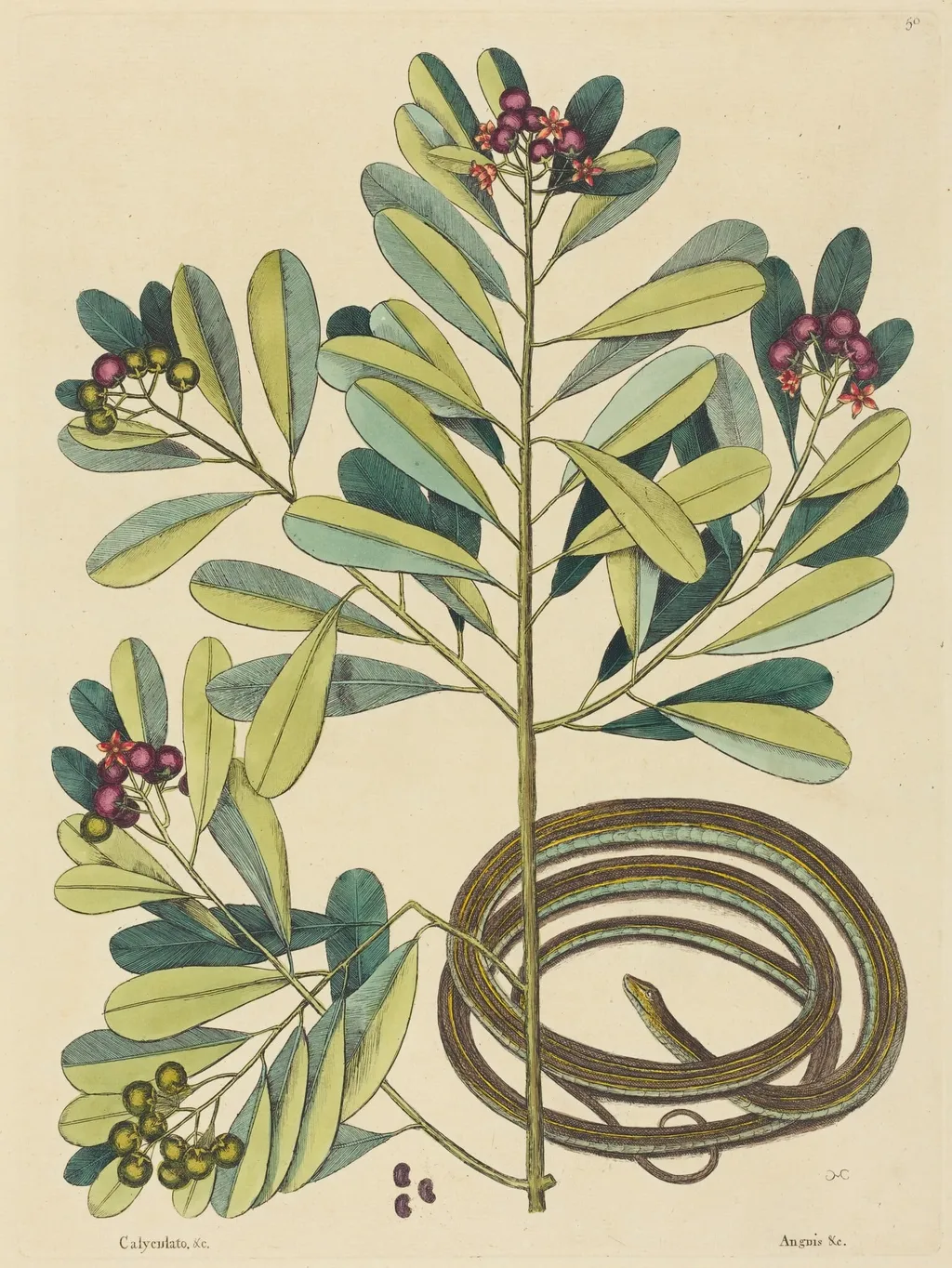
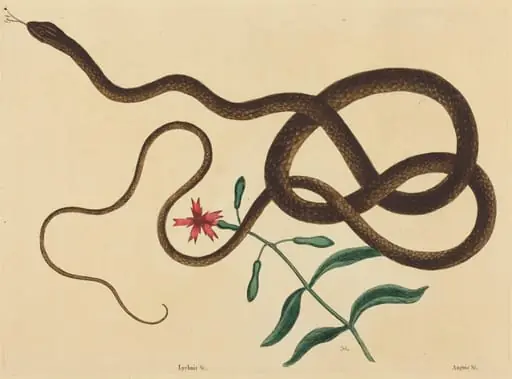
The Ribbon Snake (Coluber saurita) is an ink print by the Baroque artist Mark Catesby. It dates from 1737 and is held in the collection of the National Gallery of Art.
About this work
Overview
Executed in etching and engraving with hand coloring on laid paper, it is one of 220 plates in Catesby’s multi-volume study of North American wildlife.
Created in 1737 by English naturalist Mark Catesby, this print depicts a ribbon snake entwined with a native plant. Executed in etching and engraving with hand coloring on laid paper, it is one of 220 plates in Catesby’s multi-volume study of North American wildlife. The work belongs to a systematic effort to document species previously unrecorded in European scientific literature, blending observation with artistic precision.
Subject & Meaning
The ribbon snake, a nonvenomous species native to the southeastern United States, is rendered in close association with a plant bearing waxy leaves and clusters of red and yellow berries. The composition emphasizes the snake’s habitat and behavior, presenting it not as a specimen isolated from its environment but as an integral part of a living ecosystem. This reflects Catesby’s intent to portray nature as interconnected.
Technique & Style
Catesby used fine etching and engraving lines to capture the snake’s scaled texture and the plant’s delicate structure. Hand coloring, applied with care, enhances naturalistic detail without overwhelming the underlying draftsmanship. The layered technique allowed for subtle tonal variations, enabling accurate representation of light and form. The snake’s coiled posture and the plant’s arrangement suggest both anatomical accuracy and compositional balance.
History & Provenance
The print was produced as part of Catesby’s *Natural History of Carolina, Florida and the Bahama Islands*, published in installments between 1729 and 1747. It was among the first illustrated works to depict North American species from direct observation rather than secondhand accounts. Original impressions were distributed to European scientific societies and collectors, establishing Catesby’s reputation as a foundational figure in American natural history illustration.
Context
In the early 18th century, European interest in New World biodiversity was growing, yet few firsthand visual records existed. Catesby traveled to the American colonies between 1722 and 1726, sketching and collecting specimens. His work countered speculative natural histories by grounding representation in field study. This print exemplifies the emerging scientific ideal: accurate depiction as a tool for understanding, not merely aesthetic display.
Legacy
Catesby’s plates influenced subsequent naturalists, including Linnaeus and Audubon, by demonstrating how detailed visual documentation could advance biological classification. The ribbon snake image, though not widely known today, remains a representative example of early scientific illustration that prioritized fidelity to nature over ornamentation. Its methodical approach laid groundwork for modern ecological illustration.
Artist & collection

Artist
Mark Catesby (24 March 1683 – 23 December 1749) was an English naturalist who studied the flora and fauna of the New World.

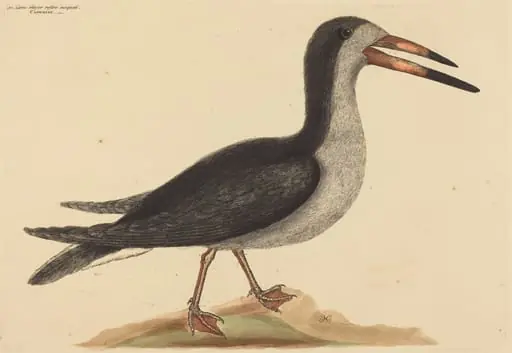
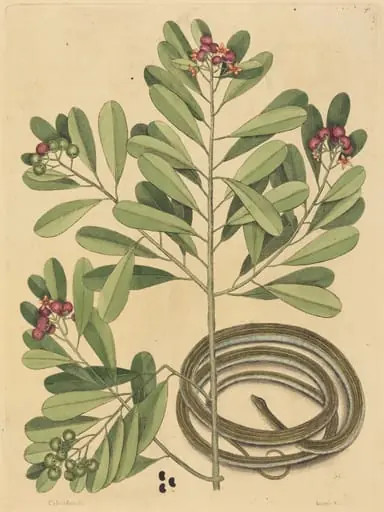 The Ribbon Snake (Coluber saurita)
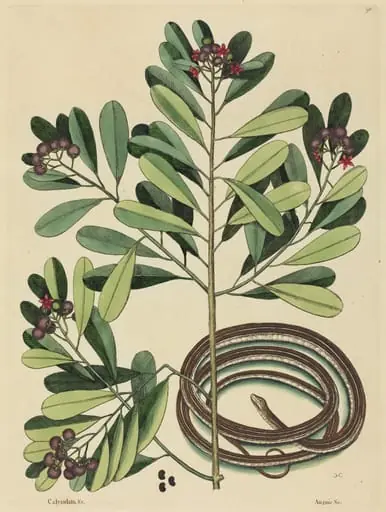 The Ribbon Snake (Coluber saurita)
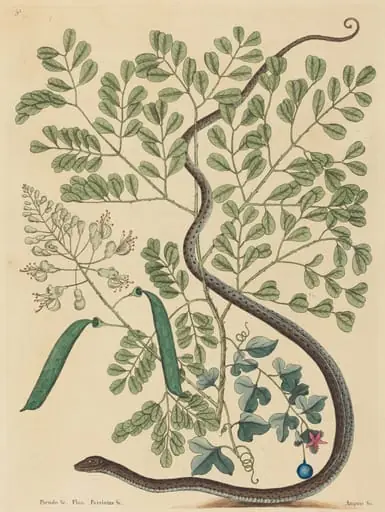 The Spotted Ribbon Snake (Coluber nebulosus?)
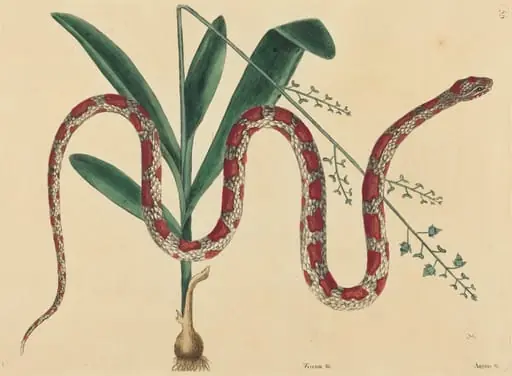 The Corn Snake (Coluber fulvius?)
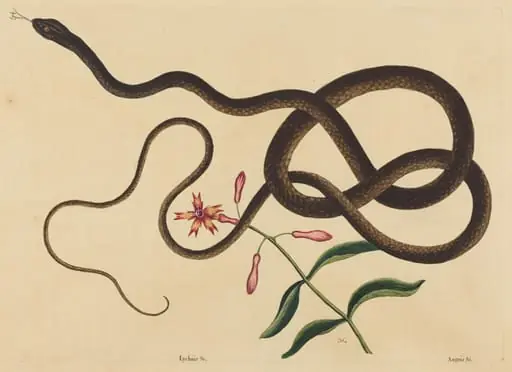 The Coach-Whip Snake (Coluber flagellum)
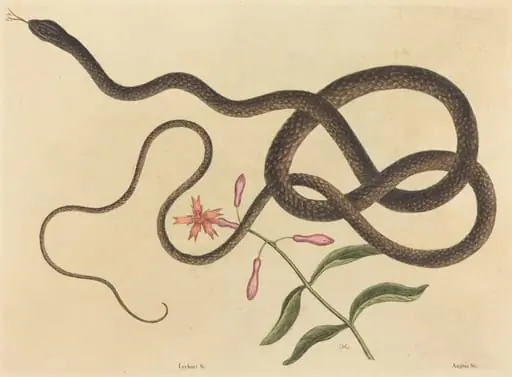 The Coach-whip Snake (Coluber flagellum)
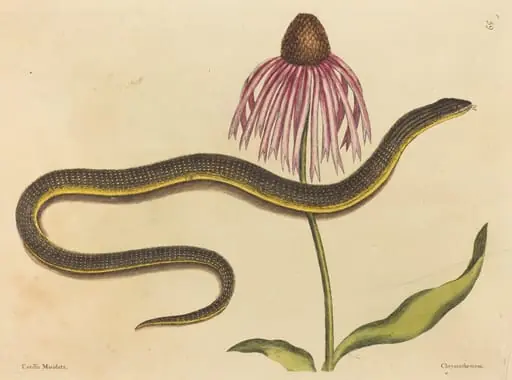 The Glass Snake (Anguis ventralis)
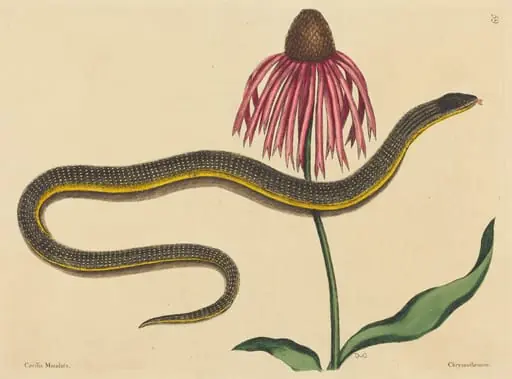 The Glass Snake (Anguis ventralis)
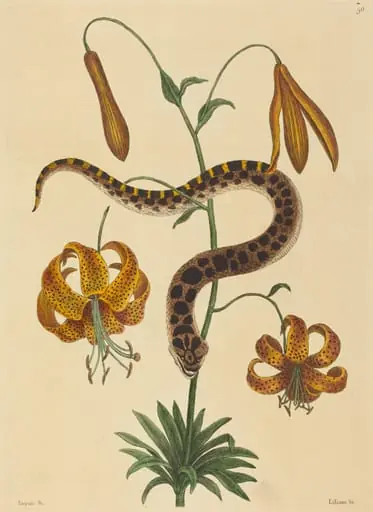 The Hog-nose Snake (Boa contortrix)
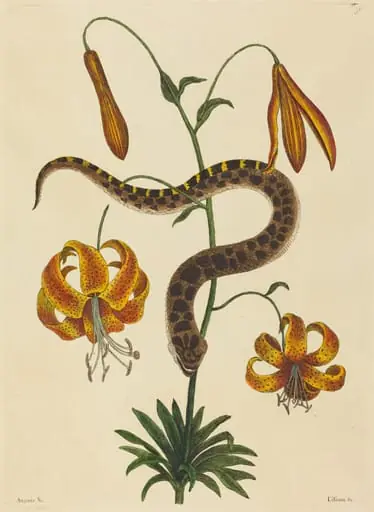 The Hog-nose Snake (Boa contortrix)