Artwork
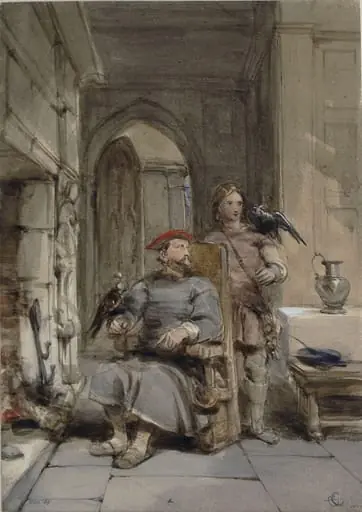
Sir Thomas Wentworth (afterwards Earl of Stafford) and John Pym at Greenwich 1628
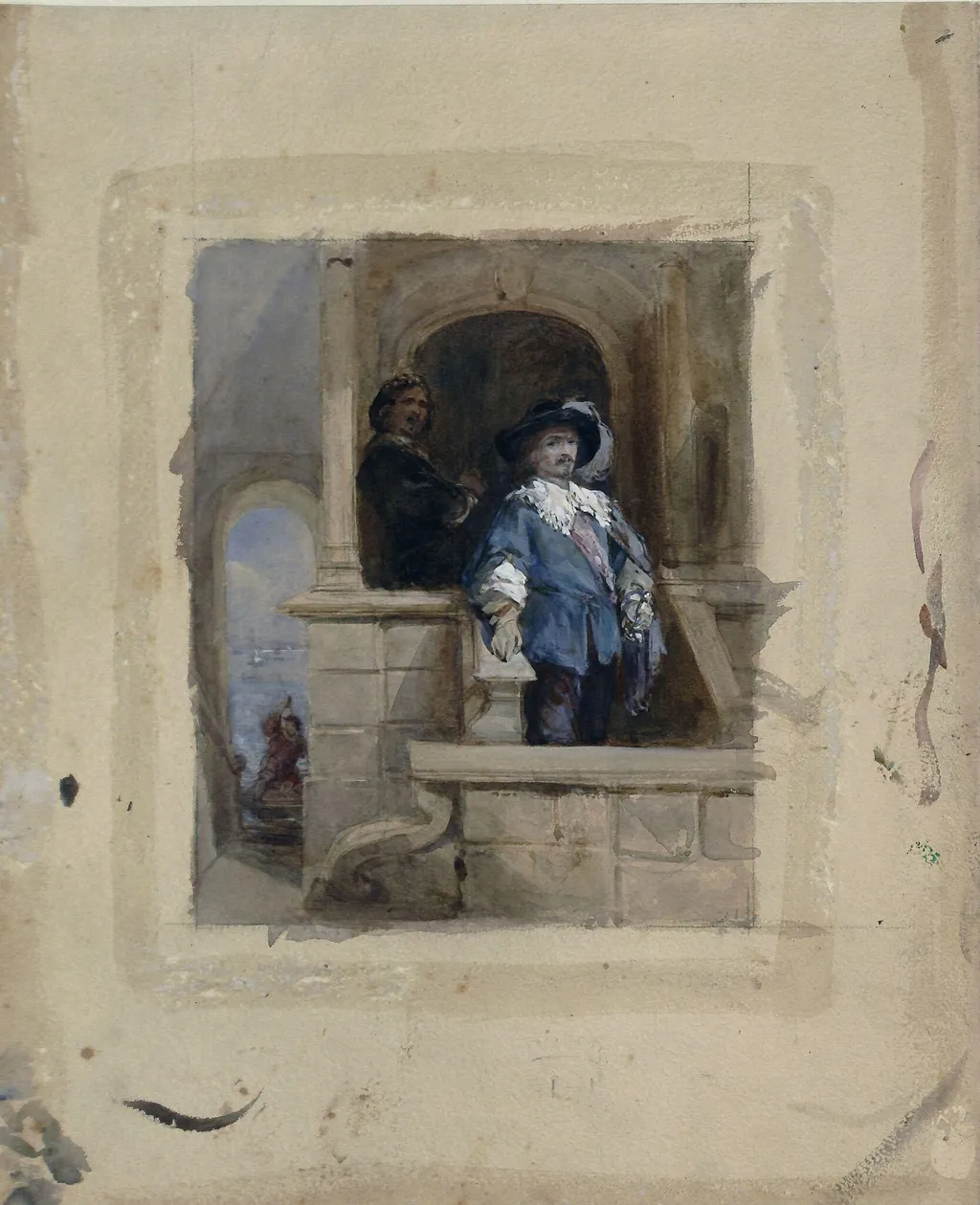
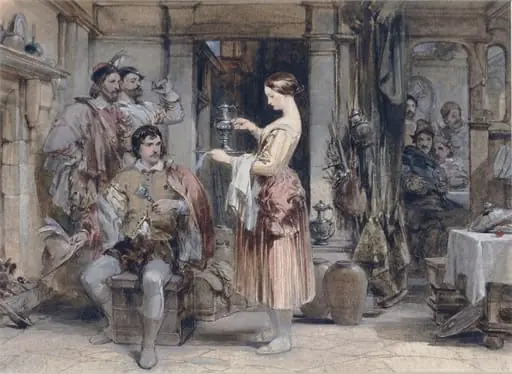
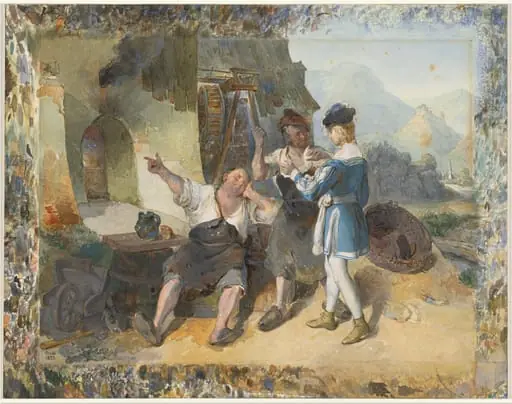
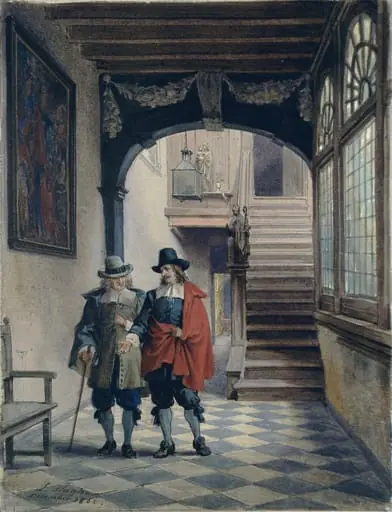
Sir Thomas Wentworth (afterwards Earl of Stafford) and John Pym at Greenwich 1628 is a watercolor work on paper by George Cattermole. It dates from 1850 and is held in the collection of the Victoria and Albert Museum.
About this work
The man on the left wears a dark outfit, while the man on the right is dressed in blue with a white collar and a hat.
In this painting, two men stand in a room with a large window behind them. The man on the left wears a dark outfit, while the man on the right is dressed in blue with a white collar and a hat. A small table or bench is positioned in front of them.
The room's architecture and the men's clothing suggest a formal setting, possibly from the 17th century. The artist's use of watercolor creates a sense of softness and delicacy in the scene.
To learn more about the artist's style and technique, explore the works of Cattermole, George.
Overview
George Cattermole created this watercolour depicting Sir Thomas Wentworth and John Pym in a private interior at Greenwich, dated to 1628. The work is a historical reconstruction, not a contemporary portrait, rendered in the delicate, translucent medium typical of Cattermole’s approach. It presents two prominent political figures in a moment of quiet interaction, framed by architectural details that evoke the early Stuart period.
Subject & Meaning
The figures are Sir Thomas Wentworth, later Earl of Stafford, and John Pym, key players in the parliamentary opposition to Charles I. Though their relationship would later fracture, this scene suggests an early alignment. The setting—likely a royal residence—implies a private political consultation. Their postures and attire convey formality, hinting at the gravity of their discussions during a tense phase of royal-parliamentary relations.
Technique & Style
Cattermole employed watercolour with restrained washes and fine linework to suggest texture and depth without heavy pigment. The softness of the medium lends a contemplative mood, contrasting with the political tension implied by the subject. Light filters through a large window, casting subtle shadows that define the figures and furnishings, while the muted palette reinforces the scene’s somber, intimate character.
History & Provenance
The watercolour was produced in the 19th century, long after the events it portrays, as part of Cattermole’s series on Stuart-era figures. It was not a commissioned portrait but a historical reconstruction, likely intended for publication or private collection. Its provenance traces to 19th-century British collectors interested in political history, though its early ownership records remain incomplete.
Context
In 1628, Wentworth and Pym were both members of Parliament opposing royal absolutism. The year saw the Petition of Right, a landmark constitutional document. Though they later diverged—Wentworth becoming a royalist, Pym a parliamentary leader—this image captures a moment of shared purpose. Cattermole’s depiction reflects Victorian romanticism toward early constitutional struggles, not contemporary accuracy.
Legacy
Cattermole’s watercolour contributes to 19th-century efforts to visually reconstruct England’s political past. While not a documentary record, it shaped public perception of early Stuart figures through accessible, emotionally resonant imagery. The work remains a reference in studies of historical illustration, illustrating how Victorian artists interpreted 17th-century politics through aesthetic and moral lenses.
Artist & collection
Artist
George Cattermole was a British painter and illustrator, chiefly in watercolours.