Artwork
Allegorical Figure
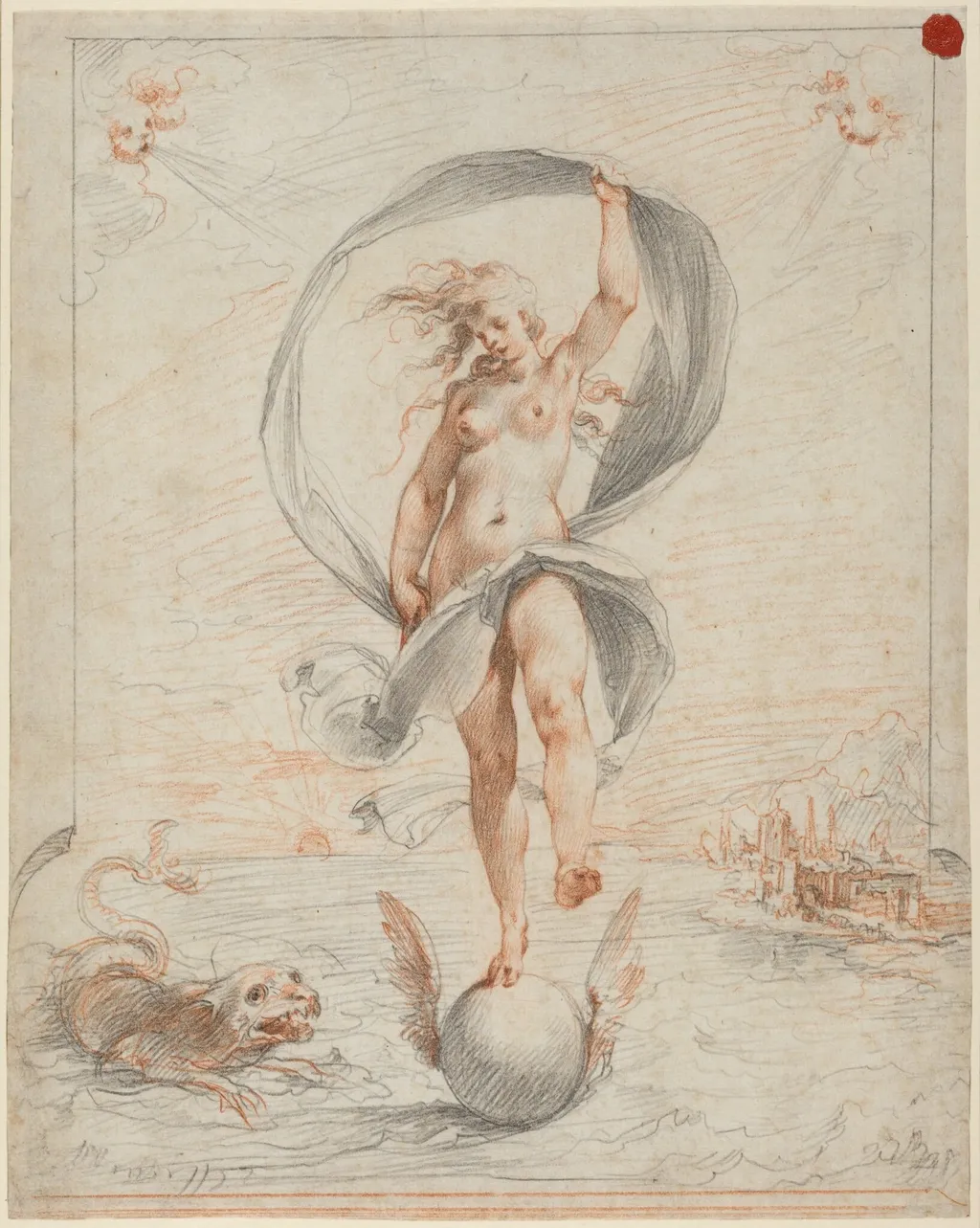
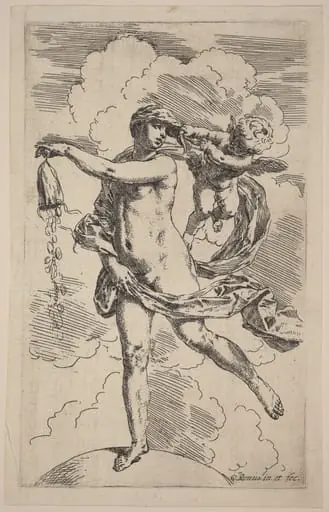
Allegorical Figure is a chalk drawing by the Renaissance artist Giuseppe Cesari. It dates from 1588 and is held in the collection of the National Gallery of Art.
About this work
Overview
Allegorical Figure is a drawing created by Italian artist Giuseppe Cesari around 1588. The work is executed in black and red chalk on laid paper.
Subject & Meaning
The drawing depicts a winged, humanoid figure standing on a shell, holding a circle aloft, accompanied by a small, winged creature grasping a large ball. The scene is set against a background suggesting water and distant buildings, and is characteristic of the allegorical genre, where figures and objects convey symbolic meaning.
Technique & Style
Cesari's use of black and red chalk allows for soft shading, effectively capturing the play of light and shadow on the figures. The drawing's style is consistent with Cesari's work as a leading Italian Mannerist painter.
History & Provenance
Cesari produced Allegorical Figure during a period of significant favor from popes Clement VIII and Sixtus V, and was active as a studio head, training artists including Caravaggio.
Artist & collection
Artist
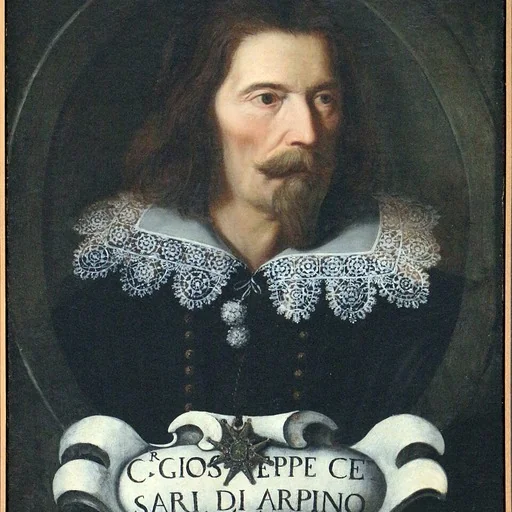
Giuseppe Cesari (14 February 1568 – 3 July 1640) was an Italian Mannerist painter, also named Il Giuseppino and called Cavaliere d'Arpino, because he was created Knight of the Supreme Order of Christ by his patron Pope Clement VIII.