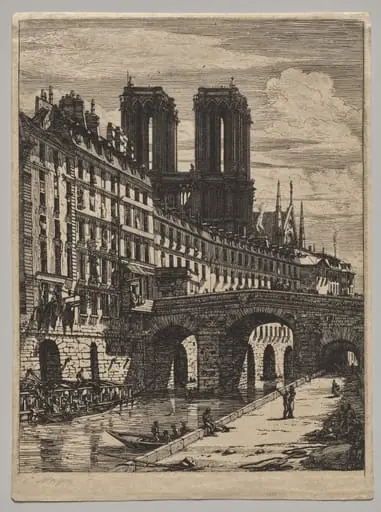
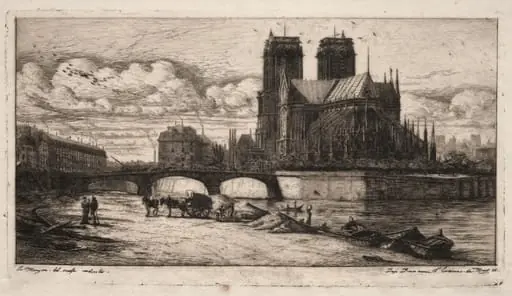
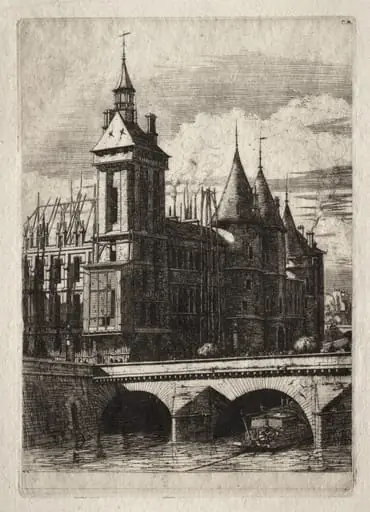
Artwork
Etchings of Paris: Le Petit Pont
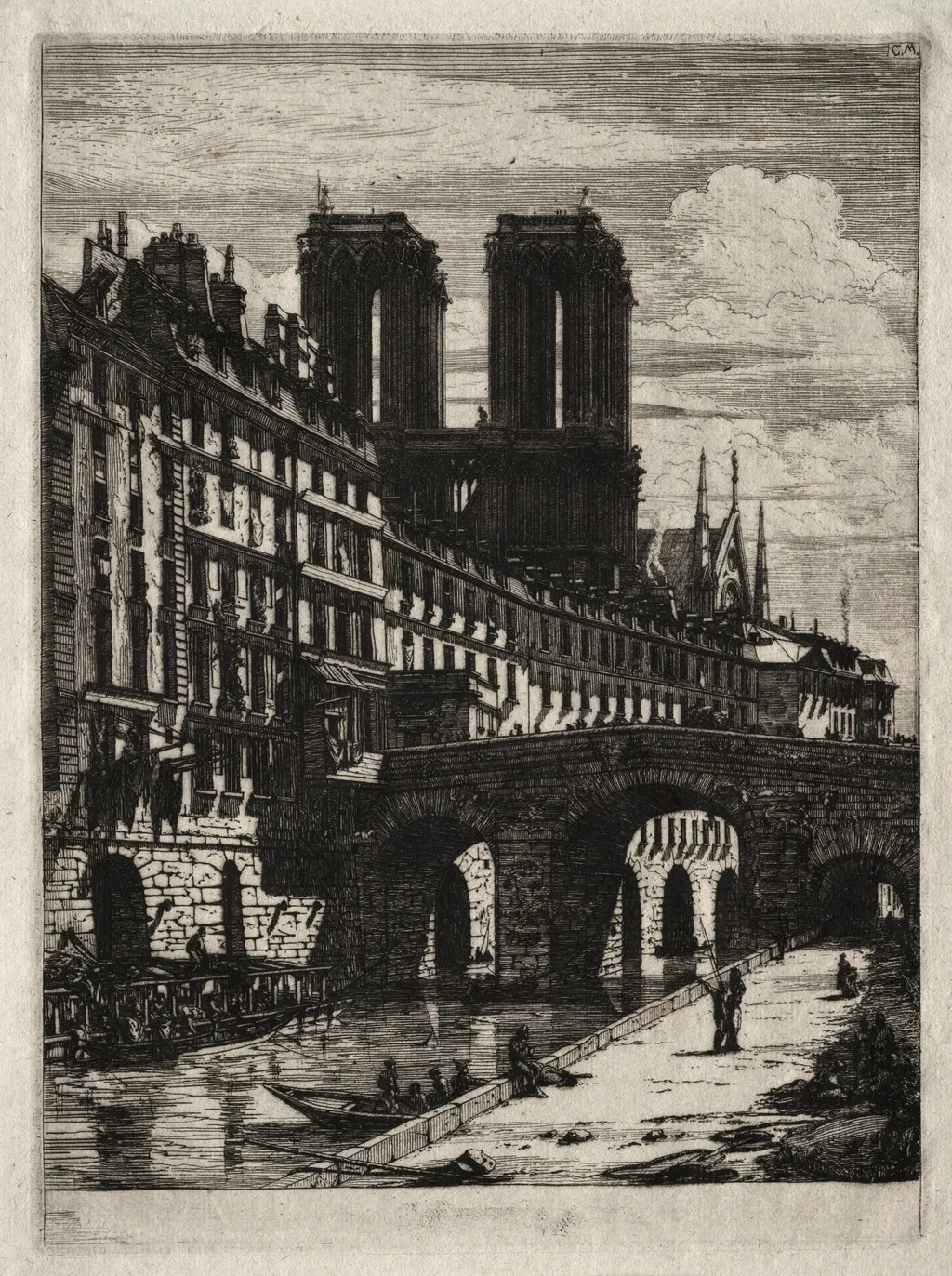
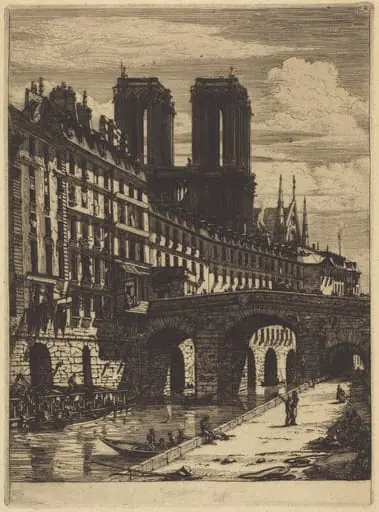
Etchings of Paris: Le Petit Pont is a print by the Impressionist artist Charles Meryon. It dates from 1850 and is held in the collection of the Cleveland Museum of Art.
About this work
The artist focused on the contrast between the cramped, everyday life on the bridge and the grand, empty towers behind it.
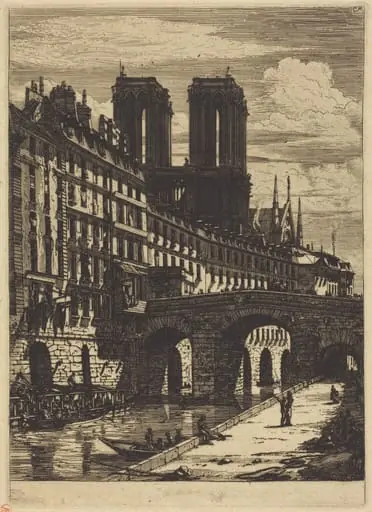
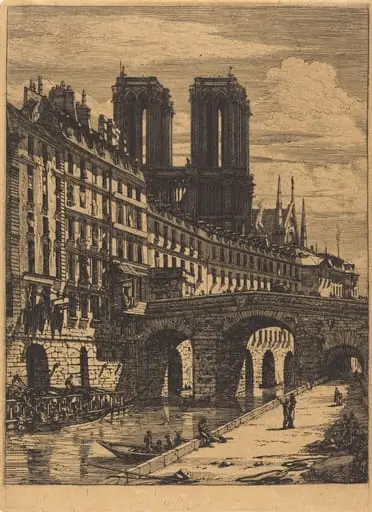
This black-and-white print shows a Paris bridge packed with buildings. The left side has tall, narrow houses stacked closely together, their windows and balconies crammed into the space. On the right, a big stone archway leads to a river where a small boat floats. In the background, two grand towers loom over the scene.
The artist focused on the contrast between the cramped, everyday life on the bridge and the grand, empty towers behind it. This print was made in 1850, capturing a moment in Paris before photography became common.
Next, check out the technique: chiaroscuro to see how light and shadow create depth in art.
Overview
Etchings of Paris: Le Petit Pont, created by Charles Meryon in 1850, is a black-and-white print depicting a densely populated Parisian bridge, contrasting with grand, looming towers in the background. This work is part of Meryon's series capturing his distinctive Gothic vision of the city.
Subject & Meaning
The print juxtaposes the cramped, everyday life on Le Petit Pont, with tightly packed houses and bustling activity, against the grandeur of empty, towering structures behind. This contrast highlights the coexistence of ordinary urban life and monumental architecture in 19th-century Paris.
Technique & Style
Meryon, largely confined to etching due to color blindness, employed chiaroscuro to achieve depth, leveraging strong contrasts between light and shadow. His Gothic vision of Paris is characterized by detailed, expressive lines, capturing the city's essence in monochrome.
History & Provenance
Produced in 1850, before the widespread use of photography, this etching preserves a pre-photographic moment in Paris's history. Meryon's life, marked by mental illness and culminating in his death in an asylum, contrasts with his mother's illustrious career as a Paris Opera dancer.
Context
As a key figure in 19th-century French etching, Meryon's work reflects his unique perspective on Paris, distinct from the emerging photographic representations of the city. His series of etchings stands as a testament to the artistic interpretation of urban landscapes during this transitional period.
Legacy
Etchings of Paris: Le Petit Pont contributes to Meryon's recognition as the most significant etcher of 19th-century France, celebrated for his ability to convey the city's Gothic character through etching, despite the challenges posed by his color blindness.
Artist & collection
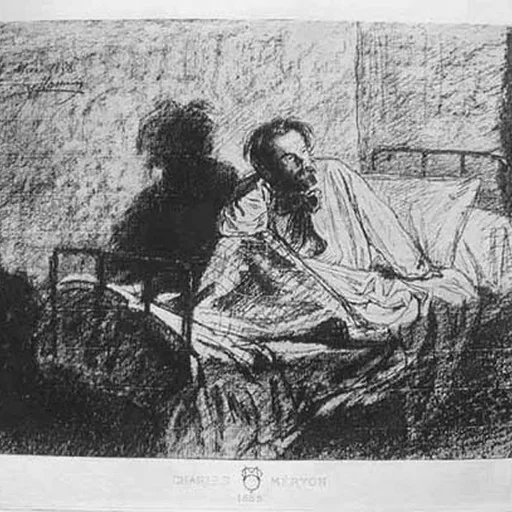
Artist
Charles Meryon (sometimes Méryon, 23 November 1821 – 14 February 1868) was a French artist who worked almost entirely in etching, as he had colour blindness.