Artwork
Etchings of Paris: The New Bridge
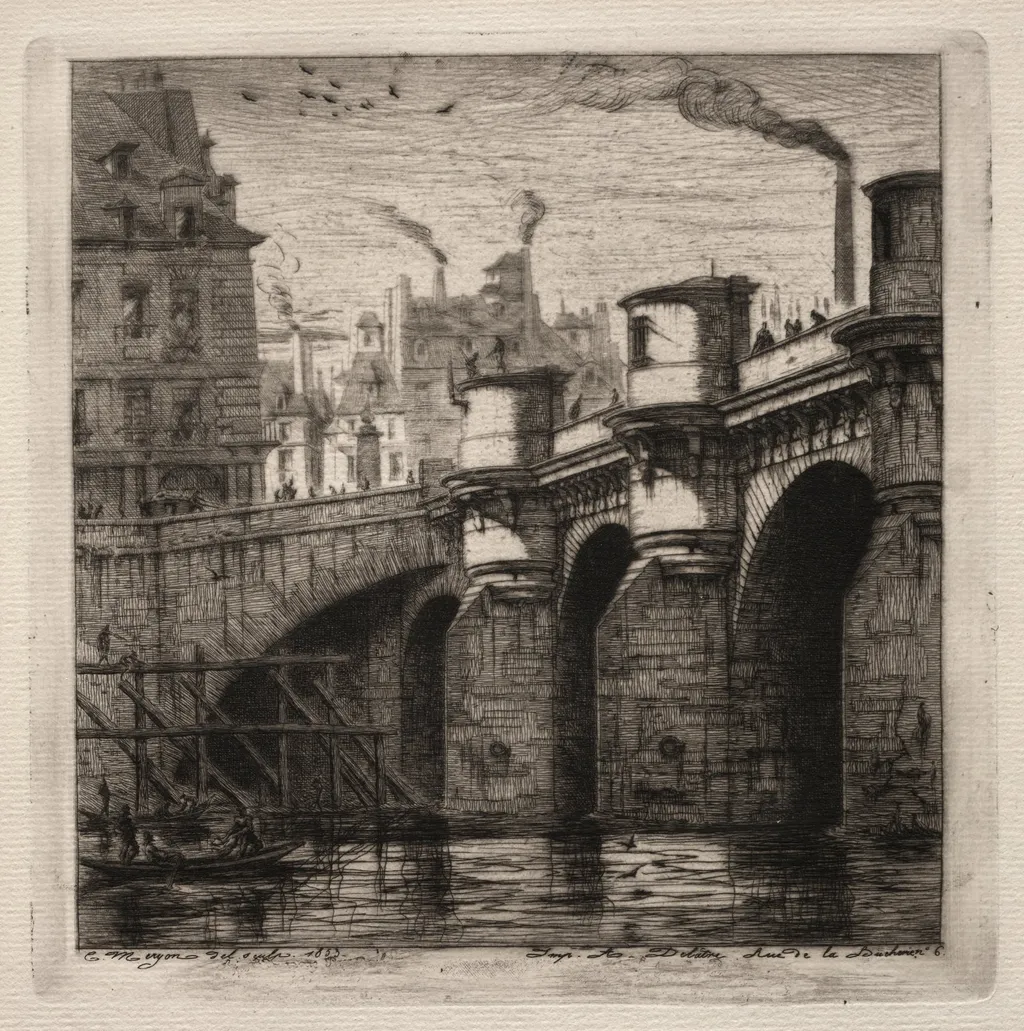
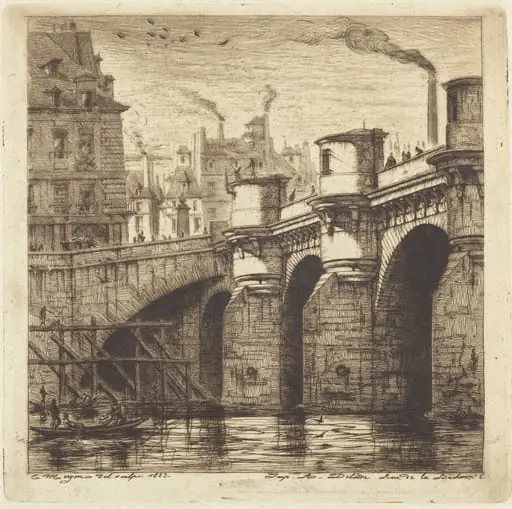
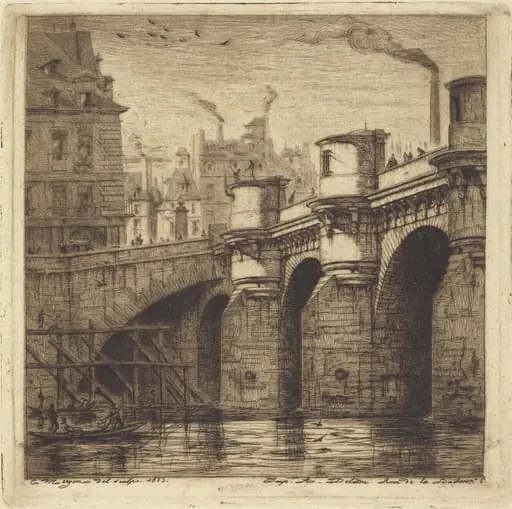
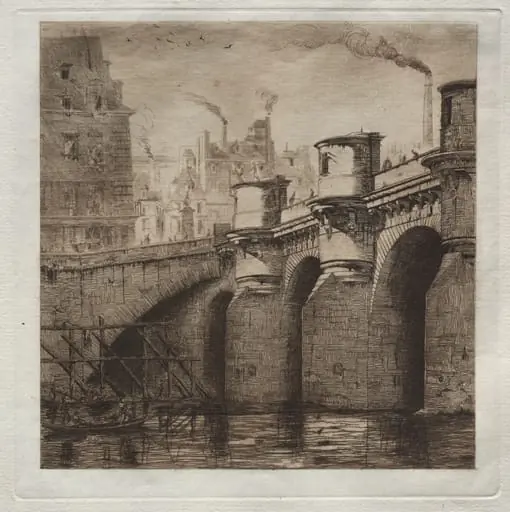
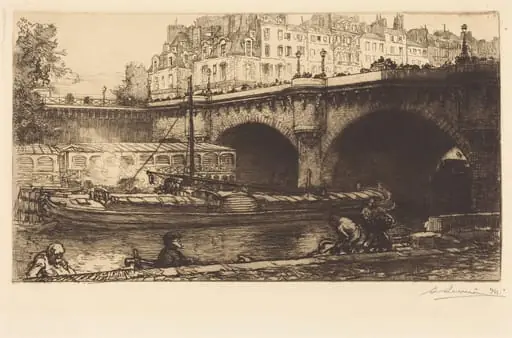
Etchings of Paris: The New Bridge is a print by the Impressionist artist Charles Meryon. It dates from 1853 and is held in the collection of the Cleveland Museum of Art.
About this work
Overview
Etchings of Paris: The New Bridge is an 1853 etching by French artist Charles Meryon, characterized by its detailed, atmospheric portrayal of a bustling Parisian scene, marking a key work in Meryon's series of Parisian city views.
Subject & Meaning
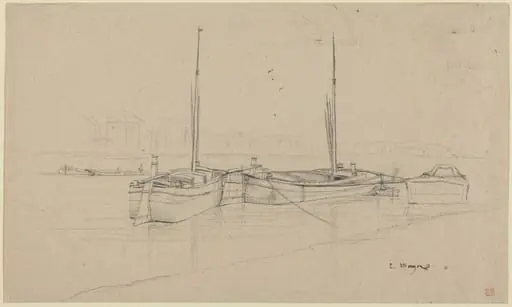
The etching depicts a vibrant, industrial Paris, focusing on the everyday reality of the city. The New Bridge, with its stone arches, is set amidst tall, worn buildings, smokestacks, and calm water, capturing the gritty, lived-in aspect of urban life.
Technique & Style
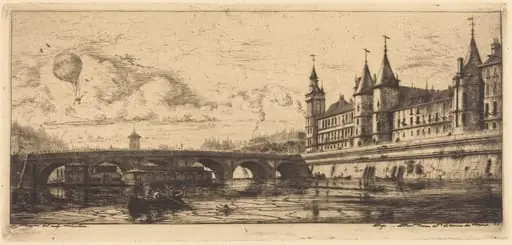
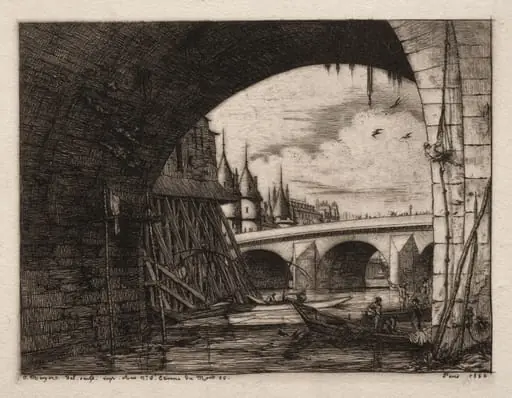
Executed in sharp, detailed lines, the work reflects Meryon's mastery of etching, a medium he favored due to his colour blindness. His style blends a Gothic sensibility with emerging Realist tendencies, emphasizing the mundane and industrial over the idealized.
History & Provenance
Created in 1853, the etching is part of Meryon's celebrated Paris series. The artist's life was marked by personal struggles, including mental illness, leading to his confinement and death in an asylum in 1868.
Context
The work contributes to the broader 19th-century artistic shift towards Realism, which sought to depict everyday life in a truthful manner, moving away from romanticized representations of urban landscapes.
Artist & collection
Artist
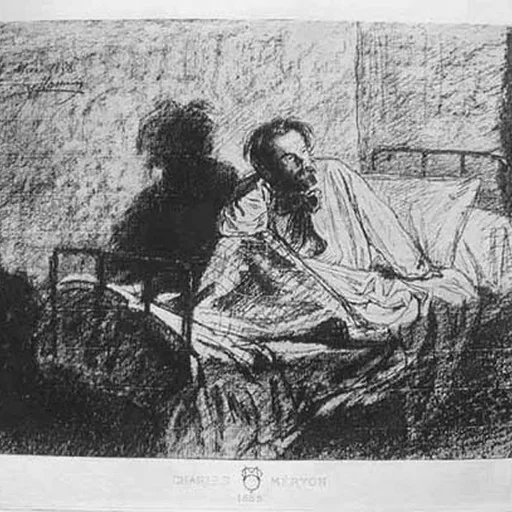
Charles Meryon (sometimes Méryon, 23 November 1821 – 14 February 1868) was a French artist who worked almost entirely in etching, as he had colour blindness.